The 4L60E is in more vehicles than most techs realize. GM used it in trucks, SUVs, vans, and cars from 1993 through 2013 -- Silverado, Tahoe, Suburban, Sierra, Yukon, Blazer, S-10, Camaro, Firebird, Corvette, and more. If you do any GM work, you will see 4L60E units regularly. The good news is the failure patterns are well-documented and mostly predictable. The bad news is that some of these failures get misdiagnosed because the symptoms can point in more than one direction.
This covers the four failures I see most consistently, in order of how often they show up.
For more GM and Chevy transmission resources, visit our GM hub page and Chevy hub page.
Failure 1: 2-4 Servo Bore Wear
What It Causes
The 2-4 servo is an aluminum bore in the transmission case that houses the band apply servo piston. This bore wears oval over time, especially on high-mileage units. When the bore is worn, the servo piston cannot seal properly and the 2-4 band cannot apply with full force. The result: loss of second gear and fourth gear. The transmission will still have first, third, and reverse -- the gears that do not depend on the 2-4 band.
Symptoms
The vehicle starts in first gear and shifts directly to third, skipping second entirely. Or it starts in first and the 1-2 shift feels like the transmission is hunting -- RPM rises, then drops, then the vehicle moves. Fourth gear may be absent entirely or may drop out under load. Many customers describe it as "missing a gear." Some feel it only when cold. On worn bores, the symptom is often constant regardless of temperature.
Diagnostic Steps
Pull codes first. A worn 2-4 servo bore will often set a 2nd gear ratio error or a 4th gear ratio error code. Verify the complaint by driving the vehicle and monitoring commanded gear versus actual gear with a scanner. If commanded gear shows 2 but actual gear shows 3, the 2-4 band is not engaging. A pressure test at the 2-4 servo port will show bleed-down under apply pressure if the bore is worn.
DIY vs. Shop Call
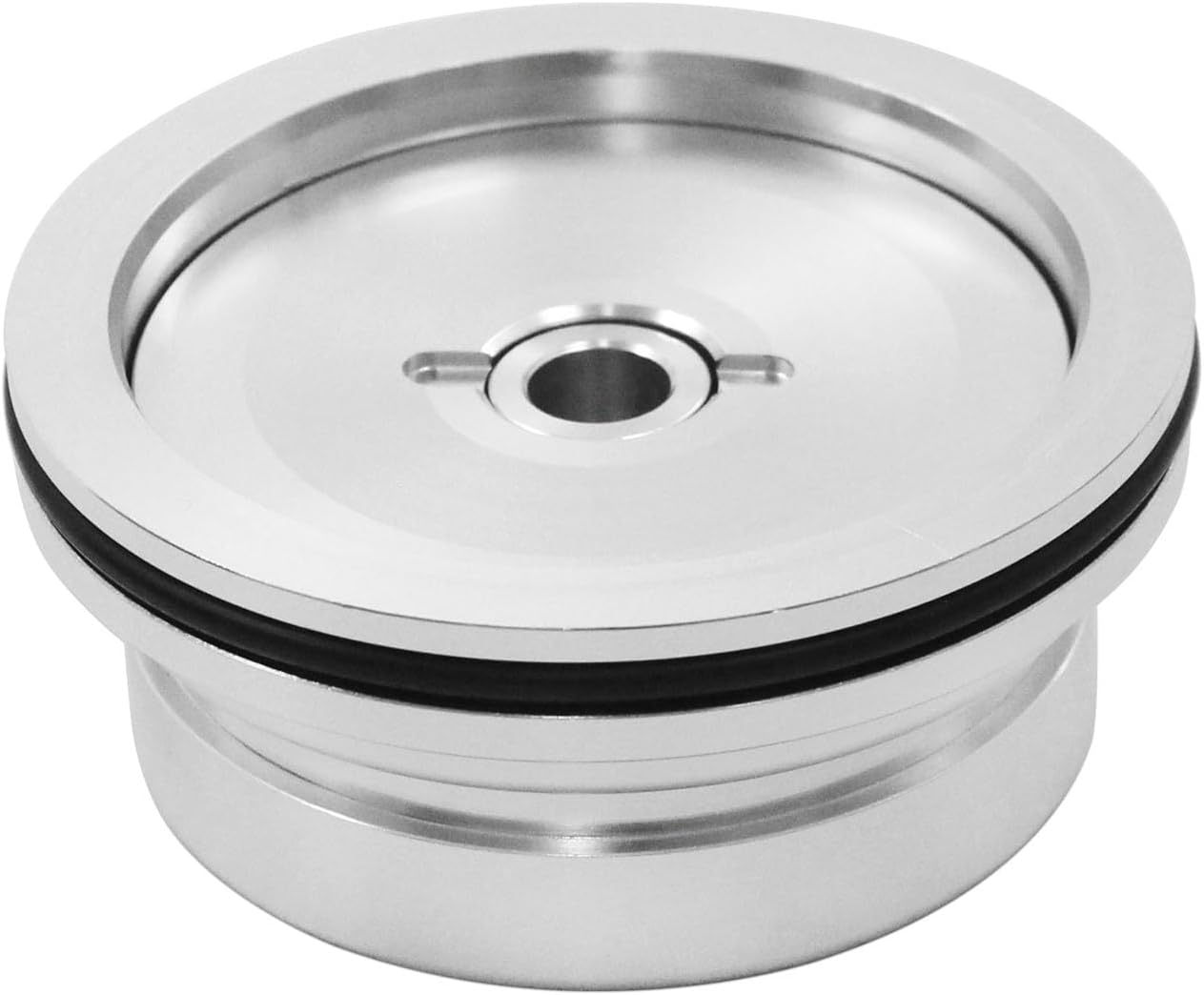
The 2-4 servo bore can be repaired without a full rebuild if the bore damage is not severe. Sonnax makes an oversized servo pin kit (77787-03K) for reconditioned 4L60/4L60E/4L65E/4L70E case bores -- a chromoly pin with two sealing rings that stops leakage past the pin after the bore is reamed true [1]. For units that keep cooking the 2-4 band, the Sonnax 2nd Gear Super Hold servo adds roughly 18% more apply area than the largest OE "Corvette" servo and uses dual seals to eliminate the cross-leaks that feed both 2-4 band and 3-4 clutch failure [2]. It requires dropping the pan and valve body, and some disassembly -- not an easy DIY, but a competent transmission tech can do it without pulling the unit. If the bore is damaged badly, the unit comes out.
Failure 2: 3-4 Clutch Pack Burnout
What It Causes
The 3-4 clutch pack is the most commonly burned clutch pack in the 4L60E. It handles the 3-4 upshift under load and is the apply element for fourth gear. When this pack burns, the vehicle loses fourth gear and may set a P0758 (Shift Solenoid B Performance) or P0756 (Shift Solenoid A Performance) code. In advanced cases, the burned clutch material contaminates the fluid and accelerates wear throughout the valve body.
The part most people get wrong is the root cause. A burnt 3-4 clutch is almost always a line rise problem, not a worn-out clutch problem, and ATRA's GEARS magazine points at the mass airflow sensor as the most common failing input behind it. The PCM uses engine load to command line pressure; feed it a low load signal and it commands low pressure, and the 3-4 pack slips itself to death under throttle. GEARS documents a 4L60E case where a freshly rebuilt unit still showed erratic line pressure on a stall test -- spiking to 150 psi, falling to 90, then settling near 130 -- which is exactly the kind of instability that cooks a new clutch pack. Check the MAF and verify commanded versus actual line pressure before you install friction plates, or you will do the job twice.
Symptoms
Harsh 3-4 shift that gets progressively worse. Eventually no engagement in fourth gear. Sometimes the 3-4 shift produces a shudder or a momentary RPM flare before fourth is achieved. Under heavy load -- towing, highway acceleration -- the symptom appears first and is most severe. When the fluid is checked it is often dark and has a burnt odor. In severe cases there is clutch material visible in the pan.
Diagnostic Steps
There is a noise clue worth knowing before you drop the pan. Per GM Preliminary Information PIP5071 (October 2012), covering 2008-2013 Silverado, Sierra, Express, Savana, Tahoe, Suburban, Colorado, Canyon, Envoy, Trailblazer, Hummer H3 and Saab 9-7X with the 4L60E, 4L65E or 4L70E (RPO M30, M32 or M70), a squawk or grunt noise on the 2-3 shift is the early warning on this clutch. GM calls for replacing the 3-4 clutch friction plates (654A) and steel plates (654B) along with the apply plate (653) and the selective backing plate (655) -- note that the selective backing plate is part of the repair, not an optional extra, because clearance is what killed the pack in the first place.
Beyond that: scan for codes, pull the pan and inspect contents. Clutch material -- fine black friction particles -- in the pan confirms clutch pack wear. If there is significant material, the filter is likely clogged and contributing to the problem. Monitor TFT with the scanner; a burned clutch pack generates heat, so TFT running above 220 degrees under normal driving conditions is a sign of internal slippage.
DIY vs. Shop Call
A 3-4 clutch pack replacement is an internal repair. The unit comes out. This is a shop call unless the vehicle owner has transmission rebuild experience. The 3-4 clutch pack drum needs to be inspected for scoring -- burned packs often score the drum surface, which requires drum replacement or surfacing on a lathe.
Failure 3: TCC Solenoid Failure (P0741)
What It Causes
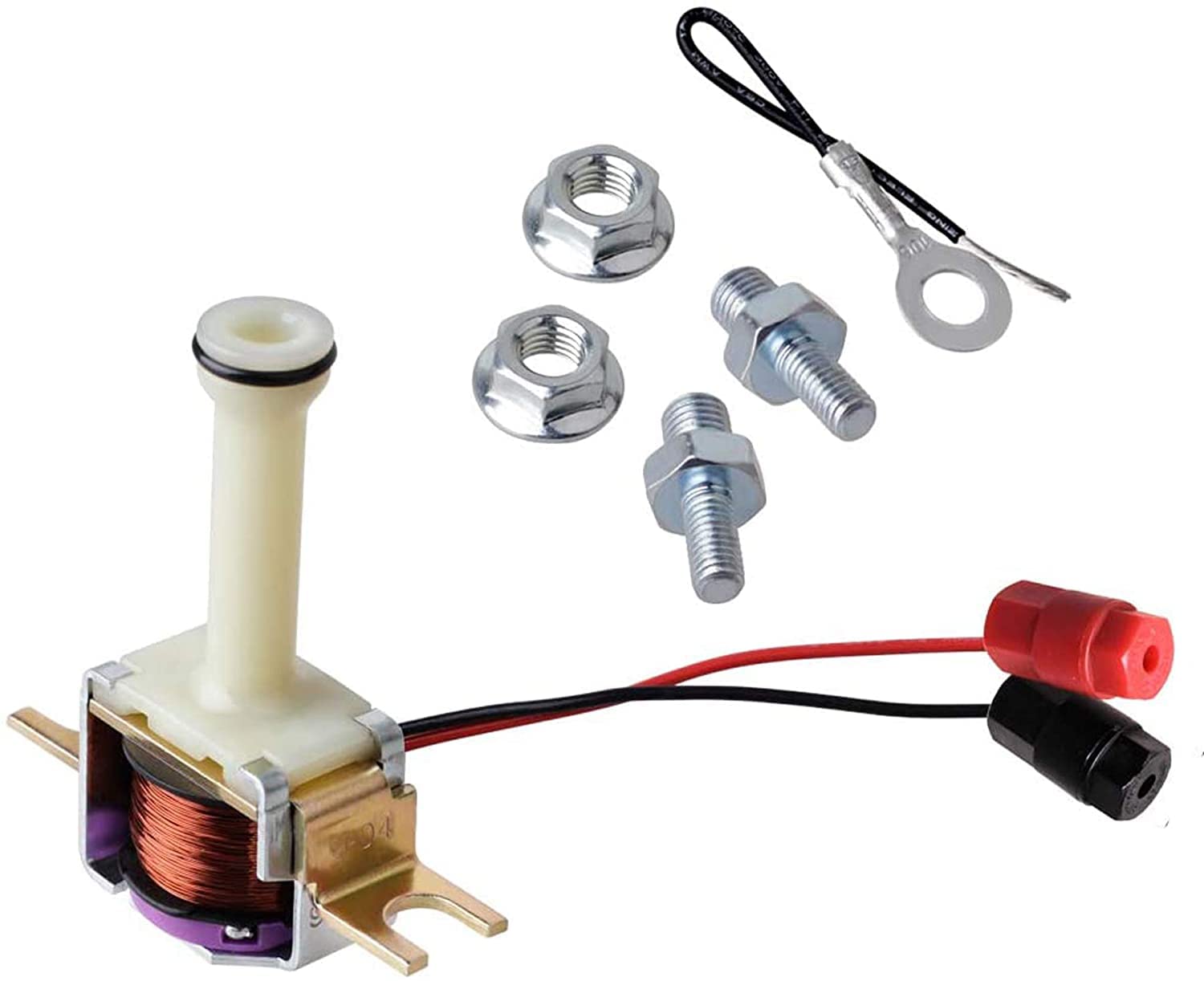
The torque converter clutch solenoid on the 4L60E controls hydraulic apply pressure to the TCC friction disc. When the solenoid fails or wears, it cannot maintain consistent apply pressure. The result is TCC shudder at highway speed, or a converter slip code. Which code you get depends on the year and the calibration, and this is where a lot of 4L60E diagnosis goes sideways: GM's P1870 (transmission component slipping) has covered TCC performance on the 4L60E since 1995, and per Sonnax's Gregg Nader, late-model 4L60E units can set either P1870 or P0741 depending on how the computer is programmed [4]. Do not assume the absence of P0741 means the converter clutch is fine — look for P1870 too, and note that on these trucks the transmission strategy lives in the PCM rather than a separate TCM.
Which solenoid you are dealing with matters just as much. Sonnax groups GM converter clutch circuits into three styles: a single on/off TCC enable solenoid, two solenoids (one enable plus one pulse width modulated), and a single TCC PWM solenoid [5]. The 4L60E moved from on/off to PWM in the mid-1990s, and the PWM system added a second solenoid to control the regulated apply valve [6]. Identify which architecture is in front of you before you start throwing solenoids at a shudder.
Symptoms
Shudder between 40 and 55 mph at light throttle. The vehicle feels like it is driving over rumble strips. P0741 stored in the TCM. Sometimes the check engine light cycles on and off as the solenoid functions intermittently. Fuel economy drops because the TCC is not fully locking and the torque converter is operating in fluid-coupling mode at highway speeds.
Diagnostic Steps
Before replacing the solenoid, check the fluid. TCC shudder on the 4L60E is frequently a fluid issue, not a solenoid issue. If the fluid is over-mileage and the friction modifier package is degraded, the TCC will shudder even with a good solenoid. Do the fluid service first, road test, and see if the shudder clears.
If it persists, watch TCC slip on the scan tool instead of guessing. Slip is engine RPM minus input shaft speed, and what counts as normal depends on the control strategy. Under plain PWM control the duty cycle ramps linearly from 0 percent unlocked to about 90 percent for full lockup. Under GM's later EC3 strategy the computer deliberately does not fully lock the clutch — it holds a controlled slip of roughly 20 to 40 RPM, stepping duty cycle to around 50 percent to start apply and up to 98 percent to fully lock under high load or freeway speed [6]. On an EC3 calibration, a steady 30 RPM of slip is the transmission working correctly, not a failure. Slip that climbs well past that window with duty cycle high is a real fault: solenoid, worn TCC valve bore, or a leak in the apply circuit. Check the solenoid's resistance against the service manual figure for your specific application and year rather than a single number off a forum — the on/off and PWM solenoids are not the same part.
One more trap worth knowing before you order a converter: the TCC friction lining is strategy-specific. GM changed it from paper to a high-carbon material when PWM arrived, and changed it again for EC3. Lining designed for an on/off system burns up under modulated slip, and PWM lining wears out prematurely in an EC3 application [6]. A converter that shudders again 5,000 miles after a rebuild is often the wrong lining for the calibration, not a bad solenoid.
DIY vs. Shop Call
TCC solenoid replacement on the 4L60E requires dropping the pan and removing the valve body. Doable for a competent DIY mechanic with patience and the right tools. The solenoid itself is inexpensive. The labor is the cost.
Failure 4: Sun Shell Fracture
What It Causes
The sun shell in the 4L60E is a stamped steel component that transfers torque between the front and rear planetary gear sets. It is a known weak point, especially on higher-torque applications -- trucks with larger engines or modified vehicles. When the sun shell fractures, the result is sudden and dramatic: the 1-2 shift fails completely, the transmission may jump to third gear only, or it may go into limp mode. The failure is almost always audible -- a crack or bang when it lets go.
Symptoms
Sudden onset, usually during acceleration. The vehicle was shifting normally and then was not. The driver often hears a noise when it fails. After failure: no 1-2 shift, or only third gear available, or complete loss of forward gears. This is not a progressive failure like clutch pack wear -- it is a structural fracture, and it happens quickly.
Diagnostic Steps
Pull codes. Drop the pan and inspect. Bright metal fragments in the pan with no clutch material points toward a hard part failure. If the pan shows clean metal shavings rather than black friction dust, you are looking at gear or shell damage rather than clutch pack failure. The unit needs to come out for inspection.
DIY vs. Shop Call
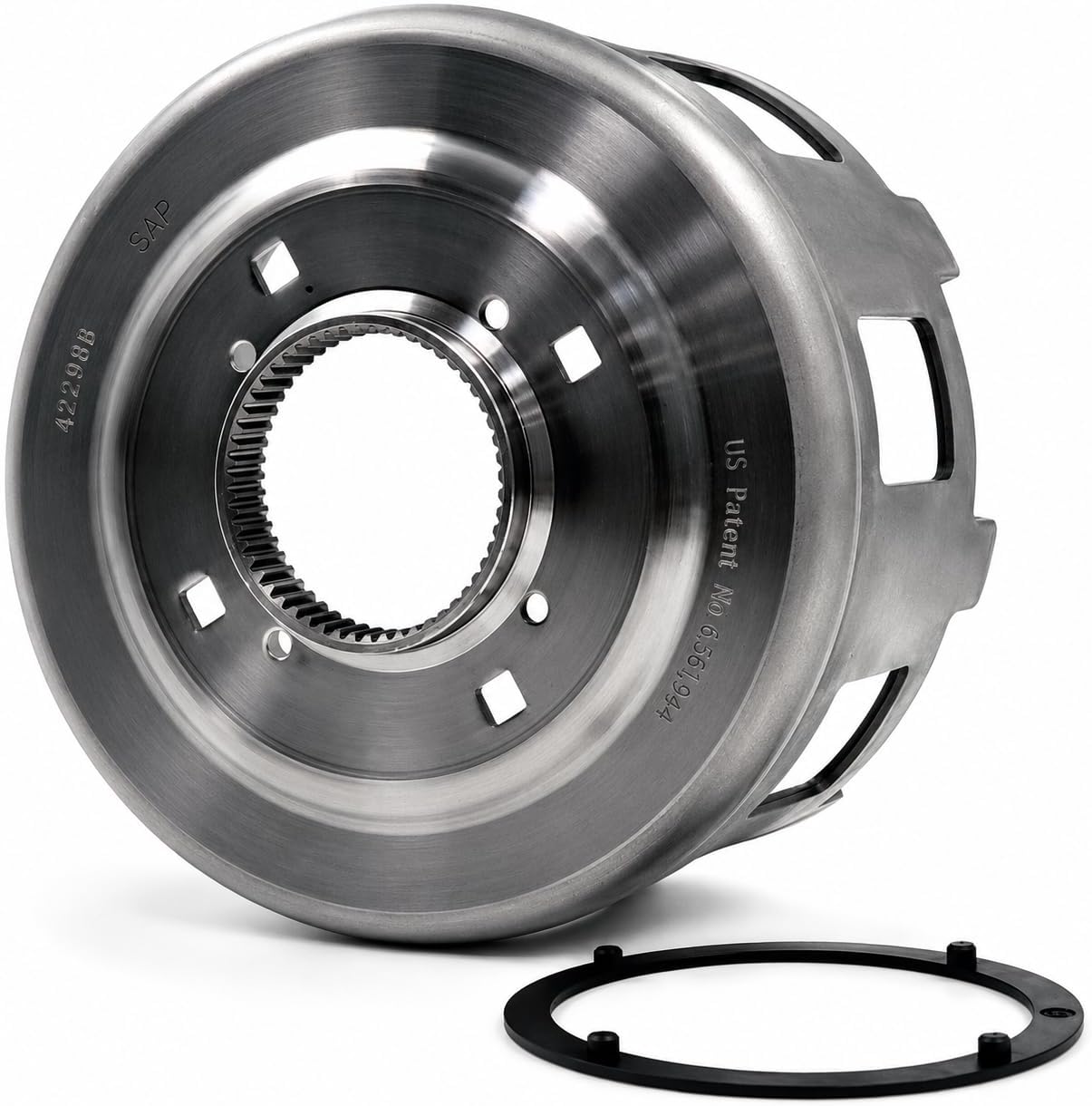
Sun shell fracture is an internal repair. Unit out, disassembly, replacement of the shell and inspection of the planetary gear sets for secondary damage. The OE stamped shell strips or cracks at the splines under load, and bulky aftermarket shells often still break and take the captured planetary bearing with them. The Sonnax SmartShell (77749-02K) is the common upgrade here: it uses a larger bearing and a custom roller clutch race to re-route thrust loads through the carrier and bypass that delicate bearing, which addresses the shell failure and the bearing damage at the same time [3]. Worth doing on any truck or performance rebuild rather than chasing a repeat failure.
The Fluid Maintenance Reality
A 4L60E that gets Dexron VI changes on a reasonable schedule -- 50,000 to 60,000 miles -- will outlast one that runs on degraded fluid by a significant margin. The 3-4 clutch pack failures and TCC solenoid failures I see most often come in vehicles that have never had the fluid changed. The fluid gets dark, the friction modifiers deplete, the clutch material starts absorbing contamination, and the wear rate accelerates. It is not complicated. It is just maintenance that gets deferred until something breaks.
The fluid service also gives you the chance to inspect the pan contents. Fresh fluid is a diagnostic tool as much as it is a maintenance item. Drop the pan, look at what is in it, change the filter, note the filter condition, refill with Dexron VI. That process takes less than an hour on a 4L60E and tells you exactly where the unit stands.
Shop 4L60E parts for these repairs
Servo kits, 3-4 clutch packs, TCC solenoids, reaction shells and master rebuild kits for the 4L60E, 4L65E and 4L70E — on our own checkout, shipped from the USA.
Shop 4L60E parts →Sources
- Sonnax — Oversized Servo Pin Kit 77787-03K. Backs the 2-4 servo pin bore repair for reconditioned 4L60/4L60E/4L65E/4L70E case bores and the dual-sealing-ring design that stops leakage past the pin. sonnax.com/parts/5523-oversized-servo-pin-kit
- Sonnax — 2nd Gear Super Hold Servo Kit. Backs the ~18% additional apply area over the OE "Corvette" servo and the dual-seal cross-leak fix tied to 2-4 band and 3-4 clutch failure. sonnax.com/parts/2481-2nd-gear-super-hold-servo-kit
- Sonnax — Solve Multiple 4L60/E Problems with the Sonnax SmartShell (77749-02K). Backs the OE reaction sun shell spline/breakage failure mode and the SmartShell's larger bearing and roller clutch race that re-route thrust through the carrier to protect the captured bearing. sonnax.com/tech_resources/537
- [4] Gregg Nader, Sonnax — Beyond 1870: GM Converter Codes P0741, P0742 and 1887. Backs P1870 as GM's manufacturer-specific TCC performance code in use on the 4L60-E since 1995, and the point that late-model 4L60-E units can set either P1870 or P0741 depending on computer programming. sonnax.com/tech_resources/120
- [5] Maura Stafford, Sonnax — GM TCC Circuits. Backs the three GM converter clutch circuit styles used to identify what you are working on: one on/off TCC enable solenoid, two solenoids (one enable plus one PWM), and a single TCC PWM solenoid. sonnax.com/tech_resources/137-gm-tcc-circuits
- [6] Sonnax — 20 Years Later: What's New with 4L60-E PWM Modifications. Backs the mid-1990s move from on/off to PWM control with a second solenoid added for the regulated apply valve, the linear PWM duty cycle from 0 percent unlocked to about 90 percent full lockup, the EC3 strategy's deliberate 20 to 40 RPM controlled slip with duty cycle stepping to about 50 percent to begin apply and up to 98 percent for full lock, and the TCC lining progression from paper to high-carbon to high-thermal-slipping material along with the premature-wear consequences of using the wrong lining for the calibration. sonnax.com/tech_resources/214
- General Motors — Preliminary Information PIP5071, "Squawk Or Grunt Noise On The 2-3 Shift," October 2012 (hosted by NHTSA). Backs the squawk/grunt on the 2-3 shift as a 3-4 clutch symptom on 2008-2013 GM applications with RPO M30, M32 or M70, and GM's specified repair of the 3-4 friction (654A) and steel (654B) plates plus apply plate (653) and selective backing plate (655). static.nhtsa.gov/odi/tsbs/2012/SB-10071954-7690.pdf
- ATRA / GEARS Magazine — Rise of the MAF. Backs burnt 3-4 clutches being caused by a line rise problem rather than the clutch itself, the mass airflow sensor as the most common failed input behind it, and the documented 4L60E stall-test line pressure swing of 150 psi down to 90 psi and back to 130 psi. gearsmagazine.com/magazine/rise-of-the-maf/