The 6L80 is GM's six-speed heavy-duty automatic. It went into Silverado 1500, Tahoe, Suburban, Yukon, Camaro SS and ZL1, CTS-V, and a few other high-torque applications starting around 2007. It is a stout unit compared to the 4L60E it replaced in many applications, but it has its own service requirements and failure modes. The "lifetime fluid" recommendation from GM is one of the least useful pieces of advice they have ever published for this transmission. Shops that follow it end up seeing the consequences at 150,000 miles.
For more GM and Chevy transmission resources, visit our GM hub page and Chevy hub page.
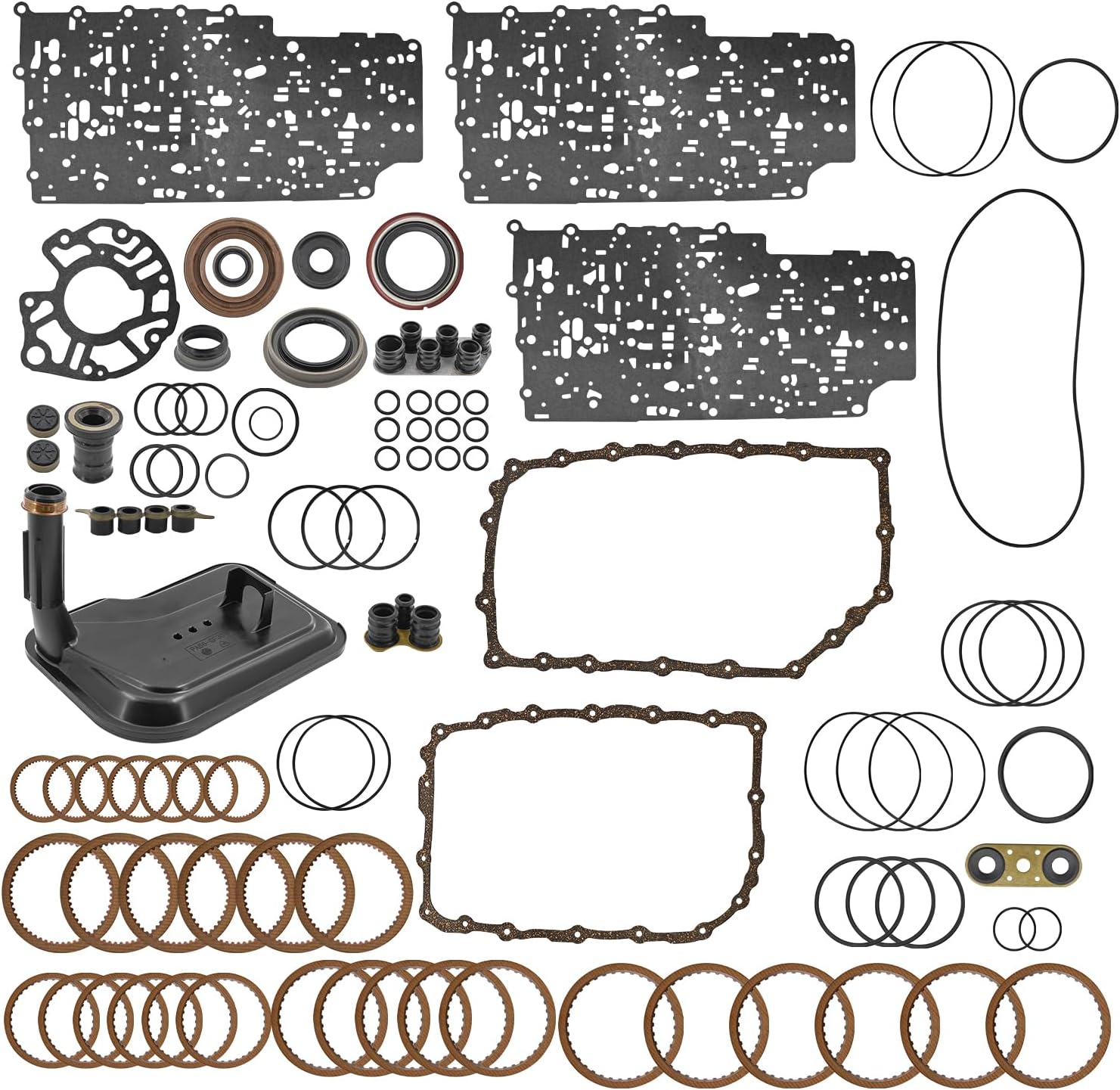
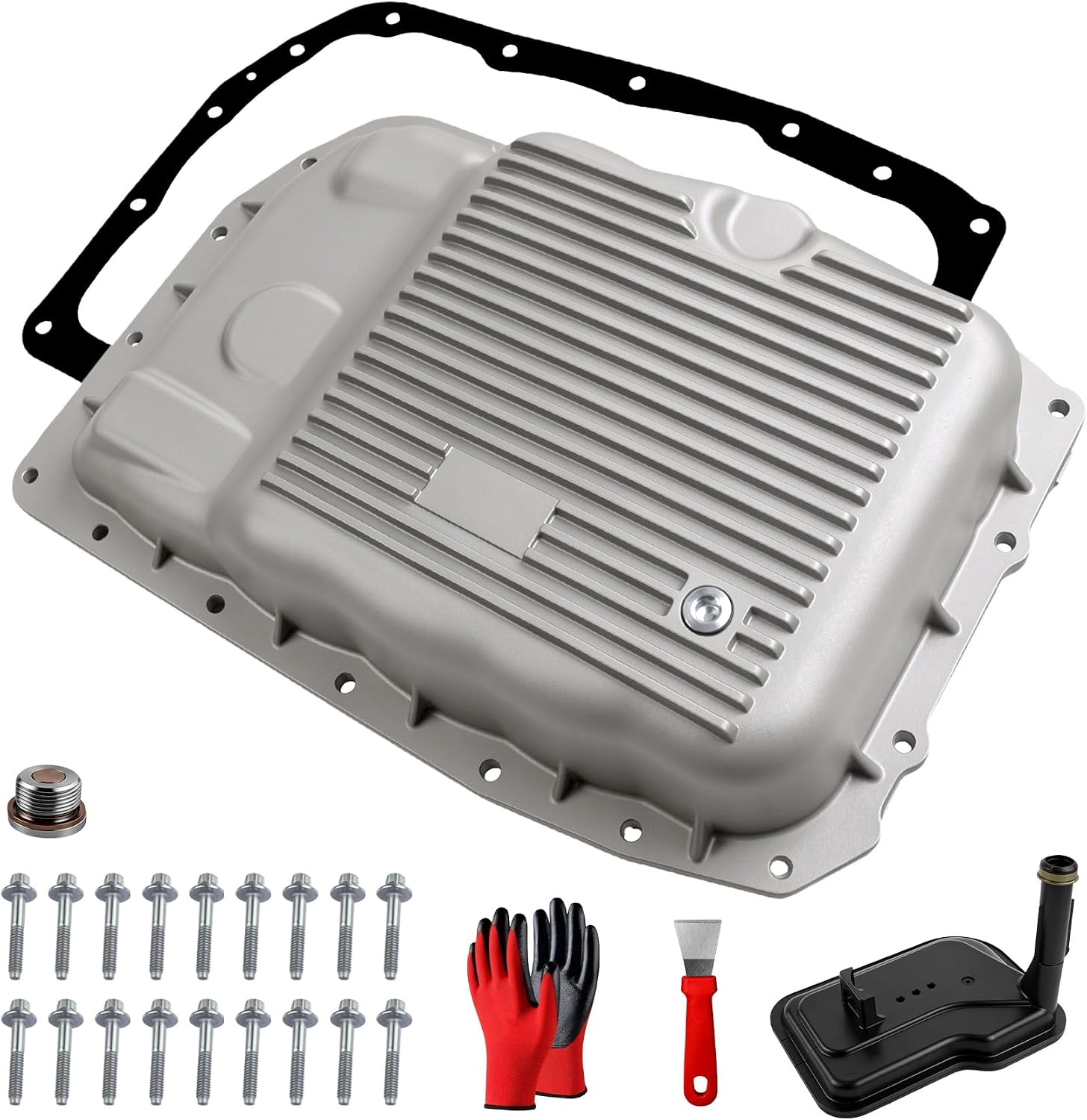
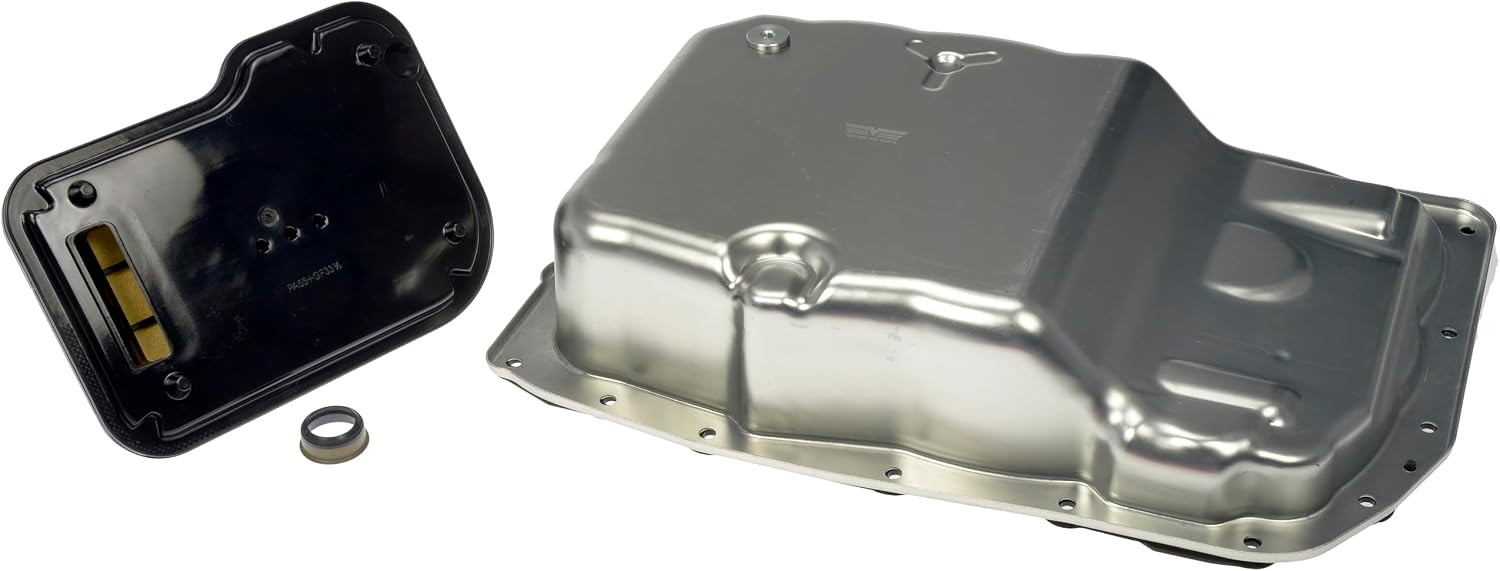
Fluid Specification: Dexron VI and Dexron HP
For 6L80 units through approximately 2019, the correct fluid is Dexron VI. Starting with 2020 and newer applications that use the 8L90 and some 6L80 variants, GM introduced Dexron HP (High Performance). These two fluids are not interchangeable in the direction that matters: you cannot use Dexron VI in an application requiring Dexron HP without potential shift quality issues. Dexron HP is backward-compatible with older units that called for Dexron VI, so if you have a shop situation where you need one fluid to cover both, Dexron HP covers the older applications. Confirm by checking the owner's manual or the fluid specification decal on the unit before you fill.
Dexron VI is the correct service fluid for most 6L80 applications a shop will see in 2026, since the majority of units in service are pre-2020. GM's own current transmission fluid capacity chart draws the line clearly by unit rather than by model year: the 6L80 (MYC) and 6L90 (MYD) are listed on DEXRON VI, the 8L80 and 8L90 on DEXRON HP, and the 10L80, 10L90 and 10L1000 on DEXRON ULV. If you are unsure what is under a truck, look up the RPO, not the year. Stock Dexron VI in quantity if you do GM work. GM's owner information for 6L80-equipped Silverados lists DEXRON-VI and an approximate capacity of 5.7 L (6.0 qt) for a pan removal and filter replacement on the 6L80-E, and 6.0 L (6.3 qt) on the 6L90-E. A dry unit after a rebuild takes considerably more, so fill to the level check rather than to a number.
Check the level the way GM wrote it for the six-speed: engine idling on level ground, lever run through each range, then read TRANS TEMP on the Driver Information Center. GM's hot check is done with fluid between 71-93°C (160-200°F); the cold check window is only 27-32°C (80-90°F) and is a reference until you can do the hot check. GM notes a low unit generally takes less than a pint to correct, so do not overfill.
Service Interval Reality
GM published "lifetime" fluid recommendations for the 6L80. When I say I see 150,000-mile units with sludge, I am not exaggerating. The fluid in these units turns dark by 60,000 miles in normal driving. Towing, hard use, or high ambient temperatures accelerate that. Sludged fluid does two things: it clogs the filter and it carries abrasive contamination through the valve body and clutch packs.
The service interval I recommend to every customer with a 6L80: first service at 50,000 miles, then every 50,000 miles or every three years, whichever comes first. If the vehicle is used for towing or sees sustained high temperatures, bring that to 30,000-mile intervals. This is more conservative than GM's recommendation and more expensive for the customer in the short term. It is significantly cheaper than a rebuild at 120,000 miles.
GM has since published something that makes the lifetime-fill position harder to defend. Bulletin 20-NA-142 covers shudder and surging on 6L80 and 6L90 trucks and states the cause outright: additives in the transmission fluid have been depleted during vehicle operation, specifically the additives that kept clutch slip rate consistent. The correction is three pan drops with 6 quarts of DEXRON VI at each fill, the transmission cycled through all six forward ranges, reverse and neutral between drops, and the filter (kit 24236933) replaced only on the final drain so the new element never sees old fluid. That is 18 quarts. Note the bulletin's own ceiling: it applies only at or under 50,000 km (30,000 miles), and above that GM calls for the torque converter and filter to be replaced instead. A fluid that wears out well before 30,000 miles is not a lifetime fill by any reading.
Drop Pan vs. Flush
The 6L80 does not have a traditional drain plug on most applications. Service involves either dropping the pan to drain, or using an evacuator through the fill port. The pan drop is always preferable for an initial service or any service where you have not seen the pan contents recently. The reason: the pan tells you the condition of the unit.
Do not use a pressure flusher on a 6L80 that has clutch material in the pan. Pressure flushing circulates the contaminated fluid back through the valve body at higher velocity than normal operation. On a unit with a worn filter and clutch debris in the pan, flushing can move that debris into the valve body bores and solenoid passages. Drop the pan, inspect it, change the filter, and do a drain-and-fill with fresh fluid. That is the correct service procedure.
It is worth knowing what GM's own machine procedure looks like, because it is not a flush either. In 20-NA-142 the DT-45096 TransFlow reservoir is filled with 17 quarts, the thermal bypass valve and cooler pipe assembly come off and a DT-53040 adapter block goes on in their place (bolt to 22 N-m / 16 lb-ft), and the exchange runs in measured rounds: add fluid, start the engine, run 30 to 45 seconds until exactly 4 quarts are expelled into a graduated bucket, shut it off, repeat. Fluid in equals fluid out, the engine drives its own pump, and nothing is pushed backward through the unit. GM also torques the level set plug to 9 N-m (80 lb-in), which is inch-pounds into aluminum and is routinely overtightened. GM's published warranty time for the pan and filter job is labor operation 8481018 at 1.2 hours, with 0.6 to 1.5 hours added depending on body style and whether the truck has a fill tube.
What the Pan Tells You
A healthy 6L80 pan drop at 60,000 miles shows fluid that is darker than new but not black. There may be a very fine metallic film on the pan magnet -- this is normal wear material and does not indicate a problem. What you do not want to see: black clutch friction material (indicates clutch pack wear or burnout), large metal particles or flakes (indicates gear or hard part damage), or a filter so clogged it has collapsed (indicates severely overextended service interval).
While the truck is on the hoist, check the thermal bypass valve, because it decides how hot the fluid ever gets. GM's PIP5882 gives the numbers for 2014-2021 6L80 (MYC) and 6L90 (MYD) units: the original valve starts to open between 180 and 187°F (82-86°C) and is fully open at 194°F (90°C), while the updated valve released under TSB 21-NA-199 starts at 138-145°F and is fully open at 158°F (70°C). The field test takes five minutes: drive it to roughly 190°F so the valve is definitely open, then shoot the pan, the valve and both cooler lines about six inches from the valve with an infrared thermometer. The line heading out to the cooler should read hotter than the pan and the return line cooler. If both lines read cooler than the pan and the valve reads hotter, the valve is not opening. If the pan runs 10 to 15°F hotter than the cooler line, GM says replace it. And if the scan tool temperature is more than 15° above the pan, suspect the sensor in the TEHCM rather than the cooling circuit.
P0894: The Code Shops Most Often Get Wrong
P0894 is "Transmission Component Slipping." Most shops see this code and immediately start talking about internal clutch pack failure and a rebuild. In the majority of 6L80 cases, that is the wrong conclusion.
P0894 is set when the TCM detects a ratio mismatch -- the transmission is in a commanded gear but the input-to-output speed ratio does not match what that gear should produce. The most common cause on the 6L80 is not worn clutch packs. It is a pressure control solenoid (PCS) that is not maintaining correct line pressure in the affected range. The solenoid allows clutch pack slip under load because the apply pressure is insufficient -- not because the clutch pack is worn.
The diagnostic sequence for P0894: first, check fluid level and condition. Low fluid causes pressure drops that look like solenoid failure. Second, verify the code with live data: check which gear shows the slip. Third, pull bidirectional solenoid activation tests if your scanner supports it -- the Autel MS906BT can command individual solenoids to activate and monitor the response. A solenoid that tests in-spec on resistance but does not respond normally to commanded activation is failing mechanically, not electrically.
The hydraulic side matters just as much as the solenoid. Sonnax's 6L80/6L90 vacuum test guide lists a worn pump pressure regulator valve as a cause of erratic, high, or low line pressure and clutch slippage, and a worn boost assembly as a cause of low line rise in Drive and burnt clutches. Vacuum test those bores before you condemn the clutches. Replacing the clutch pack based on P0894 alone, without ruling out the pressure circuit, is how shops end up with comebacks. The rebuilt pack slips for the same reason the original did -- insufficient apply pressure from a failing solenoid.
Cold 2-3 flare on a 2012 5.3L truck
Not every flare is a slip. GM bulletin PI0952 covers 2012 Avalanche, Silverado, Suburban, Tahoe, Sierra, and Yukon trucks with the 5.3L and 6L80 (RPO MYC) that flare on the 2-3 shift when fluid temperature is 25°C (77°F) or lower, usually on the first few shifts after sitting for hours. The fix is a revised TCM calibration, and GM warns it should only be installed when the customer describes that exact concern.
The 8L90 Confusion
The 8L90 is GM's 8-speed automatic that replaced the 6L80 in many applications starting around 2015. The two units look different externally but service in similar environments. The 8L90 has a documented shudder issue that is separate from TCC shudder -- it occurs during low-speed, light-throttle driving and has been traced to torque management calibration and in some cases the clutch apply calibration. GM issued several TSBs addressing 8L90 shudder. If a customer brings in a 2015 or newer Silverado or Corvette with shudder complaints, confirm whether it has a 6L80 or 8L90 before applying the same diagnostic path to both.
Sources
- General Motors — 2012 Chevrolet Silverado Owner Manual. Backs: DEXRON-VI fluid, 6L80-E pan and filter capacity of 5.7 L (6.0 qt), 6L90-E 6.0 L (6.3 qt), the six-speed hot (71-93°C) and cold (27-32°C) check windows, and the less-than-a-pint top-off note. GM Owner Center: 2012 Silverado owner manual (PDF)
- General Motors Preliminary Information PI0952, 2-3 Shift Flare Cold (via NHTSA). Backs: the cold 2-3 flare at or below 25°C on 2012 5.3L/6L80 trucks and the revised TCM calibration. static.nhtsa.gov/odi/tsbs/2013/MC-10130650-9999.pdf
- Sonnax — GM 6L45, 6L50, 6L80, 6L90 Vacuum Test Guide. Backs: pressure regulator valve wear causing erratic line pressure and clutch slippage, and boost assembly wear causing low line rise and burnt clutches. sonnax.com/tech_resources/439
- General Motors, TechLink — Transmission Capacities & Fluids (2025 edition). Backs: the 6L90 (MYD) fluid change capacity of 5.7 L / 6.0 qt on DEXRON VI, and the split between DEXRON VI on the 6-speeds, DEXRON HP on the 8L80/8L90 and DEXRON ULV on the 10L80/10L90/10L1000. gm-techlink.com — transmission fluid capacities (PDF)
- General Motors, Service Bulletin 20-NA-142, May 2022 (hosted by NHTSA). Backs: depleted fluid additives as the stated cause of 6L80/6L90 shudder and surging; the three-drain correction at 6 quarts of DEXRON VI per fill with the filter replaced on the final drain; the 50,000 km / 30,000 mile ceiling above which the torque converter and filter are replaced instead; filter kit 24236933; the 17-quart DT-45096 TransFlow exchange with measured 4-quart expels; level set plug torque of 9 N-m (80 lb-in) and cooler line bolt torque of 22 N-m (16 lb-ft); and labor operation 8481018 at 1.2 hours plus the 0.6, 1.0 and 1.5 hour add-on times. static.nhtsa.gov/odi/tsbs/2022/MC-10213032-0001.pdf
- General Motors, PIP5882, October 2022 (hosted by NHTSA). Backs: thermal bypass valve opening temperatures on 2014-2021 6L80 (MYC) and 6L90 (MYD) units, 180-187°F to fully open at 194°F on the original valve versus 138-145°F to fully open at 158°F on the TSB 21-NA-199 replacement; and the infrared pan / valve / cooler line comparison used to decide between a stuck valve and a bad TEHCM temperature sensor. static.nhtsa.gov/odi/tsbs/2022/MC-10226356-9999.pdf