Honda started putting CVTs into the Accord, CR-V, HR-V, and Fit starting around 2014-2015 depending on the model. The CVT in these vehicles uses a steel push belt running between two variable-diameter pulleys. It is not a chain CVT. It also is not a stepped torque converter automatic, though it does use a torque converter to launch, which matters more than it sounds: Honda service bulletin 18-072 traces a cold-start stall in Reverse on 2015-2016 CR-V and Accord L4 CVT models to excessive oil clearance between the input and stator shafts, which lets fluid drain out of that converter and traps air on refill, applying the lock-up clutch and killing the engine within the first 10 to 14 seconds. The maintenance requirements are different from any other Honda transmission, and the failure mode when those requirements are ignored is expensive -- replacement costs run $3,000 to $5,000 at a shop.
The biggest single mistake I see is using the wrong fluid. The second biggest mistake is not servicing it at all because Honda's service intervals are optimistic.
See all Honda transmission resources and email courses on our Honda hub page.
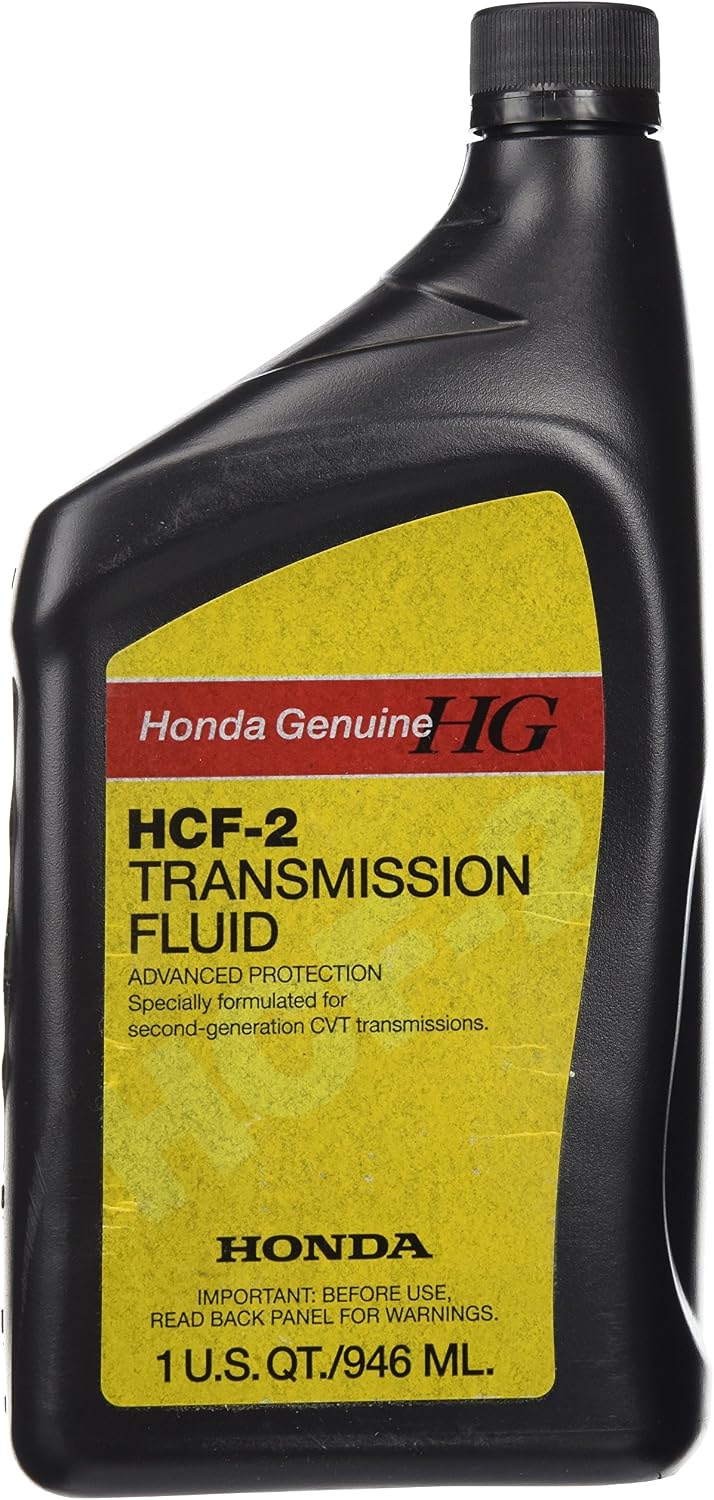
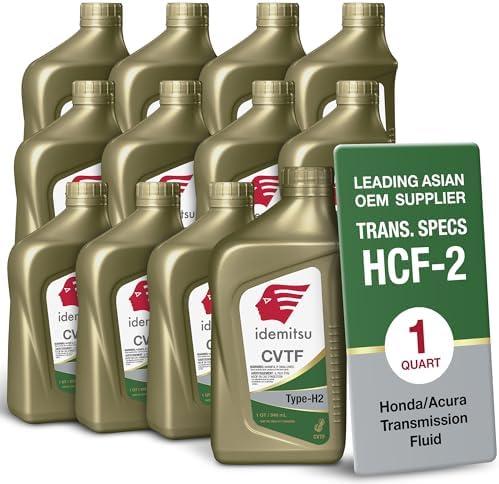
The Fluid Problem: DW-1 vs. HCVTF
Honda makes two different automatic transmission fluids. Honda DW-1 is for Honda torque converter automatics -- the traditional hydraulically-coupled transmissions in older Accords, Pilots, Ridgelines, and other vehicles that use a conventional automatic. HCVTF is Honda CVT Fluid, formulated specifically for the steel push belt CVT design.
These two fluids are packaged in similar bottles, they are both made by Honda, and they look nearly identical. They are not interchangeable, and Honda's own bulletins make the split concrete. Bulletin 17-003, covering a CVT valve body repair on 2016-2017 Civic 1.5L CVT models, lists Honda Genuine HCF-2 CVT Fluid, part number 08200-HCF2, as the required material. Bulletin 17-017, covering the V6 six-speed torque converter automatic in the 2013-2017 Accord, calls for Honda ATF DW-1, part number 08200-9008. Different transmission, different fluid, different part number on the shelf. The friction coefficient requirements for a CVT belt-and-pulley system are completely different from what a torque converter clutch pack needs. HCVTF is formulated to allow the belt to grip the pulleys with the correct friction characteristics for efficient torque transfer without slippage. DW-1 is not formulated for that purpose.
What Happens When You Use the Wrong Fluid
When DW-1 goes into a Honda CVT -- whether by accident during a top-off, by a shop that did not verify the specification, or by an owner who grabbed the wrong Honda bottle -- the belt operates with incorrect friction characteristics. The immediate result is usually belt slip, which shows up as the rubber-band acceleration feeling. The belt is not gripping the pulleys correctly at the torque levels required. Over time, belt slip generates heat, and heat degrades the fluid faster than normal. Honda has documented that mechanism on the fluid side directly: in bulletin 17-017 the company investigated a lock-up clutch judder felt between 20 and 60 mph, found the converter itself was not at fault, and concluded the judder was caused by transmission fluid that deteriorates quicker than expected when exposed to intermittent high heat loads under specific driving conditions. The fix was a software update to hold fluid temperature in range, plus a flush. Degraded fluid causes more slip. The belt surface wears. At some point the damage is irreversible and the CVT needs replacement.
The insidious part is that the vehicle may feel only slightly off at first. The rubber-band sensation might be attributed to "how CVTs feel." By the time the symptoms are obvious, significant belt wear has already occurred.
How to Tell If You Have a CVT or a Conventional Automatic
This matters before you do anything. Not all Hondas with these model years have CVTs. The Honda Pilot, Odyssey, Passport, and Ridgeline use a conventional torque converter automatic (9-speed or 6-speed ZF-sourced unit). The CVT is used in the Accord 4-cylinder, CR-V, HR-V, and Fit for the years where CVT was the standard transmission.
The easiest check: look at the gear selector positions. A CVT will show P-R-N-D-S or P-R-N-D-L without numbered gear positions. A conventional automatic with multiple gears may show gear positions numbered 1-7 or higher in the selector or on the display. Also, pull the ATF fill cap or check the owner's manual -- it will specify either HCVTF or DW-1 clearly. Never guess on this.
Service Interval: What Honda Says vs. What Reality Is
Honda's published interval for HCVTF is "inspect at 90,000 miles, replace if necessary." That interval was written for vehicles in normal driving conditions and is based on the fluid maintaining its properties under those conditions. In practice, most CVT fluids -- including HCVTF -- show significant degradation by 45,000 miles in average use.
The service interval I recommend: every 30,000 miles in severe service (frequent short trips, towing, hot climates, stop-and-go commuting), every 45,000 miles in normal service. This is more conservative than Honda's recommendation. The cost of three fluid services over 90,000 miles is dramatically less than one CVT replacement.
HCVTF is more expensive than conventional ATF. Plan on $8-12 per quart versus $5-7 for Dexron VI. For a drain-and-fill that recovers 3-4 quarts, the cost difference is $10-20 per service. That is not an argument for skipping the service or substituting a cheaper fluid.
Symptoms of CVT Trouble
One caution before you condemn anything on a CVT. Writing in GEARS, ATRA's Jarad Warren notes that about 60 percent of the ATRA field calls he takes on Jatco CVTs turn out to be a weak battery or a fault in another system rather than the transmission, with ABS codes and wheel speed sensors as the repeat offenders. That is a Nissan-family unit rather than a Honda, but the discipline transfers directly: load test the battery and scan every module for codes before you sell a Honda CVT owner any transmission work.
Rubber-Band Acceleration
The most common CVT complaint. Engine RPM rises but vehicle speed does not follow proportionally. There is a delay between throttle input and vehicle response. Mild cases: the vehicle feels sluggish and the power delivery feels disconnected. Severe cases: the RPM flares to 4,000 or more while the vehicle barely accelerates. This is belt slip. Early stage belt slip is often fluid-related. Late stage belt slip indicates belt or pulley damage.
Shudder Under Load
The vehicle shudders during acceleration from a stop or during uphill driving under load. The shudder is often mistaken for engine issues. It occurs because the belt is gripping and releasing inconsistently against the pulley faces. Degraded fluid is the primary cause. A fluid service with fresh HCVTF resolves this if the belt itself is not damaged.
Hunting at Highway Speed
The transmission seems to hunt for the correct ratio at steady cruise, causing slight RPM variation even under constant throttle. In a healthy CVT, highway cruise should be smooth with stable RPM. Hunting indicates the hydraulic control system is struggling to hold a stable ratio -- typically a fluid pressure issue caused by degraded fluid or a failing pressure control solenoid.
CVT Fluid Service Procedure
The Honda CVT does not have a traditional drain plug on all models. Some have a drain bolt on the CVT case; others require fluid evacuation through the fill port or using a hand pump through the dipstick tube where applicable. Check the specific model before starting the service.
For models with a drain bolt: drain completely, measure the amount drained, refill with the same volume of fresh HCVTF. Do not overfill. The CVT is more sensitive to overfill than a conventional automatic because overfill causes aeration in the hydraulic circuit, which disrupts ratio control.
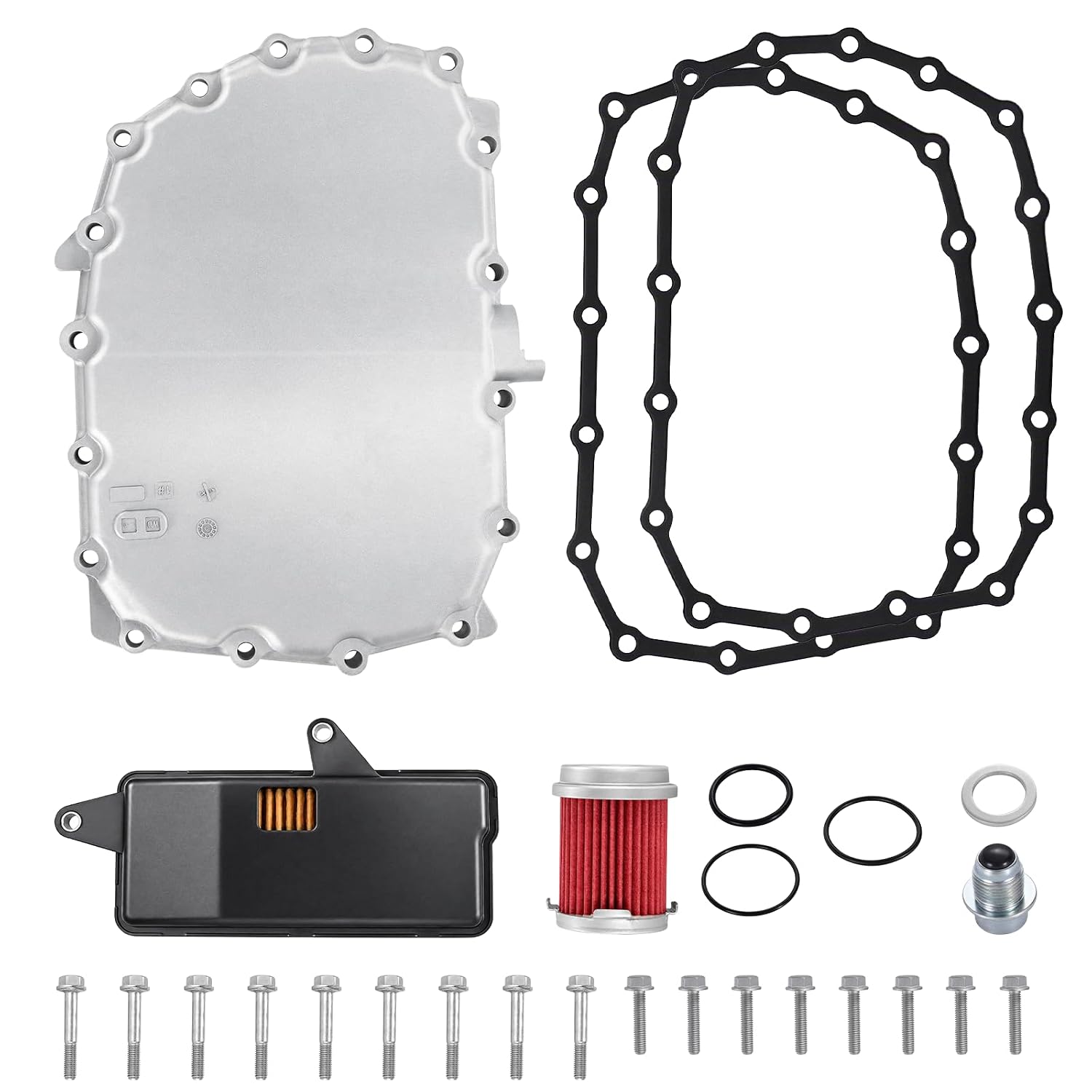
For fluid evacuation using the Mityvac or similar tool: pull as much fluid as you can through the fill/check port, then refill. You will not recover 100% of the fluid this way, but recovering and replacing 60-70% with fresh fluid significantly improves fluid condition. This method is acceptable for a maintenance service on a unit with known-good fluid history. For a first service on unknown history, drop the pan if accessible to inspect for belt material.
Setting the level, and what the magnet is telling you
Two things separate a CVT fluid service from a conventional one, and Transmission Digest spells out both. First, the level has to be set at a specific fluid temperature read off the sensor mounted to the valve body. Guessing the temperature or shooting the pan with an infrared thermometer is not an option, because fluid volume changes as it heats and most CVT coolers are thermostat-controlled and will not circulate at all until a set temperature is reached. Second, debris on the magnet at a first fluid change is not automatically a death sentence. Per Transmission Digest, seeing a lot of metal on the magnet and pickup screen during the first fluid change is normal for a CVT — it comes off the chain or belt, and the fluid path is designed so the magnets, pickup and inline filter capture it. Judge the belt by how the unit drives and by visible scoring on the elements, not by the first magnet you pull.
The overfill sensitivity has a mechanism worth naming. Too little fluid lets air into the valve body feeding the variators; too much lets moving parts whip air into the fluid. Either way the aerated fluid changes how the solenoids and pulleys position the plates, and you end up chasing slipping and incorrect-ratio codes that are really a fill-level problem. And if you intend to pressure test one of these, note that CVT circuits run high enough that Transmission Digest calls for a gauge rated to 1,000 psi or higher. A standard automatic transmission gauge will not cover it.
When the CVT Is Past Saving
Once the steel belt shows wear -- visible scoring or shiny high spots on the belt elements -- the unit needs replacement. A worn belt causes pulley face wear, and replacing just the belt in a unit with worn pulleys results in continued belt slip. CVT repair at a component level is not practical for most shops; the rebuild cost approaches or exceeds the cost of a remanufactured unit.
The remanufactured Honda CVT market has improved significantly in the past few years. Quality reman units with warranties are available. For a shop, quoting a CVT replacement versus a rebuild is a different calculation than it is for a conventional automatic. Document the fluid condition at intake -- if the CVT failure is clearly caused by wrong or neglected fluid, that is relevant to any warranty discussion with the customer.
Need parts for this job?
Rebuild kits, hard parts, solenoids, valve bodies, filters, gaskets and the correct fluid for this unit — shipped fast from the USA on secure checkout.
Shop CVT parts →Sources
- American Honda — Service Bulletin 17-003, "CVT Makes a Grinding Noise on Hot Restart," March 22, 2017 (hosted by NHTSA). Backs the HCF-2 requirement and part number: covering 2016-2017 Civic 1.5L CVT models, the bulletin lists Honda Genuine HCF-2 CVT Fluid, part number 08200-HCF2, as the required material, alongside lower valve body kit 06270-5CG-306, and traces the noise to a pressure control valve vibrating in the CVT lower valve body on a hot restart. static.nhtsa.gov
- American Honda — Service Bulletin 17-017, "2013-17 Accord: Judder from the Torque Converter Lock-Up Clutch," March 4, 2017 (hosted by NHTSA). Backs both the DW-1 contrast and the heat-degrades-fluid mechanism: the V6 six-speed automatic calls for Honda ATF DW-1, part number 08200-9008; the judder felt between 20 and 60 mph was not caused by the torque converter but by transmission fluid that deteriorates quicker than expected under intermittent high heat loads, corrected with a software update and a flush. static.nhtsa.gov
- American Honda — Service Bulletin 18-072, "Engine Stalls In Reverse Shortly After Cold Start," October 15, 2019, Version 2 (hosted by NHTSA). Backs the converter detail and the cold-start stall pattern on 2015-2016 CR-V and 2015-2016 Accord L4 CVT models: too much oil clearance between the input and stator shafts lets ATF drain out of the torque converter during extended off periods, air is trapped when it refills on a cold start, the lock-up clutch applies, and the engine stalls in the first 10 to 14 seconds after shifting to Reverse. static.nhtsa.gov
- Transmission Digest, Andrew Markel, "CVT maintenance basics" (August 2023) — backs the three ways CVT fluid differs from conventional ATF (belt and chain wear protection, high shear stability for the variator pressures, and compatibility with the forward, reverse and start clutch friction materials), the requirement to set fluid level at a specified temperature read from the valve-body sensor rather than an infrared thermometer, the thermostat-controlled cooler that will not circulate until temperature is reached, the fact that heavy metal debris on the magnet and pickup screen at a first CVT fluid change is normal and comes off the belt or chain, the aeration mechanism behind both underfill and overfill producing slipping and incorrect-ratio codes, and the 1,000 psi minimum gauge rating for CVT pressure testing. transmissiondigest.com
- GEARS Magazine (ATRA), Jarad Warren, "Tips and Tricks: Jatco CVT Diagnostics" — backs the field-call statistic that roughly 60 percent of the ATRA calls fielded on these CVTs trace to a bad battery or a fault in another system rather than the transmission, and that ABS codes and wheel speed sensors are the common offenders, supporting the battery-and-full-module-scan step before any CVT repair is sold. gearsmagazine.com