The 48RE is the four-speed automatic that Chrysler paired with the 5.9L Cummins diesel in the 2003 to 2007 Dodge Ram 2500 and 3500. It is an evolution of the 47RE, which itself descended from the venerable A727 Torqueflite. The DNA is decades old. The 48RE added electronic governor pressure control, a revised torque converter, and updated clutch packs to handle the torque output of the Cummins diesel. Despite the updates, the 48RE has a well-earned reputation for being the weak link in the Cummins Ram drivetrain.
The 5.9L Cummins makes 610 lb-ft of torque at the crank in stock form. The 48RE was designed to handle that -- barely. Add a tuner, which almost every Cummins owner does, and the transmission becomes the failure point. I rebuild more 48RE units than any other Chrysler transmission, and the failure patterns are consistent. Here is what breaks and why.
When the 6.7L Cummins arrived in the 2007.5 RAM trucks, Chrysler replaced the 48RE with the 68RFE six-speed automatic. The 68RFE addressed some of the 48RE's shortcomings -- primarily by adding two gear ratios and electronic shift control -- but it brought its own set of problems under high torque loads. If you work on both generations of Cummins trucks, that guide covers the 68RFE rebuild side of things.
For more Dodge and RAM transmission resources, visit our Dodge hub page and RAM hub page.
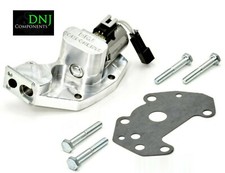
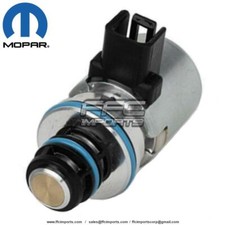
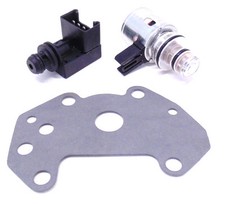
Failure 1: Governor Pressure Solenoid and Transducer
What It Does
The 48RE uses an electronic governor pressure system to control shift points. The governor pressure solenoid and the governor pressure transducer work together -- the solenoid creates the hydraulic pressure and the transducer reports the actual pressure back to the PCM. When either component fails, the transmission loses accurate shift point control.
Symptoms
Late or erratic shifts. The transmission may hold gears too long, shift at random points, or refuse to upshift under light throttle. In some cases, the transmission defaults to maximum line pressure and all shifts become extremely harsh -- this is the PCM's limp-mode strategy when it loses governor pressure feedback. Codes P0748 (Governor Pressure Solenoid) and P0871 (Governor Pressure Transducer) are common.
What to Do
Replace both the solenoid and the transducer at the same time. They are inexpensive parts and the labor overlaps completely -- the valve body must come out to access either one. Replacing only the solenoid and leaving a marginal transducer just means the valve body comes off again in six months. The parts are under $100 for the pair. Use OEM or Mopar-spec replacements. Aftermarket governor pressure solenoids vary widely in quality.
When New Electronics Do Not Fix It
If you have already replaced the solenoid and transducer and the shift timing still drifts with fluid temperature, stop buying electronics and look at the casting. Per Sonnax, governor oil leaving the solenoid strokes the 1-2 and 2-3 shift valve governor plugs, and wear at the large diameter of those plug bores lets governor pressure leak past them. The signature is a 1-2 shuttle, oversensitive 2-3 and 3-2 shifts, early upshifts, and shift timing you cannot dial in with the TV linkage. Sonnax makes the key point directly: once that leak exists, solenoid and transducer feedback is too slow to compensate for the oil loss. A drop-in governor bore plug kit with PTFE seals (Sonnax 22771-14K) salvages the valve body rather than replacing it. Note that the bore diameter in some 48RE units runs smaller, which can cause reamer piloting problems if you go oversized instead.
On 2005-and-later diesel trucks, add one more suspect to the erratic-shift list. Per Transmission Digest, Dodge replaced the TV cable with a transmission throttle valve actuator (TTVA) on the 48RE in diesel 2500 and 3500 Rams starting in 2005. There is no adjustment; the actuator is initialized by holding the ignition on for at least 30 seconds while the module looks for at least 48 degrees of span. The throttle shaft adjustment bolt on the pressure regulator spring bracket should sit 0.905 in. from the bracket, and a cable-era bracket at 0.820 in. will set P1751 or P1752 on a unit that is otherwise fine. The full code range is P1749 through P1755.
Failure 2: Torque Converter Failure
What Happens
The stock 48RE torque converter is the most common catastrophic failure point on tuned Cummins trucks. The converter lockup clutch is undersized for the torque output, especially with any performance tuning. When the lockup clutch slips, it generates enormous heat. It is worth knowing where the clamping force is supposed to come from: per Sonnax, in fourth gear or in third with lockup applied, the 48RE pressure regulator exhausts two reduction points and raises line pressure roughly 22 to 28 psi, versus roughly 10 to 15 psi on a 46/47RE. That extra boost is the converter clutch's holding pressure. This is why a 46/47RE valve body dropped into a 48RE — a common move when a good 48RE core cannot be found — runs fine at first and then comes back with a failed torque converter clutch or a burned overdrive clutch. That heat destroys the clutch material, contaminates the fluid, and sends debris through the entire transmission. A converter failure on a 48RE is rarely just a converter replacement -- the debris typically requires a full rebuild.
Symptoms
TCC shudder at lockup speeds, usually 40 to 55 mph. Fluid temperature climbing rapidly during highway driving or towing. Dark or burned fluid that appeared suddenly -- the fluid was fine at the last service and now it is black. In severe cases, the converter ballooning -- the converter housing deforms under heat and centrifugal force, which causes a vibration at speed that feels like a driveline balance issue.
What to Do
On a stock-power 5.9L Cummins, the stock converter will survive if the fluid is maintained and the transmission is not overheated. On any tuned truck, the stock converter should be replaced proactively with an aftermarket unit rated for the actual torque output. A single-disc billet converter from a reputable manufacturer like Goerend, SunCoast, or BD Diesel is the standard upgrade. This is not optional on a tuned truck -- it is a question of when the stock converter fails, not if.
Failure 3: Overdrive Clutch Pack Burnout
What It Does
The overdrive clutch pack engages fourth gear on the 48RE. It is the highest gear and the one that is applied during sustained highway driving and towing. The overdrive clutch pack is the most common clutch failure in the 48RE because it is applied during the highest-load conditions and is the most sensitive to heat.
Symptoms
Loss of fourth gear. The transmission shifts normally through first, second, and third, but either refuses to engage fourth or engages it momentarily and then slips. Under towing loads, the overdrive clutch pack is the first to fail because it sees the highest sustained torque while the converter is in lockup. The customer may report that the truck "drops out of overdrive" on hills while towing.
What to Do
This is a rebuild item. The unit comes out. When rebuilding, upgrade to a Kolene-treated overdrive clutch hub, add an extra friction disc if the drum allows it, and use high-energy clutch frictions. The stock overdrive clutch pack in the 48RE is marginal by design. Every reputable 48RE rebuild includes upgraded overdrive clutch capacity.
Failure 4: Output Shaft Breakage
What It Does
The output shaft on the 48RE transmits torque from the transmission to the transfer case. The stock output shaft is adequate for stock power, but it is a known failure point on trucks with performance tuning, especially those making over 500 lb-ft at the wheels. The shaft fractures under high-torque load, typically during hard acceleration from a stop or during aggressive towing acceleration.
Symptoms
Sudden and complete loss of drive. The engine revs freely but the truck does not move. There may be a loud crack or bang at the moment of failure. Unlike a clutch pack failure, which is progressive, an output shaft failure is instantaneous. The truck was moving and then it was not.
What to Do
On a stock-power truck, the output shaft is generally adequate. On any truck with performance tuning, an upgraded billet output shaft should be installed during the next rebuild or during a proactive upgrade. This is one of those parts that costs $200 to $400 and prevents a $4,000 tow bill and a catastrophic failure on the highway.
One Diagnostic That Saves a Pump
A hot stall in Reverse on any RE-series unit usually means a pump that is not flat, and Transmission Digest documents how deceptive that is — the pump looks pristine, and it takes pressure-indicating film between the pump halves to show where the mating surfaces are off. But the 48RE has a failure the earlier units do not. Its TCC solenoid is fed forward clutch pressure from the manual valve in any Drive range rather than second-gear oil off the 1-2 shift valve, so a mechanically stuck TCC solenoid can fully apply the converter clutch the moment Drive is selected and stall the engine. Practical rule: a stall in Reverse points at the pump or a restricted cooler; a stall in Drive but not Reverse on a 48RE is the TCC solenoid. Shops lose whole afternoons replacing a pump for the second symptom.
The Tuning Problem
I need to address this directly because it is the root cause of most 48RE failures I see. The 5.9L Cummins is an incredibly tunable engine. A simple programmer can add 100 to 150 horsepower. The owners love the power increase. The 48RE does not.
A stock 48RE behind a stock 5.9L Cummins is a reasonable powertrain combination. It is not the strongest automatic transmission ever made, but it works within its design parameters. The problem is that almost nobody leaves a Cummins stock. The moment a tuner goes on the truck, the 48RE becomes the fuse in the circuit -- it is the component that will fail first.
If you are advising a customer who wants to tune their Cummins, the conversation should include the transmission. At minimum, they need a billet torque converter, a transmission temperature gauge, and a shift kit that increases line pressure. For trucks making over 450 horsepower at the wheels, they need a built transmission with upgraded clutch packs, a billet input shaft, a billet output shaft, and a properly sized converter. The cost of the transmission work is significant, but it is far less than rebuilding a failed stock 48RE every 30,000 miles.
Fluid and Maintenance
The 48RE uses ATF+4 fluid. Not Dexron. Not Mercon. ATF+4. Using the wrong fluid in a 48RE will cause shift quality problems almost immediately because the governor pressure system is sensitive to fluid viscosity and friction characteristics. Mopar ATF+4 is the factory fill. Valvoline MaxLife ATF+4 is a commonly available alternative that meets the specification.
Service interval for a stock truck in normal use is every 30,000 miles with a filter change. For a towing truck or a tuned truck, cut that to 15,000 to 20,000 miles. The filter on the 48RE is internal and requires pan removal. While the pan is off, inspect the pan magnet for metallic debris. Fine powder on the magnet is normal wear. Chunks or flakes indicate a developing problem.
The 48RE also benefits from an auxiliary transmission cooler. The factory cooler that is built into the radiator is adequate for stock power and light towing. For heavy towing or tuned applications, add a standalone transmission cooler. Mount it in front of the A/C condenser with its own fan. The investment in cooling is the single best thing you can do to extend 48RE life.
Building or servicing a 48RE?
Governor pressure solenoids and transducers, valve bodies and governor bore kits, billet converters, bands, servos, filters and ATF+4 — plus the tools to set it all properly.
Shop 48RE parts →Sources
- Sonnax — "Dodge 48RE Hydraulic Features Revealed," Jim Dial (Sonnax TASC Force), October 27, 2015. Backs the roughly 22–28 psi line rise on a 48RE in 4th gear or with the converter clutch applied versus roughly 10–15 psi on a 46/47RE, and the failed torque converter clutch or burned overdrive clutch that follows a 46/47RE valve body installed in a 48RE. sonnax.com
- Transmission Digest — "A Significant Departure – the 48RE Transmission," Wayne Colonna (ATSG / Transmission Digest technical editor), August 1, 2012. Backs the 48RE TCC solenoid being fed forward clutch pressure rather than 2nd gear oil, the resulting stall-in-Drive-but-not-Reverse diagnostic, and pump flatness testing with pressure-indicating film on a pump that looks perfect. transmissiondigest.com
- Sonnax — Governor Bore Plug Kit 22771-14K. Backs governor oil leaking past the 1-2 and 2-3 shift valve governor plugs from bore wear, the 1-2 shuttle / oversensitive 2-3 and 3-2 / early upshift / untunable TV linkage symptom set, solenoid and transducer feedback being too slow to compensate, and the smaller 48RE bore diameter caution. sonnax.com
- Transmission Digest — "Preventing 48RE Transmission Throttle-Valve-Actuator Codes," Jeff Parlee (Sonnax TASC Force), June 1, 2010. Backs the 2005 switch to the TTVA on diesel 2500/3500 Ram trucks, the 30-second key-on initialization, the 48 degrees of required span, the 0.905 in. versus 0.820 in. bracket dimension, and the P1749 through P1755 code list. transmissiondigest.com
- Sonnax — "Chrysler 48RE Vacuum Test Guide," April 14, 2025. Backs the 48RE valve-by-valve wear locations and symptom sets used to bench test a valve body before reusing it, including the pressure regulator, throttle valve, lockup boost, TCC apply, 3-4 quick fill and governor plug locations. sonnax.com