The 68RFE is the six-speed automatic behind every RAM 2500 and 3500 equipped with the 6.7L Cummins diesel from the 2007.5 model year forward. It replaced the 48RE, which was a four-speed unit based on the ancient A727 platform. The 68RFE brought two additional gear ratios, a lock-up torque converter in more gears, and electronic shift control through the TIPM and TCM. It was a significant step forward in fuel economy and drivability. It was not a significant step forward in durability under load.
The 6.7L Cummins makes around 370 horsepower and 850 lb-ft of torque in current form. Even the early 2007.5-2012 trucks put out 350 hp and 650 lb-ft from the factory. The 68RFE was not designed for those numbers under sustained towing loads, and it definitely was not designed for the 800-1,100 lb-ft that a deleted and tuned Cummins can produce. That is why these transmissions are one of the most common rebuilds in any Dodge/RAM transmission shop. Here is how to do the rebuild right.

What Trucks Have the 68RFE
The 68RFE is found exclusively in the following applications:
- 2007.5-present RAM 2500 with 6.7L Cummins diesel (all cab and bed configurations)
- 2007.5-present RAM 3500 with 6.7L Cummins diesel (single rear wheel and dually)
- RAM 3500, 4500, and 5500 Cab Chassis in certain configurations (some use the Aisin AS69RC instead)
Starting in 2019, RAM offered the Aisin AS69RC as an option on higher-trim 3500s. But the 68RFE remains the standard transmission on most 2500 and 3500 trucks sold with the Cummins. The gas-engine RAM HDs use the 66RFE or 8HP75, which are different units entirely.
68RFE Quick Specs
| Spec | 68RFE |
|---|---|
| Type | 6-speed automatic, electronic shift control |
| Torque Rating (factory) | ~520 lb-ft (conservative estimate) |
| Fluid Capacity | ~17 quarts (with torque converter) |
| Fluid Type | ATF+4 (MS-9602) |
| Weight (dry) | ~265 lbs |
| Gear Ratios | 1st: 3.32, 2nd: 1.86, 3rd: 1.41, 4th: 1.00, 5th: 0.82, 6th: 0.63 |
| Reverse | 3.32:1 |
| Controller | TCM integrated with TIPM (early) / standalone TCM (later) |
Known Weak Spots: Where the 68RFE Fails
The 68RFE has a well-documented list of failure points. If you have rebuilt more than a handful of these, you already know most of them. But for shops that are seeing their first few, here is where to focus during teardown. For a deeper look at each failure mode, see our 68RFE weak spots and fixes article.
1. Overdrive Clutch Pack Failure
This is the most common failure in the 68RFE by a wide margin. The overdrive clutch pack burns out under towing loads. Symptoms are a flare or slip on the 4-5 or 5-6 shift, rising transmission temperature, and eventually a complete loss of overdrive and sixth gear. The root cause is insufficient clutch capacity for the torque load combined with heat buildup during sustained highway towing. Sonnax puts a number on it: the OE overdrive clutches are single-sided with a steel core only .034" thick — among the thinnest installed in any transmission, against .080" steels in a 4L80E direct clutch pack. With that little mass they have almost no tolerance for heat and cannot shed it, so once they pass temperature they distort, clearance goes out of spec, the pack stops releasing fully, and it burns (per Sonnax, 68RFE Overdrive Clutch Failure: What to Check First). Sonnax's Smart-Tech overdrive clutch housing addresses it by holding a taller pack with thicker steels for about 20 percent more clutch capacity.
2. Overdrive Piston Housing Crack
This is the number one catastrophic failure in the 68RFE and the reason so many of these units come in as a complete rebuild rather than a targeted repair. The overdrive piston housing develops cracks around the apply piston bore. Once cracked, the housing leaks apply pressure, the overdrive clutches slip, and the transmission starts generating debris that contaminates the entire unit. You cannot just replace the housing and put it back together -- by the time the crack shows symptoms, the clutch material has been circulating through the valve body, cooler, and converter.
The fix is the Sonnax 22171-11K overdrive piston housing kit. This is a billet aluminum replacement for the factory cast housing. It eliminates the crack failure entirely. Every 68RFE rebuild should include this part regardless of whether the original housing is cracked. If it is not cracked now, it will be. The Sonnax kit runs around $350-$400 and is the single most important upgrade in the entire rebuild.
3. Accumulator Piston Wear
The accumulator pistons in the 68RFE ride in bores that wear over time. As the bores develop scoring and the piston seals lose their seal, shift quality degrades. The 3-4 and 4-5 accumulator circuits are the worst offenders. Symptoms include soft or delayed shifts, particularly when the fluid is hot. Sonnax makes oversized accumulator pistons that restore proper fit in worn bores. These should be part of every rebuild kit.
While you have the valve body apart, vacuum test the solenoid switch valve and its bore plug. Sonnax calls this area notorious for bore wear, and the bore plug specifically sees the heaviest wear because it is in constant motion: on the 1-2 the switch valve strokes to feed the 2C clutch circuit, on the 2-3 the bore plug strokes up against the switch valve, and on the 3-4 the plug strokes back the other way to feed the overdrive clutch circuit and hold the switch valve. As Sonnax puts it, it is not a matter of if you will see a problem here, but when — and the resulting crossleak is a direct cause of overdrive clutch failure. Check the overdrive dribbler valve in the stator at the same time: air-test it and air should travel from the pump to the drum, not the reverse. A restricted dribbler delays overdrive apply and drags the clutches; a leaking one keeps them slightly applied. It is a deliberate controlled leak that precharges the circuit, so it belongs in your clutch-clearance thinking, not outside it.
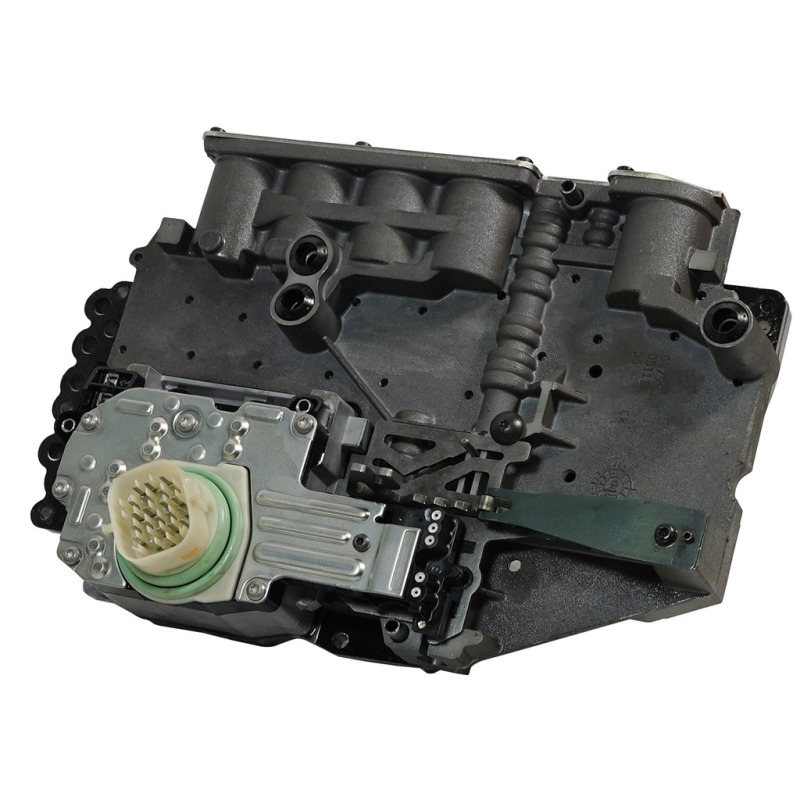
4. Valve Body Solenoid Pack Failure
The 68RFE solenoid pack is an integrated unit -- you do not replace individual solenoids on this transmission. The solenoid pack bolts to the valve body and controls all shift functions, line pressure, TCC apply, and converter charge. When solenoids start to fail, you get erratic shifts, limp mode codes (P0871, P0888, P0765, P0760), and intermittent loss of gears. Electrical failures in the solenoid pack are common after 100,000-150,000 miles, especially in trucks that run hot. Always replace the solenoid pack during a rebuild. Do not try to save $400 by reusing the old one.
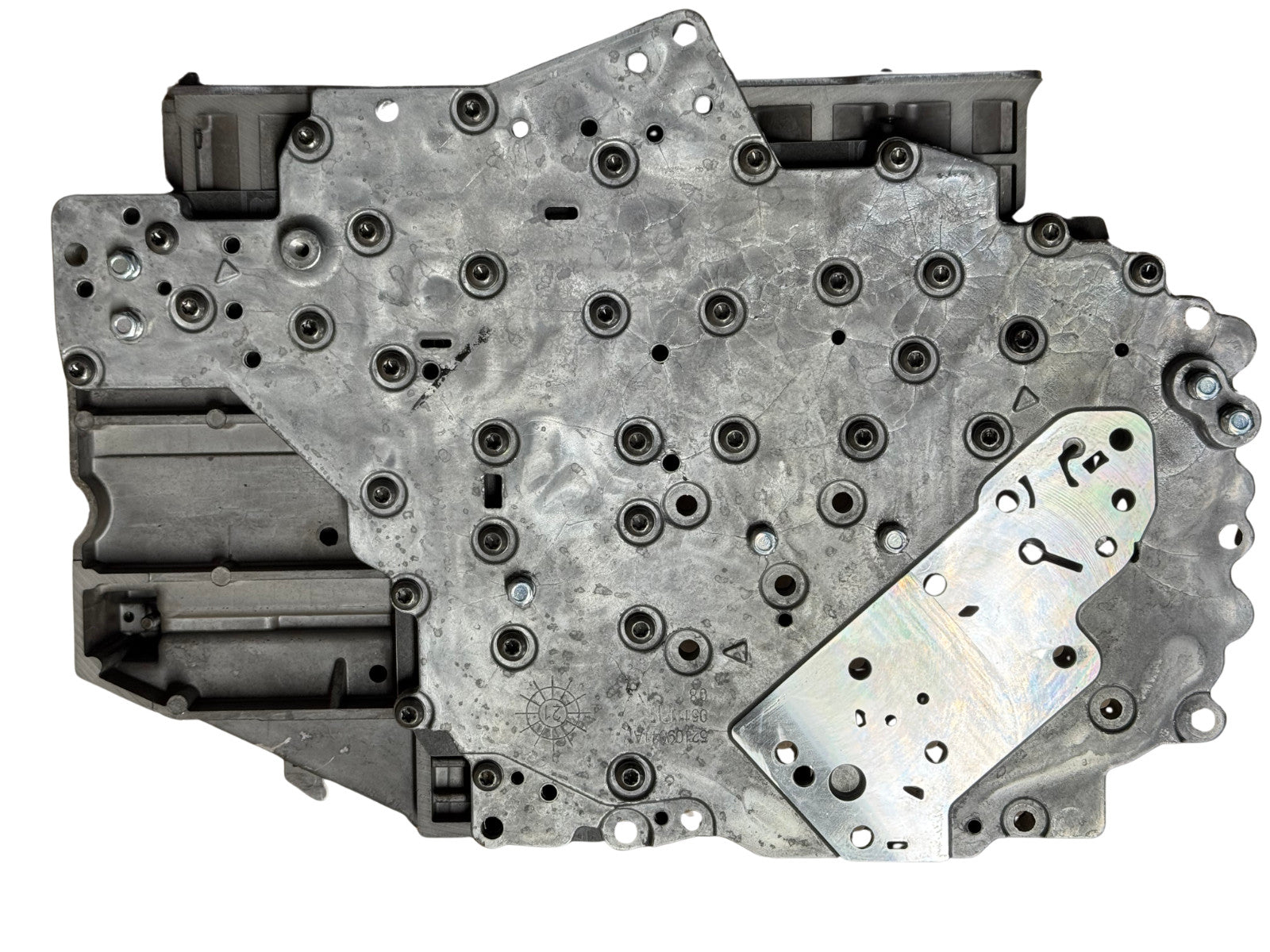
5. Valve Body Wear
The valve body itself wears in predictable locations. The pressure regulator valve bore, the converter clutch control valve bore, and the overdrive clutch control valve bore all develop wear that causes cross-leaks. These cross-leaks reduce apply pressure to the clutch packs and contribute to slipping and heat generation. Sonnax and Superior both make valve body repair kits with oversized valves and sleeves for the worn bores.
Why the 68RFE Fails: Torque, Towing, and Tuning
Understanding why the 68RFE fails is as important as knowing what fails. Three factors drive almost every 68RFE failure that walks through the door:
Towing stress. The RAM 2500 and 3500 are work trucks. Their owners tow trailers, haul heavy payloads, and drive in conditions that keep the transmission loaded for extended periods. The 68RFE runs through its clutch capacity faster under sustained load than it does in unloaded highway driving. A truck that tows a 12,000-pound fifth wheel across the Rocky Mountains is asking the overdrive clutch pack to hold 650+ lb-ft of torque at elevated temperatures for hours. The factory clutch pack was marginal for that duty cycle on day one.
High torque from tuned engines. The 6.7L Cummins responds aggressively to tuning. A stock Cummins makes around 370 hp and 800-850 lb-ft in current trim. A simple EFI Live or MM3 tune can push that to 500+ hp and 1,000+ lb-ft. Some trucks are running 600 hp and 1,200 lb-ft on the street. The 68RFE was not designed for anything close to those numbers. Tuning without upgrading the transmission is the fastest way to turn a 68RFE into scrap metal.
Inadequate cooling. The factory transmission cooler on the RAM HD trucks is undersized for towing duty. Transmission fluid temperatures above 220 degrees F accelerate clutch wear and seal degradation exponentially. Every 20-degree increase above 200 degrees roughly halves the fluid life. Adding an auxiliary transmission cooler (B&M 70264 or Derale 13504 are common choices) is a baseline upgrade for any RAM that tows regularly.
Valve Body Rebuild: OE vs. Aftermarket Options
Before you choose a route, understand what you are actually fixing. ATRA's Rob Faucett, writing in GEARS, identifies valve body worm track erosion as the cause of most 68RFE overdrive clutch failures, driven by the excessive torque of engines running software tuners. His field-proven repairs are flat-sanding the valve body and installing an aftermarket bonded separator plate, or going to a billet channel plate. He also flags the same plug bore behind the switch valve: second-gear oil moves the plug away from the valve, and overdrive oil moves it toward the valve to hold the switch valve locked — so wear there leaks the overdrive circuit directly.
The valve body is the brain of the 68RFE, and it is also where a lot of the performance and durability gains come from during a rebuild. You have several paths here.
OE Valve Body with Repair Kits
Strip the factory valve body, inspect all bores, and install Sonnax or Superior repair components in the worn locations. This approach keeps the factory shift programming intact and works well for stock-power trucks that tow. Cost for the repair components runs $200-$400 depending on how many bores need attention. This is the right choice for a customer who wants a reliable daily driver and tow rig without aggressive shift behavior.
SunCoast Valve Body
SunCoast (out of Macon, Georgia) builds a remanufactured valve body for the 68RFE that includes all updated valves, springs, and a calibrated solenoid pack. Their valve body is tuned for firmer shifts and higher line pressure, which extends clutch life under load. The SunCoast unit runs $1,200-$1,800 depending on the configuration. It is the most popular aftermarket valve body in the 68RFE market for good reason -- the shift quality improvement is immediate and the durability gain is measurable.
BD Diesel Valve Body
BD Diesel offers a performance valve body kit that includes a modified valve body, a new solenoid pack, and a wiring harness tap that allows for adjustable line pressure via a dash-mounted controller. The BD unit runs $1,500-$2,200. The adjustable line pressure feature is useful for trucks that switch between unloaded driving and heavy towing -- you can dial up pressure when the trailer is hooked up and back it down for daily driving. The downside is the additional wiring and the dash controller, which some customers find intrusive.
Full Aftermarket Valve Body
Companies like Goerend Transmission build complete billet valve bodies for the 68RFE. These are ground-up replacements machined from billet aluminum with tight bore tolerances and no wear. They run $2,500-$3,500 and are overkill for a stock-power tow rig. But for a truck making 600+ hp that needs to hold together under load, a billet valve body eliminates the factory casting quality as a variable.
Torque Converter: Billet vs. Stock
The factory torque converter in the 68RFE is a single-disc lockup unit. It is adequate for stock power levels but becomes a liability in two scenarios: high-torque applications where the lockup clutch cannot hold, and towing applications where converter slip generates excessive heat.
Stock Replacement
A remanufactured factory-spec converter runs $250-$400. Appropriate for stock-power trucks that stay at or below factory torque output. If the customer is not tuned and does not plan to tune, a stock replacement with a new lockup clutch is fine.
Billet Single-Disc
A billet converter with a single-disc lockup from SunCoast or Goerend runs $800-$1,200. The billet cover resists ballooning under load (a failure mode where the converter cover flexes outward at high RPM and reduces lockup clutch clamping force). Good for trucks in the 400-600 hp range.
Billet Triple-Disc
For trucks making 600+ hp, a triple-disc billet converter is the standard. Three lockup clutch discs provide roughly three times the holding capacity of a single disc. SunCoast, Goerend, and Firepunk Diesel all build triple-disc converters for the 68RFE in the $1,500-$2,500 range.
Stall Speed Selection
Stall speed matters for drivability and towing. A stock 68RFE converter stalls around 1,800-2,000 RPM. For a tow rig, stay close to stock -- 1,800-2,200 RPM keeps the engine in its torque band without excessive heat generation. For a sled puller or drag truck, a higher stall (2,400-2,800 RPM) lets the engine build boost before the converter locks. Do not put a high-stall converter in a tow rig -- it will run hot and the customer will be back in six months.
Build Levels and Cost Breakdown
Every 68RFE rebuild falls into one of three tiers. Price the job accordingly and set customer expectations upfront about what each level can handle.
Level 1: Stock Replacement -- $3,500 to $4,500
This is a standard rebuild with OE-spec parts, new clutch packs, new steels, a rebuilt valve body, new solenoid pack, and a stock replacement converter. It restores the transmission to factory condition. Appropriate for stock-power trucks with no tuning and moderate towing. Includes the Sonnax 22171-11K overdrive piston housing because you should never build a 68RFE without it.
| Component | Part |
|---|---|
| Clutch packs | OE-spec friction and steel plates |
| Overdrive piston housing | Sonnax 22171-11K |
| Valve body | Rebuilt factory with Sonnax repair kit |
| Solenoid pack | New OE solenoid pack |
| Converter | Remanufactured stock-spec |
| Seals and gaskets | Full overhaul kit |
| Accumulators | Sonnax oversized pistons |
Level 2: Performance Build -- $5,500 to $7,500
This is the sweet spot for most Cummins owners. Upgraded clutch packs (Alto Red Eagle frictions with Kolene-treated steel plates for heat resistance), a SunCoast or BD Diesel valve body, a billet single-disc converter, Sonnax accumulator pistons, and the Sonnax overdrive piston housing. This build handles 500-600 hp reliably and is the right answer for a truck that tows heavy and may have a mild tune.
Level 3: Full Billet Build -- $8,000 to $12,000
For sled pullers, drag trucks, and heavily tuned tow rigs making 600+ hp. Includes a billet input shaft, billet overdrive piston housing, billet valve body (Goerend or equivalent), triple-disc billet converter, Alto Red Eagle clutches throughout, Kolene steels, upgraded thrust washers, and a full SunCoast or Goerend internal kit. This build can hold 1,000+ lb-ft reliably. Some shops also upgrade the output shaft and planetary gears at this level, depending on the application.
Parts to Keep on the Shelf
If your shop rebuilds 68RFEs regularly, these are the parts to keep in stock. Waiting two weeks for a backorder kills your turnaround time and ties up a bay.
- Sonnax 22171-11K overdrive piston housing kit -- goes in every build, no exceptions
- Alto Red Eagle clutch pack set (188754A or equivalent) -- the friction material that handles Cummins torque
- Kolene-treated steel plates -- resist heat warping at temperatures that destroy standard steels
- Sonnax accumulator piston kit -- oversized pistons for the worn bores
- 68RFE master overhaul kit (gaskets, seals, o-rings, Teflon rings) -- keep two on the shelf at all times
- Solenoid pack -- new, not rebuilt. You will use one on every build
- Filter and pan gasket -- self-explanatory
- Valve body repair kit (Sonnax or Superior) -- covers the common bore wear locations
Buying these parts in bulk from your distributor saves 10-15% over ordering one at a time. If you are doing three or more 68RFE rebuilds per month, negotiate a standing order.
What to Tell the Customer About Tuning After a Rebuild
This is the conversation that determines whether the customer comes back in 12 months or 12 weeks. It needs to happen before the truck leaves the shop, and it needs to be in writing on the repair order.
If the customer's truck is tuned -- and a large percentage of Cummins trucks are -- the tune needs to come down to a transmission-safe level or the warranty is void. Period. A stock 68RFE rebuild with OE-spec clutches cannot hold 900 lb-ft of torque from an aggressive tune. A Level 2 performance build can handle a mild tune (500-600 hp range). Only a Level 3 billet build should be behind a truck making 700+ hp.
Put it on the RO: "Transmission rebuilt to [Level 1/2/3] specification. Warranty coverage requires engine tuning to remain at or below [X] horsepower / [X] lb-ft torque. Tuning beyond this level voids the transmission warranty." Have the customer sign it. This protects the shop and sets clear expectations.
Some shops dyno-test the truck before and after the rebuild to document power levels. That is an extra step, but it eliminates the "I did not change my tune" argument when the customer comes back with a smoked overdrive clutch pack and an obviously modified ECM calibration.
Break-In Procedure
The break-in procedure for a freshly rebuilt 68RFE is not optional. Skipping it will shorten the life of the rebuild and can cause premature clutch failure from glazing.
First 500 Miles
- No towing. No loads. No exceptions.
- Drive normally -- allow the transmission to shift through all gears under light to moderate throttle.
- Avoid sustained highway speeds above 65 mph for extended periods. Vary your speed to allow the converter to lock and unlock.
- Monitor transmission fluid temperature. Keep it below 200 degrees F during break-in. If it climbs, back off and let it cool.
- No wide-open throttle. No aggressive downshifts. No manual gear holds at high RPM.
500-Mile Fluid Change
At 500 miles, drain the pan and change the filter. This removes the initial break-in debris -- clutch material dust, seal particles, and machining residue from new parts. The fluid will likely be slightly discolored. That is normal. If it smells burnt or is dark brown, something is already wrong and the transmission needs to come back out for inspection.
500 to 5,000 Miles
Light towing is acceptable after 500 miles. Keep loads under 75% of the truck's rated capacity until the 5,000-mile mark. Continue to avoid aggressive throttle and monitor fluid temperature.
5,000-Mile Fluid Change
At 5,000 miles, do a full fluid change -- drain the pan, replace the filter, and refill. Some shops also do a cooler line flush at this point to capture any remaining debris in the cooler and lines. After this service, the transmission is fully broken in and ready for normal duty, including full towing loads.
Give the customer these instructions in writing. Tape a card to the sun visor if you have to. The number of rebuilt transmissions that come back early because the owner hooked up a 14,000-pound trailer the day after pickup is not zero.
Recommended Products
Need parts for this job?
Rebuild kits, hard parts, solenoids, valve bodies, filters, gaskets and the correct fluid for this unit — shipped fast from the USA on secure checkout.
Shop 68RFE parts →Final Notes for the Shop
The 68RFE is not a complicated transmission to rebuild. It is a straightforward planetary gearset with electronic shift control. The difficulty is in sourcing the right parts, setting customer expectations about what the rebuild can handle, and getting the valve body right. The actual teardown and assembly is standard practice for any experienced rebuilder.
Do not cut corners on the overdrive piston housing. The Sonnax 22171-11K pays for itself on the first warranty claim it prevents. Do not reuse the solenoid pack. Do not skip the accumulator piston upgrades. And do not let a customer with an 800-hp tune drive away on a stock-spec rebuild without a signed waiver.
The 68RFE is going to be in production for at least another few years, and the trucks already on the road are not going anywhere. This is a rebuild you will do over and over. Set up your bench stock, dial in your process, and build a reputation for 68RFE work. The Cummins community talks, and a shop that builds a reliable 68RFE gets referrals from every diesel forum and Facebook group in the region.
Sources
- Sonnax — "68RFE Overdrive Clutch Failure: What to Check First When Troubleshooting OD Issues," Jason Larochelle. Backs the '07-'20 Ram 2500/3500 6.7L Cummins application, the single-sided OE overdrive clutches with a .034" steel core compared to .080" 4L80E direct clutch steels, heat distortion taking clearance out of spec, the leaking solenoid switch valve plugs, and the Smart-Tech overdrive clutch housing delivering about 20 percent more clutch capacity. sonnax.com/tech_resources/888
- Sonnax — "Troubleshooting RFE Overdrive Clutch Failure: Three Key Areas to Check," Caleb Perham. Backs the solenoid switch valve bore plug as the heaviest wear point and its 1-2 / 2-3 / 3-4 stroke sequence, vacuum testing as the check, the stator overdrive dribbler valve as a controlled leak that precharges the circuit and the pump-to-drum air test, the effects of clutch clearance set too tight or too loose, and performing a fast learn after any RFE repair. sonnax.com/tech_resources/1310
- ATRA / GEARS Magazine — "68RFE OD Clutch Failure," Rob Faucett. Backs valve body worm track erosion as the most common cause of 68RFE overdrive clutch burn-up and its link to tuner-added torque, flat sanding plus a bonded separator plate or a billet channel plate as the field fix, and the plug bore behind the switch valve where second-gear and overdrive oil work against each other. gearsmagazine.com/magazine/68rfe-od-clutch-failure
- ATRA / GEARS Magazine — "Fixing the Root Cause of the Problem: Solving Issues with the 68RFE Transmission." Backs the diagnosis-through-delivery approach to these units and the point that wear and pressure management will fail even a good rebuild if the root cause is not understood. gearsmagazine.com/magazine/fixing-the-root-cause-of-the-problem-solving-issues-with-the-68rfe-transmission
- Sonnax — "Maximize 68RFE Overdrive Clutch Capacity & Squawk Resistance with the Smart-Tech Housing." Backs the overdrive housing upgrade path referenced throughout this guide. sonnax.com/tech_resources/922
- Sonnax — Chrysler 68RFE unit reference. Parts and tech resource index for the unit, used to confirm part coverage and kit numbers cited above. sonnax.com/units/155-68rfe