The 4L60E-to-4L80E swap is one of the most common upgrade requests that walks through the door. The customer usually has a truck or SUV making more power than the 4L60E was designed to handle -- LS swap builds, tow rigs pulling heavy loads, or performance trucks that keep burning up 3-4 clutch packs. The 4L60E tops out around 360 lb-ft of torque in stock form. A well-built 4L60E with upgraded internals can handle more, but the case itself becomes the limiting factor north of 450-500 lb-ft. The 4L80E is rated for 440 lb-ft of engine input torque and 885 lb-ft of output torque stock, per Novak's 4L80E reference, and GM's own Supermatic spec sheet rates the heavier-duty 4L85E at 650 lb-ft maximum engine torque.
This swap is straightforward in concept and complicated in execution. It is not a bolt-in. The 4L80E is physically larger, uses a different bellhousing pattern on certain applications, requires different wiring, and needs a shorter driveshaft. But for the right application, it is the correct answer. Here is what the swap actually involves.
For more GM and Chevy transmission resources, visit our GM hub page and Chevy hub page.
Why the 4L80E Over the 4L60E
The 4L60E is a light-duty transmission derived from the 700R4. It uses a 27-spline output shaft. The 4L80E is a heavy-duty unit derived from the TH400. It was introduced in 1991 in GM C/K trucks (RPO MT1), uses a 32-spline output shaft and a die-cast aluminum case, and was designed for vehicles up to 8,000 lb GVWR, which is where the "80" comes from. They share no internal parts.
The typical customer requesting this swap falls into one of three categories: towing builds that keep killing 4L60E units, LS swap projects making 500+ horsepower, or truck owners who are tired of rebuilding the same transmission every 60,000 miles. If a customer has rebuilt a 4L60E twice on a truck that tows regularly, the swap pays for itself over the third rebuild.
Spec Comparison
| Spec | 4L60E | 4L80E |
|---|---|---|
| Torque Capacity (stock) | 360 lb-ft | 440 lb-ft |
| Weight (dry) | 156 lbs (4L65E/4L70E, GM) | 230 lbs (4L85E, GM) |
| Overall length | approx. 778 mm / 30.6 in (4L65E/4L70E, GM) | 817 mm / 32.2 in (4L85E, GM) |
| Fluid capacity (dry) | 11.2 quarts, DEXRON-VI | 13.2 quarts, DEXRON-VI (7.7 qt pan removal) |
| Output Shaft Spline | 27-spline | 32-spline |
| First Gear Ratio | 3.059:1 | 2.482:1 |
| Second Gear Ratio | 1.625:1 | 1.482:1 |
| Third Gear Ratio | 1.00:1 | 1.00:1 |
| Fourth Gear Ratio | 0.696:1 | 0.750:1 |
| Reverse | 2.294:1 | 2.077:1 |
| Bellhousing | Varies by year; later units removable | Integral, Chevrolet 90-degree pattern only (per Novak) |
Ratios, weights, lengths, and capacities are from GM's Chevrolet Performance Supermatic specification sheets for the 4L65E/4L70E and 4L85E, the closest factory-published figures for each family. Weights include GM's notes: the 4L65E/4L70E figure is with a 298 mm converter.
Two things jump out from the gear ratios. First, the 4L80E has a shorter first gear (2.48 vs 3.06), which means less mechanical advantage off the line. In a tow rig with 4.10 axle gears, this is not a problem. In a truck with 3.08s, the difference is noticeable -- the vehicle feels lazier leaving a stop. Second, the 4L80E fourth gear is 0.75 versus 0.70, so overdrive RPM will be slightly higher at highway speed. Plan the axle ratio accordingly.
Parts List: What You Actually Need
This is where customers get surprised by the cost. The transmission itself is only part of the bill. Here is the full parts list for a typical swap in a GMT400 or GMT800 platform truck (Silverado, Sierra, Tahoe, Suburban, Yukon).
Transmission
A good used 4L80E from a 3/4-ton or 1-ton truck. The 4L80E was used in the K2500, K3500, C3500, Express/Savana vans with the 6.5L diesel, and in Allison-predecessor applications. Common donor vehicles include 1997-2002 2500HD trucks. Expect to pay $400-$800 for a used unit in good condition. A reman unit from a reputable builder runs $1,800-$2,800. For the rebuild vs. replace vs. reman decision, read our full breakdown.
Torque Converter
The 4L60E converter does not fit the 4L80E. Different bolt pattern, different pilot dimensions. You need a 4L80E-specific converter. Stock replacement converters run $150-$250. If the build makes real power, a performance converter matched to the engine is money well spent. The converter needs to match the stall speed to the engine's torque curve -- a 2,400-2,800 RPM stall is typical for a mild LS build.
Crossmember
The 4L80E is longer and its mount sits in a different place than the 4L60E, so the factory crossmember will not work. Novak notes the added overdrive gearset made the 4L80E case roughly 1-1/2 in. longer than the TH400 it came from, and GM's spec sheets list about 39 mm more overall length for a 4L85E than a 4L65E/4L70E. Measure your actual mount location before ordering. You need either a custom fabricated crossmember or an aftermarket swap crossmember. Dirty Dingo and Novak make bolt-in crossmember kits for common applications. These run $150-$300 depending on the platform. Some shops fabricate their own from 2x3 rectangular tubing -- works fine if the shop has a welder and a jig.
Transmission Mount
The 4L80E uses a different mount pad location and bolt pattern. A polyurethane mount from Energy Suspension or a stock GM mount for the correct donor application is the move. Under $30 for the mount itself.
Driveshaft
Because the 4L80E is longer, the driveshaft has to be shortened. Measure with the transmission installed and the truck at ride height rather than using a rule-of-thumb number. For a 2-piece driveshaft, this usually means shortening the rear section. Have a local driveshaft shop measure and cut -- this runs $150-$250. The output yoke also changes from 27-spline to 32-spline. You will need a 32-spline slip yoke. If the truck is 4WD, the transfer case also factors in -- the NP241 bolts to both units but uses a different adapter housing for the 4L80E.
Wiring Harness
This is where most shops lose time. The 4L60E uses a different connector and different solenoid wiring than the 4L80E. The 4L60E has a case connector with pins for the shift solenoids (A and B), TCC solenoid, pressure control solenoid, TFT sensor, and ISS/OSS. The 4L80E has its own case connector with pins for shift solenoids A and B, TCC solenoid, force motor (equivalent of the PCS), TFT, ISS, and a different ground configuration.
You have three options for the wiring:
- Standalone transmission controller: Companies like Compushift (formerly US Shift) and TCI EZ-TCU make standalone controllers that handle all the shift logic independently from the engine ECU. The Compushift Sport runs around $600-$800 and is the cleanest solution for LS swaps that are already running a standalone engine controller. Plug in power, ground, TPS signal, and VSS, and the controller handles shift points, TCC lockup, and line pressure.
- Custom wiring with factory ECU: If the vehicle uses a factory PCM that supports the 4L80E (such as a 0411 or similar PCM from a 2500HD), you can rewire the transmission harness to the factory connector and retune the PCM with HP Tuners or EFI Live to run 4L80E shift tables. This requires the PCM to have the 4L80E operating system. Not every PCM supports both transmissions.
- Adapter harness: Several companies sell plug-and-play adapter harnesses that convert the 4L60E connector to the 4L80E connector. These work when the PCM already has the 4L80E code loaded. If it does not, the harness alone will not fix it -- you still need the tune.
Flexplate
The 4L80E uses a different bolt pattern on the flexplate -- six bolts in a larger diameter pattern versus the 4L60E three-bolt pattern. If the engine currently has a 4L60E flexplate, it needs to be swapped. The SFI-rated flexplates from TCI (P/N 399753 for LS engines) or PRW are the safe choice. Do not reuse a flexplate from a junkyard without inspecting it for cracks around the bolt holes and the center hub.
Common Problems During the Swap
Speedometer Calibration
The 4L60E and 4L80E use different vehicle speed sensor (VSS) setups. The speed sensor setup and calibration differ between the two, and Novak notes the 4L80E may use both an input (turbine) speed sensor and an output speed sensor. If the vehicle originally had a 4L60E, the speedometer will need recalibration. On OBD-II trucks with a factory PCM, this is handled in the tune -- set the correct tire size, axle ratio, and output shaft tooth count in HP Tuners. On standalone controller setups, the controller has its own VSS calibration table.
Transmission Tunnel Clearance
The 4L80E is wider than the 4L60E. In full-size trucks (Silverado, Sierra), the tunnel is large enough that clearance is not usually an issue. In cars (Camaro, Firebird, Corvette), the tunnel almost always needs modification -- either massaging with a hammer and dolly or cutting and welding in a larger section. F-body swaps are more involved than truck swaps for this reason.
Converter Drainback
If the 4L80E sits for more than a day or two after the swap, the converter can drain back into the pan. On first startup, the unit will be briefly starved for fluid. Pre-fill the converter before installation. GM's Supermatic instructions call for adding 6-8 ounces of DEXRON-VI to the converter before installing it, warning that a dry start-up can damage converter internals. GM also notes the 4L80-family return cooler line fitting is unique, so use GM parts 8637742 and 24205178 if you are converting to standard inverted flare lines.
Transfer Case Adapter (4WD)
The 4L60E and 4L80E use different adapter housings for the NP241/NP243/NP246 transfer cases. You need the correct adapter from the 4L80E donor vehicle. If the adapter is missing, aftermarket adapters from Advance Adapters are available but add $300-$500 to the cost. The transfer case input shaft spline count is different between the two transmissions -- verify you have the correct input gear.
Exhaust Interference
On trucks with headers or long-tube exhaust, the wider 4L80E case can contact the driver-side downpipe. Check clearance before bolting everything up permanently. Denting a header primary because the transmission case is a half-inch wider than expected is a common and avoidable mistake.
Cost Breakdown for Customers
This is a real-world parts and labor estimate for a 4L60E-to-4L80E swap in a 1999-2006 Silverado/Sierra 1500 with a 5.3L or 6.0L. Costs vary by region and shop rate.
| Item | Cost Range |
|---|---|
| 4L80E transmission (used, good condition) | $400 - $800 |
| 4L80E transmission (reman, quality builder) | $1,800 - $2,800 |
| Torque converter | $150 - $400 |
| Crossmember kit | $150 - $300 |
| Driveshaft modification + 32-spline yoke | $200 - $350 |
| Flexplate (SFI rated) | $80 - $150 |
| Transmission mount | $20 - $40 |
| Wiring (standalone controller route) | $600 - $900 |
| Wiring (adapter harness + PCM tune) | $200 - $500 |
| Fluid and filter | $80 - $120 |
| Miscellaneous (bolts, cooler lines, fittings) | $50 - $100 |
| Transfer case adapter (4WD only) | $0 - $500 |
| Labor (8-14 hours at shop rate) | $800 - $1,800 |
Total estimate for a 2WD truck swap with a used 4L80E: $2,500 - $3,500
Total estimate for a 4WD truck swap with a reman 4L80E: $4,500 - $6,500
Labor hours depend heavily on the platform and the shop's experience with the swap. A shop that has done this swap ten times can do it in 8-10 hours. The first time takes 12-16 hours with the inevitable fitment adjustments, wiring troubleshooting, and test driving.
When a Built 4L60E Makes More Sense
The swap is not always the right answer. For vehicles making under 450 lb-ft of torque, a built 4L60E with upgraded internals is cheaper, simpler, and retains the factory driveline dimensions. No crossmember work, no driveshaft modification, no wiring changes.
A properly built 4L60E with the following upgrades can reliably hold 450-500 lb-ft:
- Sonnax 77733-09K SmartShell -- hardened sun shell, eliminates the fracture failure
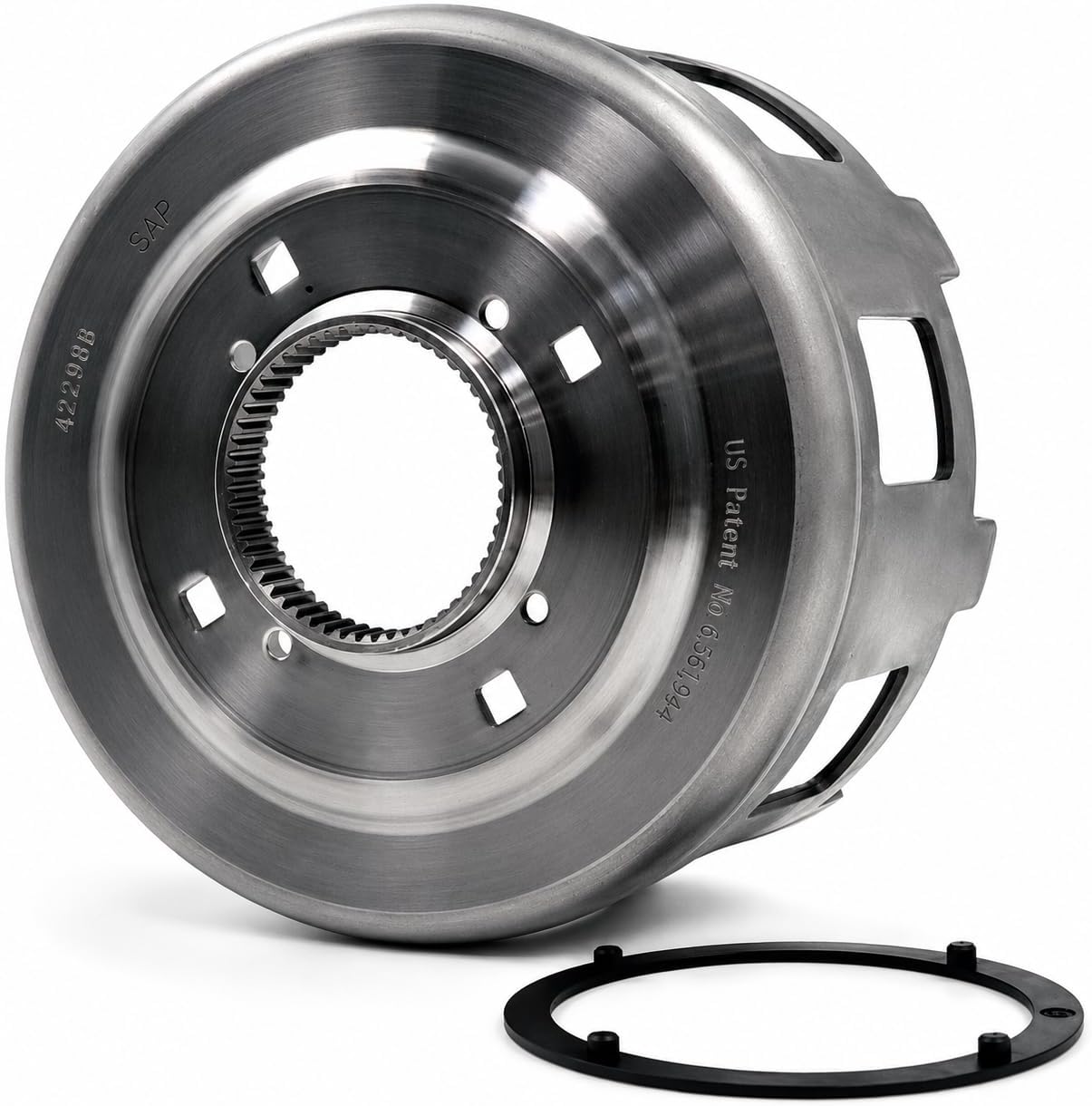
- Kolene-treated input drum -- resists the 3-4 clutch pack burn failure
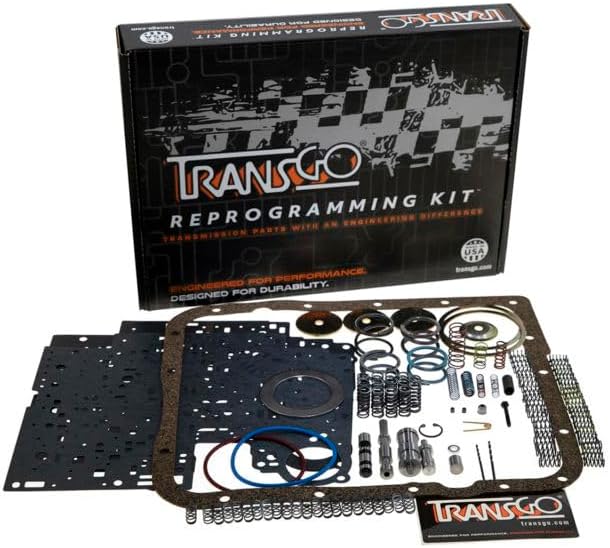
- TransGo SK4L60E shift kit -- firms up shifts and reduces clutch slippage during apply
- Raybestos Stage 1 clutch pack kit -- adds clutch count and upgrades friction material
- Sonnax 2-4 servo piston upgrade -- addresses the bore wear issue before it starts
- Corvette servo assembly -- larger apply area for the 2-4 band
Two details from Sonnax's own 4L60E build guidance are worth adding to that list, because they are the difference between a build that holds and a build that comes back. First, the 3-4 clutch does not burn purely from clutch count: the OE input housing has a thin backing plate that flexes during apply, which heats the pack unevenly and cooks it. A Smart-Tech input housing (77733-10KB or 77733-11KB) takes a larger clutch pack without giving up the steel mass that carries heat away. Second, Sonnax flags pressure pulsation from poor pressure regulator valve control as the real pump killer on these, which is why an oversized PR valve (77917-06 or 77917-07) belongs in a high-torque build alongside the boost valve.
One assembly note that costs nothing: never shim the servo. Set servo travel to .075 in. to .125 in. with a dial indicator. And if the customer's complaint is really about ratio spread rather than raw capacity, Sonnax input carrier kit 77284-K converts first gear from 3.06 to 2.84, which narrows the spread from first to fourth and takes load off the band and clutches without touching the driveline.
A quality built 4L60E with these upgrades, including labor, runs $1,800-$2,500 at most independent transmission shops. That is less than half the cost of a full 4L80E swap in many cases. The built 4L60E also keeps the 3.06 first gear ratio, which is better for street driving in trucks with taller axle gears.
The decision tree is straightforward: if the vehicle consistently makes over 450 lb-ft or tows heavy loads regularly, the 4L80E swap is the long-term play. If the vehicle is under that threshold and the 4L60E failures are caused by known weak points rather than raw torque overload, a built 4L60E is the smarter spend.
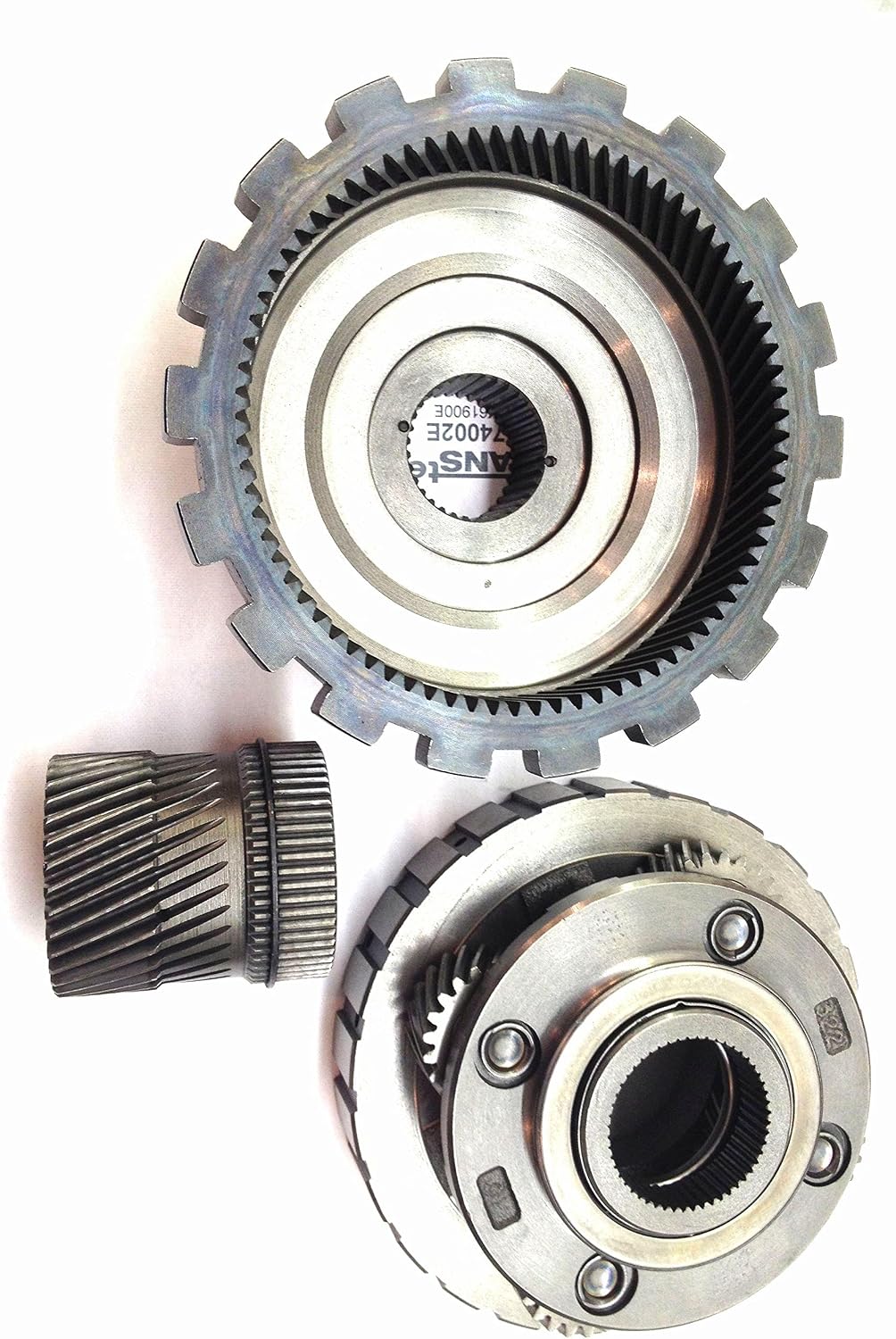
Set expectations honestly on the 4L80E side, too. It is the stronger unit, but it is not bulletproof, and it has a chronic failure of its own: Sonnax attributes repeat overdrive roller clutch failure in hardworking 4L80-E and 4L85-E units to insufficient holding power in that roller clutch, and addresses it with an overrun clutch valve kit (34200-40K) at every power level of its build guides. Low/reverse servo piston durability and case bushing wear are the other two items that show up under sustained load. If the donor unit is going behind real power, Sonnax's under-1,000HP build adds a 300M heavy duty input shaft (34670-01) and main shaft (34672-01); the over-1,000HP build steps those up to Aermet steel (34670-02 and 34672-05). A used 4L80E dropped in untouched is stronger than the 4L60E it replaced, but it is still a used transmission.
Final Notes for Shops
Price the swap as a complete job, not line items. Customers who see 15 separate line items get sticker shock and start asking which parts they can skip. Quote the swap as a package: transmission, all supporting hardware, wiring, labor, and fluid. One number. Let them choose between used or reman for the unit itself, but everything else should be included in the package price.
Keep a donor list. When you pull a 4L80E from a vehicle, save the crossmember, adapter housing, wiring pigtail, and flexplate. Those parts are worth more as a swap kit than they are sold individually. A complete 4L80E swap kit sitting on the shelf is a $3,000-$5,000 job waiting to happen every time someone calls about their 4L60E acting up.
Test drive the vehicle before and after. Log shift pressures, shift times, TCC apply pressure, and TFT on the post-swap road test. Give the customer a copy of that data. It documents the quality of the work and protects the shop if the customer comes back with a complaint six months later. That kind of documentation separates professional shops from parts-swappers.
Sources
- General Motors / Chevrolet Performance — Supermatic Transmission Specifications, part no. 19260445 (4L65-E and 4L70-E). Backs: 3.059/1.625/1.000/0.696/2.294 ratios, DEXRON-VI, 11.2 qt dry capacity, 156 lb dry weight, approx. 778 mm overall length, and 430/495 lb-ft maximum engine torque for the 4L65E/4L70E. Chevrolet Performance Supermatic 4L65E/4L70E spec sheet (PDF)
- General Motors / Chevrolet Performance — Supermatic Transmission instructions, part no. 19211852 (4L85-E, 19300175). Backs: 2.482/1.482/1.000/0.750/2.077 ratios, 650 lb-ft maximum engine torque, 7.7 qt pan removal and 13.2 qt dry capacity, 230 lb dry weight, 817.23 mm overall length, the unique 4L80-family return cooler fitting (8637742 and 24205178), and the 6-8 oz converter pre-fill. Chevrolet Performance Supermatic 4L85E instructions (PDF)
- Novak Conversions — The Novak Guide to the GM 4L80E Automatic Transmission. Backs: 1991 introduction, RPO MT1, 8,000 lb GVWR design, 440 lb-ft input and 885 lb-ft output torque ratings, the die-cast aluminum case, the roughly 1-1/2 in. longer case versus the TH400, the integrated Chevrolet 90-degree bellhousing, and input and output speed sensors. novak-adapt.com/knowledge/transmissions/automatic/4l80e
- Sonnax — 4L80-E, 4L85-E Performance & Heavy Duty Transmission Build Guides. Backs: insufficient holding power in the overdrive roller clutch as the underlying cause of chronic OD roller clutch failure in hardworking 4L80-E and 4L85-E units; the overrun clutch valve kit 34200-40K used at every power tier; low/reverse servo piston durability and case bushing wear as secondary concerns; the 300M heavy duty input shaft 34670-01 and main shaft 34672-01 for under-1,000HP builds and the Aermet steel 34670-02 and 34672-05 for over-1,000HP builds. sonnax.com/tech_resources/1307
- Sonnax — Gregg Nader, “Building the Killer 4L60E: Top Tips for Optimizing Your Transmission Upgrades.” Backs: the OE input housing’s thin backing plate flexing during apply and burning the 3-4 clutch unevenly; Smart-Tech input housings 77733-10KB and 77733-11KB; pressure pulsation from poor PR valve control as the cause of pump failure and the oversized PR valves 77917-06 and 77917-07; input carrier kit 77284-K converting first gear from 3.06 to 2.84 to reduce ratio spread and component torque loads; the instruction never to shim the servo and to set travel to .075 in. to .125 in. with a dial indicator. sonnax.com/tech_resources/293