A 1990s Ranger, Bronco II, Explorer or Aerostar rolls in with a shift complaint and the first job is figuring out which four-speed is under it. The A4LD and the 4R44E look close enough on the lift that people order the wrong kit every week. Inside, they are two different control systems built on the same basic geartrain. The A4LD shifts 1-2-3 on hydraulics, with a governor and a vacuum diaphragm doing the thinking. The 4R44E hands every shift, line pressure and converter apply to the PCM.
This guide covers how to tell them apart, what the computer controls on each, the diagnostic checks and specs from Ford's A4LD workshop manual, the fluid and fill, and the weak spots the two units share. Sources are listed at the bottom.
The Short Answer
The A4LD is Ford's older four-speed overdrive for the small trucks and vans. Ford's 1993 workshop manual describes it as a four-speed automatic overdrive with a lockup converter, where the PCM controls only two things: the 3-4/4-3 shift, through a 3-4 shift solenoid, and the converter clutch, through a TCC solenoid [1]. Everything else is hydraulic: the 1-2 and 2-3 shifts, line pressure and shift feel all come from the governor, the vacuum diaphragm and the valve body.
The 4R44E replaced it. Sonnax dates the 4R44E to 1995 in the 2.3L and 3.0L Ford and Mazda rear-drive trucks, with the heavier-duty 4R55E following for the 4.0L in 1996 and the five-speed 5R44E and 5R55E from 1997 [2]. On the 4R44E the PCM runs all four gears through shift solenoids, sets line pressure with an EPC solenoid and modulates the converter clutch by duty cycle [2][3]. Same basic gear layout, completely different brain.
How to Tell Them Apart on the Truck
- Vacuum hose. The A4LD has a vacuum diaphragm (modulator) on the case with a hose from the intake. Ford's removal procedure has you pull the vacuum hose from the transmission modulator before the unit comes out [1]. A 4R44E has no modulator line.
- Governor. The A4LD manual lists a governor assembly bolted to the oil collector body and torqued to 84-115 in-lb [1]. If the unit has a governor, it is an A4LD.
- Connector. The A4LD harness feeds only the TCC and 3-4 solenoids through a case connector that also contains a diode [1]. The 4R44E connector carries the shift solenoids, coast clutch solenoid, TCC, EPC and the fluid temperature sensor [3].
- Door label. Ford says to read the stamped code in the "Trans" box on the certification label on the driver's door lock post, and to confirm with the tag on the transmission body [1].
Early A4LDs are their own trap. Rebuilders generally split the run into early units that shifted 3-4 hydraulically with only a converter clutch solenoid, and later units with the electronic 3-4 solenoid. Owners argue about the exact cutover year, so identify the valve body and solenoids in front of you rather than trusting the model year.
What the Computer Controls on Each
A4LD: two solenoids on EEC-IV
Ford's manual lists the A4LD's PCM inputs as engine coolant temperature, the brake on/off switch, the ignition profile (PIP) signal for rpm, throttle position and vehicle speed. The outputs are the 3-4/4-3 shift solenoid and the TCC solenoid [1]. The PCM holds the converter clutch off on tip-in and tip-out, with the brakes applied, at closed throttle, on a cold engine, at very heavy or wide-open throttle, at low engine speed, and at 23.5 inches of mercury absolute or below in the intake [1].
Ford also notes that the shift into overdrive drops engine rpm by about 25 percent, and that the converter clutch can apply in third in D and in fourth in overdrive. That is why a healthy A4LD can feel like it makes as many "shifts" as a five-speed [1]. Do not chase that as a fault.
Failure modes are spelled out in the same section [1]:
- 3-4 solenoid failed ON: weak acceleration at start-out. Failed OFF: no 3-4 upshift or 4-3 downshift. Code 566.
- TCC failed ON: the engine stalls at low idle. Failed OFF: no converter lockup. Code 629.
- VSS fault (code 452) or rpm/PIP fault (211-217): no 3-4, no 4-3 and no lockup.
- Brake switch fault (536): failed ON, the converter will not engage; failed OFF, it will not release when you brake.
- TP codes (121-125, 167): harsh engagements, firm shifts, wrong shift schedule and no lockup.
4R44E: full electronic control
TransGo's SK 44-55E instructions give the 4R44E solenoid apply chart (all normally open): first = SS1, second = SS1 and SS2, third = none, fourth = SS3, reverse = SS1, with the coast clutch solenoid on in manual ranges and reverse. With power lost, it limps in third [3]. The same sheet lists resistance at the case connector: 22-48 ohms for the shift and coast clutch solenoids, 9-16 ohms for TCC, 3.1-5.7 ohms for EPC, and about 28.4K ohms at 70 F for the fluid temperature sensor [3].
Line pressure is the big difference. On the A4LD the vacuum diaphragm and throttle valve set pressure from engine load. On the 4R44E, line pressure comes from the EPC circuit. Sonnax explains that converter apply feed comes off the TCC regulator valve, which is supplied by EPC-controlled line pressure. A dirty EPC solenoid or a leaky EPC circuit therefore causes weak line rise, poor TCC apply, delayed reverse, 1-2 or 2-3 flare, broken bands and blown servo seals [2]. An A4LD with a leaking modulator gives you a similar list of complaints for a completely different reason.
A4LD Diagnostic Checks and Specs
These numbers come from Ford's 1993 workshop manual, Section 07-01A [1]:
- Solenoid resistance. SS 3-4 and TCC each read 26-40 ohms on Ford's pinpoint tests. The internal harness should read under 0.5 ohm end to end, with no continuity to ground.
- Case connector diode. The transmission tester checks a diode in the case connector. If the diode is bad, Ford says to replace the connector and warns that a bad diode can cause a PCM concern.
- Control pressure with a vacuum pump. Plug the modulator line, feed it from an adjustable vacuum source, and record control pressure in every range at 15 inches. At 1000 rpm, record (D), D-2 and D-1 at 10 inches, then (D), D-1, D-2 and R at 1 inch. Compare against Ford's performance specifications for the application.
- Vacuum supply test. At idle the modulator line must show steady vacuum. It must drop quickly when you snap the throttle and come back right away when you let off. A slow or flat response points to a plugged or kinked line.
- Stall test. Never hold stall for more than 5 seconds, and run at 1000 rpm in neutral for about 15 seconds between ranges. The manual lists 2,495-2,885 rpm for the 2.3L with the 10-1/4 inch converter.
- Converter end play. 0.023 inch maximum for a new or rebuilt converter, 0.050 inch maximum for a used one.
On any A4LD shift complaint, check vacuum first. A cracked modulator hose or a torn diaphragm changes shift points and shift feel long before anything inside the case fails.
Torque Specs Worth Having on the Bench
From Ford's A4LD specification table [1]:
- Main control (valve body) to case: 71-97 in-lb. Separator plate to valve body: 53-71 in-lb.
- Oil pan to case: 8-10 ft-lb.
- Converter to flywheel nuts: 20-34 ft-lb. Transmission to engine: 28-38 ft-lb.
- Reverse servo to case: 80-115 in-lb. Vacuum diaphragm retainer clip: 80-106 in-lb.
- Band adjustment, overdrive and intermediate: fit a new locknut, tighten the adjusting screw to 10 ft-lb, back off two turns, then hold the screw and tighten the locknut to 35-45 ft-lb.
On the 4R44E, TransGo specifies 72-92 in-lb for the valve body, tightened from the center out. Over-tightening can cause a wrong-gear start after reverse [3]. Both units call for an inch-pound wrench, not a ratchet and a feel.
Fluid and Fill
Ford's A4LD manual calls for Motorcraft XT-2-QDX or -DDX (E4AZ-19582-B) or equivalent. Check the level at normal operating temperature, about 150-170 F with the dipstick hot to the touch, and add in half-pint steps [1]. The manual's approximate dry refill for the 2.3L application it covers is 9.7 quarts (9.2 liters), including cooler and lines. Ford says to set the real level on the dipstick and not to overfill: overfill foams the fluid and pushes it out the vent, and underfill causes slipping and lost engagement, worst when cold or on a hill [1].
For the 4R44E, Ford's 2001 Ranger owner guide lists Motorcraft MERCON V (XT-5-QM) and warns that MERCON and MERCON V should not be mixed [5]. On an older truck, Ford tells owners the fluid requirement is printed on the dipstick handle [5]. Read it before you pour, especially on a truck that may have been swapped from one unit to the other.
The Weak Spots They Share
4.0L crank spacer, flexplate and converter pilot
This is the one that ties the two units together. In Transmission Digest, Sonnax's Gregg Nader lays out the front-end problem on A4LD and 4R44E units behind the 4.0L. The powdered-metal crankshaft spacer between the crank and flexplate cracks and wears where the converter pilot sits, which lets the converter run off center. That leads to front seal leaks and broken flexplates [4]. Early flexplates were 0.083 inch steel with a second layer and three spot welds at the crank bolts. For 1997 Ford went to a 0.106 inch plate (F1TZ-6375-BA) with no second layer. Ford also lengthened the converter pilot, giving 0.100 inch more contact in the spacer [4].
Nader's advice applies to either unit: inspect or replace the spacer on every job, use the thick flexplate, and insist on a long-pilot converter. Not every converter rebuilder updates the pilot, so it is easy to replace a long-pilot converter with a short one without knowing it [4].
Valve body wear
On the A4LD, Ford's mechanical diagnosis chart points TCC complaints back to a TCC shuttle valve or TCC shift valve stuck in the bore, or to contamination on the solenoid valve. The shuttle valve spring should be about 2.0 lb at 0.512 inch [1]. On the 4R44E, Sonnax describes end plugs held by "L" retainers that loosen and leak as the valves toggle. Those leaks cause no reverse or loss of third or fourth, and a worn coast clutch valve takes out fourth or engine braking [2].
4R44E case wall movement
The 4R44E family also has a case problem that you should rule out before blaming the valve body. Transmission Digest documents the thin wall between the line pressure passage and the converter charge passage flexing under load, fuzzing the gasket and cross-leaking circuits. The fix is set screws braced into the case passage [6].
Can You Swap a 4R44E Into an A4LD Truck?
Not as a bolt-in. The A4LD truck's PCM only knows how to drive a 3-4 solenoid and a TCC solenoid off EEC-IV. A 4R44E needs a PCM and harness that run SS1-SS3, the coast clutch, EPC and TCC by duty cycle, and read the fluid temperature sensor [1][3]. Put a 4R44E behind an A4LD computer and it has no way to shift or set line pressure. If you swap, you swap the unit, the harness and the computer as a set, and you still have to deal with the 4.0L flexplate and converter pilot updates [4].
Which One Is Better?
The 4R44E shifts better and adapts better because the PCM controls line pressure and converter apply directly. The A4LD is simpler to diagnose with a vacuum gauge and a pressure gauge, and it does not depend on an EPC solenoid that wears out. Either one will last if you fix the shared basics on a rebuild: a clean valve body with tight bores, the correct fluid set on the dipstick, a good vacuum supply on the A4LD or a new EPC solenoid on the 4R44E, and a fixed crank spacer, flexplate and converter pilot on 4.0L trucks.
A4LD and 4R44E rebuild kits at CoreTransmissionParts
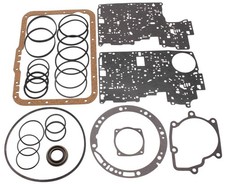
Rebuilding a Ranger, Explorer or Aerostar four-speed? CoreTransmissionParts carries master rebuild and overhaul kits. Confirm A4LD or 4R44E, and the year, before you order.
Shop rebuild kits at CoreTransmissionParts →Need parts for this job?
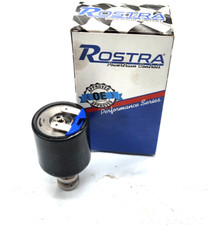
Overhaul kits for the 1985-1995 A4LD run, plus 4R44E rebuild kits, solenoid kits and EPC solenoids, all with secure checkout.
Shop 4R44E / 5R55 parts → 1985-1995 overhaul kit →FAQ
What is the difference between an A4LD and a 4R44E?
The A4LD shifts 1-2 and 2-3 hydraulically with a governor and vacuum diaphragm, and the PCM only controls the 3-4 shift solenoid and the converter clutch solenoid. The 4R44E, introduced in 1995, is fully electronic: the PCM runs all shifts with shift solenoids, sets line pressure with an EPC solenoid and modulates converter lockup.
How do I tell if my truck has an A4LD or a 4R44E?
Look for a vacuum hose running to a modulator on the transmission case; that is an A4LD. Ford also says to read the code in the Trans box on the certification label on the driver's door lock post and to check the tag on the transmission body.
What fluid does the A4LD take?
Ford's 1993 A4LD workshop manual calls for Motorcraft XT-2-QDX or -DDX (E4AZ-19582-B) or equivalent, checked hot at about 150-170 F. The 4R44E is listed on MERCON V in Ford's 2001 Ranger owner guide, and Ford says not to mix MERCON and MERCON V, so read the dipstick handle before adding fluid.
Can I put a 4R44E in place of an A4LD?
Not as a bolt-in swap. The A4LD truck's PCM only drives a 3-4 solenoid and a TCC solenoid, while a 4R44E needs a computer and harness that run its shift, coast clutch, EPC and TCC solenoids. Swap the transmission, harness and PCM as a set.
What is the A4LD 3-4 shift solenoid resistance?
Ford's pinpoint test calls for 26-40 ohms on the 3-4 shift solenoid, and the same range on the TCC solenoid. The internal harness should read under 0.5 ohm with no continuity to ground.
Sources
- Ford Motor Company, 1993 Workshop Manual, Section 07-01A: Transmission, Automatic, A4LD. Backs the four-speed overdrive description with PCM control of only the 3-4/4-3 shift and TCC solenoids, the TCC inhibit modes, the 25 percent overdrive rpm drop, PCM inputs and outputs, EEC-IV codes 566, 629, 452, 536 and failure symptoms, the 26-40 ohm solenoid and diode case connector pinpoint tests, the vacuum control pressure, vacuum supply and stall tests, the TCC shuttle valve spring spec, the XT-2-QDX/DDX fluid and level check, the 9.7 qt approximate refill, converter end play and the torque and band specs. Description · Electronic control and codes · Pinpoint tests · Mechanical diagnosis · Fluid check · Specifications
- Sonnax, Bob Warnke, "18 Troubleshooting Tips for 4R44E and 5R55E Transmissions" (Sept 2005). Backs the 1995 4R44E release for the 2.3L and 3.0L, the 1996 4R55E and 1997 five-speed versions, the EPC-fed TCC regulator circuit, EPC booster valve complaints, and end plug and coast clutch valve leakage. sonnax.com
- TransGo, SK 44-55E Shift Kit Instructions (PDF). Backs the 4R44E solenoid apply chart and third-gear limp mode, the solenoid and fluid temperature sensor resistance values, and the 72-92 in-lb valve body torque. TransGo (PDF)
- Transmission Digest, Gregg Nader (Sonnax TASC Force), "A4LD/4R44E: Ford 4.0-Liter Crank-Spacer Puzzle" (Oct 2004). Backs the cracked powdered-metal crank spacer, the 0.083 inch early and 0.106 inch 1997 flexplate (F1TZ-6375-BA), and the long converter pilot with 0.100 inch more spacer contact. transmissiondigest.com
- Ford Motor Company, 2001 Ranger Owner Guide (archived copy). Backs MERCON V (XT-5-QM) for the 4R44E, the warning not to mix MERCON and MERCON V, and the fluid spec printed on the dipstick. web.archive.org (Ford PDF)
- Transmission Digest, Gregg Nader (Sonnax TASC Force), "4R44E, 5R55E Case-Wall Movement and Comebacks". Backs the line pressure versus converter charge case wall flex, gasket fuzzing and the set-screw fix. transmissiondigest.com
Shop at CoreTransmissionParts →