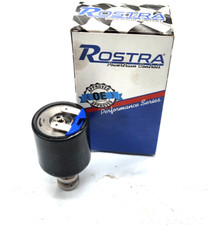
This is the budget-friendly way to put a new electronic pressure control (EPC) solenoid in a Ford 4R44E. The part shown is a boxed Rostra Powertrain replacement, the aftermarket maker that supplies transmission solenoids to rebuild shops, built to replace Ford's XL2Z-7G383-AA EPC solenoid. If your Ranger, Aerostar, Explorer or Mazda B2300 or B3000 four-speed shifts like it is being kicked, slips between gears, or has a pressure control fault stored, this is the single part that sets how firmly every gear applies.
How the EPC solenoid works in the 4R44E
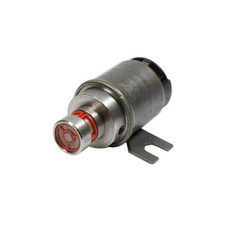
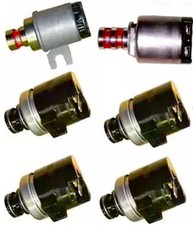
The 4R44E has no throttle valve cable and no modulator. Instead, the engine computer controls line pressure electronically through this one solenoid. The more current it sends, the lower the EPC signal pressure; the boost valve then multiplies that signal into the mainline pressure that feeds both bands and every clutch pack. Line pressure also supplies the converter clutch regulator, so a solenoid that cannot raise pressure can make lockup feel weak too. Rostra and Transtar describe the OE version of this solenoid with two red inlet screens, while their aftermarket versions use green screens, so a different screen color on your new part is normal.
Common symptoms
- Harsh, clunking garage shifts that appeared suddenly rather than gradually
- Every shift firm after a fault code, as the computer defaults to high line pressure
- Flare or slip on the 1-2 or 2-3 upshift, worst under load or towing
- Delayed Reverse on a cold morning that improves as the truck warms
- Converter lockup slip at highway speed with no TCC solenoid fault
- Check engine light with an EPC circuit or pressure control code
Testing before you replace it
Confirm fluid level and condition first; dark, burnt fluid full of friction material points to a worn transmission, not a solenoid. Scan for codes and note whether they are electrical or performance faults. Electrical faults are confirmed at the case connector with an ohmmeter, comparing the coil to the roughly 4.5 ohm rating this unit is listed at; our solenoid testing without a factory scan tool guide shows how. Performance faults need a pressure gauge, because a stuck boost valve or worn regulator bore can mimic a bad EPC solenoid exactly. The steps are in our line pressure guide. If you replaced solenoids before and the codes came back, have the valve body checked; the valve body cleaning and inspection guide covers what to look for.
Fitment
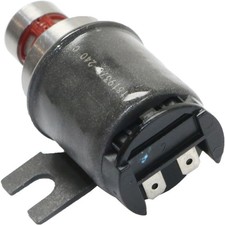
The Transtar interchange for this EPC solenoid lists the 4R44E from 1995 through 2001, which covers the 2.3L and 3.0L Ranger, the 1995-1997 Aerostar, and Mazda B2300, B2500 and B3000 trucks of that era. The same solenoid also fits the 4R55E, 5R44E and 5R55E, so it is the right part for most of Ford's small rear-drive automatics through 2011. This listing does not carry a year range, so before you install it, line it up against your old solenoid: two-blade connector, single-bolt mounting tab and twin-screen nose should all match. If anything looks different, send us your year and VIN and we will confirm the fit. It does not fit the 5R55W or 5R55S. Browse the rest of this family on our 5R55 and 4R44E parts page.
Install notes
- Work through the pan: drain, drop the pan and filter, and locate the EPC solenoid on the valve body.
- Unplug the connector, remove the bracket bolt and work the old solenoid straight out so the bore is not scored.
- Transfer nothing from the old part; the new one comes with its own O-ring. Lube it with clean ATF before installing.
- Seat it fully before tightening the bracket bolt, plug it in, and refill with MERCON V or the fluid your dipstick specifies.
- Clear codes, road test, and confirm line pressure with a gauge if the original complaint was soft shifting.
A fresh filter is a must on this job. If your truck has original solenoids and high miles, the converter clutch solenoid is a sensible add-on; the 4R44E TCC solenoid uses the same pan-off access. If you want the OE-style red-screen version instead, see the 4R44E EPC solenoid for 1995-2012.