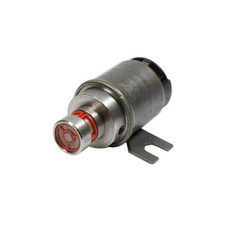
If you own a 2.3L or 3.0L Ford Ranger, a mid-1990s Aerostar or Explorer, or a Mazda B2300 or B3000 with the four-speed 4R44E, and the truck has started banging into gear, slurring the 1-2 shift or throwing a pressure control fault, this is the part most shops test first. It is a new electronic pressure control (EPC) solenoid in the original equipment layout: a steel body with a flat mounting tab, a two-blade electrical connector and twin red filter screens on the nose. That red-screen, bracket-mounted design is the one Ford installed at the factory, and the same solenoid carried on into the five-speed 5R44E and 5R55E, which is why this listing spans 1995 through 2012.
What the EPC solenoid does in a 4R44E
The 4R44E was released for 1995 behind the smaller Ford and Mazda engines, and it was one of the first rear-drive Ford automatics with no throttle cable and no vacuum modulator. Line pressure is decided entirely by the powertrain computer. It reads throttle angle, load and road speed, then sends a varying current to this solenoid. The solenoid bleeds a signal pressure to the boost valve, and the boost valve sets mainline at the pressure regulator. That mainline is what squeezes the clutch packs and applies the bands. Sonnax also points out that the converter clutch regulator in this valve body is fed by line pressure, so poor line rise from a dirty EPC solenoid can show up as converter slip, not just soft shifts.
Symptoms of a failing 4R44E pressure control solenoid
- A sudden, hard engagement into Drive or Reverse at idle
- Firm, abrupt upshifts all the time once an EPC circuit fault has been stored, because the system defaults to maximum pressure
- Slow, slipping 1-2 or 2-3 shifts with engine flare when the solenoid sticks toward low pressure
- Torque converter lockup that slips or shudders even though the TCC solenoid tests good
- Check engine light with an EPC open, short or performance code
- Shift quality that changes as the fluid warms, a common sign of varnish on the screens
How to confirm it before you buy
Start with the cheap checks: fluid level, fluid condition, and the stored codes. Unplug the transmission case connector and look for ATF wicking up the harness, which can corrupt the EPC signal on its own. Measure the EPC circuit through the connector using the method in our multimeter solenoid test guide; an open coil or a short to ground settles it. If the electrical readings are normal, put a gauge on the line pressure tap and command EPC with a scan tool. Pressure that rises and falls with the command means the solenoid is working and the problem is elsewhere, usually worn boost valve or regulator bores. The gauge procedure is in our line pressure checking guide, and the harsh or delayed shift walkthrough covers the same valve body.
Fitment
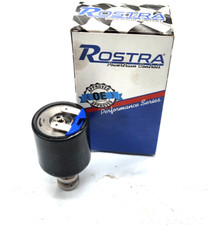
Per the Rostra and Transtar interchange for this solenoid family, the 4R44E used it from 1995 through 2001, after which Ford's small rear-drive trucks moved to the five-speed 5R44E and 5R55E with the same EPC design through 2011. Vehicles on that interchange include the 1995-2011 Ranger, 1995-1997 Aerostar, Explorer, Mercury Mountaineer and Mazda B2300, B2500, B3000 and B4000 trucks. Because the title runs to 2012, treat later model years as a match-it-first case: compare the mounting tab, the two-blade connector and the twin-screen nose against your old solenoid, or send us your year and VIN and we will confirm it. This solenoid does not fit the 5R55W or 5R55S used in 2002-up Explorers and Mustangs. The rest of this family is on our 5R55 and 4R44E parts page.
Install notes
- Drain the fluid and drop the pan and filter; the EPC solenoid is on the valve body, so the transmission stays in the truck.
- Unplug it, remove the single bracket bolt and pull it straight out of its bore.
- Look at the old screens. Friction material or metal on them means the unit has wear beyond the solenoid.
- Lightly oil the new O-ring, seat the solenoid fully, then torque the bracket bolt so the body is not cocked in the bore.
- Fill with MERCON V or the fluid listed on your dipstick or owner's manual, then verify line pressure with a gauge.
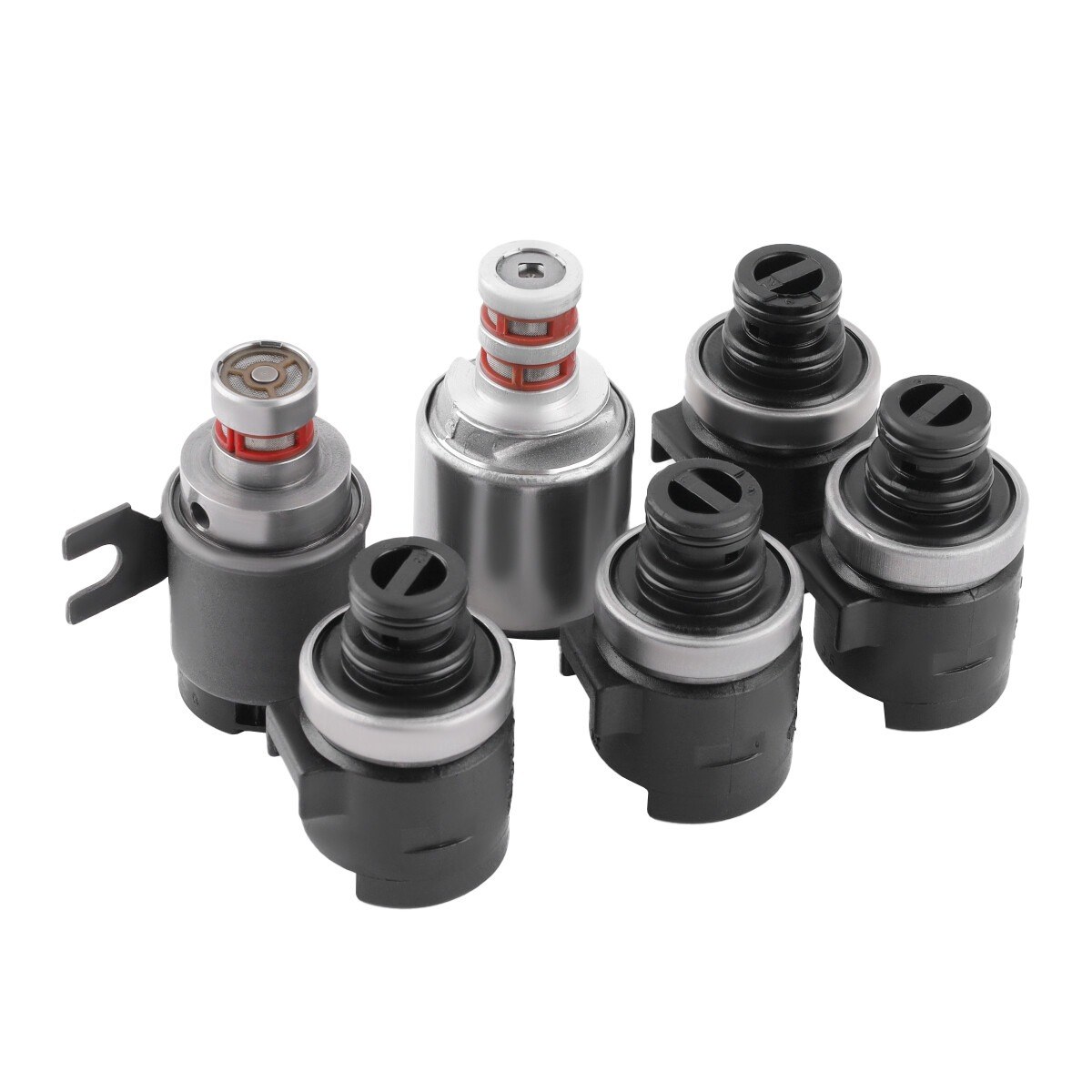
If the pan is already down and the truck has high miles, replacing the other solenoids at the same time with the 4R44E solenoid kit is cheap insurance, and a valve body with repeat pressure codes is a candidate for the Sonnax 4R44E/5R55E Zip Kit.