The 5R55S and 5R55W are Ford's five-speed automatics from the early-2000s Explorer, Mountaineer, Mustang, Ranger, and the Lincoln LS and Thunderbird. They earned a bad reputation, and a lot of that reputation is deserved — but not for the reason most people think. These units do not usually die because the clutches wear out. They die because the aluminum case wears out around a steel pin, and the hydraulic pressure that runs the whole transmission starts leaking out through a hole that no clutch pack, solenoid, or valve body rebuild will ever seal. If you do not understand the servo pin bore, you will keep chasing this transmission in circles.
This is the failure I see most, why it produces the exact symptoms it does, how to confirm it on the bench instead of guessing, and the repair that actually restores the case instead of replacing it. I will also lay out the two cheaper problems — the range sensor and the valve body wear — that you rule out first, because they can mimic the expensive one.
The short version: Loss of 2nd, 3rd and 5th, plus a delayed or slamming reverse, on a high-mile 5R55S/W points hard at servo pin bore wear in the aluminum case. Confirm it before you condemn the valve body. The correct fix is a wear-resistant case sleeve installed on a reaming fixture — not a used case of unknown history that is already wearing the same way.
First, Know Which Unit You Have
The 5R55 family is an alphabet, and the letters are not interchangeable. Per Sonnax's own field guide, the 5R55N ran from roughly 1999–2002 in the Jaguar S-Type (3.0/4.0L), Lincoln LS, and Ford Thunderbird. The 5R55S replaced the N in the Lincolns and T-Birds for 2003, then went into the Explorer and Mountaineer for 2004–2005 (and served in the Mustang and Ranger). The 5R55W covered Explorers and Mountaineers for 2002–2003 before the S took over.
The N is the odd one out: it uses a lower valve body base plate similar to the 4R70W and carries a reverse-pressure (RP) switch, and only a few of its parts cross over to the W/S. You can spot it externally — the N has two cast bosses just behind the intermediate servo cover; the W/S has only one, for the PCC pressure port. Between the W and the S, the biggest hard-part difference is the overdrive sun gear: the W uses a 24-tooth OD sun gear, the S a 38-tooth. Get the identification right before you order anything, because a "5R55" kit is not automatically the kit you need.
How This Transmission Actually Engages
You cannot diagnose engagement complaints on this unit without knowing what is moving fluid. The 5R55S/W carries four on/off shift solenoids, one PWM solenoid for torque-converter-clutch control, and three variable-force solenoids (the PCA, PCB and PCC, also called VFS 1, 2 and 3). The four shift solenoids only align valves in the valve body; the three variable-force solenoids do the real work of controlling how fast a clutch or band applies and releases. With the selector in Park, Reverse, Neutral or Drive, the four shift solenoids stay in the same state — only the three variable-force solenoids control the reverse and forward engagements.
Jesse Zacarias walked through the hydraulics in Transmission Digest, and the takeaway for diagnosis is this: when you select Reverse, the PCM modulates PCB at roughly 0.5 amp to hold the reverse-engagement control valve down, while SSA holds the direct-clutch control valve up so PCC pressure can start applying the direct clutch. As the PCM lowers PCC amperage, PCC pressure climbs, overcomes PCB, strokes the valve, and lets main line pressure fill the direct-clutch drum. The whole event takes about two seconds. Drive works the same way through PCB and PCA into the forward-clutch drum. The practical lesson: because the transmission range sensor is what tells the PCM which way to modulate those solenoids, a failing range sensor can keep the unit from engaging forward or reverse at all — with no internal damage whatsoever.
Rule out the range sensor first. A no-forward or no-reverse complaint, or engagements that come and go, deserve a hard look at the transmission range (TR) sensor and its wiring before anything comes apart. It is cheap, it is external, and it produces symptoms that look internal. This is the 5R55 equivalent of checking the harness before you drop the pan.
The Main Event: Servo Pin Bore Wear
Here is the failure that defines this transmission. The overdrive and intermediate servos apply their bands through a steel servo pin that rides directly in a bore machined into the aluminum case. Steel against aluminum, oscillating under pressure, thousands of times a day. Aluminum loses that fight. Over time the bore wears oval, and once it is no longer round, pressurized fluid finds a path around the pin.
Sonnax describes the hydraulic consequence precisely, and it explains every symptom you will see. Servo apply oil is fed through the center of the case bridge and into the servo pin, acting on the cover side of the piston. As the pin bore wears, that apply oil leaks off into the barrel area of the case, hurting shift timing and servo/band apply pressure. Servo release pressure feeds the spring side of the piston; as wear increases, release oil cross-leaks into the apply circuits and exhausts at the shift valves. And because in Reverse both servos are charged from the release side, pin bore wear shows up as a delayed reverse. On top of all that, these units are prone to foaming the fluid in the sump from excess exhaust and valve body wear, which pushes fluid out the vent and gives you a false low-fill reading.
What the driver and the scan tool see
The classic pattern is loss of 2nd, 3rd and 5th gear with incorrect-ratio codes, plus a reverse that is delayed or bangs in. In OBD-II terms the ratio codes are P0731 through P0735, which correspond to gears 1 through 5 — so a stored P0732/P0733/P0735 cluster on a 100k-plus 5R55S is a servo-bore fingerprint until proven otherwise. Ford acknowledged this wear pattern in a service bulletin covering shift concerns and the loss of those gears on Explorer-family units; the mechanism it describes is the same servo pin bore wear Sonnax builds the repair for. Burned overdrive or intermediate band material in the pan is the confirmation that the apply pressure has been leaking long enough to cook the friction.
Confirming it on the bench
With the unit apart, this is not a subtle inspection. Pull the servo covers and pistons and look at the bores. A worn bore will be visibly and measurably oval, often with a witness mark or step where the pin has been hammering one side. Test-fit a known-good pin; if it rocks or drags on one axis, the bore is gone. Do not skip this because the clutches "looked fine" — a leaking servo bore burns bands and starves apply pressure while the direct and forward clutches still measure in spec, which is exactly why shops replace the wrong parts and get a comeback.
The fix that actually holds
The durable repair is not a used case — every high-mile case is wearing the same way, so a junkyard swap just resets the clock on the same failure. The right answer is a wear-resistant sleeve installed in the worn bore on a dedicated reaming fixture. Sonnax's overdrive & intermediate servo pin bore sleeve kit (part 56361J-01K, with the S-56361J-TL tool kit and the SERVO-FIX reaming fixture) reams the damaged bore and installs a sleeve made of highly wear-resistant aluminum, aligned from the pin bore centerline rather than the piston bore, restoring proper clearance to the servo apply pins. Done correctly, it refurbishes the case to hold pressure again — the one repair that addresses the actual cause instead of the downstream damage.
5R55W / 5R55S Filter and Pan Gasket Kit
Whether you are servicing fluid or going in for the servo bore, you drop the pan either way. Do it with a fresh filter and gasket rather than reusing a clogged filter that starves an already pressure-short pump. This kit fits the 5R55W/5R55S and is the right starting point for any service or teardown on these units.
View the 5R55W/5R55S Filter Kit →Valve Body and Case Bore Wear (Rule This Out Too)
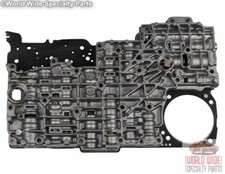
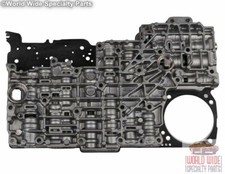
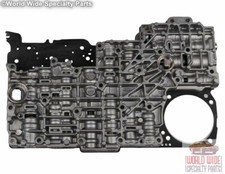
The servo bore is not the only aluminum surface that wears. Sonnax's field guide points to the valve body itself: the TCC modulator bore and the main regulator bore tend to wear first because they cycle the most — and city driving, with its constant stop-and-go, accelerates it. As those bores go, and then the VFS 1/2/3 modulator bores behind them, clutch and servo pressure drop across the board. The symptoms overlap with servo bore wear: soft shifts, flare, inconsistent timing that changes with temperature. That overlap is exactly why you inspect both while the unit is open and address whichever bores are worn, rather than assuming one cause and reassembling.
There is also the CDF (coast/direct/forward) drum side of the story. The direct clutch is applied in Reverse, 4th and 5th by the PCC solenoid, and in 3rd, direct-clutch oil sits under the servo cover to release the band — so a worn or leaking servo cover degrades the 2-3 shift and direct-clutch durability, not just the servo function. If you have a 2-3 flare on top of the loss-of-gears pattern, keep the cover and its bore on your suspect list.
Fluid: Mercon V, and a Sealed Unit With No Dipstick
The 5R55S/W uses Mercon V — not Mercon LV, not Mercon SP. Mercon V is a synthetic-blend ATF that Ford developed in part to combat torque-converter-clutch shudder, and it carries the friction chemistry these clutches were calibrated around. Do not substitute a low-viscosity or SP fluid; the wrong friction properties on this unit read as shudder and erratic shifts.
| Item | Spec (approximate) |
|---|---|
| Fluid type | Motorcraft Mercon V (dyed red) |
| Total / dry fill (rebuild) | ~13 quarts |
| Pan drop + filter | ~3.5 quarts removed |
| Fill-plug drain only | ~2.75 quarts removed |
The catch is that these are sealed units with no under-hood dipstick. You fill through a plug and set the level by fluid temperature, which means you need a fill adapter and a scan tool reading transmission fluid temp to do it right. Overfill and you foam the fluid — which this unit already wants to do from servo-bore exhaust — and push it out the vent. Underfill and you starve an already pressure-marginal pump. Get the level set at the specified temperature window, not by eye.
The 2004 fill-fluid recall matters here. Ford identified that a batch of 2004 and some early-2005 vehicles with 5R55S/5R55E/5R44E transmissions left the plant with improperly formulated fluid that could cause delayed or harsh reverse over time; the field remedy was an additive. If you have a delayed-reverse complaint on an original-fluid 2004–2005 unit, know that history exists before you assume the case is worn out. On a high-mile unit it is usually both — but confirm, do not assume.
The Diagnostic Order, Start to Finish
- Scan and record. Pull codes but read them as clues, not verdicts. A P0731–P0735 ratio cluster with a reverse complaint on a high-mile unit says servo bore before it says anything internal-and-random.
- Check the transmission range sensor and its wiring. No-forward, no-reverse, or come-and-go engagement can be the TR sensor telling the PCM the wrong thing. Cheap, external, first.
- Assess the fluid and level. Mercon V only, set to temperature. Foamed or over-vent fluid is itself a servo-bore tell. Rule out a wrong-fluid or improper-fill history, including the 2004 fill-fluid issue.
- Inspect both aluminum wear zones. With the unit open, check the servo pin bores and the valve body TCC/main-regulator bores. Address every worn bore, not the first one you find.
- Sleeve the case, do not swap it. A worn servo bore gets the Sonnax sleeve on a reaming fixture. A used case is a used clock on the same failure.
Follow that order and the 5R55S/W stops being the mystery box it is reputed to be. Most of what gets called "these just fail" is a range sensor, a fluid-level or fluid-type mistake, or an aluminum bore that wore oval and can be restored on the bench for a fraction of a replacement unit. The cases that are genuinely destroyed reveal themselves clearly once you have ruled the cheap causes out.
Going in for a full teardown? Our valve body cleaning and inspection guide and pressure-testing walkthrough cover the bench steps that apply directly here, and the TCC shudder diagnosis is worth a read given how sensitive this unit is to fluid. For servo covers, TR sensors, solenoids, seal kits and shift kits, our sister store gearboxinsider.com ships them direct, and our own tool store carries the fill adapters and pressure gauges the job needs.
Sources
- Sonnax — Overdrive & Intermediate Servo Pin Bore Sleeve Kit 56361J-01K (5R55N/5R55W/5R55S), on the servo apply/release oil circuits, how pin bore wear causes delayed reverse and lost apply pressure, and the wear-resistant sleeve repair. sonnax.com/parts/2207-overdrive-intermediate-servo-pin-bore-sleeve-kit
- Sonnax — "Figuring Out the 5R55 Alphabet," on N vs. W/S identification, the 24- vs. 38-tooth OD sun gear, and the TCC-modulator and main-regulator valve body bores that wear first. sonnax.com/tech_resources/195-figuring-out-the-5r55-alphabet
- Transmission Digest — Jesse Zacarias, "Understanding the 5R55S/W Initial Engagements," on the four shift solenoids, PWM TCC solenoid, three variable-force solenoids (PCA/PCB/PCC), and how a range sensor fault blocks forward/reverse engagement. transmissiondigest.com/understanding-the-5r55s-w-initial-engagements/
- Sonnax — Ford 5R55S unit page, parts and component reference for the transmission. sonnax.com/units/190-5r55s
- Ford Customer Service Division (Motorcraft) — Mercon V automatic transmission and power-steering fluid product data, for the Mercon V specification and shudder-oriented friction chemistry. fcsdchemicalsandlubricants.com/products/transmission-fluid/productdetails?id=2
- NHTSA Office of Defects Investigation — 2004 Ford Explorer complaint dataset (1,408 total complaints, of which 477 cite the "Power Train" component), as a measure of the real-world failure volume on this platform. api.nhtsa.gov (complaintsByVehicle, Ford Explorer 2004)
Need parts for this job?
Rebuild kits, hard parts, solenoids, valve bodies, filters, gaskets and the correct fluid for this unit — shipped fast from the USA on secure checkout.
Shop 5R55 parts →