Nissan has been using JATCO continuously variable transmissions across nearly their entire passenger car lineup since the mid-2000s. The Altima, Sentra, Rogue, Murano, Pathfinder, Maxima, Versa, and Juke all use some version of the JATCO CVT. These transmissions have generated more customer complaints, class action lawsuits, and extended warranty programs than any other transmission family in recent memory. If you run a transmission shop, you are seeing these units regularly -- and you need to understand what you are dealing with.
The JATCO CVT family includes the JF010E (used in larger vehicles like the Murano and Maxima), the JF011E (the most common, found in the Altima, Rogue, and Sentra), and the JF015E (a smaller unit in the Versa and Juke). The failure modes overlap significantly across these variants. This guide covers the problems I see most frequently and what the repair options actually are.
See all Nissan transmission resources and email courses on our Nissan hub page.
How the JATCO CVT Works (Quick Version)
A CVT does not have traditional gears. Instead, it uses a steel push belt running between two variable-diameter pulleys. By changing the effective diameter of each pulley, the CVT achieves a continuously variable ratio -- no discrete shifts, just a smooth change in the ratio between the engine and the wheels. The JATCO units also include a torque converter at the input (unlike some CVTs that use a clutch pack) and a planetary gear set for reverse.
The critical components are the belt, the pulleys, and the hydraulic system that controls pulley clamping pressure. If clamping pressure is insufficient, the belt slips on the pulley surfaces. Belt slip on a CVT is not like clutch slip on a conventional automatic -- it scores the pulley surfaces, damages the belt, and generates metallic debris that contaminates the entire hydraulic system. A single episode of belt slip can turn a fluid service problem into a $4,000 rebuild.
Problem 1: Overheating
Why It Happens
The JATCO CVT generates more heat than a comparable planetary automatic transmission. The belt-and-pulley system creates friction across a larger surface area, and the hydraulic clamping system requires continuous high-pressure oil flow. Nissan's factory cooling system is marginal for the heat load, especially in stop-and-go traffic, warm climates, or any situation where the vehicle is driven aggressively.
Symptoms
The transmission warning light illuminates. The CVT goes into a protection mode that limits RPM and vehicle speed. The customer may report that the vehicle suddenly lost power on the highway or in traffic. On Nissan vehicles with a CVT temperature display in the driver information center, the temperature may show 250 degrees or higher. Normal operating temperature for the JATCO CVT is 170 to 200 degrees.
Nissan documents this behavior and the conditions that trigger it. Per Nissan bulletin NTB16-090, on 2011-2015 Rogue and Rogue Select built without the tow package kit, vehicle speed is reduced by the CVT fail-safe after continuous operation at 4,000+ RPM or 65 mph for 1.0 to 1.5 hours or more, when driving in ambient temperatures of 96 degrees or higher, or when climbing steep or extended hills for 6 miles or more. A whine or rattle during the power reduction is listed as part of the same complaint. Those are the real-world conditions that push this unit past its cooling capacity.
What to Do
Nissan's own remedy in NTB16-090 is the same one: after checking the CVT-A counter with the factory scan tool, the bulletin directs the technician to install the External CVT Fluid Cooler kit, and to replace the control valve assembly as well if the CVT-A count is greater than 1. An aftermarket cooler is doing the same job the factory kit does.
If the customer is experiencing repeated overheating events but the CVT still functions normally when cool, the solution is an auxiliary transmission cooler. The factory cooler is integrated into the radiator and is insufficient for the heat load in many driving conditions. An aftermarket stacked-plate cooler plumbed in series with the factory cooler will reduce operating temperature by 20 to 40 degrees and significantly extend CVT life. This is a proactive repair that should be recommended to any Nissan CVT owner in a warm climate.
If the CVT has overheated severely and is now exhibiting belt slip, shudder, or noise, the damage is likely done. Overheated CVT fluid loses its friction properties and its ability to maintain clamping pressure. The unit needs to come out for inspection at minimum.
Problem 2: Judder and Shudder
Why It Happens
CVT judder is a vibration felt during acceleration, typically at low speeds. It feels like driving over a washboard road. The cause is belt slip on the pulley surfaces -- the belt is not maintaining consistent contact with the pulley, and the micro-slipping creates a pulsation in the drivetrain. Judder is caused by one of three things: degraded fluid that has lost its friction properties, worn pulley surfaces that no longer grip the belt properly, or a failing stepper motor that controls pulley ratio and is not maintaining consistent clamping pressure.
Symptoms
Vibration during acceleration from a stop. The vibration may come and go. It is typically worse when cold and may improve when the fluid reaches operating temperature. In early stages, a fluid change with the correct Nissan NS-2 or NS-3 CVT fluid resolves the judder. In advanced stages, the pulley surfaces are scored and no amount of fresh fluid will fix it.
What to Do
Step one is always a fluid service with the correct fluid. The JATCO CVT is extremely sensitive to fluid specification. NS-2 fluid is used in 2007 to 2012 applications. NS-3 fluid is used in 2013 and later applications. Using the wrong specification or a non-Nissan-approved fluid will make the judder worse, not better. Do not use universal CVT fluid in a Nissan. It does not have the correct friction properties.
This is not shop folklore. Nissan bulletin NTB14-077 supersedes the owner's manual language for the NS-3 applications and states it plainly: use Genuine NISSAN NS-3 CVT Fluid only, do not mix it with other fluids, and do not use ATF or manual transmission fluid in a Nissan CVT as it may damage the unit. The same bulletin adds that damage caused by using fluids other than as recommended, including fluids that are not equivalent to Genuine NISSAN NS-3, is not covered under the New Vehicle Limited Warranty. Put that on the work order when a customer asks for the cheap jug.
Nissan also built judder diagnosis into the TCM. Bulletin NTB15-014C covers enhanced diagnostic logic that stores P17F0 (CVT_JUDDER [T/M INSPECTION]) and P17F1 (CVT_JUDDER [C/U INSPECTION]) on the applied vehicles, which include the 2013-2015 Pathfinder and Altima with the V6, 2015 Quest and Murano, and 2016 Maxima. If the vehicle is on that list, pull codes before you sell a fluid service, because the TCM may already be telling you whether the unit or the control unit is the problem.
If a fluid service does not resolve the judder within 500 miles of driving, the pulley surfaces are likely damaged and the unit needs to be inspected. Pulley resurfacing is possible but uncommon -- most shops replace the pulleys or the entire variator assembly.
Problem 3: Valve Body Failure
Why It Happens
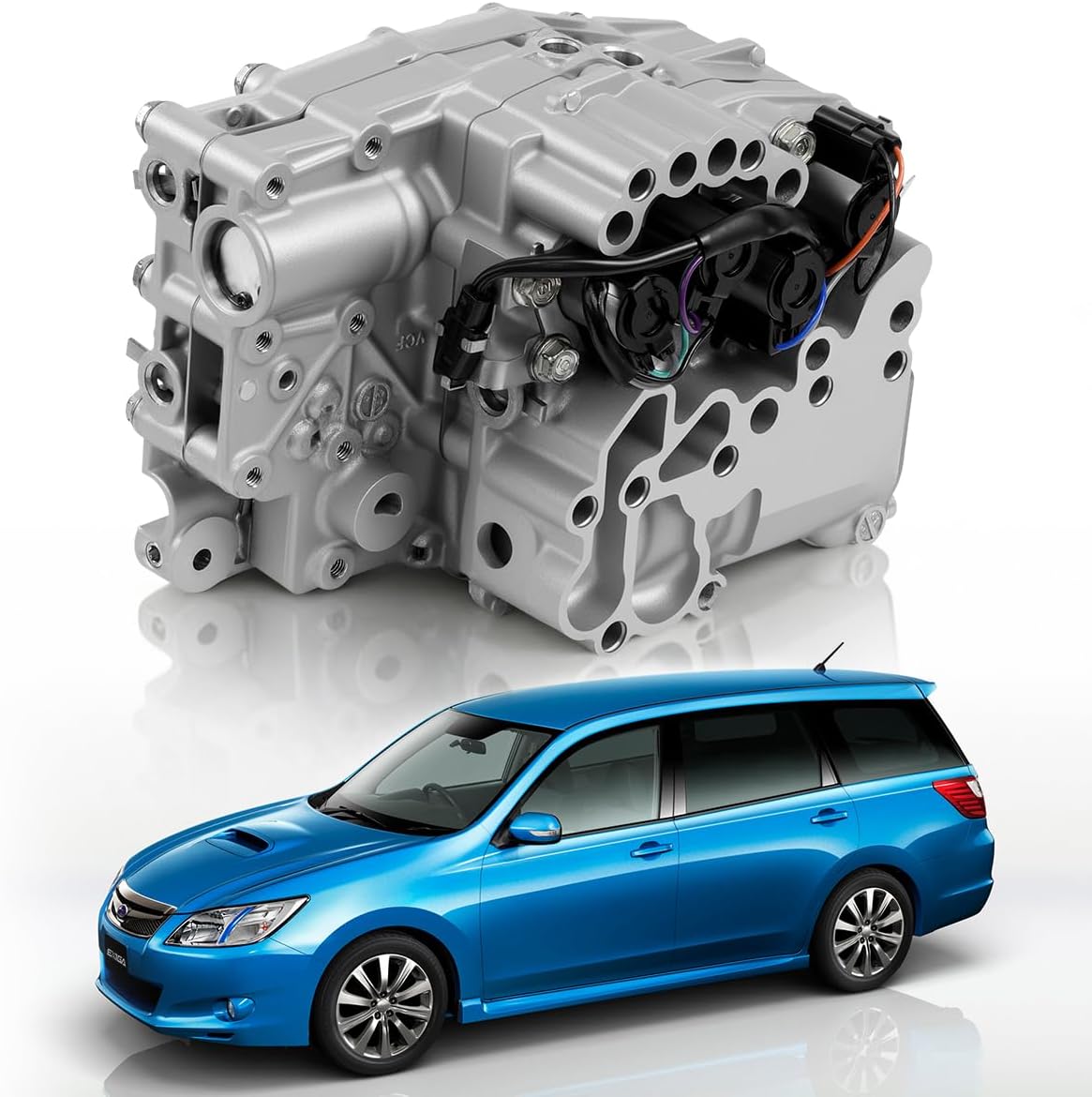
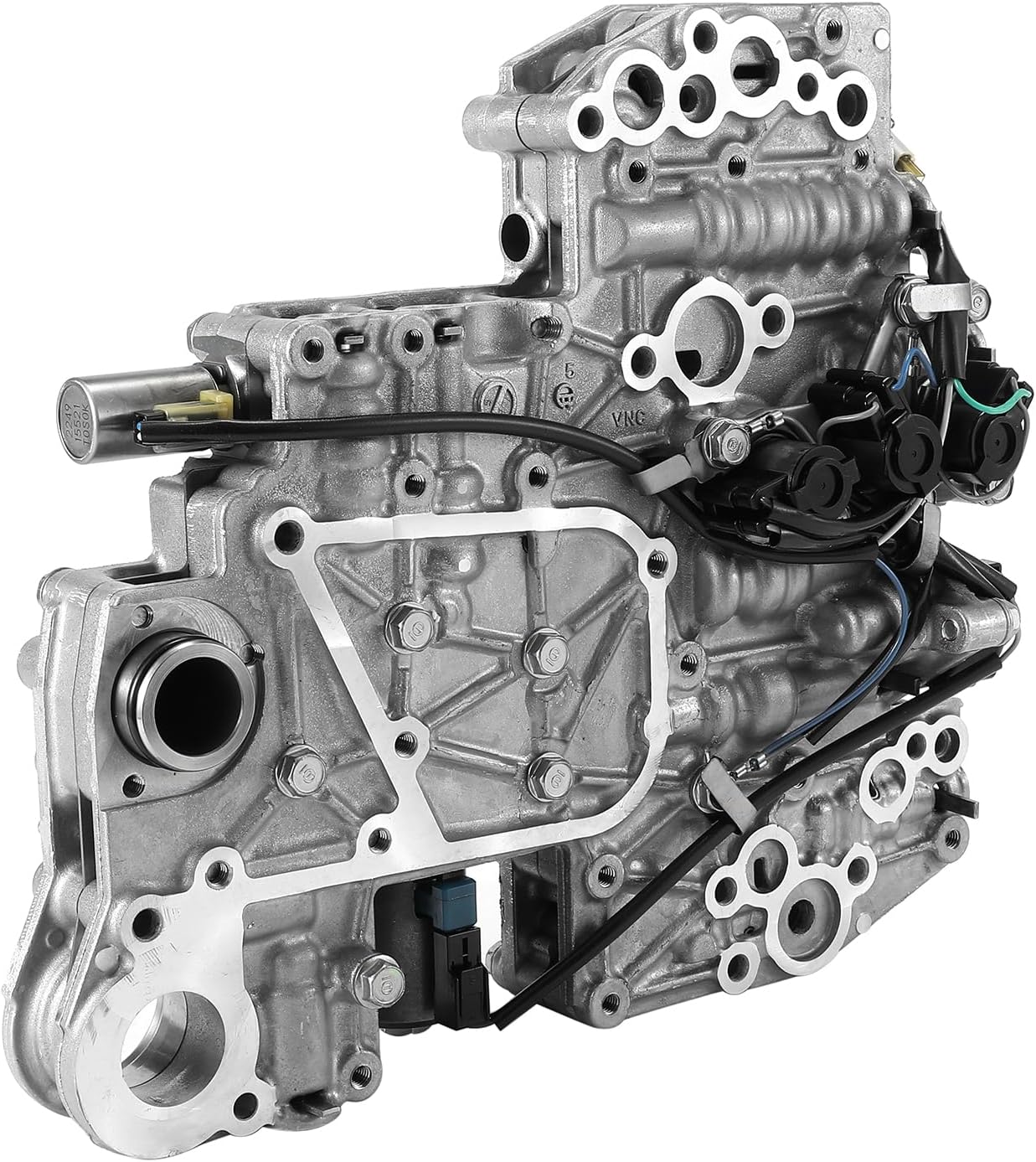
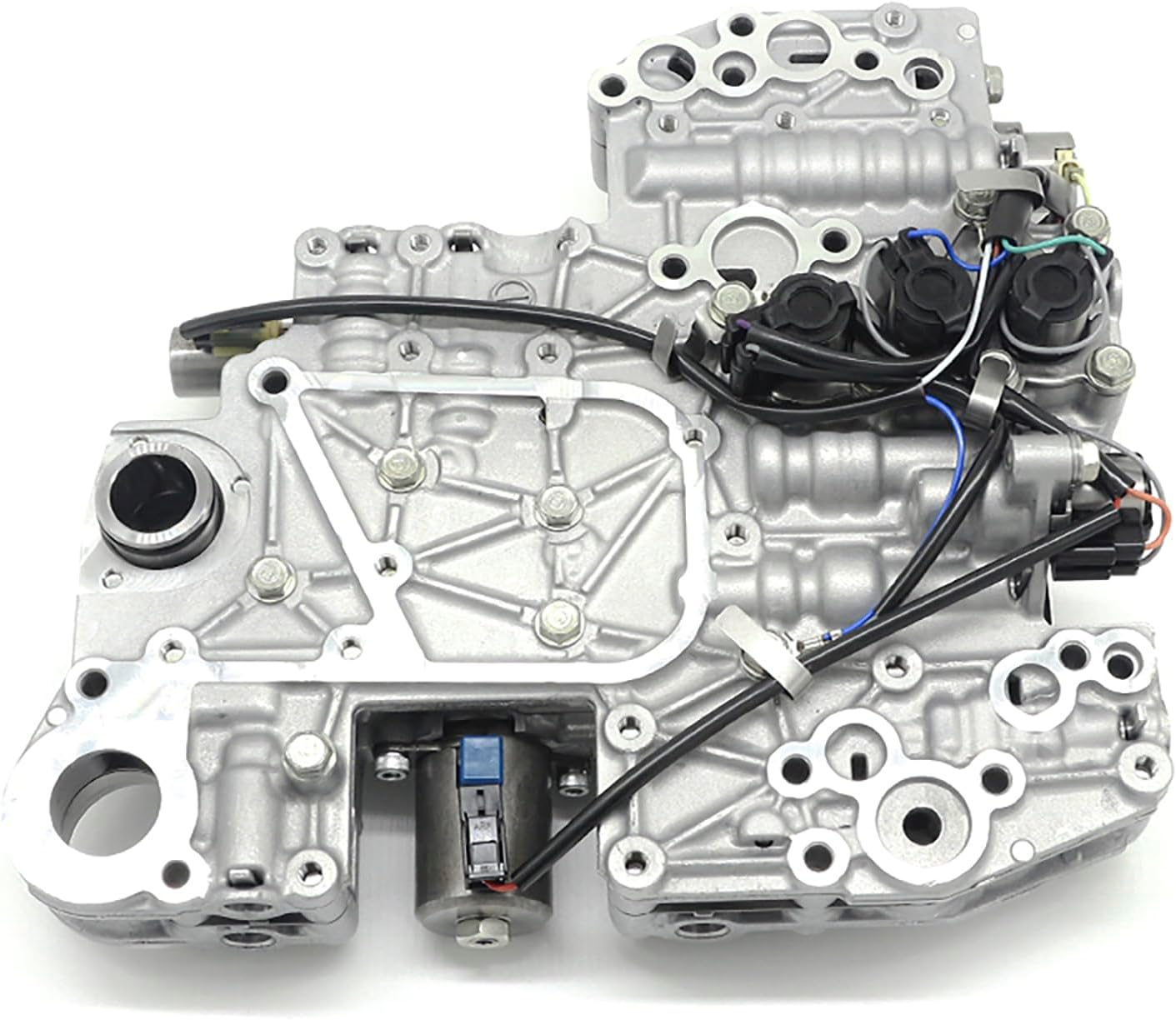
The valve body in the JATCO CVT controls the hydraulic pressure that clamps the pulleys and manages the torque converter lockup. The valve body contains multiple solenoids and spool valves that regulate pressure based on commands from the TCM. Over time, the valve bores wear, solenoids degrade, and the valve body can no longer maintain precise pressure control. The result is erratic ratio changes, delayed engagement, and in severe cases, complete loss of drive.
Symptoms
Delayed engagement from park to drive or reverse. The RPM flares momentarily before the CVT engages. Erratic behavior at steady throttle -- the RPM wanders up and down instead of holding steady. Codes related to pressure control solenoid performance. In some cases, a sudden loss of drive at highway speed that returns after cycling the ignition.
What to Do
Valve body replacement on the JATCO CVT is a viable repair option. Aftermarket remanufactured valve bodies are available for the JF010E and JF011E from suppliers like Transtar and Sonnax. The valve body can be replaced without removing the CVT from the vehicle on most applications -- pan removal and careful disassembly are required. This is a significantly less expensive repair than a full CVT replacement and resolves engagement and pressure control issues in the majority of cases where the belt and pulleys are still in good condition.
Problem 4: Complete Belt or Chain Failure
Why It Happens
The steel push belt in the JATCO CVT is a precision component made up of hundreds of individual steel segments held together by steel bands. Under normal conditions with proper fluid maintenance, the belt is durable. Under abnormal conditions -- overheating, contaminated fluid, excessive torque from aggressive driving or towing -- the belt segments can fracture, the bands can stretch, or the belt can jump on the pulley surfaces. A belt failure in a CVT is a catastrophic event that typically destroys the pulleys and contaminates the entire hydraulic system.
Symptoms
Loud metallic noise from the transmission area. The noise is typically a grinding or rattling that is speed-dependent. Complete loss of drive may follow the noise. In some cases, the belt does not fully fail but begins to shed individual segments, which produces a rhythmic metallic tapping sound that increases with vehicle speed.
What to Do
A belt failure is the end of the road for the internal components. The CVT needs a full rebuild with a new belt, new pulleys, new bearings, and a thorough flush of the hydraulic system. In many cases, the cost of a rebuild approaches or exceeds the cost of a remanufactured unit. For most customers, a remanufactured CVT with a warranty is the more practical option. Rebuilt JATCO CVT units from reputable remanufacturers typically run $2,500 to $3,500 plus installation.
Fluid Service: The Single Most Important Thing
Nissan originally published CVT fluid change intervals of 60,000 miles for "severe" conditions and "lifetime" for normal conditions. The "lifetime" recommendation was quietly dropped after the flood of CVT failures and extended warranty claims. The current recommendation is 30,000 miles for severe conditions, and every Nissan CVT should be treated as a severe condition application.
The fluid service on a JATCO CVT is a drain and fill. There is no serviceable filter on most applications -- the filter is internal to the CVT and is not replaced during a routine service. The drain capacity is approximately 4 to 5 quarts depending on the model. A complete fluid exchange requires multiple drain and fill cycles because the torque converter and cooler lines retain fluid. Two drain and fill cycles with driving in between captures approximately 80 percent of the total fluid volume.
Use the correct fluid. NS-2 for pre-2013 vehicles. NS-3 for 2013 and later. NS-3 is backward-compatible with NS-2 applications in most cases, but check the Nissan TSBs for your specific application before using NS-3 in an older vehicle. Do not use aftermarket CVT fluid regardless of what the label says.
Need parts for this job?
Rebuild kits, hard parts, solenoids, valve bodies, filters, gaskets and the correct fluid for this unit — shipped fast from the USA on secure checkout.
Shop CVT parts →Sources
- Nissan Bulletin NTB16-090 / AT16-013, "2011-2015 Rogue and Rogue Select; Reduced Performance Due to CVT Fluid Temperature Protection Logic" (hosted by NHTSA). Backs the overheating section: the CVT fail-safe reduces vehicle speed after continuous operation at 4,000+ RPM or 65 mph for 1.0–1.5 hours or more, in ambient temperatures of 96 degrees or higher, or climbing steep or extended hills for 6 miles or more, with whine or rattle noise during the power reduction; and Nissan's remedy is to install the External CVT Fluid Cooler kit, plus replacement of the control valve assembly when the CVT-A count is greater than 1. static.nhtsa.gov
- Nissan Bulletin NTB14-077 / AT14-011, "Nissan; NS-3 CVT Fluid Service Information" (hosted by NHTSA). Backs the fluid specification section: Nissan recommends Genuine NISSAN NS-3 CVT Fluid only, instructs that it not be mixed with other fluids, warns that ATF or manual transmission fluid may damage the CVT, and states that damage caused by fluids other than as recommended, including fluids not equivalent to Genuine NISSAN NS-3, is not covered under the New Vehicle Limited Warranty. Applied vehicles include the 2013-2015 Versa Sedan, Altima Sedan, Sentra and Pathfinder, and the 2014-2015 Versa Note and Rogue. static.nhtsa.gov
- Nissan Bulletin NTB15-014C / AT14-014C, "Enhanced Diagnostic Logic for CVT Judder" (hosted by NHTSA). Backs the judder diagnostic section: Nissan established diagnostic logic that stores P17F0 (CVT_JUDDER [T/M INSPECTION]) and P17F1 (CVT_JUDDER [C/U INSPECTION]) for customer reports of transmission judder described as shake, shudder, single or multiple bumps or vibration, on applied vehicles including 2013-2015 Pathfinder and Altima Sedan with the V6, 2015 Quest, 2015 Murano and 2016 Maxima. static.nhtsa.gov
- JATCO Ltd — Introduction to Transmissions (manufacturer technical glossary). Backs the description of how the unit works: the belt-and-pulley CVT changes ratio continuously by varying the effective pulley diameters, using a metal push belt clamped between movable pulley sheaves rather than discrete gear steps. jatco.co.jp
- JATCO Ltd — Jatco CVT8 (JF016E/JF017E) product information. Backs the family and application context for the current belt-type Jatco CVT generations referenced in this guide. jatco.co.jp