From 2009 into 2010, Ford built the F-150 with two completely different automatics behind the same badge. A base 4.6L two-valve truck got the four-speed 4R75E. Step up to the 4.6L three-valve or the 5.4L and you got the six-speed 6R80. Same model year, same cab, sometimes parked side by side on the same used lot. Customers call both of them "the F-150 transmission," and parts counters get the order wrong more often than you would think.
They share nothing worth naming inside. The 4R75W/E is the last of the AOD family, a Ravigneaux four-speed with a conventional valve body. The 6R80 is Ford's licensed build of the ZF 6HP26, a Lepelletier six-speed with all the electronics bolted to the valve body. This is the bench comparison: how to tell which one you have, how each is built and controlled, fluid and capacity, where each one breaks, and which is the better unit to rebuild or keep. The numbers come from Ford's own owner guides, ATRA, GEARS and Sonnax. All are listed under Sources.
The Short Version
| 4R75W / 4R75E | 6R80 | |
|---|---|---|
| Speeds | 4 forward, one overdrive | 6 forward, two overdrives |
| Gear train | AOD-family Ravigneaux, 2.84 / 1.55 ratio family | Lepelletier (simple planetary + Ravigneaux), ZF 6HP26 design |
| Shift elements | Clutches, bands and one-way clutches (AOD lineage) | Three driving clutches (A, B, E), two brake clutches (C, D) |
| Electronics | Solenoid body on a conventional valve body; external speed sensors | Mechatronic valve body with TSS, OSS, TFT and range sensor built in |
| 2009 F-150 door code (TR) | Q | 6 |
| 2009 F-150 fluid / capacity | MERCON LV, 13.9 qt | MERCON LV, 13.9 qt |
| Level check | Dipstick | No dipstick; checked at the fill plug |
| F-150 years | 2004-2010 (4R75E) | 2009-2010 with 4.6L 3V and 5.4L; every F-150 from 2011 |
Door codes and the 2009 fluid and capacity figures are from Ford's 2009 F-150 Owner's Guide [1]. The 4R75 ratio family is from Sonnax [9]. The 6R80 element layout is from GEARS [4].
Which One Is in the Truck?
Do not trust the engine size alone in the crossover years. Ford's 2009 F-150 pricing release lists the XL, STX and XLT regular cab with the "4.6L 2V w/ 4-Spd Auto Trans" as the base powertrain, while the King Ranch and Platinum carry the 6-speed automatic as standard [3]. Mid-trim trucks could go either way depending on the engine ordered.
The fastest check is the Safety Compliance Certification Label on the driver's door pillar. In the 2009 F-150 guide, Ford lists transmission code Q for the four-speed 4R75E and code 6 for the six-speed 6R80 [1]. Earlier trucks use the same Q code for the 4R75E; the 2006 F-150 guide lists A for the 4R70E and Q for the 4R75E [2].
If the label is gone, look under the hood and under the truck:
- Dipstick. The 2009 owner guide has a separate procedure for the six-speed and says plainly that it "does not have a transmission fluid dipstick" [1]. A dipstick tube at the back of the engine means 4R75E.
- Fuse panel. The same guide splits the power distribution box by transmission: a 5A fuse feeds the "PCM, 6R80 transmission," and a separate 10A fuse is labeled for the four-speed shifter circuits [1]. If you are chasing a no-communication or limp complaint, you need the right fuse table first.
- Case and pan. The 4R75 has the long AOD-family case and pan. The 6R80 has the ZF-pattern case and pan. Side by side on a lift they look nothing alike, so one look underneath settles it.
How Each One Is Built
4R75W / 4R75E: the end of the AOD line
The 4R75 is a reinforced 4R70W, which is itself an evolved AODE. Sonnax sorts the whole family by ratio: the 4R70E, 4R70W, 4R75E and 4R75W all use the 2.84 / 1.55 gearset, while the AODE stands alone at 2.40 / 1.46 [9]. Third is direct drive and fourth is the overdrive.
ATRA's 4R70W/4R75E interchange section shows how far the unit kept changing even late in life [7]:
- The "E" versions (4R70E and 4R75E) carry a turbine speed sensor. The center support has an extra notch to clear it, so a 4R70W support will not let the sensor seat in an E case.
- From 2004 on, the forward drum has three clutch apply holes 120 degrees apart instead of one. ATRA calls that change cosmetic; the late drum fits all years.
- In 2007 Ford introduced a new intermediate mechanical diode with more ratchet teeth for more holding strength, retained by a snap ring instead of a press fit.
6R80: a ZF 6HP26 built by Ford
GEARS' David Chalker traces the 6R60/75/80 to the ZF 6HP26 that Ford first used in the 2005 Expedition and Navigator with the 5.4L. Ford's version uses a four-element torque converter with a multi-disc lockup clutch, three driving clutches (A, B and E), two brake clutches (C and D) and a Lepelletier planetary gear train [4]. Every gear is made by applying two of those five elements, and every upshift is a clutch-to-clutch swap of one for another.
The big mid-life change came in 2011 with the new F-150 engines. Ford added a one-way clutch to the rear planetary to smooth the 1-2 and 2-1 shifts. On 2009-2010 units the D clutch applies through all of first gear; on 2011-up units it applies only until about 3 mph and then releases, leaving the one-way clutch to hold [4][5]. That change touched the case, the C/D support, the rear planetary, the valve body, the lead frame and the PCM strategy [4]. So a "6R80" is not one parts list. A 2009-2010 truck and a 2011-up truck need different hard parts in that area.
Controls and Sensors: Where the Diagnosis Differs
On a 4R75E, the solenoids, speed sensors and valve body are separate pieces you can test and replace on their own. The turbine speed sensor reads the forward drum through the sun shell, which is why ATRA warns that the E-model sun shell must be non-magnetic. Install a magnetic shell from a W unit and the sensor cannot see the drum: the result is harsh or no shifts with ratio and input speed sensor codes [7]. That is a build mistake, not a bad sensor, and it shows up on the first road test.
On the 6R80, the turbine speed sensor, output speed sensor, fluid temperature sensor and range sensor all live in the Mechatronic unit on the valve body [4]. A sensor code often means a lead frame or valve body job, not a $40 sensor. The shift solenoids are also matched to the calibration. Sonnax's Jim Dial points out that unless you program a new calibration code, you replace a 6R80 solenoid with one carrying the exact same band number as the one you took out [6].
Shift-quality diagnosis is different too. On the 6R80 you read the apply chart and the solenoid data together. Dial's 2-3 example: the 3-5-R clutch (B solenoid) applies while the 2-6 clutch (C solenoid) releases. On a good 2-3, B solenoid pressure rises to near 50 psi as its amperage drops to about 0.07 A, and C drops to zero [6]. If both solenoids look correct on the scan tool but the shift still flares or binds, the fault is mechanical in the solenoid or clutch clearance. After any repair, reset the adaptive tables and run 20 to 25 stop-and-go cycles from 1st through 6th before you judge the shift [6].
Fluid and Capacity
For 2009, Ford lists both units at 13.9 quarts (13.2 L) of Motorcraft MERCON LV, XT-10-QLV in the F-150, and it warns that transmissions requiring MERCON LV should only use MERCON LV [1]. Ford also tells you to set the level by the indicator, not the capacity figure, because cooler size changes the total [1].
The catch is the older 4R75s. The 2006 F-150 guide specifies MERCON V (XT-5-QM) for the 4R70E and 4R75E at the same 13.9 quarts [2]. So a 2004-2008 4R75E and a 2009-2010 4R75E in the same body style call for different fluid. Check the guide for the exact year rather than assuming every four-speed takes MERCON V or that every 2009-up truck is LV only because it has six speeds.
The 2009 guide also says not to use supplemental transmission additives, treatments or cleaning agents in either unit [1]. A bottle will not fix a worn bore or a bowed separator plate. It only changes how the symptom shows up.
Where Each One Fails
4R75: separator plate cross-leak and the direct drum
The failure most shops misread on a 2001-up 4R70W or 4R75 is a separator plate problem. Sonnax's Gregg Nader explains that Ford deleted the two-bolt stiffener plate under the 2-3 accumulator in 2001. Without that clamp, pressurized oil seeps into unused valve body passages and pushes the separator plate up like a servo piston. He measured the plate bowing as much as 0.011 in under normal forward pressure, which lets forward clutch oil cross-leak into the direct clutch circuit [8]. The driver feels soft or inconsistent 2-3 shifts. The shop sees a burnt direct pack and blames the clutches.
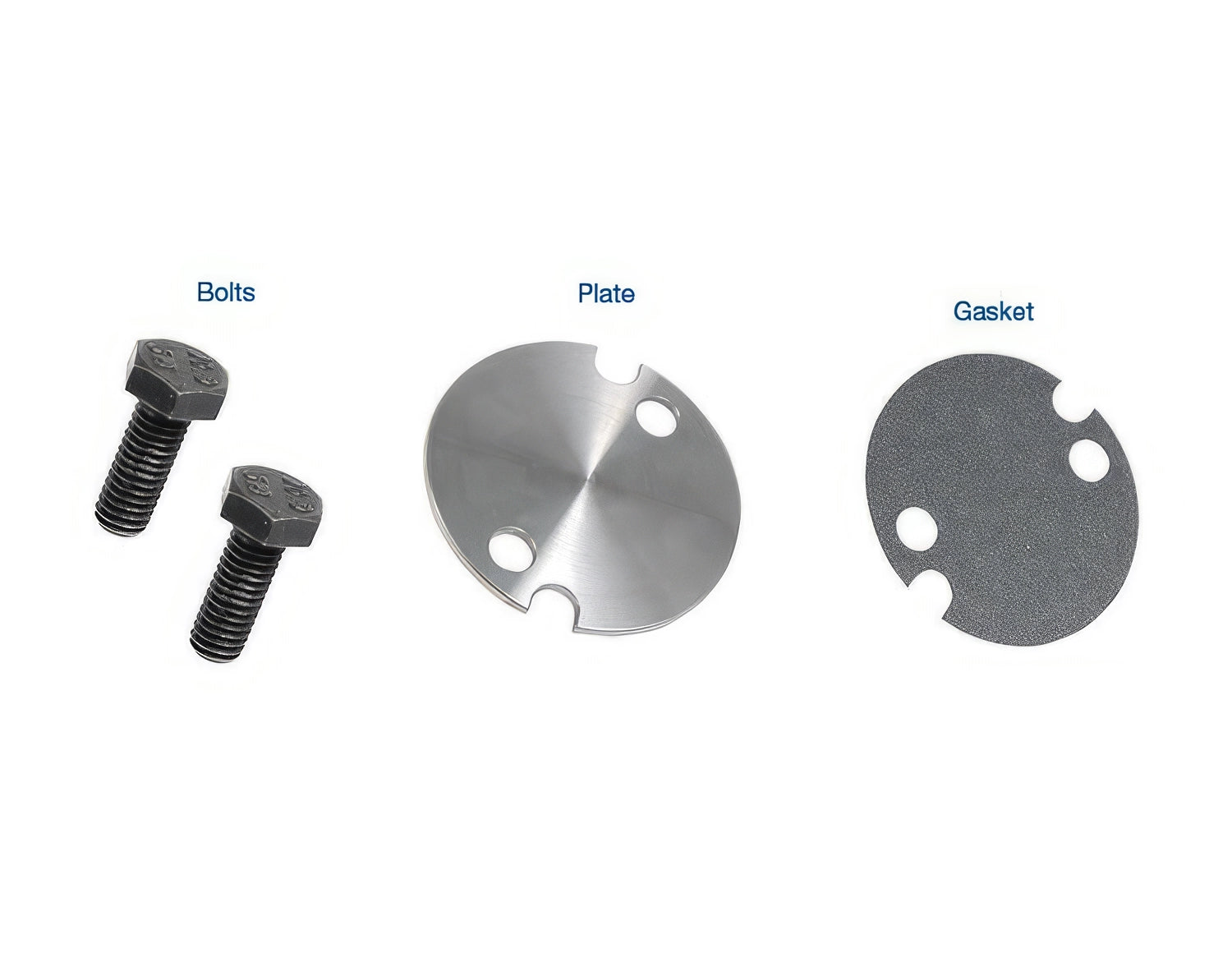
Nader's teardown tell: lay the upper gasket over the lower and look at the imprint. You will see heavy valve body imprint across most of the lower gasket except around the 2-3 accumulator. That is the unclamped area. The fix is to put the clamp back, either by drilling and tapping for a two-bolt plate or with the Sonnax retainer plate kit, 76507F-01K [8].
The second classic is the direct drum. Sonnax lists the OE weak point as the spot where the direct drum splines strip and the intermediate stub shaft breaks [9]. Their one-piece drum and shaft (76656-01K for the 2.84 / 1.55 units) eliminates that joint and adds room for one more friction [9]. On any 4R75 that has been towing or making extra power, inspect those splines before you reuse the drum.
6R80: solenoids, adaptives and year-specific hard parts
Most 6R80 complaints that reach the bench are shift-quality issues: harsh or flared shifts, a slow 1-2 with a bump at the end, or a 2-3 that cannot make up its mind. As Dial shows, a sticking solenoid that looks electrically fine on the scan tool is a common cause, and the fix is often replacing the two solenoids involved in that shift so the valve body only comes off once [6]. Do not over-tighten clutch clearances to "firm up" a shift; Dial warns that it can cause binding and send the unit straight back out [6].
The other trap is year. Because the 2011 one-way clutch change reached the case, the C/D support, the rear planetary and the valve body [4], parts from a 2009-2010 unit are not a safe swap into a 2011-up unit, and the reverse. Order by year and confirm against the core before you build.
Shop the part for this fix: 4R75W Sonnax valve body retainer plate kit
The clamp Ford deleted in 2001. It holds the separator plate down under the 2-3 accumulator so forward oil stops leaking into the direct circuit. Put it in every 2001-up 4R75 build.
View the 76507F-01K retainer plate kit →Browse all 4R75W transmission parts.
Can You Swap a 6R80 Into a 4R75E Truck?
Not as a bolt-in, and it is rarely worth it on a 2009-2010 F-150. The two units use different PCM strategies, different wiring, different fuse circuits [1] and a different internal control system. Even Ford's own 2011 6R80 change needed a new PCM strategy to manage the D clutch [4]. A swap means the matching PCM and harness, a driveshaft, crossmember and cooler lines confirmed for the new case, plus programming. If the 4R75E has failed, a proper rebuild with the 2001-up separator fix and an inspected direct drum costs far less than converting the truck.
Which One Is the Better Unit?
For the driver, the 6R80 wins easily. Two overdrives and closely spaced gears keep the engine in its power band when towing and drop cruise rpm, and the 6R80 is the heavy-duty member of the 6R60/75/80 family. That is why Ford moved every 2011 F-150 to it [4].
For the rebuilder, the 4R75 is simpler and cheaper to put back together. Parts are plentiful, the failures are well known, and the separator plate and direct drum fixes are cheap insurance. The 6R80 rewards a shop that has good scan data, the right solenoid band numbers and the year-correct hard parts, and punishes guesswork.
Practical advice: if a customer has a 2009-2010 F-150 with a worn 4R75E, rebuild what is in it. If they are shopping for a used truck to tow with, the 6R80 truck is the better buy, but check the shift quality cold and hot, and pull codes before you shake hands.
Need parts for this job?
4R75W/4R75E master rebuild kits, valve bodies, pumps and the Sonnax retainer plate kit, plus 6R80 master kits, solenoid sets and year-specific valve bodies. Secure checkout on our site.
Shop 4R75W parts →Frequently Asked Questions
Is the 6R80 better than the 4R75W?
For towing and highway driving, yes. The 6R80 has six speeds with two overdrives and is the unit Ford moved every 2011 F-150 to. The 4R75 is simpler and cheaper to rebuild, so on a 2009-2010 truck with a worn 4R75E, rebuilding it with the 2001-up separator plate fix is usually the better money.
Which 2009-2010 F-150s have the 4R75E and which have the 6R80?
Ford's 2009 pricing release lists the 4.6L two-valve with a four-speed automatic as the base XL, STX and XLT powertrain, while the 4.6L three-valve and 5.4L trucks got the six-speed. The door pillar label settles it: transmission code Q is the 4R75E and code 6 is the 6R80.
Do the 4R75E and 6R80 use the same fluid?
In a 2009 F-150, yes. Ford lists both at 13.9 quarts of Motorcraft MERCON LV, XT-10-QLV. Earlier 4R75E trucks are different: the 2006 F-150 guide calls for MERCON V at the same 13.9 quarts, so check the guide for the exact year.
Does the 6R80 have a dipstick?
Not a conventional one. Ford's 2009 F-150 guide says the six-speed does not have a transmission fluid dipstick, and the level is checked at operating temperature through the fill plug. The 4R75E keeps a normal dipstick, which is a quick way to tell the two apart.
Sources
- Ford Motor Company — 2009 F-150 Owner's Guide (archived copy). Backs transmission codes Q (4R75E) and 6 (6R80), 13.9 qt (13.2 L) Motorcraft MERCON LV XT-10-QLV for both units, the LV-only warning, no dipstick on the six-speed, the separate 6R80 and four-speed fuse circuits, and the no-additives warning. web.archive.org (Ford PDF)
- Ford Motor Company — 2006 F-150 Owner's Guide (archived copy). Backs door codes A (4R70E) and Q (4R75E) and MERCON V XT-5-QM at 13.9 qt for the 2006 four-speed. web.archive.org (Ford PDF)
- Ford Motor Company — 2009 F-150 pricing and trim press release (archived copy). Backs the 4.6L 2V with four-speed automatic as the base XL/STX/XLT powertrain and the six-speed automatic as standard on King Ranch and Platinum. Ford press release (archived)
- GEARS Magazine (ATRA) — David Chalker, "Updates to the Ford 6R80." Backs the ZF 6HP26 origin in the 2005 Expedition/Navigator, the A/B/E driving and C/D brake clutches, Lepelletier gear train, Mechatronic sensors (TSS, OSS, TFT, TR), and the 2011 one-way clutch and the parts it changed. gearsmagazine.com
- ATRA — Technical Bulletin 1861, 6R80 Clutch and Solenoid Apply Charts (2011-up). Backs the D clutch applying through all of first gear before 2011, and releasing at about 3 mph on 2011-up units with the one-way clutch. atracom.blob.core.windows.net (ATRA PDF)
- Sonnax — Jim Dial, "Troubleshooting Ford 6R80 & 6R140 2-3 Shift Quality Issues." Backs the same-band-number solenoid rule, the 3-5-R (B) and 2-6 (C) apply logic, the solenoid amperage and pressure readings on the 2-3 shift, the 20-25 cycle adapt relearn, and the clutch clearance warning. sonnax.com
- ATRA — 2009 Seminar Manual, Ford 4R70W/4R75E interchange section. Backs the turbine speed sensor center support notch, the 2004-on three-hole forward drum, the 2007 mechanical diode change, and the non-magnetic sun shell requirement on 4R70E/75E. atracom.blob.core.windows.net (ATRA PDF)
- Sonnax — Gregg Nader, "4R70W, 4R75W 2001-Later Forward & Direct Clutch Problems: The Easy Valve Body Fix." Backs the 2001 deletion of the two-bolt plate, the 0.011 in separator plate bow, the forward-to-direct cross-leak, the gasket imprint check, and the 76507F-01K fix. sonnax.com
- Sonnax — "Stop Chasing AODE, 4R70W Direct Clutch Drum Problems." Backs the 2.84 / 1.55 ratio family for 4R70E/W and 4R75E/W (2.40 / 1.46 for AODE), the OE drum spline and stub shaft weak point, and kit 76656-01K. sonnax.com