If you spend any time under Mustangs, F-150s, Crown Victorias, Explorers or Expeditions, you already know the 4R70W and 4R75W are two branches of the same family tree. They look almost identical on the bench, share most of their hard parts, and carry the same gear ratios. The confusion starts when someone drops off a core with a mismatched tag, or wants to bolt a junkyard 4R75W into a truck that came with a 4R70W. This is the builder-to-builder rundown of what actually changed between them, what genuinely interchanges, and where your upgrade money is best spent.
Shared DNA: Where Both Units Come From
Both transmissions descend from the AOD. Ford put computer control on that unit in 1991 and called it the AOD-E, then in 1993 revised the gearset for wider ratios and renamed it the 4R70W. Per the naming convention Ford adopted, the number reads out as 4 speeds, R for rear-wheel drive, 70 for roughly 700 lb-ft of input torque times ten, and W for wide ratio. Ford kept the case common across the family, and Transmission Digest documented the proof of it: the 4R70W is calibrated with a smaller overdrive servo piston than the AOD-E, so its servo assembly carries an extra rubber-coated sleeve (the complete assembly is F3LY-7H188-A) to fit the shared case bore. Leave that sleeve out after an overhaul and you get a 3-neutral upshift and burned forward clutches. The gearset is still a Ravigneaux compound planetary with two sun gears and a dual-pinion carrier, but as Sonnax notes, the ratio family changed from 2.40/1.46 in the AODE to 2.84/1.55 in the 4R70E/W and 4R75E/W.
The wide-ratio change is the whole reason the 4R70W exists. Where the AOD-E ran 2.40 first and 1.47 second, the 4R70W dropped to 2.84 first and 1.55 second, with overdrive at 0.70. That deeper first gear is what gives these cars their launch and is why the 4R70W became the default four-speed behind 4.6L modular V-8s through the late 1990s and 2000s.
What Actually Changed from 4R70W to 4R75W
Here is the part that trips people up: the 4R75W is not a different transmission. It is a reinforced, better-instrumented 4R70W. Ford introduced it in the early 2000s as a stronger alternative to the 4R70, and the higher number in the name marks its higher input torque rating. The ratios are identical to the 4R70W, so the car drives the same. What changed is durability and control:
- Planetary ring gear and reluctor. The 4R75W got a strengthened ring gear, and the reluctor Ford reads speed from went to a finer, higher tooth count. Early 4R70W units read output speed off six windows; the 4R75-era ring gear carries a full ring of lugs for a higher-resolution signal.
- Added input shaft speed sensor. The bigger control change is a turbine/input shaft speed sensor. With input and output speed both measured, the PCM can compare the two directly, watch clutch slip, and control shift feel more precisely.
- Front pump and converter. The 4R75 got a revised front pump and a stronger torque converter to survive the higher-torque duty cycle it was assigned.
- Application. The 4R75W landed where Ford needed the extra capacity. The most common place you will see it is behind the 5.4L V-8 in the F-Series, while the lighter 4.6L generally kept the 70-series unit.
One more naming note so you tag cores correctly: the later “E” units (4R70E and 4R75E) add a turbine speed sensor in the center of the case, which gives the PCM tighter control of the shift schedule. The 4R75E carried F-150 duty through 2008; for 2009 the six-speed 6R80 took its place.
That sensor is where most mixed-parts rebuilds go wrong, and ATRA’s 2009 technical seminar manual spells out the traps in its 4R70W/4R75E interchange section:
- Center support. The 4R70E/75E support has an extra notch cut for the turbine speed sensor. Put a 4R70W support in a 4R70E/75E case and the sensor will not seat all the way into the case.
- Sun shell. The 4R70E/75E sun shell is non-magnetic so the sensor can read the forward drum through it. ATRA warns that a magnetic shell results in harsh or no shifting, with possible ratio and input speed sensor codes. The sun shell, bearing and forward sun gear must be changed as a set when converting, or end play will be wrong; Ford sells that service kit as 4L3Z-7D234-AA.
- Planetary. Same ratio and dimensions across both. The only difference ATRA lists is the rear cover: welded on the 4R70E/75E, riveted on the older units. They interchange.
- Stator support rings. The 4R70E/75E uses a thinner plastic forward sealing ring instead of the 4R70W cast iron ring. Outside diameter is the same, so the supports interchange as long as the matching rings go with them.
- Harness connector. 1993-1997 units use a white connector with soft wiring; 1998-on units use a black connector with the hard plastic harness, and the solenoids do not interchange between them.
The Electronics Are the Real Divider
Mechanically these units are cousins. Electronically, the years matter more than the W-versus-75 badge, and Sonnax's valve body identification guide is the cleanest way to keep the eras straight. The valve body castings break down like this: AODE through 1995, then the 4R70W with a soft-wire solenoid harness for 1996-1997, a molded lead-frame harness for 1998-2000, and a shared 4R70E/4R70W/4R75E/4R75W molded lead-frame body from 2001-2008, before returning to a soft-wire style for 2009-later. On the 1992-2000 castings you can confirm the year from dowel pin size and the rough forging number: 13mm pins with an F2 forging on 1992, 13mm with F3 on 1993-1995, and 10mm with F6 on 1996-2000.
Sonnax also flags a hard-part detail worth knowing before you reuse a later valve body: the 2-3 accumulator stiffener plate was eliminated on 2001-and-later 4R70E/4R70W/4R75E/4R75W valve bodies, and that change is associated with separator plate cracking and cross-leaking. If you are building one of those, adding a support plate back into that area is cheap insurance against a comeback.
Interchange Rules That Keep You Out of Trouble
The question I get most is whether a 4R75W will bolt into a 4R70W car. The mechanical answer is yes: same case, same bellhousing pattern, same mount and crossmember location, same driveshaft interface. The electronic answer is where jobs go sideways.
Because the 4R75W added the input shaft sensor and changed the output reluctor tooth count, the PCM has to be running the correct strategy for the exact unit you install. Put a high-count 4R75W reluctor in front of a PCM expecting six windows and the vehicle reads speed wrong, which throws off shift scheduling and can set ratio and speed sensor codes. The practical rules:
- Match the transmission to the vehicle's calibration, or flash the calibration to the transmission. This is not optional. A physical swap without the right strategy is a no-start driveability job waiting to happen.
- Confirm the sensor complement. Verify whether your vehicle harness and PCM support an input shaft sensor before you install a unit that has one.
- Read the trans tag and the valve body casting. Use the dowel-pin, forging-number and harness-style identifiers above to confirm what era core you actually have, regardless of what the tag says.
- Keep the converter with its era. The 4R75 converter and pump were revised for higher duty; do not assume every AODE/4R70W converter is a drop-in match for behavior.
For deeper diagnostic and service background on both units together, our 4R70W and 4R75W problems guide walks the common complaints and how to sort them on the bench.
Common Failures on Both Units
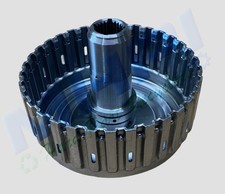
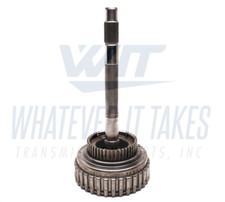
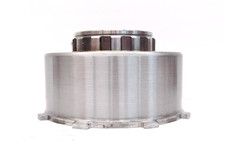
The two share most of their weak points because they share most of their hardware. The one every builder eventually meets is the direct clutch drum and the intermediate/stub shaft area. ATRA's Gears Magazine teardown, "The 4R70W Getting the Shaft," documents it plainly: the intermediate shaft worn and damaged along with the snub shaft on the output, a burnt direct drum, and planetary carnage that follows. The article's own list of real-world concerns is a good checklist: falling out of gear when coming to a stop, no 3-4 shift, planetary damage, and third clutch assembly failure. The root cause is rarely one thing. It can trace back to a burnt direct clutch, an EPC or MAF sensor fault, or a circuit leak feeding the third clutch, all of which end in the same drum and planetary damage.
Sonnax describes the mechanical failure mode the same way from the parts side: the OE weak point is where the drum splines strip and the intermediate stub shaft breaks. Once the splines let go, the drum and shaft chew each other and the debris takes out the planetary. On a stock-power car this shows up as a high-mileage wear item; on anything making extra torque it shows up early.
A note on diagnosis: do not condemn the direct drum before you rule out the electrical and hydraulic feeds. A pressure leak or a lazy sensor can mimic and cause clutch failure, and swapping in a fresh drum without fixing the cause just resets the clock on the same failure.
Upgrades Worth the Money
If you are already inside the unit, spend where the failures actually are rather than chasing horsepower parts you do not need.
Direct clutch drum and shaft
This is the single highest-value upgrade on either transmission. Sonnax's Smart-Tech direct clutch drum and shaft kit uses a one-piece design that eliminates the stripped-spline and broken-shaft failure point, with a shaft it rates at 50 percent thicker and twice as strong as the best 300M shafts. The custom drum and piston also hold one extra OE-thickness friction, which Sonnax lists as 17 percent more clutch capacity with no other modifications. The kit is offered in two ratio families: 2.84/1.55 for 4R70E/W and 4R75E/W, and 2.40/1.46 for the AODE. Match the ratio to your gearset.
Valve body and separator plate
On 2001-and-later cores, address the deleted 2-3 accumulator stiffener with a support plate to stop separator plate cracking and cross-leaks. This is a common source of soft or inconsistent 2-3 shifts that gets misdiagnosed as a clutch problem.
Planetary and shaft
If the 4R75W-style strengthened ring gear and hardened gearset are available for your build, they are the sensible choice on any unit that will see towing or added power. Just remember the reluctor tooth count that comes with that ring gear has to match your sensor and PCM strategy.
Torque converter
Converter selection matters for how these units drive and live, and diagnosing converter clutch shudder is its own topic. We keep that discussion diagnostic rather than a sales pitch; if you suspect converter clutch shudder, sort it before you blame the clutches inside the case.
Shop 4R70W / 4R75W parts →
Fluid and Service
Both units run MERCON V, specified by Ford as Motorcraft XT-5-QMC and listed for these transmissions on Ford's own ATF application chart. Do not put plain MERCON or a DEXRON III fluid into a MERCON V unit; the friction and viscosity spec is different and shift feel and clutch life suffer for it. Capacity is generous because of the converter: a full overhaul including the torque converter takes roughly 13.9 quarts, while a pan drop and refill is about 5 to 6 quarts since the converter and cooler lines stay full.
Ford labels the later sealed 4R75 cases "filled for life" and says routine service is not required beyond level checks. On the bench I treat that as a warranty-interval statement, not a maintenance plan. Any of these units behind a truck that tows, or any car that sees hard use, gets a fluid and filter service on a real interval. Clean MERCON V protects the clutch packs and the direct drum that is already the weak point.
FAQ
Will a 4R75W bolt in place of a 4R70W?
Physically, yes. The 4R75W shares the main case, bellhousing pattern and mounting with the 4R70W, so it drops into the same crossmember and driveshaft location. The catch is electronic. The 4R75W added an input (turbine) shaft speed sensor and changed the output shaft reluctor to a higher tooth count, so the PCM has to run the correct strategy for the year and unit you install or you get speed-reading errors, harsh or wrong shift timing, and codes. Match the transmission to the vehicle's PCM strategy, or have the strategy flashed to suit.
What is the real difference between a 4R70W and a 4R75W?
Same gearset architecture and same ratios (2.84 first, 1.55 second, 1.00 third, 0.70 overdrive). The 4R75W is the reinforced, higher-torque version: a strengthened planetary ring gear with a finer reluctor for the speed sensors, an added input shaft speed sensor for smarter shift control, a revised front pump and torque converter, and a higher input torque rating. It was fitted where Ford needed more capacity, notably behind the 5.4L V-8.
Do the 4R70W and 4R75W use the same fluid?
Yes. Both call for MERCON V (Motorcraft XT-5-QMC). Do not substitute plain MERCON or DEXRON in a MERCON V unit. A full overhaul that includes the torque converter takes roughly 13.9 quarts; a pan drop and refill is about 5 to 6 quarts. Ford labels the later 4R75 sealed cases "filled for life," but on a truck that tows, service the fluid anyway.
What fails most on the 4R70W and 4R75W?
The direct clutch drum and the intermediate/stub shaft area is the classic failure: drum splines strip and shafts break or wear, often taking the planetary with them. Shops also see the unit falling out of gear at a stop, no 3-4 shift, and third clutch assembly failure. Burnt direct clutches, an EPC or MAF sensor fault, or a circuit leak can all lead into the same drum and planetary damage.
Sources
- Sonnax — "Stop Chasing AODE, 4R70W Direct Clutch Drum Problems." Backs the OE failure mode where drum splines strip and the intermediate stub shaft breaks, and the Smart-Tech fix: a shaft 50% thicker and twice as strong as the best 300M shafts, 17% more clutch capacity, and the two ratio families (2.84/1.55 for 4R70E/W and 4R75E/W; 2.40/1.46 for AODE). sonnax.com
- Sonnax — "AODE, 4R70W/75W Valve Body Identification." Backs the valve body/harness eras (soft-wire 1996-1997, molded lead-frame 1998-2000, shared 4R70E/W/4R75E/W 2001-2008, soft-wire 2009-later), the dowel-pin and forging-number identifiers (13mm/F2, 13mm/F3, 10mm/F6), and the deleted 2-3 accumulator stiffener plate on 2001-later bodies. sonnax.com
- Gears Magazine (ATRA) — "The 4R70W Getting the Shaft." Backs the real-world failure list (falling out of gear at a stop, no 3-4 shift, planetary damage, third clutch assembly failure), the worn intermediate and snub shafts with a burnt direct drum, and the multiple possible root causes (burnt direct clutch, EPC or MAF fault, third clutch leak). gearsmagazine.com
- Transmission Digest — October 2000 issue, Ford 4R70W overdrive servo. Backs the common AODE/4R70W case, the smaller-diameter 4R70W overdrive servo piston with its required rubber-coated sleeve, assembly F3LY-7H188-A (4R70W) vs F2VY-7H188-A (AODE), and the 3-neutral upshift with burned forward clutches when the sleeve is missing. transmissiondigest.com
- ATRA — 2009 Technical Seminar Manual, Ford 4R70W/4R75E Interchange Information (pp. 64-73). Backs the notched 4R70E/75E center support for the turbine speed sensor, the non-magnetic 4R70E/75E sun shell and the harsh/no-shift and speed sensor codes from using the wrong one, the 4L3Z-7D234-AA sun shell/bearing/sun gear service kit, the welded vs riveted planetary rear cover with identical ratios, the plastic vs cast iron stator support sealing rings, and the 1993-1997 white vs 1998-on black harness connector change. atracom.blob.core.windows.net (PDF)
- Ford Customer Service Division — Chemicals & Lubricants ATF Application Chart (U.S.). Backs MERCON V (Motorcraft XT-5-QMC) as the specified fluid for these Ford automatic transmissions. fcsdchemicalsandlubricants.com