The Ford 4R75W is the heavy-duty evolution of the AODE/4R70W family, sitting behind a long list of trucks and rear-drive cars: the F-150, Expedition, Explorer, Crown Victoria, Grand Marquis, Town Car, and the Mustang GT of its era. It's a durable four-speed, but there is one part of it that quietly causes more harsh-shift, low-pressure, and no-reverse complaints than the clutches ever do — the valve body. And the frustrating part is that a worn valve body often throws no trouble code at all, so it gets overlooked while shops chase solenoids and clutch packs that are perfectly fine.
This is what actually goes wrong inside a 4R75W valve body, the symptoms each failure produces, a step-by-step procedure to test it on your bench or in the vehicle, and how to decide between a targeted repair and a reman unit before you spend money.
The short version: Most 4R75W valve body complaints trace to three worn spots: the main pressure regulator (PR) valve and its bore, the boost valve and sleeve, and the separator plate that flexes and cross-leaks on 2001-and-later units. All three cause pressure loss, and pressure loss is what burns clutches and bands. Confirm line pressure and vacuum-test the bores before you condemn the unit — a worn casting will not seal even with a brand-new valve dropped in.
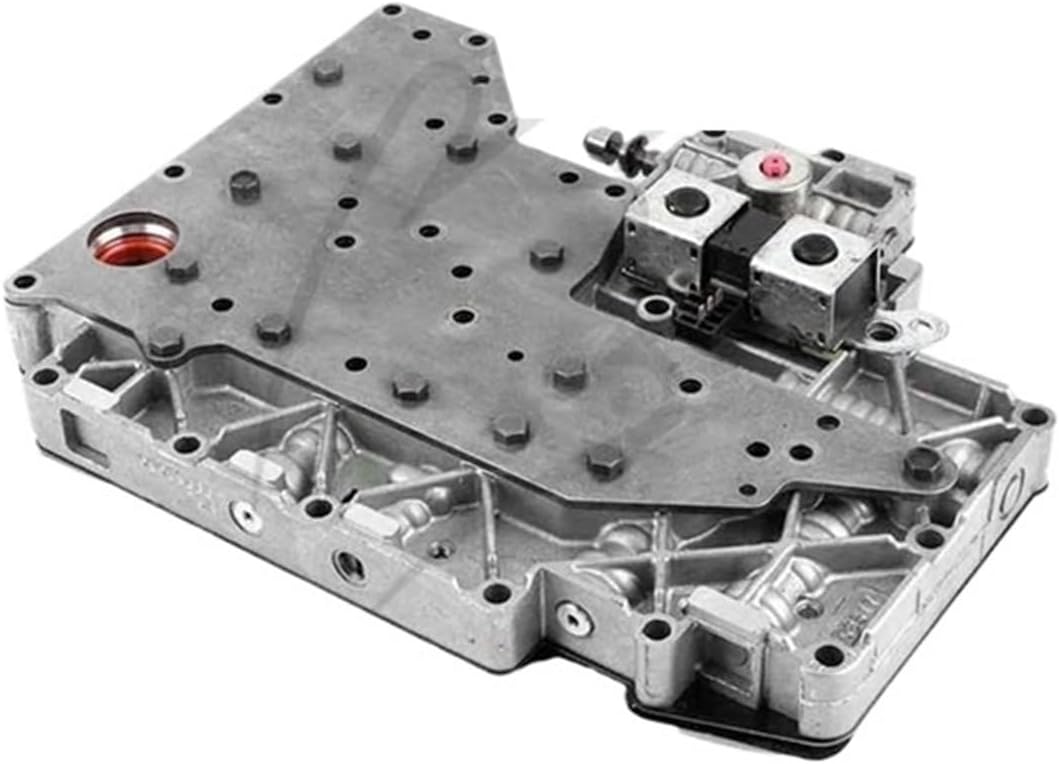
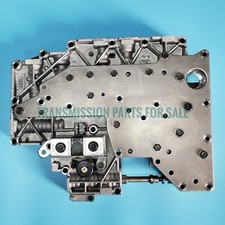
What the 4R75W Valve Body Actually Does
The 4R75W is an electronically controlled transmission. An EPC (electronic pressure control) solenoid tells the valve body how much line pressure to make, and the main pressure regulator valve is the part that actually meters that pressure to the clutches, bands, converter, and lube circuits. A boost valve stacked behind the PR valve raises pressure when the transmission needs more holding force — most notably in Reverse.
Every apply circuit in the transmission depends on the PR and boost valves holding a clean, stable pressure. When those valves or their bores wear, oil leaks past where it shouldn't, and pressure becomes erratic. That single problem shows up as a dozen different-sounding complaints, which is exactly why the valve body gets misdiagnosed so often.
Symptoms of a Worn 4R75W Valve Body
According to Sonnax, vehicles with Ford 4R70E, 4R70W, 4R75E, 4R75W and AODE transmissions often have erratic line pressure, poor line rise, and/or a throttle-sensitive buzz, which can result in harsh or soft shifts and band/clutch failure. In plain terms, the complaints you'll hear are:
- Harsh, banging shifts — or the opposite, soft slipping shifts — because line pressure is unstable.
- A throttle-sensitive buzz or moan that changes with pedal position, from the regulator valve hunting in a worn bore.
- Delayed, slipping, or no Reverse, and in bad cases a burnt Reverse clutch, from a worn boost valve and sleeve.
- Low line rise — pressure that won't climb under load — leading to repeat clutch and band failures after a rebuild.
- Repeat comebacks where a freshly rebuilt unit burns up again because the worn valve body was never addressed.
Notice what's not on that list: a specific "valve body" trouble code. The EPC circuit can set an electrical code such as P0745 if the solenoid or wiring is bad, but a mechanically worn PR valve or boost valve usually sets nothing at all. That's the trap — a clean scan does not mean the valve body is good.
The Three Real Root Causes
When a 4R75W comes in with the symptoms above, the cause is almost always one (or more) of these three worn areas. They overlap in how they feel to drive, so you test to tell them apart rather than guessing.
1. Main pressure regulator valve and bore wear
This is the big one. Sonnax notes that it's common for the pressure regulator valve in these units to experience severe wear, and that regulator valve wear allows critical fluid loss that results in driveability concerns. Scoring on the EPC end of the valve is typically quite noticeable and results in reduced line pressure or low line-rise concerns. The valve also wears on the boost spool diameter and lets EPC oil leak to exhaust, which kills line rise. Critically, if the valve is worn, the aluminum bore is usually worn too — and a compromised casting won't seal even with a new valve installed.
2. Boost valve and sleeve wear
Behind the PR valve, the boost assembly increases pressure in Reverse. Sonnax reports that continuous oscillation of the OE boost valve within its sleeve causes premature wear, creating a path for boost pressure to exhaust. The result is insufficient line rise in Reverse, delayed or slipping Reverse, no Reverse, or a burnt Reverse clutch. If your complaint is Reverse-specific but forward gears feel fine, look here first.
3. Separator plate flex and cross-leak (2001-and-later)
Starting in 2001, Ford eliminated the two-bolt stiffener plate in the 2-3 accumulator area. Sonnax explains that without it, oil pressure builds in unused cavities under the separator plate and causes the plate to flex upward as much as.010"–.011", letting the forward and direct clutch passages cross-leak. The bigger problem isn't the cracked plates shops find at teardown — it's the cross-leak between circuits, which produces harsh shifts and clutch damage. The fix is a retainer/support plate that restores clamping force (Sonnax kit 76507F-01K), not just a new gasket.
Shop 4R75W valve bodies, oversized PR and boost valve kits, separator plate/retainer kits, EPC solenoids, rebuild kits, and Mercon fluid — shipped fast from the USA.
Shop 4R75W parts →How to Test Your 4R75W Valve Body
The order matters because the price swings from a small valve kit to a reman valve body. Work through it top to bottom — don't skip to a teardown.
- Confirm the complaint and check the fluid first. Verify the actual symptom (harsh shift, no line rise, no reverse, buzz) and check Mercon-spec fluid level, color, and smell. Dark, burnt fluid with debris means clutch material is already circulating — note it, but keep going, because worn valves are usually the cause of that burning, not the result.
- Scan for codes, but don't trust a clean scan. Pull DTCs and note any EPC/solenoid electrical codes (for example P0745). Remember a mechanically worn PR or boost valve typically sets no code, so an empty scan does not clear the valve body.
- Do a line pressure test. Connect a pressure gauge to the line tap and read pressure at idle in Drive and Reverse, then snap the throttle and watch for proper line rise. Pressure that reads low, won't climb under load, or wanders with throttle points straight at PR/boost valve wear. Compare against the Ford spec for the model year.
- Test Reverse pressure separately. Because the boost valve only boosts in Reverse, low pressure that shows up only in Reverse — with forward pressure acceptable — isolates the boost valve and sleeve as the culprit.
- Vacuum-test the valve bores. With the valve body off, use a vacuum tester on the PR valve bore and boost valve bore. Bore wear is often impossible to see with the naked eye, but a bore that won't hold vacuum confirms the casting is worn and needs reaming for an oversized valve. This is the single most reliable bench test on this unit.
- Inspect the valves for scoring. Pull the PR valve and look for scoring on the EPC end and wear on the boost spool diameter; inspect the boost valve and sleeve for polish/wear marks. Visible scoring plus a failed vacuum test confirms the diagnosis.
- Inspect the separator plate (2001-up). Look for cracking around the 2-3 accumulator, signs of flex, and cross-leak witness marks between the forward and direct passages. If the stiffener was deleted from the factory, plan on a retainer/support plate.
- Decide the repair. A bore that holds vacuum with a lightly worn valve can take a new or oversized valve; a bore that fails vacuum needs reaming and an oversized kit, or a reman valve body. Match the fix to the test result — don't drop a new valve into a worn bore and expect it to seal.
Replacement and Repair Options
Once you've confirmed where the wear is, you have three levels of repair:
| Failure found | Fix | What it addresses |
|---|---|---|
| Worn PR valve, bore still good | New/oversized PR valve kit | Restores line pressure & line rise |
| Worn PR valve and bore | Ream bore + oversized PR/boost kit | Restores sealing in a worn casting |
| Boost valve/sleeve wear | Boost valve kit (e.g. 76948-02K) | Restores Reverse line rise, cures no/slipping Reverse |
| Separator plate flex/cross-leak | Retainer/support plate kit (76507F-01K) | Stops forward/direct cross-leak & plate cracking |
| Multiple bores worn | Reman valve body | Complete corrected assembly |
The reman valve body makes sense when several bores fail vacuum testing or when you simply want a known-good, corrected unit installed in one step. The targeted valve and plate kits make sense when the wear is isolated and the rest of the casting tests good. Either way, the goal is the same: a valve body that holds stable line pressure so the clutches and bands you just rebuilt don't burn up again.
Doing the job? Our line pressure testing walkthrough covers the gauge hookup and specs referenced in step 3, and the Mercon ATF guide covers the correct fluid so a pressure problem doesn't get masked by the wrong fill.
Sources
- Sonnax — Watch Out For 4R70W Pressure Regulator Valve & Casting Wear, on PR valve wear at the EPC end and boost spool, erratic line pressure/low line rise, and vacuum testing a worn bore for an oversized valve. sonnax.com/tech_resources/1152
- Sonnax — 4R70W, 4R75W 2001-Later Forward & Direct Clutch Problems: The Easy Valve Body Fix, on separator plate flex (.010"–.011"), forward/direct cross-leak after the stiffener was deleted, and retainer plate kit 76507F-01K. sonnax.com/tech_resources/135
- Sonnax — AODE, 4R70W, 4R75W, 4R70E, 4R75E Valve Body Layout, identifying the PR valve, boost valve, and separator plate locations referenced in the testing procedure. sonnax.com/tech_resources/1043
- Sonnax — Boost Valve Kit 76948-02K, on OE boost valve/sleeve oscillation wear causing low Reverse boost, delayed/slipping/no Reverse, low line rise in Reverse, and burnt Reverse clutch. sonnax.com/parts/2393-boost-valve-kit
- Sonnax — Ford 4R75W Transmission (unit overview), reference for the 4R75W as the heavy-duty AODE/4R70W-family unit and its pressure control architecture. sonnax.com/units/140-4r75w