The Ford 4R70W (and its AODE, 4R70E, 4R75W, and 4R75E relatives) sits behind millions of trucks and rear-drive cars — F-150, Crown Victoria, Mustang, Explorer, Expedition, Town Car, and more. It's a durable four-speed, but when a well-maintained 4R70W starts slipping under throttle, dropping reverse, or banging a shift, the valve body is one of the first places an experienced rebuilder looks. The trap is that the symptoms often feel like a worn clutch pack or a dying pump, when the real culprit is a few thousandths of bore wear in the valve body's aluminum casting.
This guide covers what fails inside a 4R70W valve body, the symptoms each failure produces, a numbered procedure for testing the valve body yourself, and how to decide between a targeted repair and a full valve body replacement — before you tear the unit down.
The short version: Most 4R70W valve body complaints come down to bore wear, not a burnt clutch. The pressure regulator (PR) valve bore wears and leaks EPC oil to exhaust, which kills line rise when the fluid is hot — the classic "slips only when warmed up" complaint. The reverse boost valve bore wears and bleeds off boost, causing delayed or slipping reverse. A worn casting will leak even with a brand-new valve installed, so you vacuum-test the bore to confirm before deciding whether to ream and fit an oversized valve or replace the valve body.
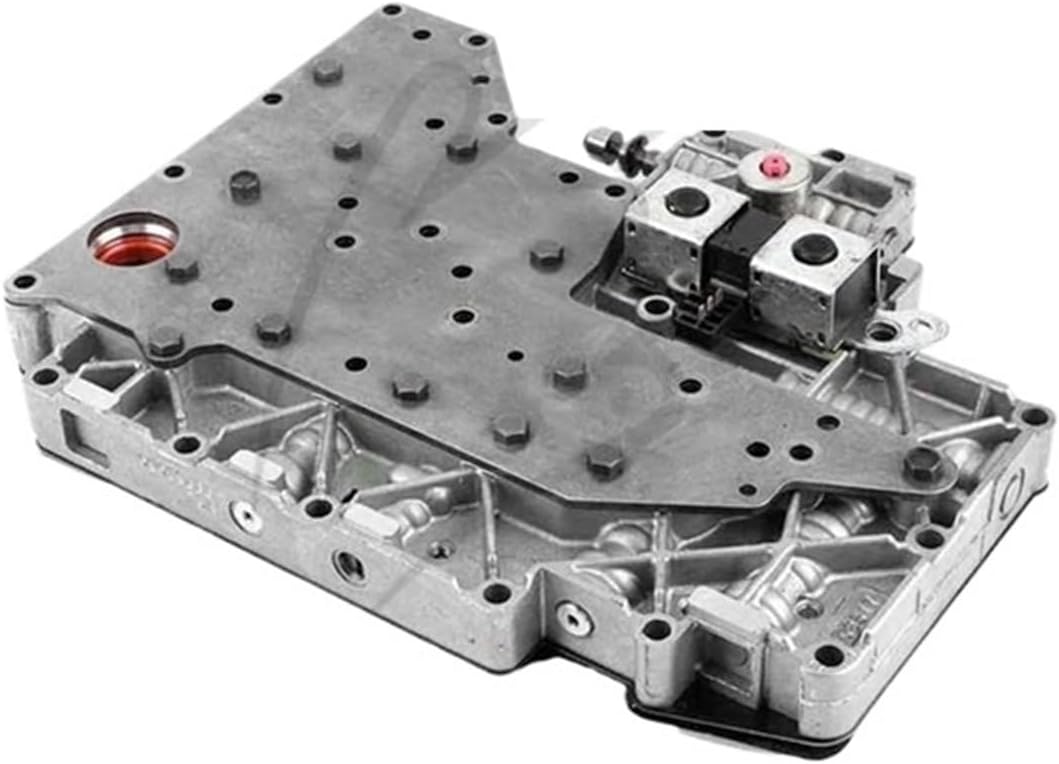
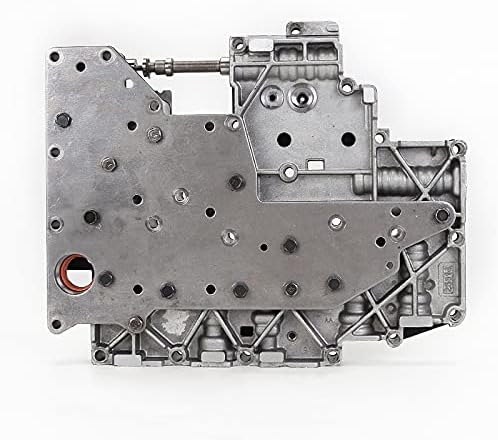
What the 4R70W Valve Body Actually Controls
The 4R70W is electronically controlled. The powertrain control module runs the shift solenoids to select gears, but line pressure — the hydraulic force that clamps the clutches and bands — is metered by the electronic pressure control (EPC) solenoid feeding the main pressure regulator valve in the valve body. The PR valve sets base line pressure; a boost valve assembly raises that pressure on demand, most notably in reverse, where the unit needs the highest clamping force.
Because the whole system leans on precise hydraulic sealing between an aluminum valve and an aluminum bore, the valve body is where small amounts of wear translate into big driveability problems. Sonnax's valve body layout for the AODE/4R70W family maps every regulating valve and bore plug in the casting, and it's a useful reference when you're trying to locate a specific valve during diagnosis [2].
Symptoms of a Failing 4R70W Valve Body
Slipping that gets worse when hot
This is the signature 4R70W valve body failure. The unit shifts and drives fine cold, then slips under medium-to-full throttle once it warms up. Per Sonnax, the AODE/4R70W is prone to wear in the pressure regulator valve bore that causes a reduction or complete loss of EPC pressure when the unit is hot — which equates to little or no line rise, producing exactly that hot-slip complaint [1]. Wear at the outboard PR valve spool or bore lets EPC oil leak to exhaust; as fluid heats up it thins, more oil leaks, and line pressure collapses [1].
Delayed, slipping, or lost reverse
The reverse boost circuit is a second common failure point. Sonnax notes that continuous oscillation of the OE boost valve inside its sleeve causes premature wear, opening a path for boost pressure to exhaust — the result is insufficient line rise in reverse, delayed or slipping reverse, and in bad cases a burnt reverse clutch [5]. If a 4R70W drives forward acceptably but reverse is weak or missing, the boost valve bore is a prime suspect.
Harsh, flaring, or missed shifts
Not every 4R70W valve body complaint is a leak. A harsh 1-2 shift is often caused by a broken lower 1-2 accumulator spring, and cross-leaks through a cracked or worn separator plate can produce flares, bind-ups, or missed shifts. Ford eliminated the valve body stiffener plate in the 2-3 accumulator area on 2001-and-later units, and separator plate cracking and cross-leaking is a recognized issue on this family, which is why the plate and its gaskets get inspected on every rebuild.
Shop 4R70W valve body kits, oversized PR and boost valve kits, separator plates, EPC solenoids, rebuild kits, Mercon fluid, and the tools to install them — shipped fast from the USA.
Shop 4R70W parts →The Root Causes, Ranked by How Often They Show Up
| Component | What goes wrong | Symptom |
|---|---|---|
| Pressure regulator valve & bore | Outboard spool/bore wear leaks EPC oil to exhaust | Hot slip, low line rise, throttle-sensitive buzz |
| Reverse boost valve & sleeve | Oscillation wear bleeds off boost pressure | Delayed/slipping reverse, burnt reverse clutch |
| Separator plate / gaskets | Cracking, cross-leaking between circuits | Flares, harsh or missed shifts |
| 1-2 accumulator spring | Broken lower spring | Harsh 1-2 shift |
| EPC solenoid | Electrical failure or restriction | Loss of pressure control, codes |
The key insight that saves money: a worn casting will not seal correctly even with a new valve dropped into it. Sonnax is explicit that on these units the bore itself needs to be reconditioned by reaming and fitting an oversized valve — simply swapping in a fresh OE-size valve does not restore the seal [1]. That's why testing the bore, not just replacing parts, is the correct diagnostic path.
How to Test Your 4R70W Valve Body
The goal here is to confirm where the pressure is being lost before you spend money. The single most useful bench test on a 4R70W valve body is a vacuum test, which reveals bore wear that you cannot see or feel. Work clean, on a flat bench, with the valve body off the vehicle and disassembled enough to reach the valves in question.
- Pull codes and drive it first. Scan for stored transmission codes — an EPC or solenoid code points you toward the pressure control side. Then note exactly when the complaint happens: cold vs. hot, forward vs. reverse, light vs. heavy throttle. A slip that only appears hot and under throttle is the tell-tale PR valve signature [1].
- Check and read the fluid. The 4R70W uses Mercon-spec fluid. Verify the level is correct and inspect its condition. Clean, full fluid with a hot-slip complaint points at the valve body/hydraulic side; dark, burnt fluid with debris points at failed frictions and a mechanical teardown. Fluid that has overheated can also score the valve body passages, so note it.
- Remove and disassemble the valve body. With the pan and valve body off, lay out the valves, springs, and bore plugs in order. Identify your specific casting first — Sonnax's valve body identification notes that '96-'97 4R70W units use a wired solenoid harness while '98-'00 units use a solid harness, and getting this right matters for parts [3]. Inspect the separator plate for cracks and the 1-2 accumulator spring for breakage.
- Vacuum-test the pressure regulator valve bore. This is the core test. Apply vacuum to the appropriate test port over the PR valve bore with a hand vacuum pump. A good bore holds vacuum; a worn bore leaks it off. Sonnax's vacuum-test method is the standard reference for interpreting these readings — low, unstable vacuum means the bore is worn past sealing and needs reconditioning [4]. Because PR valve wear on this unit is so common, expect this bore to be your most likely finding [1].
- Vacuum-test the reverse boost valve bore. Repeat the vacuum test on the boost valve and sleeve. Leakage here confirms the delayed/slipping reverse complaint originates in the boost circuit rather than the clutch itself [5].
- Test the remaining regulating valves. Work through the other valves the layout identifies — the shift and accumulator valves — vacuum-testing each bore to catch cross-leaks that mimic clutch problems [2]. Anything that won't hold vacuum is a candidate for repair.
- Confirm the EPC solenoid electrically. Before condemning the solenoid, verify its resistance is in spec and that it isn't restricted. Remember that a worn PR bore produces the same low-pressure symptom as a weak solenoid, so the solenoid is confirmed last, not swapped first.
Follow that order and you'll know whether you're looking at a valve-body repair or a full teardown before you commit to either. The point of vacuum testing is that it separates a leaking bore (a valve-body fix) from a burnt clutch (an in-the-case fix) with objective evidence rather than a guess.
Repair or Replace: Fixing the 4R70W Valve Body
Once testing tells you what's leaking, you have two paths.
Recondition the bore (the targeted fix)
If the PR valve bore fails the vacuum test, the correct repair is to ream the worn bore and install an oversized pressure regulator valve so valve-to-bore clearance is restored and correct line pressure returns [1]. For a weak-reverse complaint, a boost valve kit replaces the worn valve and sleeve with wear-resistant parts, eliminating the pressure loss and restoring robust reverse line rise [5]. On units that need more forward-range line pressure than the OE boost assembly provides, a line pressure booster kit adds a supplemental boost valve, since the factory boost circuit only augments pressure in reverse [5]. These are drop-in corrections that don't require replacing the whole casting.
Replace the valve body (the clean-slate fix)
If multiple bores are worn, the separator plate is cracked, or the casting is damaged, a remanufactured or replacement valve body — already reconditioned with corrected valves and a fresh plate and gaskets — is the faster, more reliable route, especially for a shop turning the unit around on a schedule. Either way, replace the separator plate gaskets and set the band adjustment correctly on reassembly, since a mis-adjusted band can reproduce shift complaints that look like a valve-body fault.
Shop 4R70W Valve Bodies and Parts
Whether you're reconditioning a bore or dropping in a complete unit, we stock the parts for this job. Our 4R70W parts collection carries valve body kits, oversized PR and boost valve kits, separator plates, EPC solenoids, accumulator springs, full rebuild kits, and Mercon fluid — all shipped fast from the USA. If you're diagnosing a related complaint, our line pressure testing walkthrough covers the on-vehicle pressure checks that pair directly with the bench tests above.
4R70W Valve Body Kits & Parts
Oversized PR valve kits, reverse boost valve kits, separator plates, EPC solenoids, and complete rebuild kits for the 4R70W, AODE, 4R75W and family. Shipped fast from the USA.
Shop 4R70W parts →Sources
- Sonnax — Watch Out For 4R70W Pressure Regulator Valve & Casting Wear, on PR valve bore wear causing loss of EPC pressure when hot, medium-to-full throttle slipping, and the ream-and-oversized-valve fix. sonnax.com/tech_resources/1152
- Sonnax — Ford AODE, 4R70W, 4R75W, 4R70E, 4R75E Valve Body Layout, identifying the regulating valves and bore plugs whose wear affects apply and line pressure. sonnax.com/tech_resources/1043
- Sonnax — AODE, 4R70W/75W Valve Body Identification, on distinguishing '96-'97 (wired harness) from '98-'00 (solid harness) valve bodies for correct parts selection. sonnax.com/tech_resources/369
- Sonnax — Vacuum Testing for Leakage, the standard bench method for finding worn valve bores by applying vacuum and reading whether the bore holds. sonnax.com/tech_resources/121
- Sonnax — Boost Valve Kit 76948-02K, on OE boost valve oscillation wear causing insufficient line rise in reverse, delayed/slipping reverse, and burnt reverse clutch, and the wear-resistant replacement. sonnax.com/parts/2393-boost-valve-kit