If you run a 6L80 or 6L90 — the six-speed behind a huge chunk of GM's trucks and rear-drive cars: Silverado and Sierra 1500, Tahoe, Yukon, Suburban, Escalade, Camaro, CTS-V, and the Pontiac G8 — there is one failure that shows up more than any other on the bench: the 3-5-R clutch. It's the clutch that carries 3rd gear, 5th gear, and Reverse, and when it goes, the truck tells on itself in a very specific way. The trap is that the code it usually sets points people straight at an expensive part that is often perfectly good.
This is how the 3-5-R failure actually works, how to read what the transmission is telling you, and how to separate the cheap fix from the expensive one before you spend a dime on parts.
The short version: A P0776 or P0777 on a 6L80/6L90 is a 3-5-R clutch pressure control code — and it is very often hydraulic, not electrical. A worn clutch regulator valve bore or a leaking bore plug in the valve body mimics a bad solenoid. Confirm the valve body and the 3-5-R drum before you condemn the TEHCM (the internal control module with the solenoids). Swapping the TEHCM on a hydraulic fault is the single most common way to waste money on this transmission.
How the 6L80 Applies Gears (and Why 3-5-R Matters)
The 6L80/6L90 is a clutch-to-clutch transmission. It has five friction clutches, and each is applied by its own pressure control (PC) solenoid living inside the TEHCM — the Transmission Electro-Hydraulic Control Module, which is the valve body plus the control electronics and solenoids as one internal unit. There is no old-style governor or throttle cable; a PC solenoid meters apply pressure to each clutch on command.
The 3-5-R clutch is doing triple duty: it's applied in 3rd gear, 5th gear, and Reverse. That's why its failure signature is so recognizable. When the 3-5-R can't hold, you don't lose one gear — you lose or degrade all three of those, and the classic complaints are:
- No reverse, or reverse that engages late, slips, or bangs in.
- A harsh, flaring, or slipping 2-3 shift, and the same into 5th.
- A stored 3-5-R pressure-control code and, in bad cases, limp mode.
Because the 3-5-R carries Reverse, "no reverse but drives forward" on a 6L80 should make you think of this clutch and its control circuit first, not a global pump or pressure problem.
The Codes, and What They Actually Point To
The 6L80/6L90 clutch PC solenoids each throw a "stuck off" or "stuck on" performance code. For the 3-5-R specifically you'll see P0776 (Pressure Control Solenoid 2 — 3-5-R clutch stuck off) and P0777 (stuck on). The rest of the family maps like this, and knowing the map keeps you from chasing the wrong clutch:
| Code | PC solenoid | Clutch it controls |
|---|---|---|
| P0776 / P0777 | PC Solenoid 2 | 3-5-R clutch (3rd, 5th, Reverse) |
| P0796 | PC Solenoid 3 | 1-R / 4-5-6 clutch |
| P2714 | PC Solenoid 4 | 2-6 clutch |
| P2723 | PC Solenoid 5 | 1-2-3-4 clutch |
Here is the part that saves money: a "solenoid stuck off" or "solenoid performance" code does not prove the solenoid is bad. Per Sonnax, a common cause of these codes is that the bore plug at the end of the clutch regulator valve is leaking at its retainer. That leak slows the regulating valve's reaction and bleeds off the solenoid's signal pressure — and the computer reads that lost pressure as a solenoid that isn't responding. Same code, completely different (and much cheaper) fix. The valve bore itself also wears, so the regulator valve no longer seals and holds pressure.
The Four Real Root Causes of a 3-5-R Failure
When a 6L80 comes in with the 3-5-R symptoms above, the cause is almost always one of four things. They can produce nearly identical driving complaints, so you diagnose to tell them apart rather than guessing.
1. A stuck 3-5-R clutch regulator valve or leaking bore plug (valve body)
This is the cheap one, and the one most often missed. The 3-5-R clutch regulator valve can stick in its bore, and the bore plug can leak at the retainer, as above. The result is no reverse and shift complaints with a 3-5-R code — but the clutch pack and drum may be perfectly fine. The fix is a valve-body repair: restore the worn bore and reseal or retain the bore plug, not a teardown.
2. A cracked 3-5-R drum or mis-indexed snap ring (hard part)
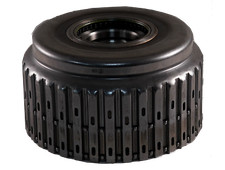
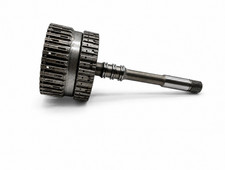
The 3-5-R clutch drum is a known weak point. Sonnax notes that cracked welds in the 3-5-R drum and an improperly indexed snap ring are common contributors to 3-5-R complaints. This is the mechanical failure — the clutch physically can't hold because the drum that carries it has failed or the pack isn't retained correctly. This one requires the transmission to come apart and the drum replaced. Burnt 3-5-R frictions (dark fluid, debris) point here too.
3. The TEHCM / PC solenoid (electrical)
Yes, the solenoid itself can genuinely fail — but it is the last thing to condemn, not the first, precisely because the valve-body leak in cause #1 sets the same code. Confirm it electrically and hydraulically before you buy a TEHCM, which is the most expensive of these fixes.
4. A cracked 1-2-3-4 / 3-5-R clutch housing weld (hard part, and GM documented it)
GM addressed this one directly in bulletin 09-07-30-004J, covering 6L80 and 6L90 units (RPOs MYC, MYD). The condition list in that bulletin is the 3-5-R pattern almost word for word: slip when reverse is selected or no reverse, delayed engagement into reverse, harsh second-to-third shifts, harsh fourth-to-fifth or slips in fifth, slips on acceleration when passing, and DTC P0776, P2715 or P2723 stored active or history in the TCM. The cause GM names is a cracked 1-2-3-4 / 3-5-R clutch housing, specifically a cracked weld that bleeds off clutch apply oil so the pack never reaches full apply pressure and burns itself.
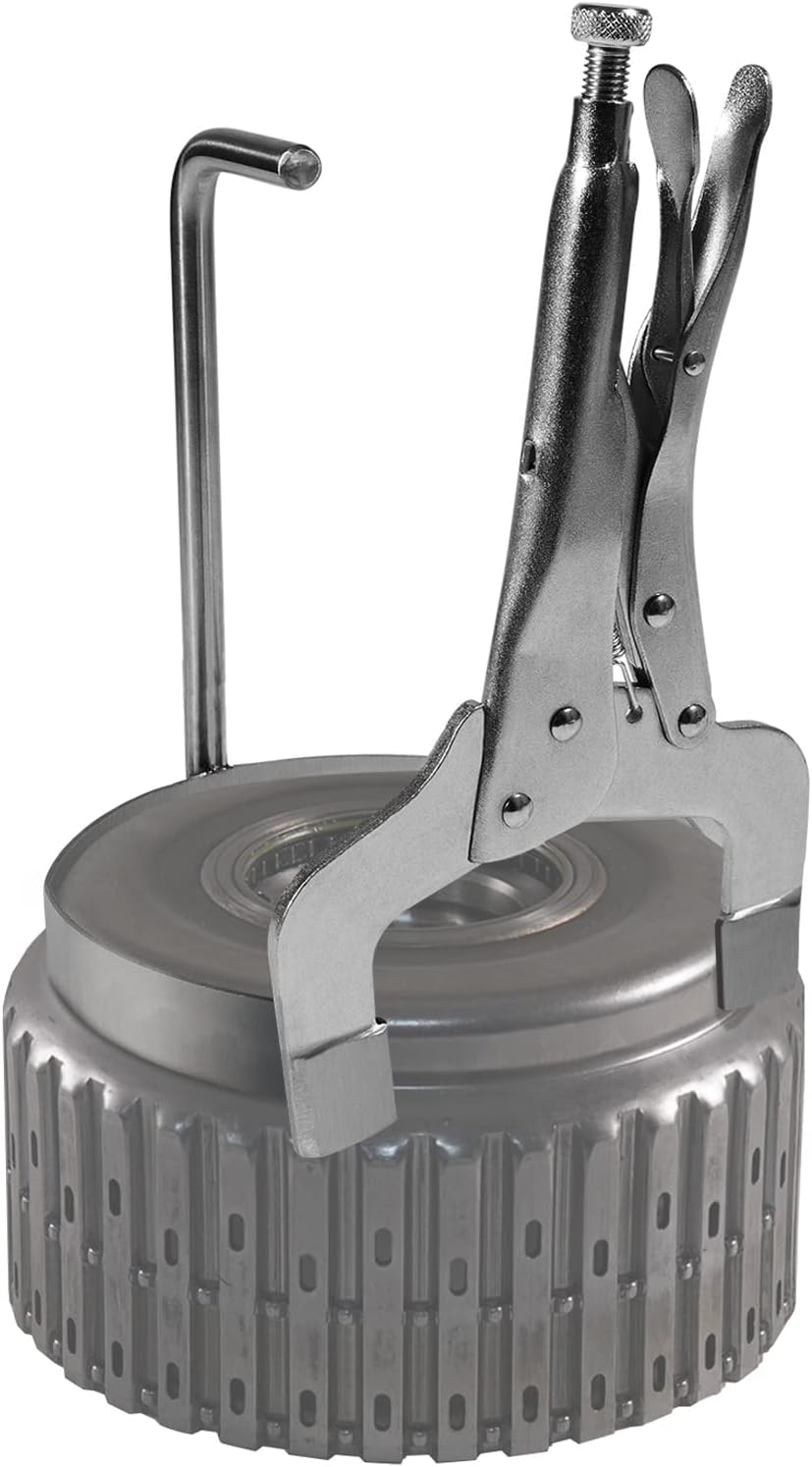
The test is cheap and can be run with the housing assembled: apply soap compound to the weld area, hold your thumb over the air bleed passage, spray compressed air into the 3-5-R clutch feed hole, and watch the weld for bubbles. Bubbles mean a new housing, and per 09-07-30-004J the complete assembled housings are 24238694 for the 6L80 (MYC) and 24238695 for the 6L90 (MYD). Two warnings from the same bulletin are worth keeping: GM redesigned the 1-2-3-4 piston, the piston housing and the 3-5-R piston for the 2008 model year, so installing a 2008 6L80 housing assembly into a 2007 or older unit may cause a 2-3 shift flare or 3-5-R clutch distress, and when a new housing goes into an older unit all three inner seals must be installed or you get no reverse, no forward, or distressed clutches.
Diagnose Before You Condemn Anything
The order matters because the price swings from a valve-body part to a full teardown:
- Pull codes and note the exact one. P0776/P0777 = 3-5-R circuit. Do not act on "solenoid" in the description — it can be hydraulic.
- Check the fluid. The 6L80/6L90 uses DEXRON VI. Dark, burnt fluid with debris points toward burnt 3-5-R frictions and a mechanical (drum/pack) failure. Clean fluid with a 3-5-R code leans toward the valve-body/hydraulic cause. If there is metallic debris in the pan, stop pricing a valve body: GM bulletin 20-NA-142 says remove the transmission and replace the torque converter when metal shows up there.
- Watch live data. Command the clutches and watch PC solenoid 2 commanded vs. actual pressure. A pressure that can't build or hold, with the solenoid electrically good, indicts the regulator valve bore or leaking bore plug.
- Inspect the valve body. Check the 3-5-R clutch regulator valve for a worn bore and a leaking bore-plug retainer before pulling the unit. This is where a reman valve body or a targeted bore/plug repair lives.
- Soap-and-air the clutch housing weld. Per GM 09-07-30-004J, soap the weld area of the 1-2-3-4 / 3-5-R housing, block the air bleed passage with your thumb, and air the 3-5-R clutch feed hole. Bubbles condemn the housing before you spend anything on clutches.
- If it's mechanical, the drum and 3-5-R pack come out — inspect for cracked welds and correct snap-ring indexing on reassembly.
Follow that order and the 6L80's most common failure stops being a guessing game. A large share of "3-5-R" codes are a stuck valve or a leaking bore plug in the valve body — a fraction of the cost of the TEHCM or a teardown that a shotgun approach would have charged for. The units that genuinely have a cracked drum reveal themselves clearly once the hydraulic causes are ruled out.
Doing the job? Our 6L80 limp mode guide and line pressure testing walkthrough cover the diagnostic steps that apply directly here, and the full 6L80 service guide covers the rest of the unit.
Sources
- General Motors — Service Bulletin 09-07-30-004J, February 2014 (hosted by NHTSA), on the cracked 1-2-3-4 / 3-5-R clutch housing as a cause of slip or no reverse, delayed reverse engagement, harsh 2-3 and 4-5 shifts and slips in fifth with DTCs P0776, P2715 and P2723; the soap-and-compressed-air weld inspection through the 3-5-R clutch feed hole; complete housing part numbers 24238694 (MYC) and 24238695 (MYD); the 2008 piston and housing redesign that makes a 2008 housing wrong in a 2007 or older unit; and the three inner seals. static.nhtsa.gov/odi/tsbs/2014/SB-10043845-3346.pdf
- General Motors — Service Bulletin 20-NA-142, May 2022 (hosted by NHTSA), on DEXRON VI as the specified fluid for 6L80 and 6L90 units, depleted fluid additives as a documented cause of shudder and surging, and the instruction to remove the transmission and replace the torque converter when metallic debris is found in the pan. static.nhtsa.gov/odi/tsbs/2022/MC-10213032-0001.pdf
- Sonnax — GM 6L45/50, 6L80/90 No Movement Conditions: Analysis & Repair Tips, on the 3-5-R clutch regulator valve sticking, cracked 3-5-R drum welds, and mis-indexed snap ring as causes of no-reverse and shift complaints. sonnax.com/tech_resources/1216
- Sonnax — Addressing GM 6L80, 6L90 No Reverse Condition, on diagnosing the 3-5-R/reverse apply circuit. sonnax.com/tech_resources/1613
- Sonnax — GM 6L45, 6L50, 6L80, 6L90 Valve Body Layout, identifying the clutch regulator valves and bore plugs whose wear/leaks affect apply pressure. sonnax.com/tech_resources/1052
- Sonnax — Remanufactured Valve Body GM6L80E, on the codes and complaints (burnt clutches, harsh/flare shifts, wrong-gear starts, solenoid performance codes) a corrected valve body addresses. sonnax.com/parts/4621-remanufactured-valve-body
- Sonnax — GM 6L80 Transmission (unit overview), reference for the 6L80 clutch-to-clutch architecture and PC solenoid control. sonnax.com/units/301-6l80