A 6L80 that slips only under load is one of the more misdiagnosed complaints that comes through the door. The truck drives fine around town. Hook a trailer to it and the tach flares between gears, or it lets go on the 2-3 and never catches. The owner says it needs a rebuild. Sometimes it does. Often it needs one housing, one seal ring set, or one 25-cent check ball.
Load-dependent slip is worth its own diagnosis because a clutch pack only slips when apply pressure falls below the torque trying to spin it. At light throttle both are low and a leak that costs you 20 psi never shows. Roll into the throttle and the transmission raises line pressure, but a leaking circuit does not raise clutch pressure by the same amount — torque climbs faster than clamp load, and that is the moment it lets go. The whole job is finding where the pressure is going.
Step one: prove it is actually clutch slip
Before pulling anything, separate clutch slip from converter slip and from an engine misfire that only shows under load. The 6L80 has input and output speed sensors, so the math happens on a scan tool without opening the pan. Watch commanded gear, input speed (ISS) and output speed (OSS) together, then divide ISS by OSS. That is your actual ratio. Compare it to the published 6L80 ratios:
| Gear | Ratio | Gear | Ratio |
|---|---|---|---|
| 1st | 4.027 | 4th | 1.152 |
| 2nd | 2.364 | 5th | 0.852 |
| 3rd | 1.532 | 6th | 0.667 |
| Reverse | 3.064 | ||
If commanded gear is 3rd and calculated ratio holds at 1.53 while the engine flares, the clutch is holding and you are chasing a converter or an engine problem. If calculated ratio climbs away from 1.53 as load builds, that is real clutch slip. Run the test with the converter unlocked so TCC slip does not contaminate the number, on a level road under a real load rather than in the bay.
Then note which gears fail. That is the most useful data you will collect, because the 6L80 shares clutches across gears and the pattern points straight at a circuit:
- Slips in 1st, 2nd, 3rd and 4th — 1-2-3-4 clutch circuit
- Slips in 3rd, 5th and Reverse — 3-5-R clutch circuit
- Slips in 4th, 5th and 6th — 4-5-6 clutch circuit
- Slips in every gear — line pressure, pump, or fluid level
A unit that slips in 3rd only has two circuits overlapping there, one of them weak. A unit that slips in 3rd, 5th and Reverse has narrowed itself to one drum.
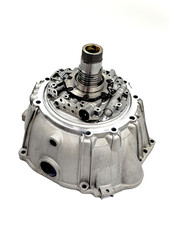
Root cause 1: cracked 1-2-3-4 / 3-5-R clutch housing weld
This is the headline failure on the 6L80 and it is documented by GM itself. Per GM bulletin 09-07-30-004G, the condition list is slip in Reverse or no Reverse, delayed Reverse or Drive engagement, harsh 2-3 shifts, harsh 4-5 or slips in 5th, and slips on acceleration when passing, with DTC P0776, P2715 or P2723 stored in the TCM. The stated cause on 2006-2008 vehicles is a cracked 1-2-3-4 / 3-5-R clutch housing.
The mechanism is simple once you see it. The housing is a welded assembly, and when the weld cracks the 3-5-R apply circuit vents into the case instead of holding pressure behind the piston. At low throttle the leak is small enough that the clutch still applies. Under load the crack bleeds off faster than the pump can feed it, and the clutch slips or drops out entirely.
How GM says to test it
The bulletin gives an air test you can run with the housing either assembled or disassembled. Assembled: apply soap compound to the weld area of the housing, hold your thumb over the air bleed passage, spray compressed air into the 3-5-R clutch feed hole, and inspect the weld area for bubbles. If bubbles appear, the housing is scrap and a new one is required. Disassembled, it is the same procedure with air sprayed into the housing itself.
Use low pressure and keep your face out of it. And do not confuse this test with an air check through the case oil feed ports: GM warned separately, in preliminary information PI0670 covering the related 6T-series units, that air testing the 3-5-R clutch through the case frequently leads to incorrect diagnosis of piston condition, and that disassembly with visual inspection is the only reliable method. A case-port air check tells you a circuit holds air, not that a piston or weld is sound.
6L80 / 6L90 Drum Leak Tester, 3-5-Reverse and 1-2-3-4
Purpose-built fixture for pressure-testing the 1-2-3-4 and 3-5-R drum on the bench so you can find a cracked weld or a cut piston lip before the unit goes back in the truck. This is the difference between one teardown and two.
See the leak tester →Parts
GM released the housing as a complete, pre-assembled unit so there is no clutch stackup to build. Per the bulletin's parts information: 24238694 is the 1-2-3-4 and 3-5-R clutch for RPO MYC (6L80), and 24238695 is the same assembly for RPO MYD (6L90). Both come complete with pistons, seals, clutches, bearing and internal parts.
Root cause 2: one-piece pump cover clutch fluid seal rings
The same GM bulletin covers a second, separate cause on 2006-2009 vehicles: leaking 1-2-3-4 and 3-5-R clutch fluid seal rings on the transmission fluid pump cover assembly. Transmissions built in 2006, 2007, 2008 and early-build 2009 used a one-piece seal ring design. Starting December 2008, GM switched to a two-piece design. The one-piece rings leak, and the bulletin notes this typically shows up as a harsh 2-3 shift at low mileage.
If you find one-piece rings, replace them (ring kit 24248581). Two cautions from the bulletin: the three clutch fluid seal rings have a specific installation orientation, and getting it wrong causes a repeat harsh 2-3 shift; and never install one-piece rings on a two-piece pump cover, which is identified by a notch in the seal ring groove that accepts the tab on the two-piece rings. This is a circuit leak upstream of the clutch, so it produces the same load-dependent behavior as a cracked housing — and a truck can easily have both.
Root cause 3: pressure regulator valve bore wear
If the unit slips in every gear rather than a specific circuit, look at the pressure regulator valve in the pump cover before condemning clutches. Sonnax documents that the 6L45, 6L50, 6L80 and 6L90 pressure regulator bore wears, and that wear at the outboard spool decreases converter feed pressure and lowers line pressure. Low line pressure gives soft shifts and burnt clutches — exactly the failure the shop then blames on the clutch pack.
The trap is that this wear causes clutch failure rather than resulting from it. Rebuild with fresh frictions over a worn pump cover bore and the same slip comes back on the same clutches inside a year. Sonnax offers a drop-in kit (104520-15K) and an oversized pressure regulator and boost valve kit (104520-16K). Read the installation notes: earlier drop-in valves required drilling the pump to supply balance oil to the valve in the regulating position, and Sonnax states that installing without drilling results in excessively high line pressure. Confirm which revision is in your hand before a drill touches a pump.
Root cause 4: worn check ball No. 1
ATRA's Gears Magazine documented a failure worth knowing because the part costs almost nothing and the misdiagnosis costs a TEHCM. Check ball No. 1 in the upper valve body, part of the 1-2-3-4 clutch circuit, wears down from its original 0.250 in. diameter to 0.180 in. or smaller. Turbulence spins the ball in its pocket and grinds the soft material away. Once undersized, it stops sealing and lets 1-2-3-4 clutch pressure exhaust at the clutch select No. 2 valve.
Symptoms are no forward drive or slipping when moving forward, sometimes dropping to neutral in first when cold, and it is often intermittent. Ratio codes P2723 (solenoid No. 5 stuck off) and P2724 (stuck on) can appear, but Gears notes many times no DTC sets at all. Inspect the check ball before ordering a TEHCM or tearing down to reach the low one-way clutch, and replace all of them any time the valve body is apart.
Root cause 5: pump and converter contamination
When the pump itself is the problem, the real cause is usually upstream. Gears' teardown coverage of 6L80/6L90 pressure issues traces pump and cover wear to internal converter degradation — friction disc wear far enough to go metal-to-metal, or spline damage at the stator one-way clutch outer race bore. That debris circulates, wears the pump, and produces erratic pressure and shift quality complaints. Specs from that same coverage, worth writing on the board:
- Pump slide and rotor end clearance: 0.0008 to 0.002 in. (0.02032 to 0.0508 mm), measured with plastigage in several positions with the cover torqued to the bellhousing
- Input endplay: 0.004 to 0.006 in.
- Slide spring clearance: minimum 0.020 in. between the spring and a straight edge laid across the slide
And the warning that matters most: replacing the pump and converter without addressing the secondary contamination damage to valves and solenoids is what produces comebacks. If the converter grenaded, the debris went everywhere. Clean everything, replace both filters, and inspect every bore.
Root cause 6: the clutch-specific weak points
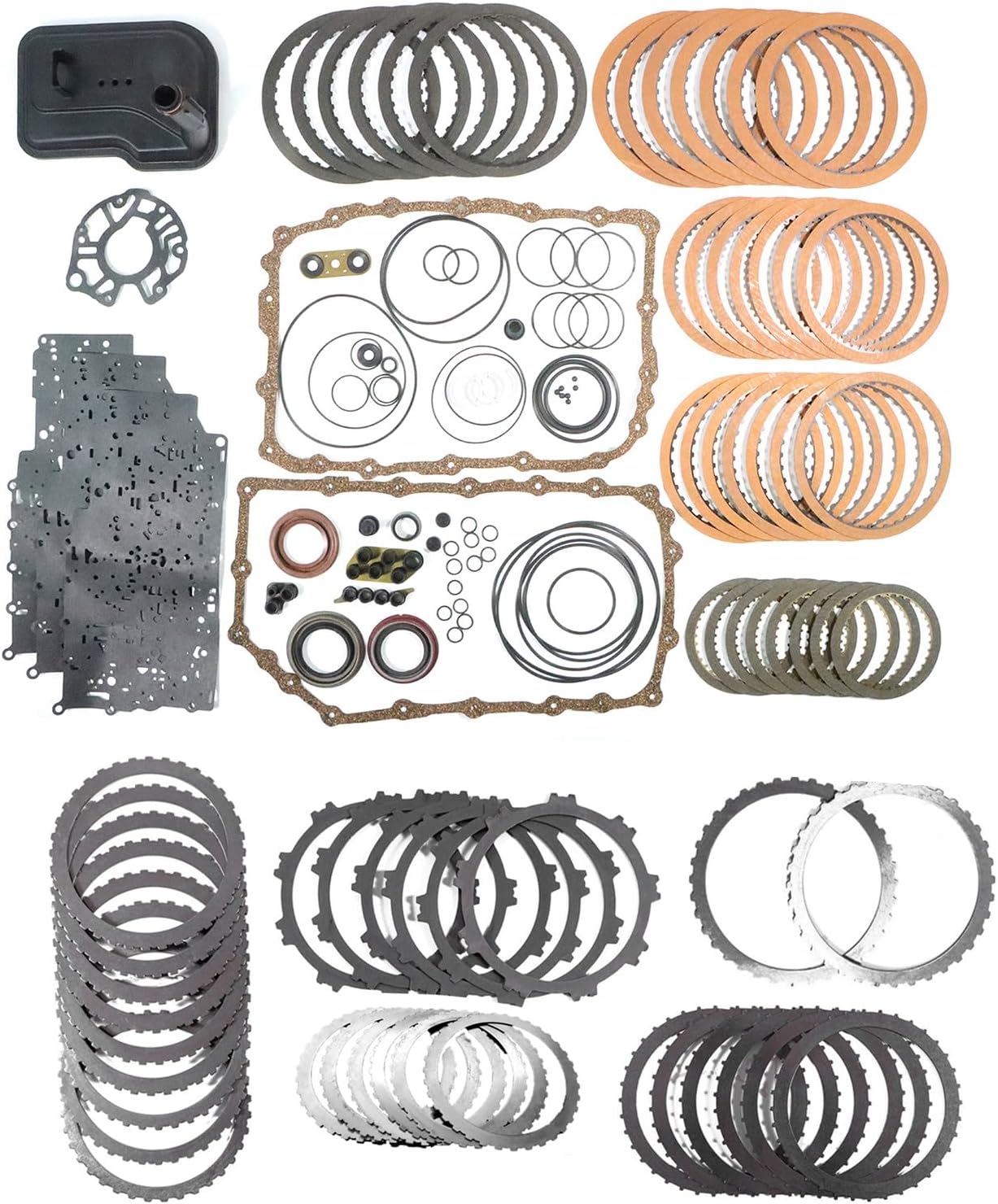
Gears' clutch failure coverage for the 6L80/6L90 breaks the three at-risk packs down usefully:
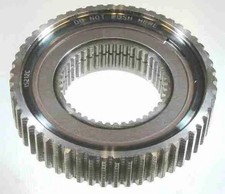
- 3-5-R: early applications crack the drum weld, which typically takes the 3-5-R clutch with it. Updated drums are identified by a QR label with dot-matrix printing.
- 1-2-3-4: the piston is a known problem and can crack, and the housing develops cracks in the internal diameter. GM released updated versions of both.
- 4-5-6: a dampener failure that fractures the shaft makes it look like the 4-5-6 clutch is no longer applying; in severe cases the shaft snaps off the drum.
Two more from the same source: a leaking stator support gasket, where which clutch fails depends on where the leak is (vacuum or air testing isolates it), and cooler bypass valve failure, which cooks the 4-5-6 clutch. A truck that tows and slips in the top three gears is worth checking for bypass failure before you assume the clutch was undersized.
Fluid and level: check this first, every time
The 6L80 uses DEXRON VI and nothing else. Its shift feel and clutch apply timing are calibrated around DEXRON VI friction characteristics, and the TCM's adaptive learn will chase a fluid it was not calibrated for.
Most 6L80 applications have no dipstick. Level is set at the level control plug in the pan with the engine idling on level ground, after cycling through the ranges with a pause in each to let the clutches fill, back in Park. Fluid should drip from the level control hole; that drip is the level. The check is only valid inside the transmission fluid temperature window — the commonly published range for these GM units is 30 to 50 degrees C (86 to 122 F) — so confirm the exact window and the plug torque in GM service information for the application rather than working from memory. Fill capacity varies with converter and pan, so fill by the plug procedure, not a book number. A 6L80 that is a quart low will slip under load and pass every other test you run.
A working diagnostic order
- Check fluid level and condition at the level plug, in the correct temperature window.
- Pull codes. P0776, P2715 and P2723 together on a 2006-2008 truck point straight at bulletin 09-07-30-004G.
- Road test with ISS, OSS and commanded gear logged. Calculate actual ratio under load, and record which gears slip.
- Map the failing gears to a circuit using the clutch overlap list above.
- If it slips in every gear, gauge line pressure and inspect the pressure regulator bore before touching clutches.
- Drop the pan and cut the filter open. Debris type tells you whether the converter is involved.
- On teardown, soap-and-air the housing weld per the bulletin, check the pump cover seal rings for one-piece versus two-piece, and measure check ball No. 1.
- Fix the cause of the pressure loss, not just the burnt friction it produced.
Preventing the repeat
The 6L80 comebacks almost all trace to the same shortcuts: reusing a worn pressure regulator bore, reusing old check balls, and skipping the housing weld test because the drum looked fine. None of those are visible failures, and all three produce a unit that drives beautifully on the lift and slips the first time the customer tows with it. Add the cooler circuit to the list — if the converter came apart, debris left in the cooler comes back to the pump within a few hundred miles. Then run the adaptive relearn: the TCM's stored adapts are tuned to the old, leaking hydraulics, and leaving them in place gives you harsh or soft shifts on a unit that is now mechanically correct.
Related reading: 6L80 limp mode causes, 6L80 TCC shudder diagnosis, and checking transmission line pressure.
1-2-3-4 and 3-5-R hard parts, pressure regulator valve kits, seal ring kits, filters, fluid, and the leak-test tooling — shipped fast from the USA.
Shop 6L80 parts →Sources
- General Motors — Service Bulletin No. 09-07-30-004G, "Slips in Reverse or Third, Delayed Reverse or Drive Engagement, DTC P0776, P2715, P2723, Harsh 2-3 Shifts (Inspect 1-2-3-4 / 3-5-R Housing and Pump Seal Rings)," March 2012, via NHTSA. Backs the condition and DTC list, the cracked 1-2-3-4 / 3-5-R clutch housing as the stated cause on 2006-2008 vehicles, the soap-and-compressed-air weld inspection procedure assembled and disassembled, the one-piece versus two-piece pump cover seal ring change in December 2008 and its harsh 2-3 shift symptom, and part numbers 24238694 (MYC), 24238695 (MYD) and 24248581. static.nhtsa.gov
- General Motors — Preliminary Information PI0670, "Diagnostic Tips for DTC P0776, Slips in or No Reverse, Third, Fifth," February 2012, via NHTSA. Backs the warning that air checking the 3-5-R clutch through the case oil feed ports frequently leads to incorrect diagnosis of piston condition, and that disassembly with visual inspection is the reliable method. static.nhtsa.gov
- Sonnax — "6L80 Series Pressure Regulator Valve Repairs: Pump Drilling Explained." Backs pressure regulator bore wear in the 6L45/50/80/90, wear at the outboard spool reducing converter feed and line pressure, the resulting soft shifts and burnt clutches, and the requirement to drill the pump for balance oil on the drop-in valve or end up with excessively high line pressure. sonnax.com
- Sonnax — Oversized Pressure Regulator & Boost Valve Kit 104520-16K product and application data. Backs the availability of drop-in kit 104520-15K and oversized kit 104520-16K as the repair path for a worn 6L80-series pressure regulator bore. sonnax.com
- Gears Magazine (ATRA) — "What's Old Is New Again: 6L45/6L50/6L80/6L90 No Forward, Slips Moving Forward." Backs check ball No. 1 in the upper valve body wearing from 0.250 in. to 0.180 in. or smaller, the 1-2-3-4 clutch pressure exhausting at the clutch select No. 2 valve, the cold-neutral and intermittent symptoms, DTCs P2723 and P2724, and the recommendation to inspect the check ball before ordering a TEHCM. gearsmagazine.com
- Gears Magazine (ATRA) — "Tackling Clutch Failure in the GM 6L80/90" and "Rise and Fall: 6L80/6L90 Pressure Issues." Back the 1234, 35R and 456 clutches as the at-risk packs, the 35R drum weld cracking and QR-labeled updated drum, the cracked 1-2-3-4 piston and housing internal diameter, the 4-5-6 dampener and shaft fracture, stator support gasket leaks and cooler bypass valve failure overheating the 456 clutch, plus the pump slide/rotor end clearance of 0.0008-0.002 in., input endplay of 0.004-0.006 in., minimum 0.020 in. slide spring clearance, and converter debris as the root cause of pump wear. Tackling Clutch Failure • Rise and Fall