The valve body is where a 6L80 or 6L90 makes most of its decisions, and it's where most of its shift complaints are born. This is the six-speed behind a huge share of GM's trucks and rear-drive cars — Silverado and Sierra 1500, Tahoe, Yukon, Suburban, Escalade, Camaro, and the CTS-V — and when one comes in with harsh shifts, flares, delayed engagement, or a wrong-gear start, the reflex is to blame a solenoid or the whole TEHCM. On this unit that reflex is usually wrong. Far more often the trouble is hydraulic wear inside the valve body: a regulator valve stuck in a worn bore, or an end plug leaking past its retainer.
This is what actually goes wrong in the 6L80 valve body, how the TEHCM controls it, how to test the valve body before you condemn it, and how to decide between a targeted bore repair and a full replacement.
The short version: On the 6L80/6L90, "solenoid performance" codes and harsh/flare shifts are frequently hydraulic, not electrical. Worn clutch regulator and boost valve bores, plus bore plugs leaking at their retainers, bleed off the pressure the pressure control (PC) solenoids are commanding — so the module reads a solenoid that "won't respond" when the solenoid is fine. Test commanded-vs-actual clutch pressure and inspect the bores before you buy a TEHCM or a valve body.
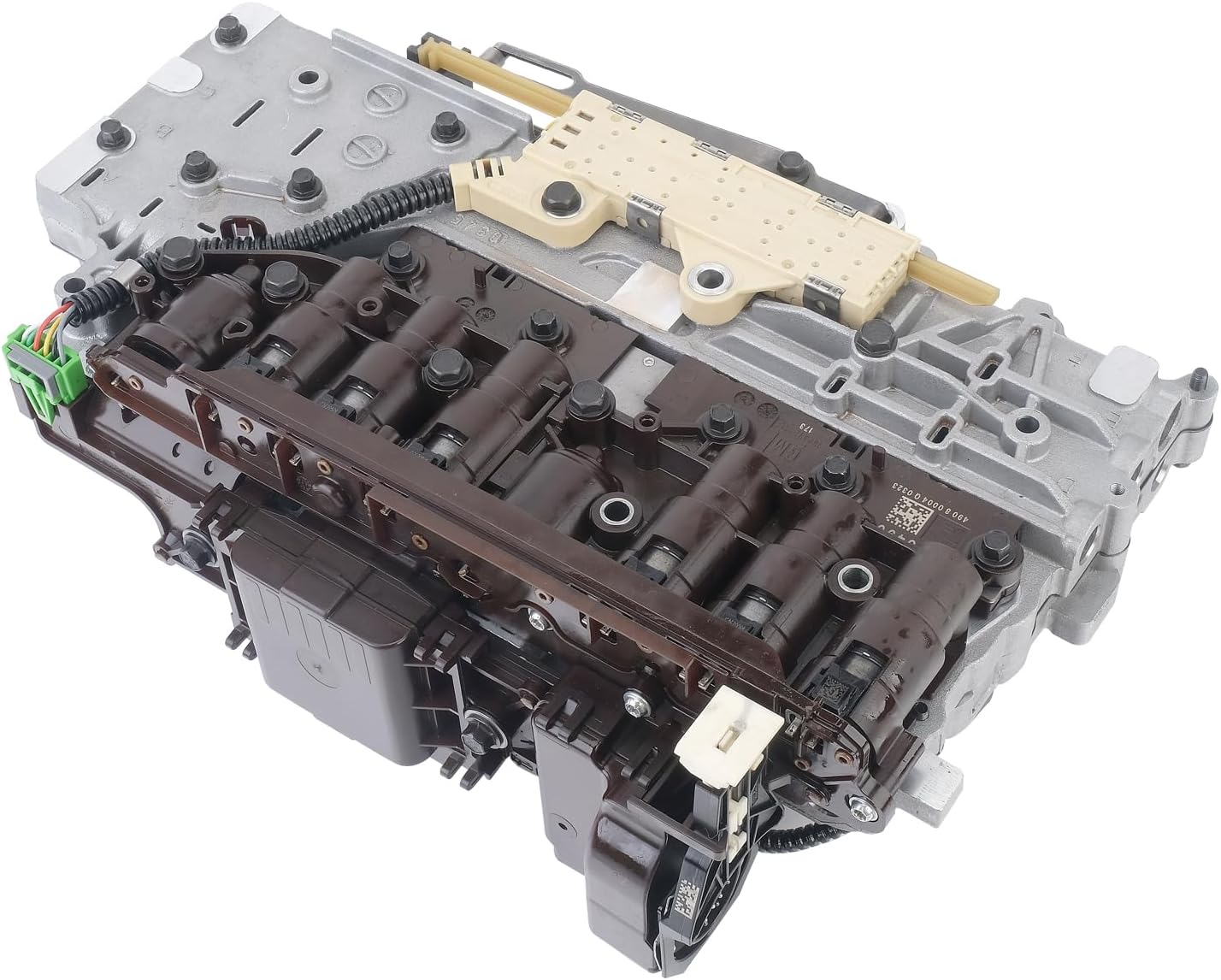
How the 6L80 Valve Body and TEHCM Control Shifts
The 6L80/6L90 is a clutch-to-clutch transmission with five friction clutches, and each is applied by its own pressure control (PC) solenoid. Those solenoids don't sit in a separate case — they live in the TEHCM (Transmission Electro-Hydraulic Control Module), which combines the control electronics, the solenoids, and the valve body into one internal assembly bolted to the bottom of the transmission. There is no governor, no throttle cable, and no external shift solenoid pack. Everything is commanded electronically and metered hydraulically inside that assembly.
Here's the chain that matters for diagnosis. A PC solenoid delivers a control pressure to a clutch boost valve. Per Sonnax, that boost valve provides feedback pressure to its clutch regulator valve, and the solenoid fluid acting on the boost valve is what precisely controls how much oil reaches the balance end of the clutch regulator valve. The regulator valve then meters actual apply pressure to the clutch. Every one of those valves rides in an aluminum bore, and every bore can wear. When it does, the commanded pressure and the delivered pressure stop matching — which is the root of almost every 6L80 valve body complaint.
Symptoms of a Failing 6L80 Valve Body
A worn 6L80 valve body rarely dies all at once. It leaks pressure in one or two circuits first, so the complaints are gear-specific and often intermittent before they get worse:
- Harsh or bumpy upshifts, especially the 2-3 and 3-4, from a regulator that can no longer soften the apply.
- Shift flare or slip — engine RPM rises during a shift because a clutch can't build and hold pressure.
- Delayed engagement going into Drive or Reverse, or a soft, late apply.
- Wrong-gear starts and bind-ups, where the transmission takes off in the wrong ratio.
- Burnt clutches and dark fluid, the downstream result of a circuit that has been slipping on low pressure for a while.
- Solenoid performance codes and, in bad cases, limp mode.
Sonnax lists exactly this cluster — burnt clutches, harsh/bump/flare shifts, bind-ups, wrong-gear starts, and solenoid performance codes — as the conditions its reman 6L80E valve body is built to correct, which tells you how tightly these symptoms track back to valve-body wear rather than the electronics.
Rule out the two bulletin causes first
Before any of that, note that GM publishes two non-valve-body causes for this exact symptom list. Bulletin 22-NA-182 covers 6L80, 6L90, 8L90 and 10-speed units with harsh shifting, shudder, surging, stalling, neutral/flare and transmission overheating, before or after the transmission has been overhauled, and its first-listed cause is a twisted cooler line on low-mileage vehicles. GM's instruction is to disconnect the line at the auxiliary cooler and untwist it, replace it if it stays misshaped, then check fluid level. On ETRS units a twisted line can also set P27EC in the TCM.
The same bulletin names the thermal bypass valve as the cause of the overheat if the cooler line is not twisted, and gives the opening temperature: 158°F (70°C) for the 6L80 and 6L90, with the valve external to the transmission. That number matters because GM changed it. TechLink told technicians to replace the TBV during any 6L80 (RPO MYC) repair on 2014-2019 Silverado and Sierra or 2015-2020 Tahoe, Suburban and Yukon for harsh shift, delayed shift, shudder, noise or vibration, because "the previous TBV had a full-open temperature of 194°F (90°C). The new TBV has a full-open temperature of 158°F (70°C)." The updated valve is identified by a "70" stamped into the bottom, visible installed, and part numbers are in bulletin 21-NA-199. If you are diagnosing a harsh or delayed shift on a truck that has never had that valve, check for the stamp before you pull the pan.
The Real Causes: Worn Bores and Leaking Bore Plugs
When a 6L80 valve body misbehaves, the cause is almost always one of the following. All three produce similar driving complaints, so you diagnose to tell them apart rather than guessing.
1. Leaking bore plugs (end plugs) at the clutch regulator valves
The end plugs seal the actuator/solenoid feed pressure that controls each clutch regulator valve as gears change and clutches apply. When a plug wears and lets that fluid leak at the retainer, the regulating valve reacts slowly and the solenoid's signal pressure bleeds off — and the module reads that lost pressure as a solenoid that isn't responding. That's how a leaking plug sets a "solenoid performance" or "stuck off" code with a perfectly good solenoid. It's the cheapest fix on the list: Sonnax addresses it with an O-ringed end plug kit that restores minimal plug-to-bore clearance with an added O-ring for a positive seal.
2. Worn clutch regulator and boost valve bores
The regulator and boost valves wear their aluminum bores over time. Once the bore is oval or scored, the valve no longer seals, so it can't hold the pressure the PC solenoid is commanding. Sonnax notes that excess wear in the boost valve bores results in harsh shifts, slipping, burnt clutches, flares, codes, and delayed engagement — and that the fix is to recondition the bore and fit an oversized valve, not simply swap parts into a worn casting. A brand-new OE valve in a worn bore will leak just like the old one.
3. The 3-5-R clutch regulator valve and compensator feed regulator valve
Two specific valves show up constantly. The 3-5-R clutch regulator valve is known to stick, causing no-Reverse and shift complaints while line pressure reads normal — a giveaway that the problem is a control valve, not the pump. The compensator feed regulator valve, when stuck, causes delays going into gear or harsh, chattering shifts and downshift clunks. If your complaint centers on Reverse and 3rd/5th specifically, read our companion write-up on the 6L80/6L90 3-5-R clutch failure, which covers that circuit in depth.
4. The TEHCM / PC solenoid itself (electrical)
Yes, a solenoid can genuinely fail, and the TEHCM's internal pressure switches can crack their membranes and throw erratic shift-timing codes. But the electronics are the last thing to condemn, not the first, precisely because the hydraulic faults above set the same codes at a fraction of the cost. GM makes the same point from the other direction in 22-NA-182 by listing these complaints as things that show up after an overhaul, with a twisted cooler line or the thermal bypass valve as the cause — which is another way of saying the unit was never the problem.
The Codes You'll See
The clutch PC solenoids each set a "stuck off" or "stuck on" performance code. Knowing which code maps to which clutch keeps you from chasing the wrong circuit:
| Code | PC solenoid | Clutch / function |
|---|---|---|
| P0776 / P0777 | PC Solenoid 2 | 3-5-R clutch (3rd, 5th, Reverse) |
| P0796 | PC Solenoid 3 | 1-R / 4-5-6 clutch |
| P2714 | PC Solenoid 4 | 2-6 clutch |
| P2723 | PC Solenoid 5 | 1-2-3-4 clutch |
| P0877 / P2715 | TEHCM pressure switch | Erratic shift timing (cracked switch membrane) |
The critical point: per Sonnax, a common cause of the P0776/P0796/P2714/P2723 family is the bore plug at the end of the clutch regulating valve leaking at its retainer, slowing the valve and bleeding off solenoid signal pressure. Same code, completely different (and much cheaper) fix than a solenoid or module.
How to Test Your 6L80 Valve Body
Test in this order. Each step is cheaper and less invasive than the next, and following the sequence keeps you from paying for a teardown that a valve-body repair would have solved.
- Pull codes and read the description literally, not emotionally. P0776/P0777 is the 3-5-R circuit; P0796, P2714, and P2723 map per the table above. Do not act on the word "solenoid" in the code text — on this unit it is frequently hydraulic.
- Check the fluid first. The 6L80/6L90 uses DEXRON VI — GM's TechLink capacities chart lists the 6L90 (RPO MYD) at 5.7 L / 6.0 qt of DEXRON VI as a fluid change capacity. Clean fluid with a shift-quality complaint and a performance code points toward the valve body (worn bore or leaking plug). Dark, burnt fluid with debris means a clutch has already been slipping and you are likely into hard parts too. One level-check trap: with the 158°F (70°C) bypass valve installed, GM says to check level only after transmission fluid temperature has reached or exceeded 158°F, because that is what opens the bypass and lets the cooler fill. Check it cold and you will read a level that is not the real one.
- Verify line pressure is normal. If a scan tool or a gauge on the line-pressure tap shows normal line pressure but the truck still shifts wrong or won't engage a gear, you've just ruled out the pump and pointed straight at a control valve in the valve body. Normal line pressure with a no-Reverse or shift complaint is the classic 3-5-R clutch regulator valve signature. Our line pressure testing walkthrough covers the hookup.
- Watch commanded vs. actual clutch pressure in live data. With a scan tool, monitor the PC solenoid PIDs — PC solenoid 2 for the 3-5-R, and the corresponding PID for whichever clutch is complaining — and compare commanded pressure against actual pressure. A gap where actual can't rise to meet commanded, or can't hold it, with the solenoid electrically good, indicts the regulator valve bore or a leaking bore plug rather than the solenoid.
- Confirm the solenoid electrically. Check each suspect PC solenoid's resistance against spec and look for a bias or reference-voltage fault before you blame it. A solenoid that reads in spec, on a circuit that still can't build pressure, is telling you the leak is downstream in the valve body.
- Reproduce the wrong-gear / harsh / flare complaint deliberately. A wrong-gear start or bind-up points to a stuck regulator or boost valve feeding the wrong clutch. A flare on a specific shift isolates the circuit for that clutch. A harsh, chattering apply or a downshift clunk points at the compensator feed regulator valve. Match the complaint to the clutch, then to the valve that controls it.
- Inspect the bores and plugs. With the pan and valve body accessible, check the clutch regulator and boost valve bores for wear and scoring, and check each end plug for a leaking retainer. Use a Sonnax valve-body layout as your map to find the exact valve train tied to your code — it identifies which regulator, boost valve, and plug belong to each clutch circuit. This is where you decide: reseal/re-plug and recondition the bore, or replace the valve body.
Shop 6L80/6L90 valve bodies, clutch regulator and boost valve kits, O-ringed end plug kits, TEHCM units, Dexron VI, and the tools to test and install them — shipped fast from the USA.
Shop 6L80 valve body parts →Repair or Replace the Valve Body?
Once you've localized the fault, the fix falls into one of two paths:
Targeted bore/plug repair. If the problem is a single leaking end plug or one worn bore, the economical fix is to recondition that bore and install an oversized valve or an O-ringed end plug kit, restoring the seal in place. This is the right call when the rest of the casting is clean and the clutches aren't burnt.
Replace the valve body. When multiple bores are worn, the casting is damaged, or you simply want a known-good corrected unit, a remanufactured valve body that already has the bores reconditioned and the upgraded valves fitted is the faster, more reliable path. Sonnax's reman 6L80E valve body, for example, is built specifically to eliminate the burnt clutches, harsh/flare shifts, bind-ups, wrong-gear starts, and solenoid performance codes described above.
One warning that saves comebacks: some faults live in the pump, not the valve body. Sonnax cautions that shift, clutch, and performance conditions caused by wear at the pressure regulator valve bore or its boost valve in the pump cannot be corrected by replacing the valve body. Those pump bores should be checked for wear whenever the unit is apart — otherwise a new valve body walks back in with the same complaint.
Diagnose the 6L80 valve body in order — codes, fluid, line pressure, commanded-vs-actual pressure, then the bores and plugs — and its most common failures stop being a guessing game. A large share of "solenoid" codes and harsh, flaring, or wrong-gear shifts are a worn bore or a leaking plug that a targeted repair or a corrected valve body fixes for a fraction of what a shotgun TEHCM swap would cost. For more on the rest of the unit, see our complete 6L80 service guide and the 6L80 limp mode guide.
Sources
- General Motors — Service Bulletin 22-NA-182, “Information on 6L80 6L90 8L90 10L80 10L90 10L1000 Equipped Vehicles With A Harsh Shift, Shudder, Surge, Stall, Neutral/Flare, Transmission Overheating and/or High Transmission Fluid Temperature,” August 2023 revision (NHTSA-hosted PDF). Backs the complaint list of harsh shifting, shudder, surging, stalling, neutral/flare and transmission overheating occurring before or after an overhaul; the first-listed cause of a twisted cooler line on low-mileage vehicles with the instruction to disconnect it from the auxiliary cooler and untwist it, replace it if it remains misshaped, then check fluid level; the note that a twisted cooler line may set DTC P27EC in the TCM on ETRS transmissions; and the thermal bypass valve opening temperature of 158°F (70°C) for the 6L80 and 6L90 with the valve external to the transmission, against 194°F (90°C) for the 8L90 and 143°F (61°C) for the 10-speeds. static.nhtsa.gov (PDF)
- General Motors — GM TechLink, “Thermal Bypass Valve Installation,” Mid-September 2021 (Volume 23, No. 18), p. 3. Backs the 6L80 (RPO MYC) coverage across 2014-2019 Silverado and Sierra and 2015-2020 Tahoe, Suburban and Yukon; the direction to replace the thermal bypass valve during transmission repairs for harsh shift, delayed shift, shudder, noise or vibration; the previous 194°F (90°C) versus new 158°F (70°C) full-open temperatures; the “70” identification stamp on the bottom of the valve; the reference to bulletin 21-NA-199 for part numbers; and the fluid level check tip that TFT must reach or exceed 158°F (70°C) to open the bypass and fill the cooler for an accurate reading. gm-techlink.com (PDF)
- General Motors — GM TechLink “2025 Transmission Capacities & Fluids” reference chart (05-2025 revision A). Backs the DEXRON VI specification for the 6L family and the 5.7 L / 6.0 qt fluid change capacity listed for the 6L90 under RPO MYD. gm-techlink.com (PDF)
- Sonnax — GM 6L45, 6L50, 6L80, 6L90 Valve Body Layout: exploded location guide identifying each clutch regulator valve, boost valve, and bore plug, and the shift/clutch complaints tied to their wear. sonnax.com/tech_resources/1052
- Sonnax — GM 6L45/50, 6L80/90 No Movement Conditions: Analysis & Repair Tips, on the clutch regulator valve bore plug leaking at its retainer causing solenoid performance codes (P0776, P0796, P2714, P2723), the sticking 3-5-R clutch regulator valve with normal line pressure, and the compensator feed regulator valve. sonnax.com/tech_resources/1216
- Sonnax — O-Ringed End Plug Kit (104740-23K), on end plugs sealing solenoid/actuator feed pressure at the clutch regulator valves and the shift complaints and burnt clutches that result when a worn plug leaks. sonnax.com/parts/1707-o-ringed-end-plug-kit
- Sonnax — Oversized Clutch Boost Valve (104740-01), on the boost-valve-to-clutch-regulator-valve control relationship, boost valve bore wear causing harsh shifts, slipping, burnt clutches, flares, codes and delayed engagement, and reconditioning the bore. sonnax.com/parts/1702-oversized-clutch-boost-valve
- Sonnax — Remanufactured Valve Body GM6L80E, listing the complaints a corrected valve body addresses (burnt clutches, harsh/bump/flare shifts, bind-ups, wrong-gear starts, solenoid performance codes) and the caution that pressure regulator/boost valve wear in the pump cannot be corrected by replacing the valve body. sonnax.com/parts/4621-remanufactured-valve-body