A customer calls about a "5R55" in their Ford, and before you quote anything you need one more letter. The 5R55E and the 5R55S share a number and a five-speed count, and that is about where the family resemblance ends. One is a Ranger-sized unit from the 4R44E family that gets its fifth gear by splitting first. The other is the larger Explorer, Mustang, Lincoln LS and Thunderbird unit with three bands, a solenoid body full of variable-force solenoids and no dipstick at all.
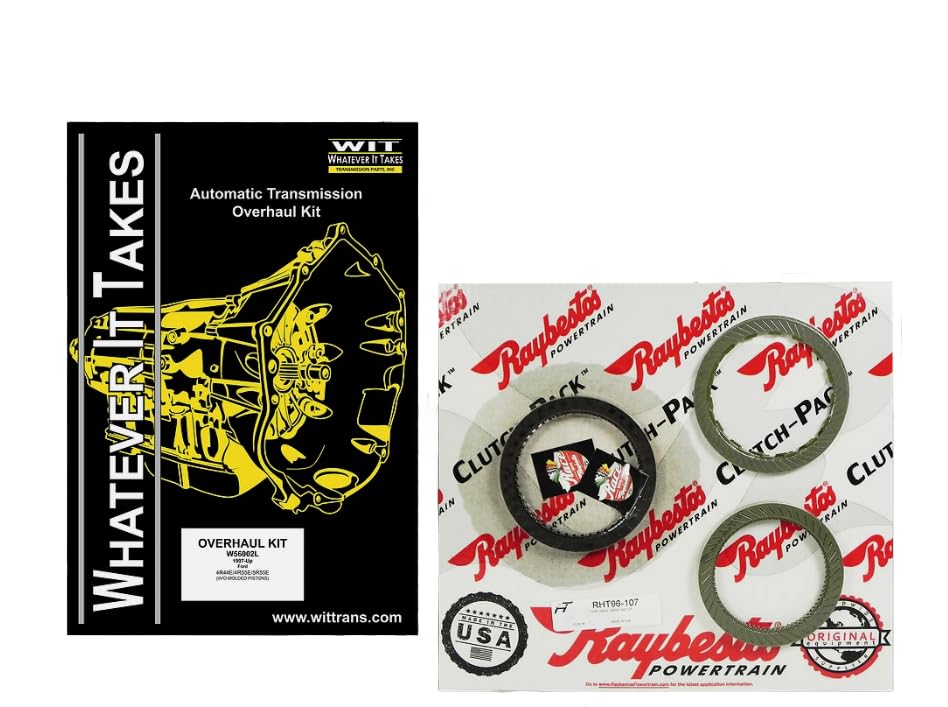
Ordering the wrong kit, valve body or solenoid pack is the most common way this mix-up costs money. This guide covers how to tell them apart, the gear ratios, how each one makes five speeds, solenoid and electrical checks, fluid and fill procedures, and the weak spots I see on the bench. The specs come from Ford service and owner literature, ATRA, Sonnax, TransGo and Transmission Digest, all listed at the bottom.

The Short Answer
The 5R55E is the five-speed version of the 4R44E/4R55E family used in Ranger, Mazda B-series and some Explorer applications. Sonnax dates the five-speed conversion to 1997, when Ford began applying the front (overdrive) servo to create an overdriven first and a fifth gear. It uses a dipstick and a valve body with conventional on/off shift solenoids plus an EPC solenoid.
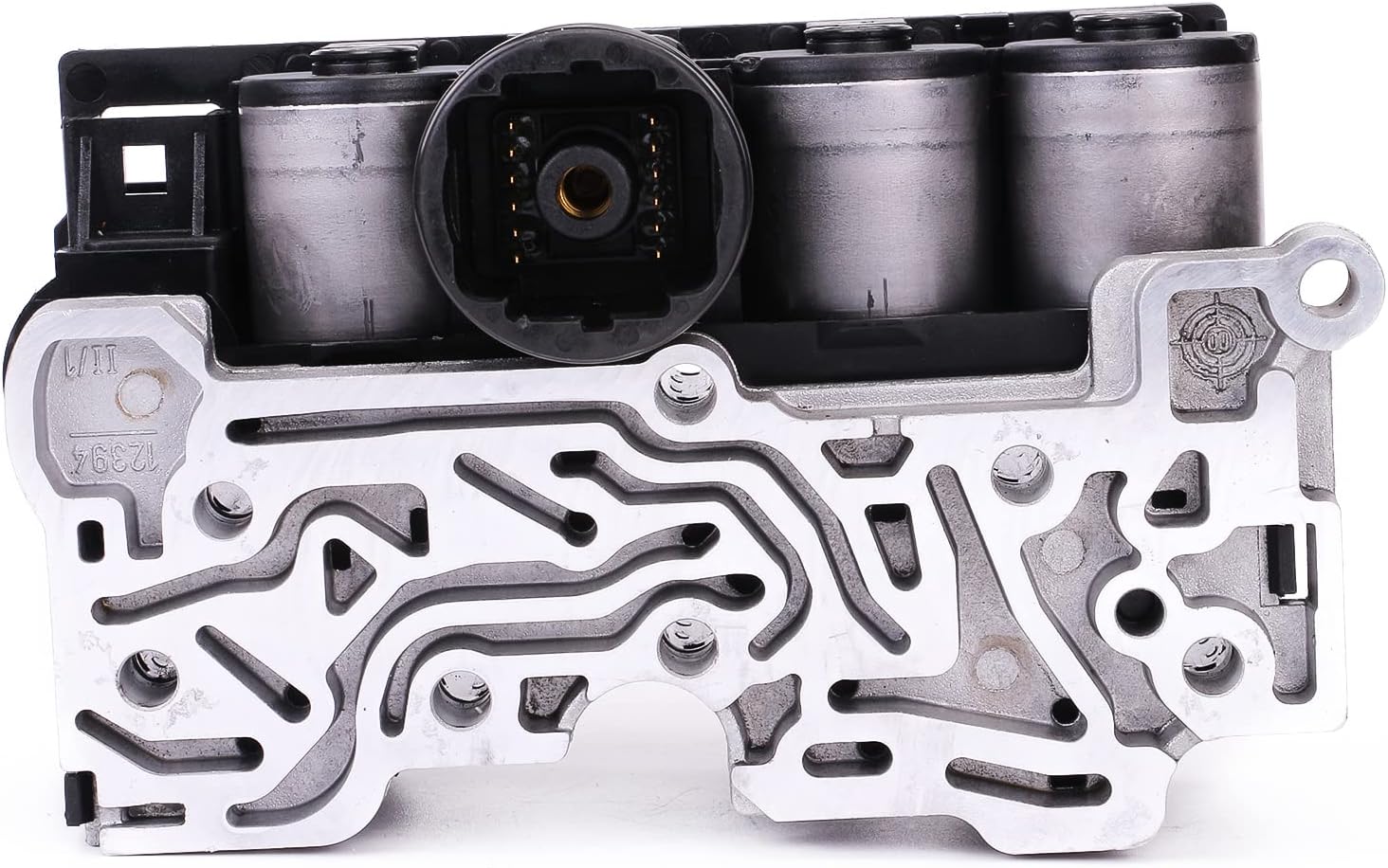
The 5R55S belongs to the 5R55N/W/S family. Ford's service literature describes the W/S design as three compound planetary sets, three bands, three multi-plate clutches and two one-way clutches, controlled by four on/off shift solenoids, a PWM converter clutch solenoid and three variable-force pressure control solenoids. Ford says the "S" stands for synchronous shift and the "W" for wide ratio. It has no dipstick; level is set at a check plug in the pan.
The two do not share valve bodies, solenoid packs, filters, geartrain parts or calibrations. Treat them as separate transmissions.
Where Each One Lives
TransGo's 4R44E/5R55E shift kit instructions list the family as fitting 1995-2010 4R44E, 4R55E and 5R55E units behind the 2.3L, 3.0L and 4.0L V6 in Aerostar, Explorer, Bronco and Ranger, plus Mazda B2300, B3000 and B4000 trucks. Ford's 2001 Ranger owner guide lists the 4R44E, 5R44E and 5R55E as that truck's automatics.
Sonnax's 5R55 history puts the N/W/S units in heavier, higher-output vehicles. The 5R55N ran 1999-2002 in the Jaguar S-Type, Lincoln LS and Thunderbird; the S replaced it in 2003 in the Lincolns and Thunderbirds. The 5R55W went into 2002-2003 Explorers and Mountaineers before giving way to the S in 2004-2005. The 5R55S then carried on in the 2005-2010 Mustang, whose 2005 Ford workshop manual specifies it.
On an Explorer or Mountaineer, check the door post label first. Ford's 5R55W/S diagnosis section says the transmission letter code under the TR heading is V for 5R55S and R for 5R55W. That one letter tells you which solenoid body, sun gear and calibration you are dealing with.
Gear Ratios Side by Side
ATRA's GEARS ratio chart (January/February 2006) lists both units:
- 5R55E: 2.47, 1.87, 1.47, 1.00, 0.75, reverse 2.10
- 5R55S: 3.22, 2.29, 1.54, 1.00, 0.71, reverse 3.07
- 5R55W (for reference): 3.22, 2.41, 1.54, 1.00, 0.75, reverse 3.07
Look at the 5R55E numbers and the design shows itself. The same chart lists the 4R44E/4R55E at 2.47, 1.47, 1.00, 0.75. Multiply first (2.47) by the overdrive ratio (0.75) and you get about 1.85, which is the 5R55E's second gear. Its third is the four-speed's old second, and fifth is direct drive run through overdrive. The 5R55S starts at a much deeper 3.22 first, which is why it launches a heavier Explorer or a Mustang far better. The S and W differ in second and fifth; Sonnax ties that to the overdrive sun gear, a 24-tooth part in the W and a 38-tooth part in the S. Do not mix those hard parts.
How Each One Makes Five Speeds
5R55E: a four-speed with a split first
Sonnax describes the 1997 change plainly: the unit became a five-speed by applying the front servo to obtain an overdriven first and fifth. That means the overdrive band is in play for both the 1-2 and 2-3 shifts, and the 2-3 is a swap shift where the overdrive band releases while the intermediate band applies. Any loss of overdrive servo release oil shows up in two gears at once. Sonnax's tip for the coast clutch shift valve bore says it well: when that bore wears, solenoid oil leaks around it, overdrive servo release pressure drops, and the result is no 4th on a 4R unit or no 2nd and no 5th on a 5R.
5R55S: bands, clutches and three pressure solenoids
The 5R55S uses its three variable-force pressure control solenoids (PC-A, PC-B, PC-C) to control line pressure and individual band and clutch apply pressure. Ford's diagnosis section notes the line pressure tap reads PC-A or PC-B output and a separate pressure control tap reads PC-C. That is why the S shifts smoothly when it is healthy and why it flares or slips when the valve body bores wear. Sonnax says the VFS 1, 2 and 3 modulator bores wear with cycle rate, reducing clutch and servo pressure; adaptives can mask it for a while, then ratio codes or slippage show up. Sonnax adds that the servo pin bore often gets blamed when the modulator valves are the real cause.
Solenoids and Electrical Checks
5R55E
TransGo's electrical chart for the 4R44E/5R55E family lists SS1, SS2, SS3, a coast clutch solenoid (SS4 on the 5R), TCC and EPC. Resistance specs from that sheet:
- Shift and coast solenoids: 22-48 ohms
- TCC solenoid: 9-16 ohms
- EPC solenoid: 3.1-5.7 ohms
- Transmission fluid temperature thermistor: about 28.4k ohms at 70 F, located in the harness near the EPC
TransGo also notes the shift solenoids are normally open and that limp mode starts in third. Their sheet warns that EPC solenoids wear out and recommends a new one at overhaul, and that the original calibration lets clutch and band shift pressure drop as low as 40 psi even with higher line pressure, which is behind a lot of burned forward clutches and bands. Sonnax lists the EPC solenoid replacement as 56842B-01 and explains that poor line rise from a dirty EPC solenoid or a leaking EPC circuit also starves the TCC regulator valve.
5R55S
Ford's 5R55W/S pinpoint tests list SSA, SSB, SSC and SSD at 16-45 ohms, TCC at 9-16 ohms and each pressure control solenoid at 3.3-7.5 ohms, measured from pin 3 of the 16-pin transmission connector. A circuit reading under 5 ohms to ground means a new solenoid body, per the same procedure. The shift solenoids are normally open three-way units. Ford also notes that a TCC solenoid stuck ON will stall the engine at idle in drive, and one stuck OFF means no lockup.
On the scan tool, the S gives you more to work with: turbine, intermediate shaft and output speed sensors, so you can calculate gear ratio and see which element is slipping. Sonnax cautions that the solenoid manifold looks interchangeable across N, W and S, but the base plate and filter are not. Mix them and the unit loses reverse, TCC apply and solenoid oil pressure.
Fluid, Capacity and Level Checks
Both units take MERCON V. The difference is how you check it, and this is where a lot of 5R55S units get hurt.
5R55E: Ford's 2001 Ranger owner guide lists Motorcraft MERCON V (XT-5-QM) for the 4R44E, 5R44E and 5R55E and says MERCON and MERCON V should not be mixed. Approximate dry-fill capacity with the 3.0L or 4.0L is 10.0 quarts in 4x2 and 10.3 quarts in 4x4. Ford says those are approximate, and the final level is set on the dipstick after about 20 miles of driving to reach operating temperature.
5R55S: there is no dipstick. Ford's 2002 Explorer 5R55W/S service procedure has you monitor the TFT PID, idle at about 650 rpm, and check with fluid at 81-120 F (27-49 C). With the engine running in park and the vehicle level, remove the small fluid level indicator plug in the center of the drain plug with a 3/16 in Allen key. A thin stream or drip means the level is correct. If nothing comes out, add fluid through the plug with fill tool 307-437 in half-pint increments until it drips. Explorer capacity is listed at 12.6 quarts. The 2005 Mustang workshop manual lists 11.2 L (11.9 quarts) approximate dry capacity including cooler and tubes, and warns not to overfill.
The service interval for the S is on the long side. The Explorer procedure calls for fluid and filter at 150,000 miles under normal service and 30,000 under severe conditions. The 2005 Mustang manual goes further and calls the fluid filled for life under normal maintenance, with a 30,000-mile change for severe duty. If one of these towed or ran hot, change the fluid well before those numbers.
Key torques for a 5R55S pan job, from the Ford Explorer procedure: pan bolts 97 in-lb in a crisscross pattern, transmission drain plug 19 ft-lb, converter drain plug 89 in-lb (use a new plug), solenoid body bolts 71 in-lb. On the 5R55E, TransGo calls for valve body bolts at 72-92 in-lb, tightened from the center outward, and warns that overtightening causes a wrong-gear start after reverse.
Weak Spots on the 5R55E
Valve body end plugs and bore wear
Sonnax describes the 4R/5R valve body as a casting full of L retainers holding end plugs that separate circuits. As valves toggle, the plugs loosen, wear the casting and cross-leak. Their list of what follows: delayed reverse, 1-2 or 2-3 flare, harsh shifts after a forced downshift, broken bands and blown servo seals from the EPC circuit, plus no reverse or loss of 3rd and 4th when solenoid oil leaks past an end plug. Sonnax says patch-fixing this body is not practical; the bores need to be repaired.
Case wall movement
Transmission Digest, via the Sonnax TASC Force, documents a casting issue in this family. The line pressure passage (70 to 350 psi) runs beside the converter charge passage (limited to about 80 psi). The pressure difference across that thin wall can exceed 1,000 lb in drive and 1,500 lb in reverse. The wall flexes, fuzzes the valve body gasket, loosens the bolts and eventually blows the gasket. The fix is set screws installed sideways in the case to brace the walls. If a 5R55E comes back with a blown gasket and loose bolts, look here.
TCC slip
Sonnax gives a good road test number: with TCC duty at 70 percent or higher and slip (TCCMACT) at 140 rpm or more, the apply circuit lacks clamping force. The causes they list are the converter, the stator shaft seal or a worn TCC regulator bore.
Weak Spots on the 5R55S
VFS modulator and regulator bores
Sonnax says to start a 5R55W/S valve body inspection at the TCC modulator bore and the main regulator bore, which wear first. The VFS modulator bores follow, dropping clutch and servo apply pressure until the PCM can no longer adapt around it. Flares and gear ratio codes are the usual result.
Servo bores and solenoid body
Servo pin bore wear is a known issue in this family, but test before you blame it. A solenoid body that reads out of spec in Ford's pinpoint test, or one that shorts to ground, is a clean diagnosis. ATRA's 2013 seminar material lists the 5R55S solenoid body service number as 9L2Z-7G391-A for 2004 and later units, superseding 4L2Z-7G391-AA.
Overfilled or underfilled units
Because there is no dipstick, many 5R55S units get topped off by guess. Too little fluid leads to slipping and burned bands. Too much can be pushed out of the vent, and Ford warns that pressurized fill equipment over 1 psi does exactly that, leaving fluid that looks like a converter-area leak.
Can You Swap One for the Other?
No, not as a bolt-in. Case, length, electrical connector, sensor count and PCM strategy are all different. Even within the S family, Sonnax warns that 5R55N parts mostly do not interchange with W/S parts, and that W and S geartrain parts differ. Build what the vehicle came with, confirm it by door code or tag, and buy parts by model and year.
Which One Is Better?
They were built for different jobs. The 5R55E is a compact, simple unit for small trucks: easy to diagnose with a dipstick and a meter, inexpensive to rebuild, and its problems are well documented. The 5R55S is the more refined design, with a deeper first gear and pressure-controlled shifts, but it depends on a healthy valve body and correct fluid level far more than the E does. In both, the valve body decides whether a rebuild lasts. If you rebuild either one, put the bore repair and a new pressure control solenoid in the plan from the start.
Shop the part for this fix: 5R55S VFS modulator valve kit
Chasing 5R55S flares or ratio codes from worn VFS modulator bores? CoreTransmissionParts carries the Sonnax oversized VFS modulator control valve kit (56947J-19K) that Sonnax recommends for this wear.
View the 5R55S VFS valve kit at CoreTransmissionParts →Need parts for this job?
5R55E rebuild kits, the Sonnax ZIP valve body kit, 5R55W/S solenoid bodies, pumps and filter kits, all with secure checkout.
Shop 5R55 parts →FAQ
What is the difference between a 5R55E and a 5R55S?
The 5R55E is the five-speed member of the 4R44E family used in Ranger and Mazda B-series trucks; it gets its extra gear by applying the overdrive band in first and is checked with a dipstick. The 5R55S belongs to the 5R55N/W/S family used in Explorer, Mountaineer, Mustang, Lincoln LS and Thunderbird, with three bands, three variable-force pressure solenoids and no dipstick. They share no valve body, solenoid pack or calibration.
What are the 5R55E and 5R55S gear ratios?
ATRA lists the 5R55E at 2.47, 1.87, 1.47, 1.00 and 0.75 with a 2.10 reverse. The 5R55S is 3.22, 2.29, 1.54, 1.00 and 0.71 with a 3.07 reverse. The 5R55W shares first, third and reverse with the S but uses a 2.41 second and 0.75 fifth.
How do I check the fluid on a 5R55S with no dipstick?
Ford's procedure is to idle the engine in park with the vehicle level and the fluid at 81-120 F on the TFT PID, then remove the small level plug in the center of the drain plug with a 3/16 in Allen key. A thin stream or drip means the level is right. If nothing comes out, add MERCON V through the plug with fill tool 307-437 in half-pint steps until it drips.
What fluid does the 5R55E take and how much?
Ford's 2001 Ranger owner guide lists Motorcraft MERCON V (XT-5-QM) for the 5R55E. Approximate dry fill with the 3.0L or 4.0L is 10.0 quarts in 4x2 and 10.3 quarts in 4x4, with the final level set on the dipstick at operating temperature.
Why does my 5R55E have no 2nd and no 5th gear?
Both gears rely on the overdrive servo. Sonnax traces a common cause to a worn coast clutch shift valve bore that bleeds solenoid oil and drops overdrive servo release pressure. Check the solenoids electrically first, then wet air test the valve body.
Sources
- ATRA GEARS, "Gear Ratios" reference chart (Jan/Feb 2006). Backs the 5R55E (2.47/1.87/1.47/1.00/0.75, R 2.10), 5R55S (3.22/2.29/1.54/1.00/0.71, R 3.07), 5R55W and 4R44E/4R55E ratios. atracom.blob.core.windows.net
- Sonnax, Bob Warnke, "18 Troubleshooting Tips for 4R44E and 5R55E Transmissions" (2005). Backs the 1995-1997 family history and five-speed conversion by applying the front servo, EPC solenoid 56842B-01 and booster valve symptoms, end plug leakage, coast clutch valve wear causing no 2nd and 5th, and the 70 percent / 140 rpm TCCMACT slip test. sonnax.com
- Sonnax, Bob Warnke, "Figuring Out the 5R55 Alphabet" (2007). Backs the 5R55N/W/S applications and years, the 24-tooth (W) vs 38-tooth (S) overdrive sun gear, N vs W/S parts interchange, solenoid base plate and filter mix-ups, and TCC modulator, main regulator and VFS modulator bore wear. sonnax.com
- Ford 5R55W/S Diagnosis, 2002 Explorer/Mountaineer (Ford service information, Mitchell reprint). Backs the W/S layout (3 planetary sets, 3 bands, 3 clutches, 2 one-way clutches), S = synchronous / W = wide ratio, door code V (5R55S) and R (5R55W), PC-A/B/C function, and solenoid resistances (SSA-SSD 16-45 ohms, TCC 9-16, PC 3.3-7.5). txnj.net
- Ford 5R55W/S Servicing, 2002 Explorer/Mountaineer (Ford service information, Mitchell reprint). Backs MERCON V, 12.6 qt capacity, the TFT 81-120 F plug level check with fill tool 307-437, 150,000/30,000-mile intervals, 1 psi fill limit, and pan, drain, converter plug and solenoid body torques. txnj.net
- Ford 2005 Mustang Workshop Manual, Section 307-01 Specifications. Backs 5R55S MERCON V XT-5-QM, 11.2 L (11.9 qt) approximate dry capacity including cooler, filled for life under normal maintenance and 30,000-mile severe-duty change. themustangsource.com (Ford manual copy)
- Ford 2001 Ranger Owner Guide (archived copy). Backs MERCON V XT-5-QM for the 4R44E, 5R44E and 5R55E, no mixing MERCON and MERCON V, and 10.0 qt (4x2) / 10.3 qt (4x4) approximate dry fill with dipstick check. web.archive.org
- TransGo, SK 4R44E/5R55E shift kit instructions (2018). Backs the 1995-2010 application list, solenoid apply and resistance specs (shift/coast 22-48 ohms, TCC 9-16, EPC 3.1-5.7), 28.4k ohm thermistor at 70 F, limp in third, 40 psi stock shift pressure, and 72-92 in-lb valve body bolt torque. res.cloudinary.com/transgo
- Transmission Digest, Gregg Nader (Sonnax TASC Force), "4R44E, 5R55E Case-Wall Movement and Comebacks" (2006). Backs the 70-350 psi line passage beside the roughly 80 psi converter charge passage, the 1,000 lb / 1,500 lb wall loads, gasket fuzzing and the set-screw fix. transmissiondigest.com
- ATRA 2013 Technical Seminar manual. Backs the 5R55S solenoid body service number 9L2Z-7G391-A for 2004-up units superseding 4L2Z-7G391-AA. atracom.blob.core.windows.net