A 68RFE dripping fluid gets blamed on a bad seal more often than it should. In reality this transmission has two genuinely documented leak mechanisms with FCA's own name on them, and they are not the same problem. One is a straightforward pan gasket leak with a published torque spec and sealant part number. The other is a federal safety recall where fluid gets pushed out the dipstick tube under pressure, and no amount of RTV sealant fixes that one. Knowing which you are looking at before you crawl under the truck saves a wasted afternoon.
This covers where a 68RFE actually leaks from on Ram 2500 and 3500 trucks with the 6.7L Cummins, with the real bulletin numbers, torque specs, and recall remedies behind each one. For the fluid itself, our 68RFE fluid type and capacity guide has the fill procedure and quantities.


Confirm It's Actually ATF+4 Before You Chase Anything
First, make sure what you are looking at is transmission fluid and not engine oil or coolant tracking back along the bellhousing. The 68RFE runs exclusively on Mopar ATF+4, a fully synthetic fluid built to Chrysler's licensing program rather than a generic DEXRON or MERCON spec. A licensed ATF+4 product data sheet lists kinematic viscosity of 33.24 mm²/s at 40°C and 7.51 mm²/s at 100°C, a viscosity index of 204, and a pour point of -51°C. In practice that means a clean red-to-amber fluid with a thinner feel than engine oil. If what is on your driveway is black and thick, you are chasing an oil pan or rear main leak, not a transmission problem.
Once you have confirmed it is ATF+4, work the leak points in the order below, from most common to least.
1. The Oil Pan Sealing Surface (Most Common)
This is the first place to look on almost every leaking 68RFE, and FCA has a service bulletin confirming it is a known factory issue rather than just wear. Bulletin 21-024-17, titled "Transmission Oil Pan Leaking," covers 2017 Ram 2500 and 3500 pickups built between October 10, 2016 and March 31, 2017, equipped with the 6.7L I6 Cummins (sales code ETK) and the 6-speed 68RFE (sales code DG7). The bulletin's own description is direct: a technician who suspects a pan leak should inspect the sealing area shown in the bulletin's figure, and if fluid is present there, perform the resealing procedure.
The repair itself is not a gasket swap. FCA's procedure has the technician remove the pan, drain and discard the old fluid, scrape all original sealing material off both the case and pan mating surfaces with a gasket scraper, then apply a bead of Mopar RTV sealant (part 05010884AD) directly to the pan's sealing surface before reinstalling it. Pan bolts torque to 12 N·m (105 in-lbs) — a light spec that an impact gun will blow past in a fraction of a second, which is exactly why over-tightened pans are such a common repeat-leak cause on this unit. The bulletin calls for a full refill with Mopar ATF+4 afterward and a leak check on a running engine.
That bulletin's build-date window is narrow, so if your truck falls outside it, this is not a free recall repair. But the sealing surface, the RTV-over-gasket method, and the 105 in-lb torque spec are the right reference point for any 68RFE pan reseal, not just the specific trucks named in the bulletin.
Resealing a 68RFE pan this week?
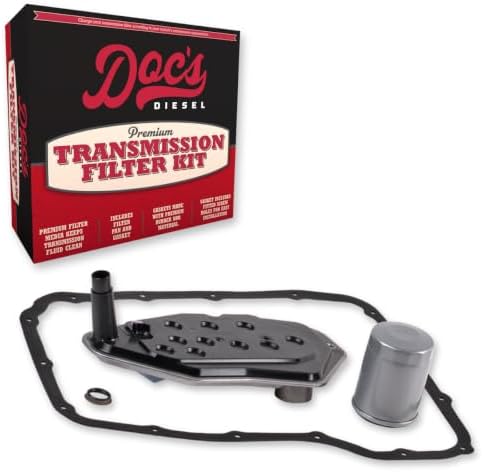
Filter and pan gasket kits for 2WD and 4WD, replacement pans with drain plugs, and the ATF+4 to refill it — shipped from the USA.
Shop 68RFE parts →2. Fluid Expelled From the Dipstick Tube (A Different Problem Entirely)
If your truck is pushing fluid out of the dipstick tube rather than dripping from the pan rail, stop treating it like a seal leak. This is a documented safety defect with its own NHTSA recall, and it has a fire risk attached to it.
NHTSA Recall 22V-835 covers 2020-2023 Ram 2500 and 2020-2022 Ram 3500 trucks with the Cummins 6.7L Turbo Diesel and 68RFE, affecting roughly 250,000 vehicles. FCA's own defect description states that "a build up of pressure and heat inside the transmission may result in transmission fluid being expelled from the dipstick tube, which may come into contact with ignition sources within the engine compartment and lead to a vehicle fire." FCA's chronology shows the investigation started in June 2022 after engineers spotted a trend of engine compartment fires, and by November 2022 the company was aware of 16 field reports and one minor injury tied to the issue before issuing the voluntary recall.
The fix is not a seal, gasket, or sealant. FCA's remedy program replaces the transmission dipstick and the transmission vent assembly — the remedy component differs from the original dipstick and vent by design, meaning the recalled parts are superseded, not resealed. If your truck falls inside that model range, run the VIN before doing anything else. A recall repair is free at any dealer, and no aftermarket seal kit substitutes for the revised vent hardware FCA designed to stop it.
Why This Happens: It's a Pressure Problem, Not a Worn Seal
"Pressure and heat buildup inside the transmission" is FCA's own wording, and it points at the hydraulic system rather than a degraded rubber part. The 68RFE's overdrive circuit is documented as the one chronic cross-leak location on this transmission: pressure can leak into and out of the OD circuit past worn solenoid switch valve bores, and that same cross-leak mechanism is tied to codes like P0870 and P0871 showing up alongside harsh or slipping shifts. A transmission running excess internal pressure and heat from a hydraulic fault has to vent that somewhere, and the dipstick tube and case vent are the path of least resistance. If a truck is both spitting fluid from the dipstick and showing overdrive-related codes or harsh shifts, the dipstick and vent replacement addresses the symptom; a valve body inspection addresses why the pressure built up in the first place.
3. Other Real External Leak Points
Once the pan and the dipstick/vent path are ruled out, work through the rest of the usual suspects in this order:
- Front pump seal. Sits where the torque converter enters the case. A worn pump seal shows as fluid on the lower bellhousing and torque converter, often mistaken for a rear main engine seal leak. This requires pulling the transmission or at minimum dropping it enough to access the front seal and bushing.
- Output shaft seal. Leaks show as fluid at the transfer case or driveshaft yoke on 4WD trucks, or dripping near the tailhousing on 2WD trucks. Easy to confuse with a leaking transfer case seal on 4x4 applications, so wipe both clean and recheck after a drive to isolate which side is actually wet.
- Cooler line fittings and O-rings. The 68RFE's auxiliary cooler lines use O-ring sealed fittings at the case and cooler. These harden with age and heat-cycle, and a cracked or flattened O-ring leaks slowly enough that it is often misdiagnosed as a pan leak until the pan itself is confirmed dry.
- Drain plug and crush washer. The lowest-cost check on the list. A loose plug or a reused, already-crushed washer leaks from the bottom of the pan. Always use a new crush washer when the plug is removed.
How to Confirm the Source Before You Reseal Anything
- Clean the entire lower transmission and bellhousing with brake cleaner and let the truck sit overnight on clean cardboard or paper.
- Drive it and recheck immediately. Fresh wet spots show you the actual path fluid is traveling, which is not always directly below the real leak source once it runs along the case.
- Check the fluid level and type at operating temperature before assuming a leak explains a low reading — the 68RFE requires its level to be read within a specific temperature window, and a truck read cold or hot the wrong way gives a false low or high reading.
- If the truck is in the 22V-835 recall range and pushing fluid from the dipstick, stop here and get the VIN checked for recall status before component diagnosis.
- If the pan rail is wet, pull the pan, clean both surfaces completely, and reseal with RTV at the specified torque rather than reusing old gasket material or over-tightening.
- If the pan is dry but fluid keeps appearing, work down the front pump seal, output shaft seal, and cooler line O-rings in that order, dye-testing if the source still isn't obvious.
68RFE Front Pump Seal
Direct replacement for the seal where the torque converter enters the case — the part you need once the pan rail is confirmed dry and the leak traces to the bellhousing.
View the 68RFE front pump seal →Shop 68RFE parts →
Frequently Asked Questions
Is it normal for a 68RFE to seep a little transmission fluid?
A small haze of residue around the pan rail from the factory RTV is not unusual over years of heat cycling, but an actual drip or puddle is not something to shrug off. The 68RFE has a documented FCA service bulletin for exactly this (21-024-17), which means the pan gasket surface is a known factory leak point, not just normal wear. If you can wipe the area clean and it is wet again within a day of driving, treat it as a real leak and find the source before it gets worse.
What is the single most common place a 68RFE leaks from?
The oil pan-to-case sealing surface, by a wide margin. FCA's own bulletin 21-024-17 addresses a factory-known oil pan leak on 2017 Ram 2500 and 3500 trucks built between October 10, 2016 and March 31, 2017 with the 6.7L Cummins and 68RFE, with a repair procedure that reseats the pan with RTV sealant rather than a reusable gasket. Outside that specific bulletin's build window, the pan rail is still the first place to check on any 68RFE with a leak, since the same thin stamped-steel pan and sealing surface is used across the model run.
My truck is spitting fluid out of the dipstick tube. Is that the same kind of leak?
No, and this distinction matters. NHTSA recall 22V-835 covers 2020-2023 Ram 2500 and 2020-2022 Ram 3500 trucks with the 6.7L Cummins and 68RFE where a build up of pressure and heat inside the transmission can expel fluid out of the dipstick tube, with a safety risk of that fluid reaching an ignition source in the engine bay. FCA's remedy is a new transmission dipstick and a new transmission vent assembly, not a gasket or seal. If your truck falls in that recall population, check its VIN for an open recall before you do anything else, since the fix may be free at a dealer.
What torque and sealant does a 68RFE pan need?
FCA's bulletin 21-024-17 specifies Mopar RTV sealant (part 05010884AD) on the cleaned pan sealing surface, no reusable gasket, with the pan bolts torqued to 12 N·m (105 in-lbs). That is a light spec by hand-tool standards, and it is exactly why over-torquing with an impact gun is such a common cause of warped pans and repeat leaks on this transmission.
Can I just add stop-leak instead of finding the actual leak source?
Not recommended on a 68RFE. The transmission uses Mopar ATF+4, a fully synthetic fluid engineered to a specific friction and viscosity profile for this unit's clutches and pressure switches; aftermarket seal conditioners change that chemistry and can affect shift quality or switch behavior on a transmission that already relies on tight pressure-switch thresholds to set codes correctly. Finding and resealing the actual leak point costs about an hour of labor and does not risk the fluid spec.
Sources
- FCA US LLC — Technical Service Bulletin 21-024-17, "Transmission Oil Pan Leaking," June 7, 2017 (hosted by NHTSA). Backs the 2017 Ram 2500/3500 build-date window (October 10, 2016 – March 31, 2017), the 6.7L Cummins ETK / 68RFE DG7 application, the RTV sealant repair procedure, Mopar RTV part number 05010884AD, the 12 N·m (105 in-lb) pan bolt torque spec, and the ATF+4 refill requirement. static.nhtsa.gov
- Chrysler (FCA US, LLC) — NHTSA Part 573 Safety Recall Report 22V-835, submitted December 8, 2022. Backs the 2020-2023 Ram 2500 and 2020-2022 Ram 3500 recall population (roughly 250,000 vehicles), the "build up of pressure and heat" defect description, the dipstick-tube fluid expulsion and engine-bay ignition risk, the investigation chronology (opened June 7, 2022; 16 field reports and one minor injury as of November 2, 2022), and the remedy replacing the transmission dipstick and transmission vent assembly. static.nhtsa.gov
- Castrol (licensed Mopar ATF+4 product) — Transmax ATF+4 Product Data Sheet. Backs the ATF+4 kinematic viscosity values (33.24 mm²/s at 40°C, 7.51 mm²/s at 100°C), viscosity index of 204, pour point of -51°C, and the Fiat Chrysler ATF+4 licensing confirmation. petroleumservicecompany.com (PDF)
- Sonnax — "68RFE Overdrive Clutch Failure: What to Check First When Troubleshooting OD Issues," Jason Larochelle, August 18, 2020. Backs the identification of the overdrive hydraulic circuit as the 68RFE's one chronic cross-leak location and the mechanism by which worn solenoid switch valve plugs cause pressure to cross-leak into and out of the OD circuit. sonnax.com
- Transmission Digest — "The Causes of the P0871 Fault Code on the 68RFE." Backs the link between overdrive circuit cross-leaks, pressure switch fault codes, and the resulting harsh-shift and overheating symptoms used here to connect internal hydraulic faults to external pressure venting. transmissiondigest.com