The Chrysler RE family of transmissions -- the 46RE, 47RE, and 48RE -- are some of the most common units that independent transmission shops still see on a regular basis. They are simple, proven, and well-understood. They are also old enough that the trucks carrying them are now second and third owners deep, often with deferred maintenance and questionable fluid histories. If you rebuild transmissions for a living, you have stacked dozens of these on your bench. This guide is a reference for what goes wrong with each variant, what to check before you commit to a teardown, and what parts and specs you need to do the job right.
For more Dodge transmission resources, visit our Dodge hub page.
The RE Family: A518 and A618 with Electronics
All three of these transmissions are evolutionary descendants of the Chrysler A727 TorqueFlite. The A518 (later renamed 46RE) and A618 (later renamed 47RE) added electronic governor pressure control and a lockup torque converter to the basic hydraulic architecture. The "RE" designation means "Rear-wheel drive, Electronic." Understanding this lineage matters because the core gear train, planetary sets, and clutch pack layout are fundamentally the same across all three. What changed between models was the governor pressure control strategy, the torque capacity of the hard parts, and the electronic integration with the PCM.
The 46RE is the light-duty version. The 47RE is the medium-duty version with heavier clutch packs, a stronger input shaft, and a larger torque converter. The 48RE is the heavy-duty version built specifically to handle the torque output of the 5.9L Cummins diesel from 2003-2007. Chrysler increased clutch pack count, redesigned the accumulator pistons, revised the valve body separator plate, and added a higher-capacity oil pump to handle the diesel torque curve.
Applications: Which Truck Gets Which Transmission
| Transmission | Vehicles | Engines | Model Years |
|---|---|---|---|
| 46RE (A518) | Ram 1500, Dakota, Durango | 5.2L V8 (318), 5.9L V8 (360) | 1996-2003 |
| 47RE (A618) | Ram 2500, Ram 3500 | 5.9L V8 (360), 5.9L Cummins diesel | 1996-2003 |
| 48RE | Ram 2500, Ram 3500 | 5.9L Cummins diesel (24-valve) | 2003-2007 |
The 46RE behind a 5.2L in a Dakota is a very different workload than a 48RE behind a tuned Cummins pulling a fifth wheel. Same family, same basic architecture, but the failure modes and the parts you stock for each are different. Know what you are working on before you quote the job.
46RE: What Breaks
The 46RE is the lightest-duty member of the family. In stock form behind a 5.2L or naturally aspirated 5.9L gas engine, it is not under extreme stress. Most of the failures you see on the 46RE are age-related and maintenance-related rather than design deficiency.
Overdrive Clutch Burnout
The overdrive clutch pack is the most common failure point on the 46RE. The overdrive section sits at the back of the transmission and handles the 3-4 shift. When the overdrive clutches burn, the truck loses fourth gear -- it will shift 1-2-3 normally and then either flare on the 3-4 shift or refuse to engage overdrive entirely. On teardown, you will find the OD clutch plates glazed and the steels heat-discolored. The root cause is usually a combination of worn sealing rings on the overdrive piston, which reduces apply pressure, and degraded ATF that has lost its friction modifier properties. In trucks that have been used for towing with old fluid, the OD clutches take the worst beating because fourth gear is where the converter unlocks and relocks during grade changes.
Governor Pressure Solenoid and Transducer Failures
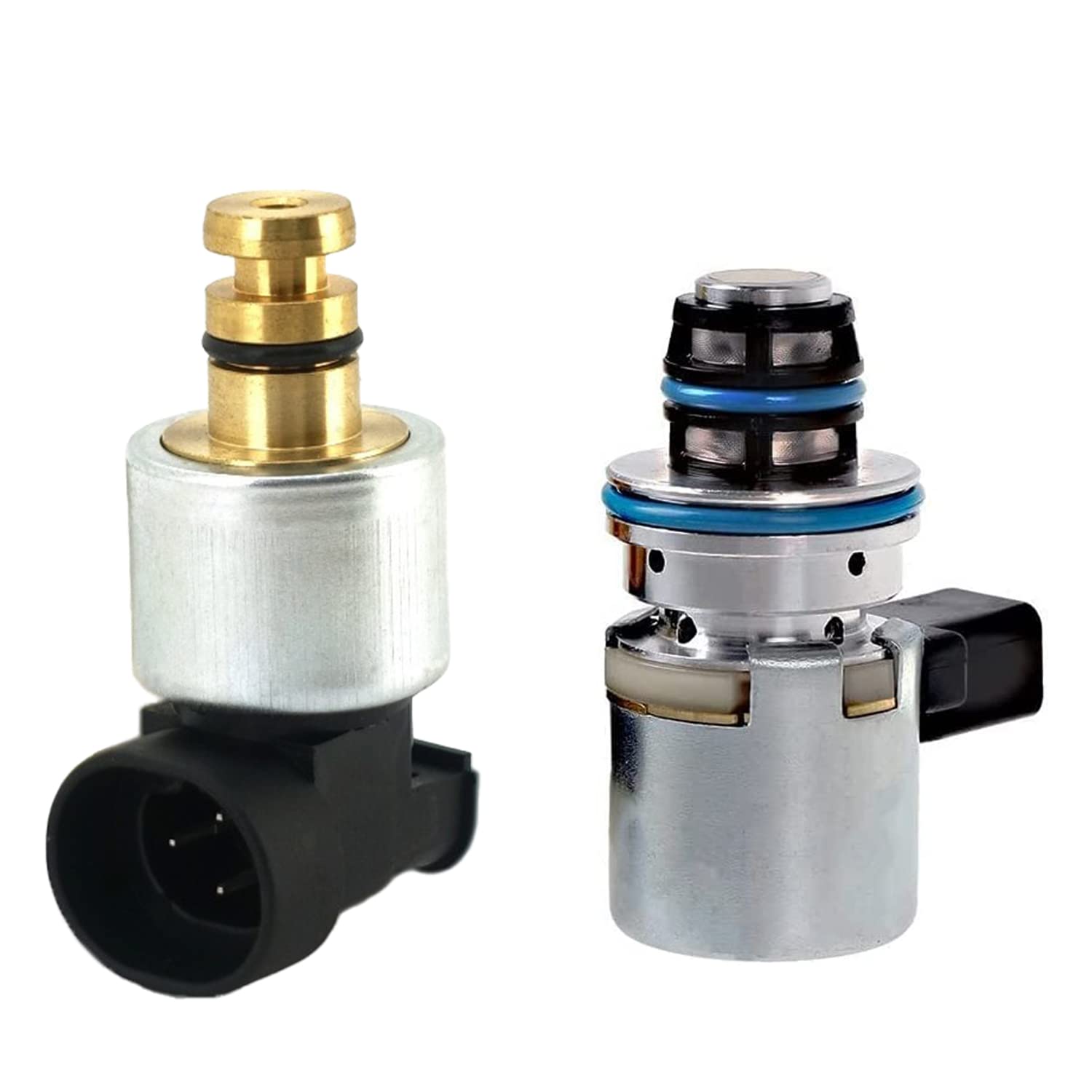
This is the single most common electrical failure across the entire RE family, and the 46RE is no exception. The governor pressure solenoid controls line pressure modulation, and the governor pressure transducer (sensor) provides feedback to the PCM. When either component fails, the transmission exhibits erratic shift timing, harsh shifts, or no upshifts at all. More detail on this in the dedicated section below, because this failure affects all three transmissions and deserves its own discussion.
Front Pump Bushing Wear
On higher-mileage 46REs (150,000+), the front pump bushing wears and allows the torque converter hub to wobble. This causes a front seal leak that gets progressively worse. If the customer complains about a transmission fluid leak from the bell housing area, check the pump bushing clearance during teardown. Replacing just the front seal without addressing the bushing is a comeback waiting to happen.
47RE: What Breaks
The 47RE handles more torque than the 46RE and sits behind heavier trucks. It shares many failure modes with the 46RE but has a few specific weak points that show up because of the higher loads.
Overdrive Housing Cracks
The 47RE overdrive housing is a cast aluminum piece that bolts to the back of the main case. In trucks that tow heavy loads regularly -- especially the 5.9L Cummins applications from 1996-2002 -- the overdrive housing can develop cracks around the bolt bosses and at the snap ring grooves. A cracked housing causes an external leak that is easy to misdiagnose as a gasket failure. During teardown, inspect the housing under good light and look for hairline cracks radiating from the bolt holes. A cracked housing must be replaced, not repaired. Welding cast aluminum transmission housings is not a reliable fix.
Front Band Failure
The front (kickdown) band in the 47RE wraps around the front clutch drum and is responsible for second gear and fourth gear holding. When the front band wears through or breaks, the truck loses second gear and may also lose overdrive. On teardown, you will find the band lining material gone and metal-to-metal contact marks on the front clutch drum. The band itself is an inexpensive part, but the drum surface needs to be inspected for scoring. A scored drum will eat the new band in short order. The band adjustment is critical on reassembly -- Chrysler spec is 72 inch-pounds torque on the adjusting screw, then back off exactly two turns. Do not eyeball this.
Governor Pressure Problems
Same failure as the 46RE, but the consequences are worse in a 47RE behind a Cummins because the diesel torque curve amplifies every shift quality problem. A governor pressure solenoid that is starting to stick in a gas truck causes annoying harsh shifts. The same solenoid sticking in a Cummins truck causes shifts hard enough to break U-joints. This is not an exaggeration -- there are documented cases of failed governor pressure solenoids causing shift events violent enough to snap driveshaft U-joints in heavily loaded trucks.
48RE: What Breaks
The 48RE was Chrysler's answer to the increasing torque output of the 5.9L Cummins in 2003+. It is a significantly upgraded unit compared to the 47RE, but it still has specific failure points that shops need to know. For a deeper dive into Cummins-specific issues, see our 48RE Cummins transmission problems guide.
Accumulator Piston Bore Wear
This is a well-documented 48RE failure. The accumulator piston bores in the case wear over time, allowing crossleaks that degrade shift quality. The symptoms are mushy, drawn-out shifts that get progressively worse. The accumulator pistons shuttle back and forth in their bores thousands of times, and the aluminum case wears out around them. Once the bore-to-piston clearance exceeds specification, you lose the controlled pressure ramp that creates a smooth shift. Sonnax makes a bore repair sleeve kit -- part number 22171 -- that restores the bore to specification without replacing the case. This kit is a must-have for any shop that rebuilds 48REs regularly. It includes oversized sleeves that are pressed into the worn bores and then finish-honed to the correct ID.
Overdrive Direct Clutch Failure
The overdrive direct clutch in the 48RE handles the 3-4 upshift under load. Behind a Cummins making 325 lb-ft at the crank (stock) or 500+ lb-ft (tuned), this clutch pack is working hard. The failure pattern is similar to the 46RE overdrive clutch burnout but more severe -- the higher torque loads burn the clutches faster and generate more debris. On a stock-tune Cummins, you can expect the OD direct clutch to last 150,000-200,000 miles with proper fluid maintenance. On a tuned Cummins, that number drops dramatically, sometimes to under 50,000 miles if the owner is running a high-torque tune without upgrading the clutch pack.
Do Not Swap a 46/47RE Valve Body Into a 48RE
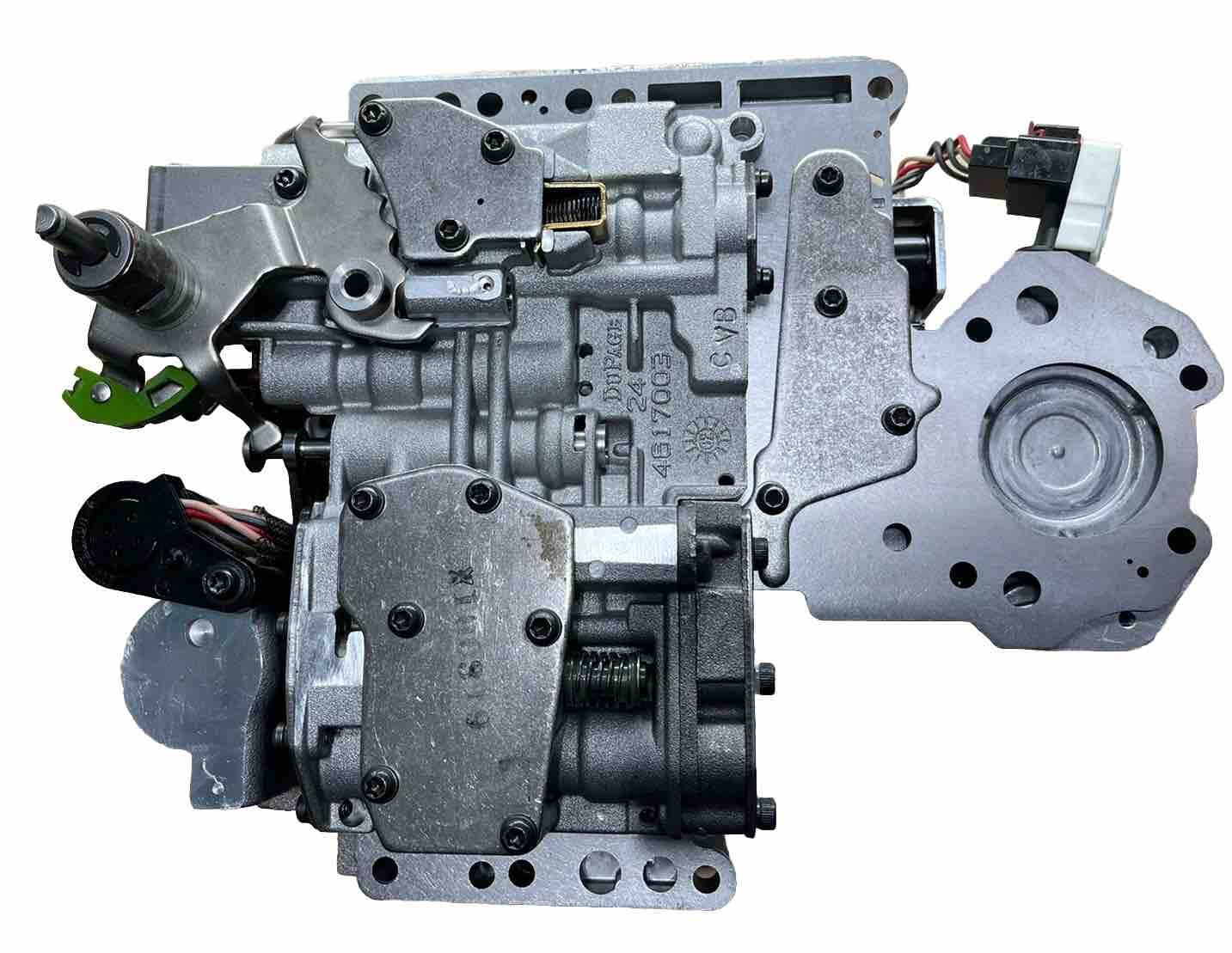
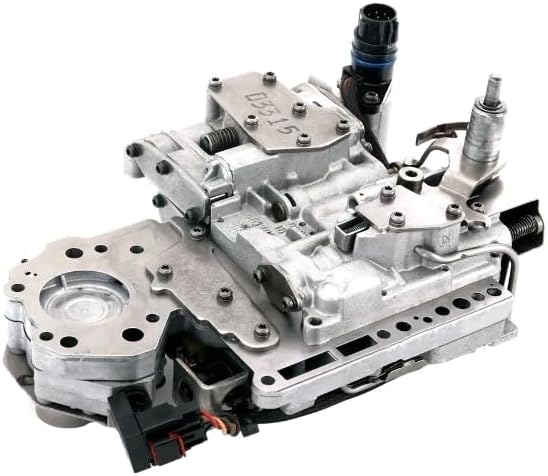
They look nearly identical and they are not interchangeable. Per Jim Dial's Sonnax teardown of the 48RE hydraulics, the two differences that matter are the pressure curve at the pressure regulator valve and the torque converter clutch solenoid feed circuit. On a 46/47RE, moving into 3rd with TCC on or into 4th exhausts reduction point D at the boost valve, which lets line pressure climb roughly 10-15 psi. The 48RE exhausts reduction points A and D in the same ranges, which raises line pressure roughly 22-28 psi and, with no reducing pressure at point A, lets the throttle pressure plug build pressure faster. That extra clamping force is what holds the TCC and the overdrive clutch behind a Cummins.
The feed circuits differ too: the 46/47RE takes TCC solenoid feed from the 1-2 shift valve, with a manual valve passage that cancels lockup in manual 2 and manual 1, while the 48RE takes TC solenoid feed from the manual valve in any Drive position — which is why a 48RE can apply the converter clutch in manual 2nd and even manual 1st. Drop a 46/47RE valve body into a 48RE and it drives fine at first, then comes back with a failed torque converter clutch or overdrive clutch. Sonnax documents exactly that comeback pattern.
Valve Body Separator Plate Issues
The 48RE uses a different separator plate than the 47RE, and Chrysler revised it multiple times during the 2003-2007 production run. The early separator plates had orifice sizing that caused shift quality issues, and some had checkball location differences that affected accumulator timing. When rebuilding a 48RE, always verify which separator plate revision you have and whether an updated plate is available. The revised plates have different orifice sizes in the governor pressure and accumulator circuits that improve shift quality and reduce the likelihood of harsh engagements. Sonnax and TransGo both offer upgraded separator plates and valve body kits that address the known issues.
Pressure Regulator Valve Bore Wear
The pressure regulator valve bore in the pump body wears over time, causing erratic line pressure. Symptoms include flared shifts at light throttle and harsh shifts at heavier throttle -- the transmission cannot maintain consistent pressure across the operating range. Sonnax kit 76948-01K is the pressure regulator valve and bore repair kit for the 48RE. It includes an oversized valve and a reaming tool to restore the bore to the correct clearance. This is a standard rebuild item on any high-mileage 48RE and should be included in every rebuild kit order.
Recommended Products
Building an RE this week?
Governor pressure solenoids and transducers, overdrive clutch packs, valve body kits, bands, filters and ATF+4 — plus the tools to set the bands and endplay right. Shipped fast from the USA.
Shop 48RE parts →Governor Pressure Solenoid and Transducer: The Most Common RE Failure
If you work on Dodge trucks from the late 1990s and 2000s, you have replaced dozens of governor pressure solenoids. This is the single most common failure point across the entire 46RE/47RE/48RE family, and it deserves a dedicated section because getting the diagnosis right the first time saves the customer money and saves your shop a comeback.
How the System Works
The RE transmissions use a governor pressure solenoid to electronically control what used to be a mechanical governor. The solenoid modulates hydraulic pressure in the governor circuit, which controls shift timing. The governor pressure transducer is a sensor that reads the actual governor pressure and sends a feedback signal to the PCM. The PCM compares the commanded pressure (solenoid output) to the actual pressure (transducer reading) and adjusts accordingly. When either component fails or drifts out of spec, the shift timing and quality go haywire.
Vacuum Test Before You Condemn the Solenoid
Not every erratic-shift RE is a bad solenoid. Sonnax's vacuum test guide for the 46RE, 46RH, 47RE and 47RH maps the bores that fail and what each one does to the truck: worn governor plugs produce a 1-2 shuttle and an oversensitive 2-3 and 3-2; a worn throttle valve gives shift timing concerns, throttle buzz, poor kickdown and a late 2-3; a worn pressure regulator valve gives delayed engagement, regulator buzz, lube failures and reverse slip; a worn line pressure plug and sleeve gives poor forward and reverse engagement, poor line pressure control and poor cooler charge at idle; and a worn switch valve gives no cooler flow in Park, lockup shudder, converter bushing failure and an overheated converter. Every one of those overlaps with the symptom list below. Vacuum test the valve body first and you stop replacing good solenoids.
Symptoms
- No upshift or delayed upshift: The transmission stays in first or second gear longer than it should, or refuses to upshift at all
- Harsh, banging shifts: Shifts hit hard enough to jolt the entire vehicle, especially the 1-2 and 2-3 shifts
- Erratic shift points: The transmission shifts at different RPMs every time, with no consistency
- Limp mode / default pressure: The PCM detects a problem and commands maximum line pressure as a protective measure, resulting in very harsh shifts at all throttle positions
- Speedometer fluctuation: In some cases, a failing transducer can cause the speedometer to bounce because the PCM uses governor pressure data as a secondary vehicle speed reference
Diagnostic Codes
- P0748: Pressure control solenoid electrical -- indicates a circuit problem with the governor pressure solenoid. Check wiring, connector, and solenoid resistance before replacing parts
- P1762: Governor pressure offset drift -- the PCM has detected that the governor pressure transducer reading has drifted outside its expected range at idle. This usually means the transducer is failing or the governor pressure circuit has a hydraulic leak
- P1763: Governor pressure sensor volts too high -- the transducer signal is above the expected voltage range. This is usually a failed transducer, but check the wiring first. A corroded connector at the transmission case connector can cause this code
How to Test
With a scan tool that reads transmission data PIDs, command the governor pressure solenoid to specific duty cycles and watch the transducer output. At 0% duty cycle, governor pressure should be near zero. As you increase duty cycle, pressure should rise smoothly and proportionally. If the pressure does not respond to duty cycle changes, the solenoid is stuck or the circuit has a wiring issue. If the pressure responds but the reading is erratic or jumps around, the transducer is failing. You can also ohm-test the solenoid -- it should read approximately 3-5 ohms at room temperature. An open or shorted solenoid is obvious on the meter.
Both the solenoid and transducer are located inside the transmission on the valve body. On the 46RE and 47RE, you can access them by dropping the pan and removing the valve body. This is a bench job, not an in-vehicle job, unless you are very comfortable working upside down under a truck. On the 48RE, the access is similar but there is slightly more room to work because of the larger pan.
Replace Both Together
When you find a failed governor pressure solenoid, replace the transducer at the same time. When you find a failed transducer, replace the solenoid at the same time. These parts are inexpensive -- the solenoid and transducer together run about $40-$80 wholesale -- and they have similar service lives. Sending the truck out with a new solenoid and an original transducer with 180,000 miles on it is a callback waiting to happen. Just replace both.
Fluid Specification: ATF+4 Only
The 46RE, 47RE, and 48RE all require Mopar ATF+4 (MS-9602). This is not optional, and there is no acceptable substitute. Not Dexron III. Not Dexron VI. Not Mercon. Not Mercon V. Not "universal" ATF. ATF+4 only.
Why This Matters
ATF+4 has a specific friction modifier package that is formulated for the clutch lining materials used in Chrysler transmissions. Using Dexron or Mercon-type fluids in an RE transmission causes two problems. First, the clutch engagement characteristics change because the friction modifiers do not match the lining material, which results in shudder, chatter, and premature clutch wear. Second, the seals and gaskets in Chrysler transmissions are formulated to be compatible with ATF+4 chemistry. Running the wrong fluid causes seal swell or seal shrinkage depending on the fluid, which leads to leaks or loss of apply pressure.
The older ATF+3 (Type 7176) fluid is backward-compatible for these units, but ATF+4 supersedes it and is the correct fluid for any RE transmission built from 1998 forward. If you are rebuilding a 1996-1997 unit, ATF+4 is still the correct fill -- Chrysler's official position is that ATF+4 is backward-compatible with all applications that previously called for ATF+3.
Fluid Capacity
| Transmission | Pan Drop Drain | Dry Fill (Overhaul) | Fluid Type |
|---|---|---|---|
| 46RE | ~4-5 quarts | ~8.5 quarts (with converter) | ATF+4 (MS-9602) |
| 47RE | ~5-6 quarts | ~10-11 quarts (with converter) | ATF+4 (MS-9602) |
| 48RE | ~5-6 quarts | ~11-12 quarts (with converter) | ATF+4 (MS-9602) |
On an overhaul, fill through the dipstick tube, start the engine, cycle through all gear ranges, and check the level hot with the engine running in park. Adjust to the full mark on the dipstick. These transmissions are sensitive to overfill -- too much fluid causes aeration from the planetary gears whipping through the fluid, which leads to foaming, pressure loss, and erratic shifts. Get the level right.
Hot Reverse Engine Stall: Look at the Pump
One more RE-family pattern worth knowing before you chase it in the wrong place. Wayne Colonna of ATSG, writing in Transmission Digest, notes that the engine-stall-when-reverse-is-selected complaint on the Dodge/Jeep RE series usually shows up once the transmission is hot, and that the usual cause is a defective pump — occasionally a restricted cooler, but in most cases the pump. The frustrating part is that the pump looks perfect on the bench, which is why the complaint gets blamed on the converter so often. Sonnax demonstrated the actual cause using Pressurex film to show the contact pattern inside the pump. If you have a hot reverse stall and a converter that checks out, put the pump on the list before you buy another converter.
Torque Converter Drain-Back and Cold-Start Delayed Engagement
This is one of the most common customer complaints on RE transmissions, and it is one of the most commonly misdiagnosed. The customer says the truck takes 3-5 seconds to engage into drive or reverse after sitting overnight, but once it engages, it shifts and drives fine for the rest of the day.
What Is Happening
The torque converter drains back into the pan while the truck sits overnight. When the engine starts, the pump has to refill the converter before there is enough fluid in the circuit to apply the forward or reverse clutch. That refill takes a few seconds, which the customer experiences as a delay. A small amount of drain-back is normal on any transmission, but excessive drain-back -- delays longer than 2-3 seconds -- indicates a problem.
Root Causes
- Worn front pump: A worn pump does not seal well enough to hold fluid in the converter circuit when the engine is off. Check pump clearances during rebuild -- gear-to-body clearance should be 0.0015-0.003 inches
- Converter drain-back valve: Some RE converters have an internal check valve that is supposed to prevent drain-back. When this valve wears or sticks, the converter empties overnight
- Worn input shaft seal rings: The seal rings on the input shaft control fluid flow to the clutch packs. Worn rings allow fluid to drain back through the input shaft circuit
- Leaking forward clutch piston seals: If the forward clutch piston seals are hard or cracked, fluid leaks past them while sitting, requiring refill before the clutch can apply
If the customer complaint is cold-start engagement delay only, start with a converter. A new or remanufactured converter with a good internal check valve solves the majority of drain-back complaints without tearing the transmission apart. If the delay persists with a new converter, the pump or clutch seals are the next suspects, and you are looking at a rebuild.
The 48RE and Cummins Tuning: Why the Input Shaft Breaks
This section is specifically for shops that work on tuned Cummins trucks, and it is information your customers need to hear before they spend money on a rebuild.
The stock 48RE input shaft is a cast steel piece designed to handle the factory torque output of the 5.9L Cummins -- approximately 325 lb-ft in the early trucks, up to 610 lb-ft in the later high-output models. The diesel tuning aftermarket has made it trivially easy for a truck owner to add 100-200+ lb-ft of torque with a programmer or tuner module. The problem is that the input shaft was never designed for that load. Tuned Cummins trucks routinely produce 700-900 lb-ft at the crank, and drag/sled trucks can exceed 1,200 lb-ft.
What Fails
The input shaft snaps at the neck, right where it steps down from the larger diameter to the smaller splined section. This is a stress concentration point in the original design. When it breaks, it breaks suddenly -- the engine revs freely, the truck stops moving, and there is usually collateral damage to the front clutch drum and stator support. The customer gets towed in, and you are looking at a rebuild plus a new converter.
The Fix: Billet Input Shaft
A billet 4340 steel input shaft replaces the stock cast piece with a forged and machined shaft that can handle 800-1,000+ lb-ft depending on the manufacturer. Companies like SunCoast, BD Diesel, and Goerend make billet input shafts for the 48RE. These typically run $250-$450 wholesale, which is a small fraction of the total rebuild cost. If you are rebuilding a 48RE that is going back behind a tuned Cummins, a billet input shaft is not optional -- it is mandatory. Tell the customer. If they refuse the upgrade and the stock shaft breaks again in 20,000 miles, that is a conversation you do not want to have.
Beyond the input shaft, tuned Cummins 48REs benefit from upgraded clutch packs (more frictions, better friction material), a billet flex plate, and a triple-disc or billet-stator torque converter. The full performance build adds $1,500-$3,000 to the rebuild cost but creates a transmission that will actually survive behind the engine the customer is running. For more on 48RE Cummins problems, see our dedicated 48RE Cummins guide.
Sonnax Parts Every RE Rebuilder Should Know
Sonnax has been making RE transmission parts for decades, and several of their kits are standard issue for any shop doing these rebuilds. Here are the ones that should be on your shelf or in your parts order for every RE job.
| Sonnax Part Number | Description | Application |
|---|---|---|
| 22171 | Accumulator bore repair sleeve kit | 48RE -- restores worn accumulator piston bores to specification |
| 76948-01K | Pressure regulator valve and bore repair kit | 46RE, 47RE, 48RE -- includes oversized valve and reaming tool |
| 22828A | OD servo pin, heavy-duty | All RE -- increased apply area for firmer OD band apply |
| 22770-06K | Boost valve kit | All RE -- corrects pressure rise rate for improved shift quality |
Order these with the rebuild kit. Having them on hand means you are not waiting two days for a Sonnax shipment while the truck sits on your lift taking up bay space. The cost of stocking these parts is trivial compared to the labor downtime of waiting for them to arrive mid-job.
Rebuild Cost Breakdown
These are real-world independent shop pricing. Dealer rates run 25-40% higher. These numbers include parts, labor, fluid, filter, and a torque converter evaluation (rebuild or replace as needed).
| Transmission | Standard Rebuild | What Is Included |
|---|---|---|
| 46RE | $1,800 - $2,800 | Master rebuild kit, all frictions/steels, seals, bushings, filter, bands, solenoids, converter eval, ATF+4 fill |
| 47RE | $2,200 - $3,200 | Same as 46RE plus heavy-duty OD clutch pack, updated separator plate, torque converter (new or reman) |
| 48RE | $2,800 - $4,200 | Same as 47RE plus Sonnax accumulator bore kit, pressure regulator kit, updated valve body components |
| 48RE (performance build) | $4,500 - $7,000+ | Billet input shaft, upgraded clutch packs, billet converter or triple-disc, billet flex plate, performance valve body |
The price range reflects the difference between a truck that came in with a simple overdrive clutch failure and clean fluid versus a truck that got towed in with a broken input shaft, metallic debris throughout the case, and a burned converter. The latter requires more hard parts and more labor time to clean and inspect every component.
Why These Are Great Rebuilders
In an industry that is increasingly dominated by sealed-for-life CVTs, complex dual-clutch units, and 10-speed transmissions with $800 solenoid bodies, the RE family is a welcome sight on the bench. Here is why experienced rebuilders appreciate these units.
- Simple design: Three planetary gear sets, a handful of clutch packs, two bands, and a valve body. No mechatronic units, no TCMs bolted to the valve body, no adaptive learning algorithms to reset. The transmission either works or it does not, and the diagnosis is straightforward
- Cheap parts: A complete master rebuild kit for a 46RE runs $250-$400 wholesale. Compare that to the cost of a friction kit alone for a ZF 8HP or a Ford 10R80. The parts margin on an RE rebuild is excellent for independent shops
- Massive aftermarket: Sonnax, TransGo, Alto, Raybestos, Superior, Precision International -- every major aftermarket parts company supports the RE family extensively. Upgraded parts, repair kits, and performance components are readily available and well-documented
- High customer volume: There are millions of Ram trucks with RE transmissions still on the road. These trucks are workhorses that get driven hard and eventually need transmission work. A shop that is efficient at RE rebuilds has a steady revenue stream
- Teachable platform: If you are training a new builder, the RE family is an excellent teaching transmission. The concepts are clear, the parts are identifiable, and the mistakes are fixable without scrapping a $3,000 case
The RE family will not be the dominant rebuild unit forever -- the 68RFE replaced it in 2007 and those trucks are now aging into rebuild territory too. But for the next decade at least, the 46RE, 47RE, and 48RE will continue rolling through independent shop bays. Know them well, stock the right parts, and these units will keep paying your bills.
Sources
- Sonnax — "Dodge 48RE Hydraulic Features Revealed," Jim Dial, October 27, 2015. Backs the two differences between 48RE and 46/47RE valve bodies (pressure curve at the pressure regulator valve and the TCC solenoid feed circuit), the approximately 10-15 psi line pressure rise on the 46/47RE when reduction point D is exhausted in 3rd-with-TCC or 4th, the approximately 22-28 psi rise on the 48RE when points A and D are exhausted, the 48RE TC solenoid feed coming off the manual valve in any Drive position (allowing TCC apply in manual 2nd and 1st), and the failed TCC or overdrive clutch that follows a 46/47RE-into-48RE valve body swap. sonnax.com
- Sonnax — "Chrysler 46RE, 46RH, 47RE, 47RH Vacuum Test Guide," November 14, 2016. Backs the critical wear areas and their symptoms cited above: governor plugs (1-2 shuttle, oversensitive 2-3 and 3-2), throttle valve (shift timing concerns, throttle buzz, poor kickdown, late 2-3), pressure regulator valve (delayed engagement, regulator buzz, lube failures, reverse slip), line pressure plug and sleeve (poor forward and reverse engagement, poor line pressure control, poor cooler charge at idle) and switch valve (no cooler flow in Park, lockup shudder, converter bushing failure, overheated converter). sonnax.com
- Transmission Digest — "A Significant Departure: the 48RE Transmission," Wayne Colonna, ATSG, August 1, 2012. Backs the hot reverse engine-stall complaint on the Dodge/Jeep RE series being traced most often to a defective pump (occasionally a restricted cooler), the fact that the pump typically looks undamaged on inspection, the use of Pressurex film to reveal the cause, and the 48RE change in TCC-apply strategy. transmissiondigest.com
- Sonnax — "Chrysler 42RE, 46RE, 47RE Valve Body Identification." Backs the need to identify the pressure sensor type and pump inlet size before ordering parts for a 42/44/46/47RE electronic valve body, which is why counting on model year alone gets RE valve body orders wrong. sonnax.com