The DQ250 is the six-speed wet-clutch DSG that Volkswagen Group put behind a huge chunk of its transverse gasoline and diesel lineup for the better part of two decades. You will see it under the factory code 02E (and 0D9) in the Mk5/Mk6 GTI and Golf, the Jetta, the Passat, the Tiguan, Audi A3/Q3/TT, and the SEAT and Skoda equivalents. It is a genuinely good transmission. It is also one that comes into the shop for a small, predictable set of reasons, and if you do not understand how the unit is built, you will replace the wrong part and hand the customer a comeback.
There are really only three failure buckets on the DQ250: the mechatronic pressure-control side wears or contaminates, an early-run temperature-sensor circuit lies to the control module, or the wet clutches and their fluid get neglected until they judder. Every one of those has a real diagnostic path and a real fix. Let me walk through the unit the way VW's own service training documents lay it out, then hit each failure mode with the codes, the scan data, and the fluid numbers that actually matter.


How the DQ250 Is Actually Built
The DQ250 is two manual gearboxes sharing a case, each with its own wet multi-plate clutch, shifted by a computer. Per VW's Self-Study Program 308 for the 02E, clutch K1 is the outer clutch and drives Input Shaft 1, carrying 1st, 3rd, 5th, and Reverse. Clutch K2 is the inner clutch and drives Input Shaft 2, carrying 2nd, 4th, and 6th. Both are wet multi-disc packs that run immersed in transmission fluid, and one of the two is always applied while you are driving. When the transmission pre-selects the next gear on the idle shaft and swaps which clutch is holding, you get the fast, no-torque-interrupt shift that a DSG is known for.
The brain of the unit is the Mechatronics module (J743). VW describes it as integrating the electronic control and the electro-hydraulic control into a single unit that sits inside the transmission, immersed in the same fluid the clutches run in. That electro-hydraulic control unit regulates eight hydraulic gear actuators, six pressure-modulation valves, and five control valves, plus the apply pressure and cooling of both clutches. The pressure-control solenoids you will see in scan data and on the bench are named consistently across the VW literature:
| Valve | Function (per VW SSP 308 / 02E training) |
|---|---|
| N215 – Pressure Control Valve 1 | Clutch valve K1 (controls K1 apply pressure) |
| N216 – Pressure Control Valve 2 | Clutch valve K2 (controls K2 apply pressure) |
| N217 – Pressure Control Valve 3 | Main line pressure valve |
| N218 – Pressure Control Valve 4 | Coolant / clutch-cooling valve |
| N233 – Pressure Control Valve 5 | Safety valve 1 |
| N371 – Pressure Control Valve 6 | Safety valve 2 |
| N88–N91 / N92 | Gear-actuating valves / multiplexer valve |
Here is the single most important thing to understand about this transmission, and it is the reason so many DQ250 repairs go sideways: the clutches and the mechatronics share one oil circuit. The same fluid that cools and applies the wet clutches is the fluid that feeds the pressure-control valves and hydraulic bores in the mechatronic unit. When the clutches shed friction material and the fluid loads up with clutch debris and metal, that contamination goes straight to the valves. A DQ250 that "lost its mechatronic" very often lost it because nobody changed the fluid, and the clutch wear killed the valve body from the inside. Treat the fluid as a shared, safety-critical hydraulic medium, not a fill-for-life afterthought.
Free spec reference for your bench
Fluid types, capacities, and change intervals for every major automatic and DSG, on one page. Print it and hang it over the parts washer.
Open the Transmission Fluid Spec Chart →Failure Mode 1: Mechatronic Pressure-Control Wear
What Actually Fails
The mechatronic unit does not usually "die" all at once. What wears is the ability of the pressure-control side to hold a commanded pressure. The pressure-control valves (N215/N216 for the clutches, N217 for main line) run in aluminum bores, and their accumulators smooth the apply events. As debris circulates and the bores and pistons wear, the unit can no longer hold clutch apply pressure or main line pressure where the control module expects it. The module watches actual clutch pressure against target, sees it drift out of range, and eventually gives up and drops the transmission into limp.
Symptoms and Codes
- Harsh, flaring, or clunky shifts that come and go, often worse once the unit is hot and the fluid thins.
- Sudden limp mode — commonly locked into a single gear or refusing to select a gear, with a gearbox warning on the dash. It frequently clears on a restart, then comes back.
- Clutch pressure-adaptation and pressure-loss faults. The one to know is the clutch-adaptation-at-limit family, e.g. P189C (clutch adaptation reached its limit), alongside pressure-sensor and hydraulic-pressure-low codes. These tell you the module can no longer keep the clutch apply point inside its adaptation window.
Diagnosis
You need a capable scan tool (VCDS or a factory-level bidirectional platform) to see the measuring-value blocks the module actually acts on: commanded vs. actual clutch pressure for K1 and K2, clutch temperature, and the adaptation values. Watch a road test. If actual clutch pressure chronically lags the target and the adaptation values are pinned at the end of their range, the hydraulic control has worn out of spec — that is a mechatronic-side problem, not a worn-out gear set. Confirm the fluid condition at the same time; burnt, debris-loaded fluid tells you why the valves wore.
The Repair Decision
Not every worn DQ250 mechatronic needs a full replacement unit. The hydraulic wear points — accumulator pistons and their bores, pressure-control valve bores — are exactly what the aftermarket rebuilds. Sonnax, for example, catalogs valve-body-level repair parts (accumulator piston-and-sleeve kits, solenoid actuators) whose whole purpose is to re-establish hydraulic integrity in a worn unit and save the case and valve body. Wayne Colonna made the same point for Transmission Digest on the 02E: the solenoids are not sold individually, so a single solenoid electrical fault nominally forces the purchase of the entire Mechatronic assembly — yet the usual root cause is a coil wire that has worked loose or broken where it passes through a hole in its blade as an interference fit instead of being soldered, and there is normally enough wire left to solder it back to the blade. Check that before you quote an assembly. So the honest decision tree is: if the electronics/TCU side is dead, you are buying a unit or a coded replacement; if it is worn hydraulics from a contaminated-fluid history, a proper valve-body/mechatronic rebuild with fresh fluid can be the correct, far cheaper fix. Either way, the job is not done until the clutch adaptation and basic-settings procedure has been run to re-teach the friction points.
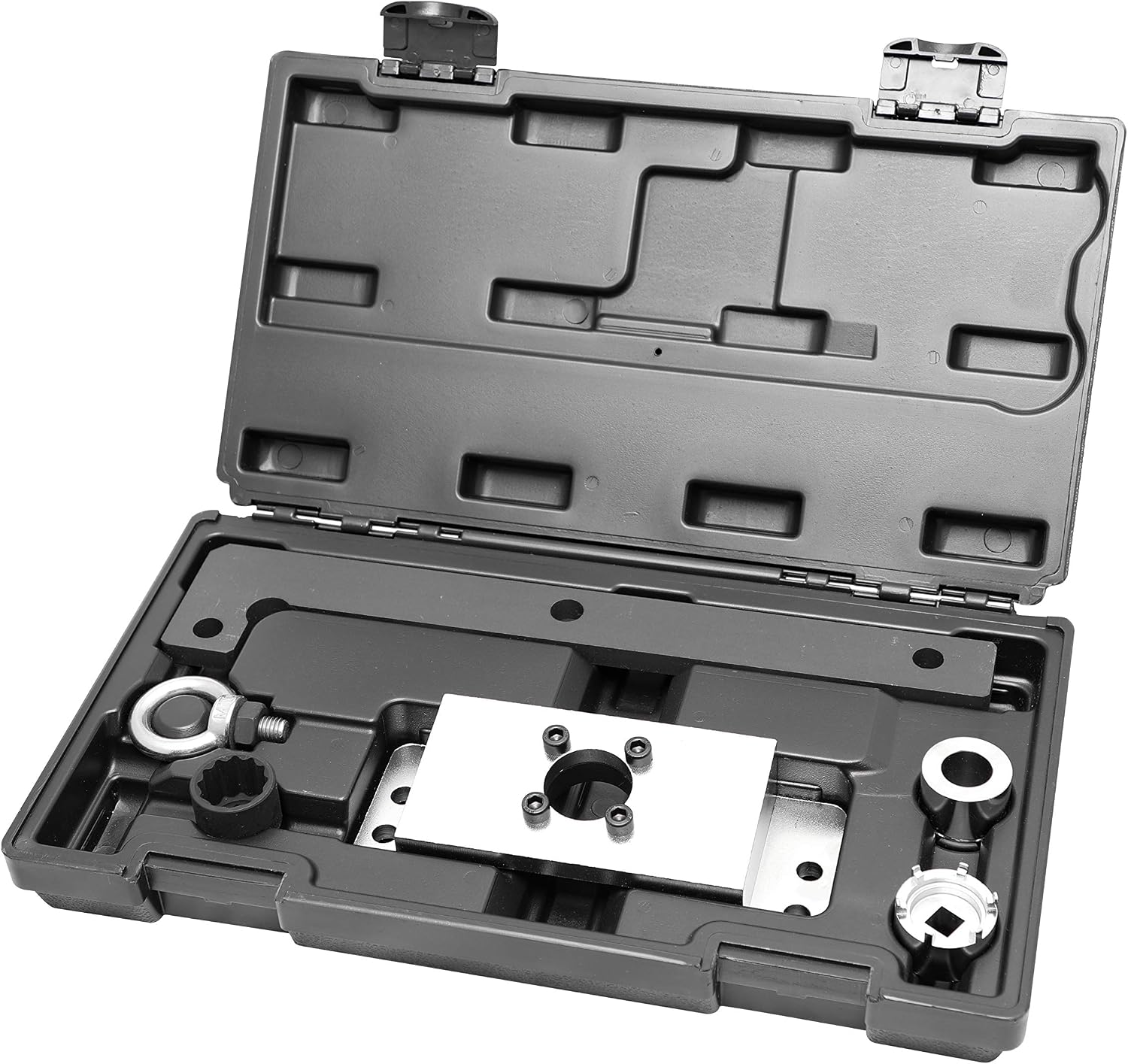
27-Piece Transmission Fluid Fill Adapter Kit
The DQ250 fills from below through a level plug, and it will not tolerate a sloppy overfill or underfill. This adapter set covers the sealed and hard-to-reach fill ports on DSG and modern sealed automatics so you can push the exact volume in cleanly and set the level at temperature.
View in the Gearbox Insider shop →Failure Mode 2: The Temperature-Sensor Recall (Shift-to-Neutral)
On early US-market DQ250 cars there is a specific, documented electrical failure that has nothing to do with clutch wear, and you should rule it in or out before you condemn any hardware on an affected VIN. Under NHTSA recall campaign 09V333000 — Volkswagen’s own Safety Recall 37E3/S7 — Volkswagen recalled the 2009 Eos and 2009–2010 Jetta, Jetta SportWagen and GTI with DSG because the wiring-harness connector for a temperature sensor inside the DSG had connector wires insufficiently crimped by the connector supplier. The consequence, in the recall's own terms: the sensor could falsely detect a high gearbox oil temperature, causing the transmission to abruptly shift to Neutral — a real drivability and safety issue, not a slow wear item. The remedy was a transmission-control-module software reflash — about an hour of dealer time, free of charge under the campaign, per the owner notification letter on file with NHTSA.
The practical takeaway for a shop: a 2009–2010 VW/Audi that intermittently falls to Neutral, often with an over-temp or implausible-temperature fault stored, may be a recall/software case rather than a failed mechatronic. Check the campaign status by VIN with the dealer before you sell a several-thousand-dollar transmission job. It is the cheapest possible outcome for the customer and it protects you from replacing a good unit.
Failure Mode 3: Wet-Clutch Wear and Judder
The DQ250's wet clutches are durable when the fluid is maintained, but they are still friction clutches. As the friction plates wear and the fluid loses its friction chemistry, you get low-speed judder — a shudder felt most in the lower gears as a clutch takes up load, especially from a stop or in slow crawling traffic. Because one clutch is always carrying torque, worn plates also show up as a slip the module has to keep chasing with adaptation, until the adaptation runs out of room and you are back to the P189C-type codes above.
Diagnose it with the scan data the module already gives you: clutch temperature, clutch slip, and the adaptation/friction-point values per clutch. Elevated slip that fresh fluid and a completed adaptation will not bring back into range means the plates are worn out and the clutch pack (or the mechatronic-plus-clutch assembly, depending on how the unit is serviced) needs to come apart. Do not skip the fluid step first — on a DQ250 that has never had a service, a correct fluid-and-filter service plus a proper adaptation resolves a surprising number of "clutch" complaints, because the real problem was degraded fluid friction, not dead plates.
The Fluid Service, Done Right
This is the single highest-leverage thing you can do to keep a DQ250 alive, and it is where most of them are killed by neglect. The unit uses a dedicated Direct Shift Gearbox fluid to spec VW G 052 182 — not generic ATF, not a CVT fluid. VW's 02E training gives a total system volume of 7.2 liters (about 1.9 gallons) of G 052 182; a service (drain, filter, refill) takes on the order of 5.0–5.2 liters, and the factory service interval is roughly 40,000 miles. The mechatronics also feeds a separate transmission fluid cooler and a serviceable fluid filter, with clutch-cooling flow managed by the N218 coolant valve.
| Spec | DQ250 / 02E |
|---|---|
| Fluid standard | VW G 052 182 (DSG dual-clutch fluid) — no substitutes |
| Total fill (dry) | ~7.2 L / 1.9 gal |
| Service refill (drain & fill) | ~5.0–5.2 L |
| Service interval | ~40,000 miles |
| Filter | Serviceable; replace at fluid service |
| Level set | By level plug, within a defined fluid-temperature window (the 02E procedure checks fill level with the fluid around 35°C) |
The level procedure is the part techs get wrong. The DQ250 sets its fluid level through a bottom level plug, and the correct level is only valid inside a narrow fluid-temperature band — the 02E procedure has you check with the fluid near 35°C. Set it cold and you overfill; set it hot and you underfill. Either error changes clutch cooling and hydraulic behavior. Use a scan tool to watch fluid temperature, and fill and level the unit within the window. Overfilling a DSG is not harmless — it aerates and changes the pressure the mechatronic is trying to control.
The Short Version for the Service Writer
- Limp mode + clutch-pressure/adaptation codes (P189C family), hot-drift shifting: mechatronic pressure-control wear, usually fed by neglected fluid. Verify with commanded-vs-actual clutch pressure and adaptation data before quoting a full unit.
- 2009–2010 car dropping to Neutral with a temperature fault: check NHTSA recall 09V333000 by VIN first — it may be a free software fix.
- Low-gear judder: worn wet clutches and/or dead fluid friction. Service the fluid and run adaptation before condemning the clutch pack.
- Prevention: G 052 182 fluid and filter every ~40k, set to level at temperature. It is cheap insurance on a unit whose valve body drinks the same oil the clutches shed into.
For more on reading commanded-vs-actual pressure and adaptation values on any modern automatic, see our guide on how to read transmission live data, and if you are weighing a rebuild against a replacement unit, our breakdown of rebuild vs. replace vs. reman.
Need parts for this job?
Rebuild kits, hard parts, solenoids, valve bodies, filters, gaskets and the correct fluid for this unit — shipped fast from the USA on secure checkout.
Shop DSG parts →Sources
- Volkswagen, Self-Study Program 308: Direct Shift Gearbox 02E (official VW service-training document) — backs the K1/K2 clutch and input-shaft/gear assignments, the two wet multi-disc clutches, the Mechatronics module J743 integrating electronic and electro-hydraulic control inside the transmission, the pressure-control valve names/functions (N215–N218, N233, N371; gear valves N88–N92), and the shared oil circuit / separate cooler and filter. volkspage.net/technik/ssp/ssp/SSP_308.pdf
- Volkswagen Academy, Self-Study Program 851403: The 02E Direct Shift Gearbox (official VW/Audi US training) — backs the dual wet-clutch construction, that the mechatronics regulates eight gear actuators / six pressure-modulation valves / five control valves and both clutches' pressure and cooling, the 7.2 L (1.9 gal) G 052 182 fill, and the coolant valve N218 clutch-cooling function. 02E Direct Shift Gearbox training PDF
- Volkswagen of America / NHTSA, Safety Recall 37E3/S7 owner notification, October 2009 (NHTSA campaign 09V333000) — backs the affected vehicles (2009 Eos; 2009–2010 Jetta, Jetta SportWagen and GTI with DSG), the defect in Volkswagen’s own words (a DSG temperature-sensor wiring harness with connector wires insufficiently crimped by the connector supplier, able to falsely detect high gearbox oil temperature and open the clutch so the driver perceives a shift to Neutral), the flashing selector-lever indicator and illuminated Depress Brake Pedal light, and the remedy: dealers reprogram the transmission control module, about one hour, free of charge. static.nhtsa.gov/odi/rcl/2009/RCONL-09V333-0124.pdf
- Sonnax, DQ250 / 02E / 0D9 parts catalog (recognized transmission-parts authority) — backs that the DQ250's hydraulic wear points are rebuildable at the valve-body level (accumulator piston-and-sleeve kits, solenoid actuators) rather than always requiring a full mechatronic replacement. sonnax.com/parts_catalogs/54-dq250-02e-0d9
- Transmission Digest / ATSG, Wayne Colonna, Volkswagen DSG 02E: A simple fix for a solenoid problem (September 2011) — backs that the 02E valve-body solenoids are not sold individually, so a single solenoid fault nominally forces purchase of the whole Mechatronic assembly (valve body, solenoids and TCM); and the repairable root cause: each solenoid coil wire passes through a hole in its blade as an interference fit rather than being soldered, so the wire can work loose or break over time and set erratic or steady solenoid electrical codes that can often be soldered back to the blade. transmissiondigest.com