The automatic E9x 3 Series, the 2006-2013 sedans, wagons, coupes and convertibles, is one of the most common ZF six-speed applications in American shops. Most of them come in with one of the same four problems: a leak at the mechatronic sleeve or plastic pan, fluid that was never changed because the window sticker said "lifetime," a worn valve body that shows up as harsh shifts or converter slip, or, on second-generation units, a 5th-gear E clutch failure. None of these is a mystery once you know where ZF and BMW put the weak spots.
Here is the order I work them, cheap fixes first.

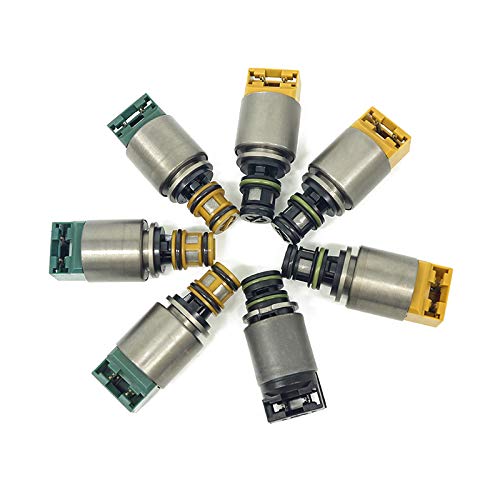

First, Which 6HP Is Under the Car
The E9x got two different ZF six-speeds. The first-generation 6HP19 and the second-generation 6HP21 look almost the same from under the car, and BMW parts and repair literature often labels both as GA6HP19Z. Read the ZF tag on the case.
It matters because the hydraulics are not interchangeable. Sonnax's ZF6 identification guide shows that Gen 1 (6HP19/26/32) and Gen 2 (6HP21/28/34) use different-size pressure regulator valves and sleeves, and the guide states those cannot be swapped. Gen 1 separator plates run in the 95740-035 through -053 range by valve body code. Gen 2 plates are in the 95740-063 and -065 range. Valve body kits, end plug kits and Zip Kits are generation-specific too (Sonnax ZF6 ID guide).
The basic design is shared. Per ATSG field adviser Niel Speetjens in Transmission Digest, the 6HP is built on a Lepelletier gear train: a simple planetary in front of a Ravigneaux set, with three clutches and two brakes and no one-way clutches. The 6HP19 is rated for 400 Nm (295 lb-ft) of engine torque. The converter clutch is also designed to run a small constant slip rather than lock solid, which matters when you read slip PIDs later (Transmission Digest).
Problem 1: The Mechatronic Sleeve and Pan Leak
The mechatronic (valve body and TCM in one unit) gets its wiring through a plastic sealing sleeve pressed into the case. Its O-rings harden and it weeps. The plastic pan gasket is the other usual leak, and both are often wet together.
Be careful what you call a leak. BMW's guidance on 6HP19/21 sleeve seepage for the E90, E91, E92 and E93 is that light oil wetness around the sleeve does not by itself justify the repair. Fluid dripping or pooling on the underbody panel does.
What BMW says about the repair
BMW's sealing sleeve bulletin, reprinted by Vehicle Service Pros, covers the procedure in repair instruction RA 24 34 020. The sleeve is BMW part 24 34 7 588 725, and the fluid it calls for is Shell M-1375.4, BMW part 83 22 0 142 516. The steps are drain the fluid, replace the sleeve and pan gasket, lube both sleeve O-rings with ATF, push the sleeve fully home, then close the white locking tab on the mechatronic connector (Vehicle Service Pros, "Leaky Bimmer").
The part people get wrong is the measurement. With the harness connector mated, the gap between the connector and the transmission housing should be no more than 3 mm. If you see 7 to 8 mm, or the connector takes extra force to lock, the sleeve is not seated. Stop there. The same bulletin says a misinstalled sleeve can permanently damage the pins in mechatronic connector X8500, the pins cannot be repaired, and the whole mechatronic then has to be replaced.
When the leak turns into a failsafe
That bulletin also ties an intermittent mechatronic-to-harness connection to two fault codes: 5079 "Serial wire message missing" and 507A "Serial line signal plausibility." You get the Transmission Emergency Program warning and the car drops into failsafe. If a 3 Series comes in with those codes after somebody else did a sleeve job, measure the connector gap before you condemn the mechatronic. If the pins are pushed back or bent, that answers the question.
BMW also says to replace the drain plug on plastic-pan units, and if the pan gasket leaks again, replace the pan and gasket together.
Problem 2: The "Lifetime" Fluid Trap
Most E9x cars I see at 100,000-plus miles are still on factory fluid. ZF's own data sheet does not back that up. The ZF LifeguardFluid 6 product data sheet says ZF transmissions are "generally filled with lifetime oil," then states that ZF recommends an oil change after 150,000 km, about 93,000 miles. It also says a change can make sense earlier for high temperature and load or for unknown past use, which covers most used 335i cars (ZF LifeguardFluid 6 data sheet).
The same sheet warns that using another oil can cause anything from poor shift quality to transmission failure. It also lists exceptions that must take LifeguardFluid 8 instead, and 6HP19X is on that list. ZF's BMW oil change kit for the 6HP19/X and 6HP21/X ships with LifeguardFluid 6, so check ZF's lubricant list TE-ML 11 against the ZF number on the tag for an xDrive car before you pour.
The ZF fill procedure, step by step
ZF Service Information 50145 (the 5HP/6HP oil change kit instructions) is the procedure I follow. The 3 Series has a plastic pan with the filter built in, so you replace the pan, not just the filter (ZF Service Information 50145).
- Car level on the lift, scan tool connected so you can read transmission oil temperature. ZF says to confirm idle speed is 650-950 rpm first. If it is not, the level cannot be set correctly.
- Drain, then loosen the pan bolts crosswise from the center outward. If the old fluid smells burned or the pan has large chips or fragments, ZF says to stop the oil change. The transmission is already damaged.
- Install the new pan with its new seal. Plastic pan bolts are 10 Nm, run in crosswise from the center out.
- Fill at the filler plug until fluid runs out. Start the engine, cycle through R and D and the gears per the version for your unit, and keep filling until it runs out again.
- Check level at 30-35 C transmission temperature. If nothing runs out, add fluid. If it is over-full, wait until only single drops come from the hole. ZF says the temperature must not exceed 50 C during the check.
- Torque the BMW 6HP19/6HP21 drain plug (M24 x 1, 10 mm hex) to 8 Nm and the filler plug (M18 x 1.5, 8 mm hex) to 35 Nm plus or minus 3.5 Nm.
ZF warns an over-fill pushes fluid out the overflow onto hot exhaust parts as it heats. After any fluid or mechatronic work, reset the adaptations with a BMW-level scan tool.
Problem 3: Valve Body Wear, Harsh Shifts and Converter Slip
Old fluid wears valve bores, and on a ZF6 a worn bore shows up as a drivability complaint long before anything breaks. Sonnax's ZF6 converter article lists the symptoms: converter slip when it should be locked, partial release, TCC or ratio codes, harsh 2-1 or 3-2 coast downshifts, flare shifts and a rough idle in reverse (Sonnax, "Six Ways From Sunday").
The bores Sonnax names are the main pressure regulator (SYS.DR-V), the converter release regulator (WK-V), the bypass clutch control valve (WD-V), the lube control valve (SCHM-V) and the solenoid pressure regulator (DR.REO-V). That last one feeds every solenoid, including the TCC. A worn DR.REO-V bore makes every solenoid's output too high or too low at once, which is why a car can feel like it needs a full solenoid set when the real fault is one worn bore.
Numbers to check on the bench or with a gauge
Sonnax gives WK (converter release) pressure values: 70-75 psi cool and steady, 65-68 psi warm, a brief dip to about 50 psi when you select reverse, and 0-2 psi with the converter applied. If WK sits around 50-60 psi with a rough reverse idle, look for a supply or leakage problem. If WK is normal, suspect the converter lining, after you have checked the engine mounts.
Sonnax also flags the TCC solenoid itself as a common mechanical failure in the ZF6 family, along with loose end plugs between shift valves and solenoids, failed accumulator dampers and worn bushings at the E clutch and pump stator. For Gen 2 (6HP21) bodies the oversized repair valves are 95740-69K (pressure regulator), 95740-64K (solenoid pressure regulator) and 95740-71K (lube). The 95030-19K bushing kit covers the 6HP19 and 6HP21. Gen 1 and Gen 2 solenoids and valves are not interchangeable.
Problem 4: The 6HP21 E Clutch (5th Gear) Failure
On second-generation units, the common big failure is the E clutch, which applies in 5th gear. It usually arrives as an E clutch performance code and a slip or flare into 5th. GEARS Magazine ran a two-part series on it, and the takeaway is that the clutch pack is usually the victim, not the cause (GEARS, part 1).
Inside the unit, check the following before you blame the frictions:
- The E drum. Air check the feed hole above the tube and around the tube base. The tube is not sold separately, so a leak there means a new drum. Also check for cracks at the base of the shaft by coating it with Transjel and putting full shop air to it.
- Air test pressure. Use full shop pressure with some fluid present, not the usual 35 psi. Some of these leaks only show up under higher pressure and get worse with heat.
- Stator support and bushings. A worn bushing lets the input shaft chew up the sealing ring surface on the support.
- The pump. There is no gasket between the pump halves or between the pump and case. The author says to always flat sand the pump body halves so E clutch oil cannot be pulled into the suction side.
Part 2 covers the valve body side. Check the EDS4 solenoid, select valve 3, holding valve E and clutch valve E, and be aware that lost anodized coating on ZF valves is a known issue. For a bench test, block the EDS4 feed with a short piece of hose, put about 30 psi of air to the valve-side end and confirm it flows, then energize the solenoid and confirm it seals the exhaust. If the solenoid and valve body pass, the author points at a command problem from the mechatronic (GEARS, part 2).
BMW 3 Series 6HP Quick Map
| Complaint | Most likely cause | First check |
|---|---|---|
| Drip under the pan, wet sleeve | Mechatronic sleeve O-rings, plastic pan gasket | Wet film or actual drip? Then RA 24 34 020 |
| Emergency program, 5079 / 507A | Connector not seated, damaged pins | Connector-to-housing gap, 3 mm max |
| Harsh coast downshifts, flare shifts | Worn regulator bores, accumulators | Fluid age, valve body vacuum test |
| Converter slip or shudder codes | TCC solenoid, WK/WD valves, bushings | WK pressure: 65-75 psi released |
| Slips into 5th, E clutch code (6HP21) | E drum tube or crack, pump cross leak | Air test at full shop pressure |
| Burned fluid, chips in the pan | Internal mechanical damage | ZF says abort the fluid change. Rebuild. |
Shop the part for this fix
If the 6HP19 has burned fluid or debris in the pan, a rebuild is the fix. Core Transmission Parts carries overhaul and master rebuild kits for ZF six-speeds. Confirm Gen 1 or Gen 2 from the case tag before you order.
See ZF rebuild kits at Core Transmission Parts →Frequently Asked Questions
What transmission is in a BMW 3 Series E90?
Automatic E90, E91, E92 and E93 3 Series cars use a ZF six-speed, either the first-generation 6HP19 or the second-generation 6HP21, depending on engine and build. BMW parts and repair literature often labels both GA6HP19Z, so read the ZF identification tag on the case before you order valve body, solenoid or rebuild parts. The two generations use different pressure regulator valves and separator plates.
Why is my BMW 3 Series leaking transmission fluid from the pan area?
The two most common sources are the mechatronic sealing sleeve, where the wiring connector passes through the case, and the plastic oil pan gasket. BMW notes that a light film of oil at the sleeve is seepage, not a leak worth repairing. If fluid is dripping or collecting on the underbody panel, replace the sleeve (BMW part 24 34 7 588 725) and the pan gasket per repair instruction RA 24 34 020.
Does the ZF 6HP19 really have lifetime fluid?
BMW marketed it that way, but ZF's own LifeguardFluid 6 data sheet recommends an oil change after 150,000 km (about 93,000 miles), and sooner for hot, heavy or unknown use. On the 3 Series the filter is built into the plastic pan, so a proper service replaces the pan, then refills with the approved ZF fluid and sets the level at 30-35 C.
What causes the Transmission Emergency Program light on a BMW 3 Series?
One known cause is an intermittent connection between the mechatronic and the harness, which BMW ties to fault codes 5079 and 507A and a failsafe mode. A sealing sleeve that was installed incorrectly can push the connector out of position or bend the mechatronic pins. If the pins are damaged they cannot be repaired, and the mechatronic has to be replaced.
Sources
- ZF Friedrichshafen AG, Service Information 50145, "Oil change kit for ZF 5HP/6HP automatic transmission" (03.2023). Backs the 650-950 rpm idle check, the burned-oil and debris abort rule, the plastic pan with integrated filter, the 10 Nm crosswise plastic pan bolt torque, the fill-until-it-runs-out procedure, the 30-35 C level check with the 50 C limit, the BMW 6HP19/6HP21 drain plug (M24 x 1, 8 Nm) and filler plug (M18 x 1.5, 35 Nm) specs, the over-fill warning, and the LifeguardFluid 6 kit for BMW 6HP19/X and 6HP21/X. aftermarket.zf.com (PDF)
- ZF Friedrichshafen AG, Product Data Sheet, ZF LifeguardFluid 6. Backs the "lifetime oil" wording, ZF's 150,000 km oil change recommendation and the earlier change under severe use, the warning against other oils, and the LifeguardFluid 8 exceptions including 6HP19X. aftermarket.zf.com (PDF)
- BMW sealing sleeve bulletin, reprinted as "Leaky Bimmer," Vehicle Service Pros (July 9, 2012). Backs repair instruction RA 24 34 020, sleeve part 24 34 7 588 725, Shell M-1375.4 (83 22 0 142 516), the 3 mm versus 7-8 mm connector gap, the unrepairable pin damage at connector X8500, codes 5079 and 507A and the failsafe, and the drain plug and pan replacement notes. vehicleservicepros.com
- Sonnax, "ZF6HP19/26/32 Generation 1 / ZF6HP21/28/34 Generation 2 Identification Guide." Backs the non-interchangeable Gen 1 and Gen 2 pressure regulator valves and sleeves, the separator plate ranges, and the generation-specific kits. sonnax.com
- Sonnax, "Six Ways From Sunday: Diagnosing ZF6 & Ford 6R60/80 TC-Related Drivability Concerns." Backs the converter-related symptom list, the SYS.DR-V, WK-V, WD-V, SCHM-V and DR.REO-V wear points, the TCC solenoid and bushing failures, the WK pressure values, and the 95740-69K, -64K, -71K and 95030-19K part numbers. sonnax.com
- GEARS Magazine (ATRA), Rob Faucett, "Tracking Down the ZF6HP21 E Clutch Failure," parts 1 and 2. Backs the E clutch drum tube and crack checks, the full shop pressure air test, the stator support, pump flat-sanding and bolt torque checks, and the EDS4 solenoid, select valve 3, holding valve E and clutch valve E diagnosis. gearsmagazine.com (part 1) / part 2
- Transmission Digest, Niel Speetjens (ATSG), "To 6HP or Not to 6HP, Is That a Question?" Backs the Lepelletier gear train layout, the 6HP19 400 Nm torque rating, and the constant-slip converter clutch design. transmissiondigest.com
Shop pan and filter kits, solenoid sets, valve bodies and rebuild kits for the ZF 6HP in the BMW 3 Series, on our own secure checkout.
Shop ZF6HP parts →