"Harsh" is its own complaint on a ZF6HP, and it is not the same complaint as slipping, flaring, or refusing to shift at all. A harsh shift means the transmission completes the gear change, but it does it with a thump, a bang, or a hard-edged jolt instead of a clean roll into the next gear — most noticeable on the 1-2 and 2-3 upshifts under moderate throttle, and often worse cold. We cover slipping and flare separately in our ZF6HP slipping causes and fix guide, and a transmission that refuses to shift into overdrive at all gets its own breakdown in our ZF6HP won't shift into overdrive guide. This one is about the opposite failure mode: too much clutch apply force or too much line pressure arriving too fast, instead of too little.
The 6HP family — 6HP19, 6HP26, 6HP28, 6HP32, 6HP34, and the Ford-badged 6R60/6R80 that share the same hydraulic core — manages shift feel almost entirely through how precisely the valve body meters line pressure and solenoid feed pressure to each clutch during the shift. There is no mechanical one-way clutch or freewheeling element anywhere in the gearset to soften a shift the electronics get wrong. When pressure control degrades, whether from a worn valve bore, a flooded solenoid circuit, or clutch clearances that are not what the adaptive strategy expects, harshness is one of the most common ways it shows up on the road.
Cause 1: Pressure Regulator Valve Bore Wear
This is the single most common root cause of harsh shift complaints on a Gen 1 6HP19/26/32, and Sonnax's own product documentation for the oversized pressure regulator valve kit (95740-01K) lays out exactly why. The valve oscillates continuously to hold line pressure at the correct value, and over tens of thousands of cycles that constant motion wears the aluminum bore around it. Sonnax lists the resulting symptom set directly: poor shift quality, flare shifts, harsh shifts, erratic line pressure, slips in forward and reverse, delayed or no reverse, and torque converter clutch slip — all from the same worn bore, just depending on which end wears first and how far it has gone.
The direction of the wear matters for which symptom dominates. Wear at the sleeve end lets excessive pressure through, which is what drives the hard, banging shifts this article is about, and in advanced cases can damage drums, pistons or other hard parts along with restricting converter and lube flow. Wear at the spring end does the opposite, bleeding pressure off and leading to burned converter clutches and premature bushing wear. A 6HP that bangs into 2nd and 3rd but also occasionally feels soft or slips under load is telling you the same valve is wearing unevenly in both directions.
Sonnax's 95740-01K kit fits ZF6HP19/26/32 (Gen 1) and the related Ford 6R60/6R75/6R80 ('09-'14), but it is explicitly not compatible with a Gen 1 unit built with the 053 separator plate code, or with any Gen 2 6HP21/28/34 unit — those use a different bore and a dedicated kit (95740-69K for the 6HP28, for example). Confirm your separator plate code and generation before ordering, since installing the wrong kit simply will not fit the bore.
Cause 2: Solenoid Pressure Regulator Valve Flooding the Solenoids
If the main pressure regulator checks out, the next place to look is the separate valve that regulates feed pressure to the solenoid bank itself, not to the clutches directly. Sonnax documents a dedicated oversized solenoid pressure regulator valve kit (95740-64K) for this circuit on Gen 2 6HP21/28/34 units, built for either M-shift or E-shift valve bodies. Their listed symptom set reads almost like a checklist for a harsh-shifting car: delayed engagement, flare shifts, harsh downshifts, neutral shifts, high line pressure, harsh upshifts, wrong-gear starts, gear ratio and solenoid codes, and TCC slip. The mechanism is straightforward — worn valve and bore surfaces let pressurized oil cross-leak to the sump instead of reaching the solenoids at the volume and pressure they are calibrated for, so the solenoids over- or under-deliver and the shift quality swings in both directions depending on which clutch is applying at the moment.
Note the generation split here is the reverse of Cause 1 in terms of which kit you need: Sonnax's documentation for 95740-64K states it is not compatible with Gen 1 6HP19/26/32 units, since that circuit is built differently on the earlier platform. If you are working a Gen 1 unit with the same harsh-shift symptom list, the main pressure regulator valve in Cause 1, or the Clutch C regulator valve covered in our slipping guide, are the more likely suspects for your generation.
Cause 3: Overtightened Clutch Pack Clearance After a Rebuild
This one is worth its own section because it is self-inflicted, common, and almost always missed on the first diagnosis pass. A rebuilder trained on GM or Ford units learns that tightening up a clutch pack generally makes for a smoother-feeling transmission. ZF's adaptive control strategy runs on the opposite assumption. Because the TCM calculates shift overlap based on the friction surface area and clearance of each clutch pack, clearances that are tighter than ZF's spec interfere with the computer's ability to calculate and apply the overlap it needs for a clean shift, and the result is exactly the bumpy, clunky feel this article is about — showing up right after a fresh rebuild rather than developing gradually with mileage.
ZF's factory clearance specs by clutch, which a rebuild should be measured against before final assembly, are:
| Clutch | Clearance |
|---|---|
| Clutch A | .062" – .080" |
| Clutch B | .055" – .073" |
| Clutch C | .054" – .072" |
| Clutch D | .082" – .106" |
| Clutch E | .072" – .093" |
If a harsh shift complaint came in right after a rebuild, pull the clutch pack clearances and check them against this table before assuming a valve body or solenoid has failed. An adaptation reset through a scan tool or a dealer software update can mask the symptom for a little while, but it does not substitute for clearances built to spec in the first place.
Cause 4: TCM Adaptation Never Relearned After Service
The 6HP's control strategy continuously adapts shift timing and pressure by monitoring input and output speed sensors during every commanded shift, comparing how fast the shift actually happened against the target, and nudging the pressure control solenoid signal to correct it. That adaptive process is what keeps shift feel consistent as clutches wear over the life of the transmission — but it depends on having a sane baseline to adapt from. A fluid change, a valve body swap, or a battery disconnect that clears or disturbs those learned values without the technician completing ZF's reset procedure and the full relearn drive cycle afterward can leave the control strategy working from a bad baseline, and a transmission that was fine before the service can come back feeling harsh until the relearn is completed properly.
If the harsh shift appeared immediately after any service event rather than gradually, run the adaptation reset and complete a full relearn drive cycle before replacing parts. It costs nothing but time and rules out the cheapest possible cause.
Cause 5: Low or Wrong Fluid
Check this first in practice, even though it is listed last, because it costs nothing to rule out. The 6HP family runs on ZF LifeguardFluid 6, developed and specified by ZF Aftermarket specifically for this transmission range, with friction modifiers tuned to the apply characteristics the control strategy expects. Low fluid volume reduces the hydraulic margin available to every clutch, and the wrong fluid changes the friction behavior the adaptive strategy was calibrated around — either one can turn a marginal valve or solenoid problem into a harsh shift that wasn't there before, or make an existing harsh shift noticeably worse. We go deep on exact capacities and part numbers by variant in our ZF6HP fluid type and capacity guide.
There is no dipstick, so set the level the way ZF Service Information 50145 specifies: engine idling at 650-950 rpm, fill until fluid runs out of the filler hole, and set the final level at 30-35 C transmission temperature without letting it go over 50 C during the check (ZF SI 50145). Sonnax's ZF6 symptom chart calls low fluid level "one of the most common and overlooked issues on the 6HP" (Sonnax ZF6 webinar).
Cause 6: Worn Accumulator Pistons
The accumulators are the cheapest part in the mechatronic and the easiest to miss. Sonnax lists firm shifts, harsh engagement and erratic EDS solenoid control as symptoms of worn pistons on both generations, and sells hard-coat anodized replacements as kit 95740-15K. Its Gen 2 vacuum test guide adds a downshift clunk to the list and gives the check: the OE pistons should sit flush with, or about .030 inch below, the casting surface, the rubber insert commonly loses tension, and each piston can be vacuum tested from the exhaust hole on the opposite side of the casting (Sonnax ZF6 Gen 2 vacuum test guide).
Cause 7: Heat and Sensor Readings
If the harsh shift only shows up hot, Sonnax's chart says valve body repair is likely necessary, but check the temperature data first. The TCM carries two sensors, one for transmission fluid and one for the TCM itself, and Sonnax says a sensor or solenoid reading out of range can cause harsh shifts. If either goes over 170 C (338 F), the transmission and TCM shut down. Also confirm battery and charging voltage, since Sonnax lists anything below 9.0 volts or above 16 volts as a cause of erratic transmission control.
The Order I Work It
- Confirm fluid identity and level before touching anything else — it's free to check and compounds every other cause on this list.
- Note whether the harsh shift started right after a fluid change, valve body service, rebuild, or battery disconnect, or developed gradually over miles.
- If it followed a service event, run the TCM adaptation reset and complete the full relearn drive cycle before replacing anything.
- If it followed a rebuild specifically, pull and measure clutch pack clearances against the ZF spec table above before suspecting the valve body.
- Pull the separator plate and confirm Gen 1 vs. Gen 2 vs. the 053-plate variant, then pressure-test or inspect the main pressure regulator valve bore for your generation.
- If the main regulator checks out clean, inspect the solenoid pressure regulator valve circuit next, matched to Gen 1 or Gen 2 per the kit compatibility above.
Working it in that order catches the cheap, common causes (fluid, relearn, clutch clearance on a fresh rebuild) before you commit to pulling the valve body apart for a bore inspection.
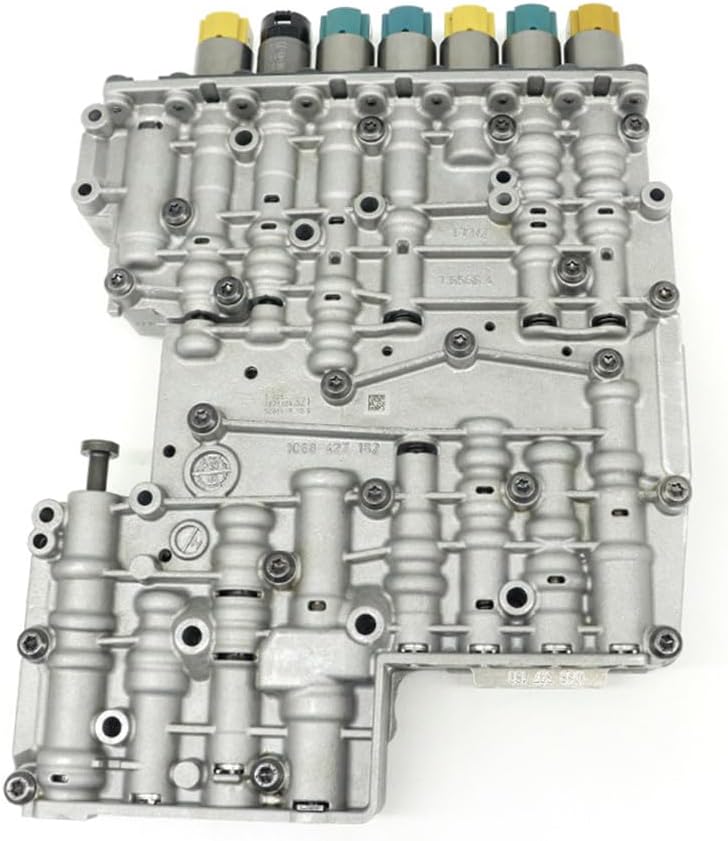
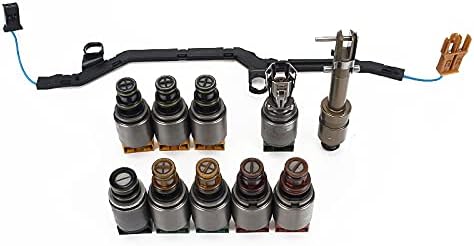
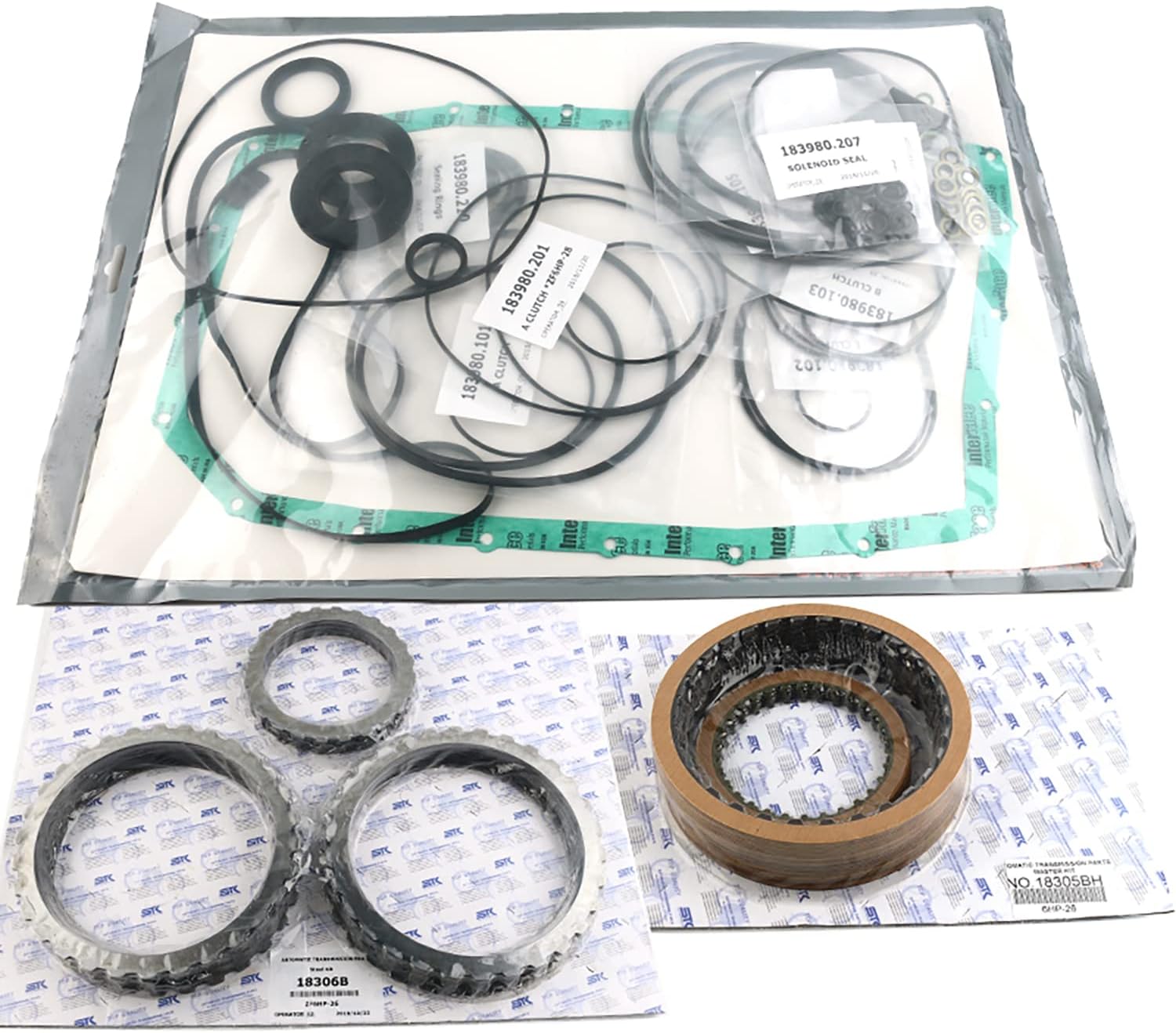
Shop ZF6HP valve bodies, solenoid kits, seal kits and rebuild kits with clutches — shipped fast from the USA.
Shop ZF6HP parts →Frequently Asked Questions
What's the difference between a harsh shift and a flare shift on a ZF6HP?
A flare shift means the engine briefly revs up because a clutch is slipping mid-shift and not holding load, so the shift feels soft and the RPM spikes before the gear catches. A harsh shift is the opposite problem in feel but often the same hardware: the clutch applies too quickly or with too much pressure, so the car bangs or thumps into the next gear instead of rolling into it. Both can trace back to the same worn pressure regulator valve bore, because a valve that is losing control of line pressure can let it run too high just as easily as too low, depending on which end of the bore wore first. If your 6HP flares in some gears and bangs in others, that inconsistency itself is a strong sign of a worn regulator valve rather than a single bad clutch.
Can I fix ZF6HP harsh shifts with a fluid change alone?
Sometimes, if the fluid is old, low, or the wrong spec, but it is not the first thing to assume on a 6HP with real mileage. Low or degraded ZF LifeguardFluid 6 reduces the hydraulic margin every clutch depends on and can make an already-marginal valve or solenoid problem feel worse, so a fluid and filter service is worth doing and worth ruling out first because it costs the least. But if the harsh shift persists after a correct fluid service with the right level, the next suspects are the pressure regulator valve bore and the solenoid pressure regulator valve, not the fluid.
Is harsh shifting after a rebuild always caused by tight clutch clearances?
No, but it is common enough that it should be the first thing you check before blaming a part. The 6HP's adaptive shift strategy is calibrated around OE clutch pack clearances, and a rebuilder who tightens the packs the way they would on a GM or Ford unit, assuming tighter means smoother, actually removes the clearance the TCM's adaptive logic needs to manage shift overlap. If the harsh shift showed up immediately after a rebuild rather than developing gradually over miles, measure the clutch pack clearances against ZF spec before chasing a valve body or solenoid problem.
Does a TCM adaptation reset fix harsh shifts on its own?
It can, but only when the underlying hardware is healthy and the harsh shift is purely a software or learned-value problem, such as adaptive values left stale or inconsistent after a battery disconnect, fluid service, or valve body swap. Running the reset and completing the full relearn drive cycle afterward is a legitimate and inexpensive step to try early, especially if the harsh shift appeared right after a service event. But a reset will not fix a mechanically worn pressure regulator valve bore or a flooded solenoid circuit, since those are physical pressure-control failures the adaptive logic cannot compensate its way around indefinitely.
Sources
- Sonnax — Oversized Pressure Regulator Valve Kit (95740-01K) product page. Backs the main pressure regulator valve's continuous-oscillation bore wear mechanism, the full symptom list (poor shift quality, flare shifts, harsh shifts, erratic line pressure, reverse slip/delay, TCC slip), the sleeve-end vs. spring-end wear distinction, and compatibility limited to Gen 1 6HP19/26/32 (no 053 plate) and Ford 6R60/6R75/6R80 ('09-'14). sonnax.com
- Sonnax — Oversized Solenoid Pressure Regulator Valve Kit (95740-64K) product page. Backs the separate solenoid-feed pressure regulator valve, its bore-wear cross-leak mechanism, the documented symptom set (delayed engagement, flare shifts, harsh downshifts, neutral shifts, high line pressure, harsh upshifts, wrong-gear starts, codes, TCC slip), and compatibility limited to Gen 2 6HP21/28/34, M-shift or E-shift, not compatible with Gen 1. sonnax.com
- Sonnax — Oversized Clutch C Regulator Valve (95740-40K) product page. Backs clutch C's shared role in 2nd and 6th gear on the 6HP platform and the bore-wear-causes-poor-shift-quality mechanism referenced when distinguishing this harsh-shift cause from the main and solenoid pressure regulator valves. sonnax.com
- FenderBender — "ZF6HP26 Bumps and Clunks." Backs the overtightened-clutch-pack-clearance cause specific to post-rebuild harsh shifts, the ZF adaptive-overlap mechanism that tight clearances interfere with, and the factory clutch clearance specifications by clutch (A through E) cited in this article. fenderbender.com
- ZF Aftermarket — LifeguardFluid 6 Safety Data Sheet. Backs ZF LifeguardFluid 6 as the ATF developed and specified by ZF for its 6HP automatic transmission range. aftermarket.zf.com
- Sonnax — ZF6 technical webinar handout (PDF). Backs the low-fluid quote, the 95740-15K accumulator symptoms, the harsh-once-hot valve body correction, the two TCM temperature sensors and 170 C shutdown, and the 9-16 V voltage window. sonnax.com tech resources (PDF)
- Sonnax — ZF6HP21/28/34 (Gen 2) Critical Wear Areas and Vacuum Test Locations. Backs the accumulator piston height check, the rubber insert note, the exhaust-hole vacuum test and the downshift clunk symptom. sonnax.com (PDF)
- ZF Friedrichshafen AG — Service Information 50145, "Oil change kit for ZF 5HP/6HP automatic transmission." Backs the 650-950 rpm idle check, the fill procedure, and the 30-35 C level check with its 50 C limit. aftermarket.zf.com (PDF)
Shop the 95740-01K kit →