The ZF 6HP family gives you almost no warning. One minute the car shifts like it left the factory, the next it is stuck in one gear with a transmission fault message on the dash. On a BMW, Jaguar, Land Rover, Audi or Bentley running a 6HP19, 6HP21, 6HP26, 6HP28 or 6HP32, that fixed-gear state is not a failure by itself. It is the mechatronic module deciding it can no longer trust its own control loop and handing the gearbox over to whatever the hydraulics do on their own.
Understanding what the hydraulics do on their own is the whole job. The 6HP is a Lepelletier design: a simple planet with the sun gear fixed to the stator support, feeding a Ravigneaux set, with five shifting elements — three input clutches and two brakes — and, as ATSG's Niel Speetjens laid out in Transmission Digest, no one-way clutches and no direct drive anywhere in the unit. Every forward gear is an actively commanded pair of elements. There is no freewheel to soften a bad command and no mechanical gear the unit falls back into by default. When the module loses confidence, the only safe move is to hold a fixed ratio and stop shifting.


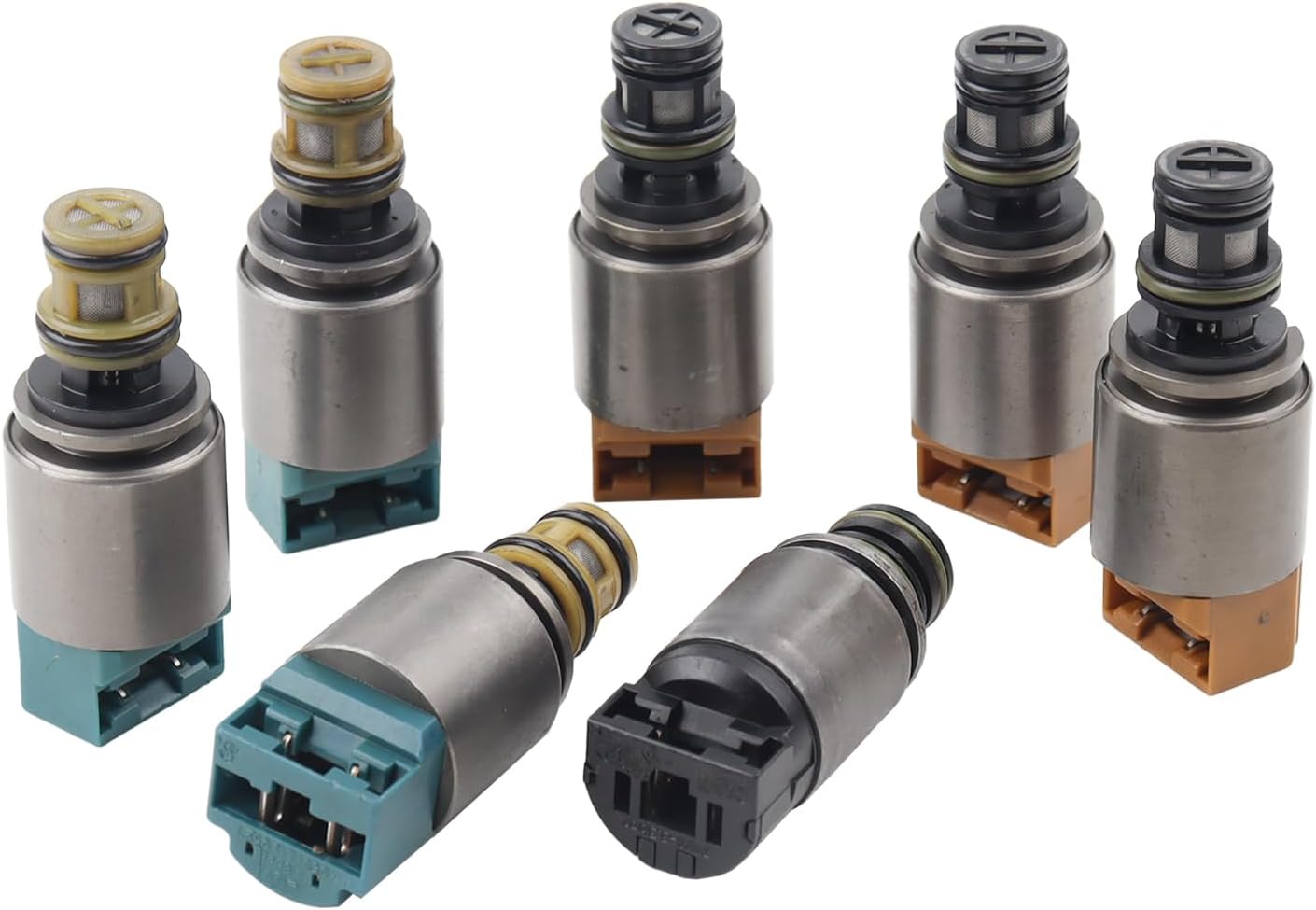
What is actually holding the gear when a 6HP goes into failsafe
In the first-generation ZF6HP19/26/32 valve body, two valves exist for exactly this purpose: the solenoid multiplex valve (bore 110) and the drive enable valve (bore 111). Sonnax's valve location chart for this family shows both present on Gen. 1 M-shift and E-shift bodies and absent from Gen. 2 (6HP21/28/34), where they were replaced by shift valve 1, shift valve 2, shift valve 3 and a position valve. That is not trivia. It means the failsafe behavior you get, and the valve you inspect when the failsafe behavior is wrong, depends on which generation is in front of you.
So identify the unit first. There is also a "tween" version stuck between the two designs, and Sonnax flags it by the separator plate: codes A053 and B053 with plate number 1068-327-189, most often in 7-series BMWs. Its bore locations match neither generation — the clutch B latch valve sits in bore 114 instead of 115, the D2 latch valve in 201 instead of 203. Order Gen. 1 parts for it and you will pull the valve body twice.
Cause 1: Fluid level, and the temperature window nobody honors
This is first because the 6HP is far less forgiving about level than an older domestic unit. There is no dipstick. The level is set by a standpipe behind a fill plug and is only correct inside a narrow temperature band.
ZF's own service information for the 5HP/6HP oil change kit (document 50145 EN) is specific: put the vehicle level, engage P, run the engine, and verify idle speed is 650–950 rpm first — if idle is out of range, ZF states the level cannot be correctly adjusted, full stop. Then check transmission oil temperature and open the fill plug only in the 30–35 °C window. Too cold, warm it up. Too hot, let it cool. The document adds a hard ceiling: oil temperature must not exceed 50 °C during the check. Close the plug when the flow drops to single drops.
Get this wrong by a liter and you get aeration under cornering or load, erratic solenoid response, ratio errors, and a failsafe event that looks electrical and is not. Units built with a thermostat valve add a step: the fluid must reach at least 75 °C on the test drive so the thermostat opens, then cool back to 35 °C for the recheck.
Fluid type matters as much. ZF LifeguardFluid 6 is the spec for this family, but ZF's product data sheet carves out exceptions that take LifeguardFluid 8 instead: 6HP19A, 6HP19X, 6HP26A61 and 6HP28AF. Same sheet, plain language: other oils can cause anything from degraded shift quality to transmission failure. And while ZF markets these as lifetime fills, the data sheet recommends a change at 150,000 km, sooner under heat and load.
| Service spec (per ZF SI 50145 EN, 03.2023) | Value |
|---|---|
| Fill / level check oil temperature | 30–35 °C, never above 50 °C |
| Idle speed required before level adjustment | 650–950 rpm |
| Drain plug, 6HP19/21/26/28/32 (BMW, Jaguar, Land Rover) | M24 x 1, 10 mm hex, 8 Nm |
| Fill plug, same units | M18 x 1.5, 8 mm hex, 35 Nm ± 3.5 Nm |
| Oil pan bolts — plastic pan (filter integrated) | 10 Nm |
| Oil pan bolts — aluminum pan | 4 Nm + 45° |
| Oil pan bolts — steel plate pan | 12 Nm |
| Bolt sequence | Crosswise, center outward |
Note the plastic pan line. On most 6HP applications the pan is the filter — a polyamide housing with the element molded in, which is why "drop the pan and clean the screen" is not a thing here. It also means 10 Nm, not "snug plus a grunt." The pan is not structural; it will not carry the weight of the transmission.
Cause 2: The mechatronic guide sleeve
If a 6HP is in failsafe with solenoid circuit codes, intermittent no-drive, or an oily external connector, check the guide sleeve before you condemn the mechatronic. The sleeve is the sealed pass-through carrying internal wiring out of the case to the bayonet-style plug. Its seals harden with heat and age, ATF wicks up the sleeve into the connector body and travels the harness from there. Two things happen at once: the unit loses fluid slowly, and the solenoid circuits see intermittent high resistance. The module reads that as an electrical fault and drops to failsafe.
ZF publishes the replacement procedure as service information 50324 EN: disconnect the battery, remove underbody paneling if fitted, twist the bayonet catch and pull the plug, drop the oil pan, release the locking device on the sleeve, pull the sleeve, lightly oil the new sleeve's seals with LifeguardFluid, seat it with attention to positioning, re-engage the locking device, reinstall the pan to the torque and sequence above, refill, check level, reconnect the battery, road test and re-check for leaks.
One warning from that document gets ignored constantly: the mechatronic is an ESD-sensitive assembly. ZF calls for conductive workwear, ESD transport protection, and no touching the connector contacts. Speetjens made the same point in Transmission Digest — a static event can fry the micro wiring outright or leave it wounded enough to fail weeks later. If you have ever had a "new" mechatronic go bad in a month, that is a candidate for why.
ZF 6HP26 valve body sleeve and connector seal kit
Seven-piece kit covering the guide sleeve seals and the connector seal — the parts you replace when the external plug is wet and the solenoid circuits are acting intermittent. Far cheaper than the mechatronic it is often blamed on.
See the seal kit →Cause 3: Solenoid regulator bore wear, the fault that hides from your meter
This one belongs on every 6HP limp-mode list and it almost never is. Sonnax's Bob Warnke describes the circuit plainly: the solenoid pressure regulator valve (DR.REO-V) supplies regulated feed pressure to every solenoid in the unit. When that bore wears, all solenoid output goes too high or too low at once. Every resistance measurement passes, every circuit test passes, and the module still watches commanded pressure and actual clutch behavior disagree until it quits.
Right next to it, the main pressure regulator valve (SYS.DR-V) bore wear robs converter feed, because line pressure has priority and converter charge is what gets shorted. Warnke's guidance is direct: vacuum test these valve bores, and if worn — as they commonly are — service them or fit a remanufactured valve body. He also notes that in this family, solenoid failures are typically mechanical, not electrical: wear and contamination, not open windings. Loose end plugs between the shift valves and solenoids leak circuit pressure, and the rubber accumulator dampers go hard, which makes solenoid output erratic and shifts harsh.
Sonnax ZF6HP19/26/32 and 6R60/6R80 valve body Zip Kit
The bore repair for the pressure regulator, solenoid regulator and clutch control circuits, plus the end plug and accumulator hardware that leaks on high-mile units. This is the fix a used valve body does not give you, because the used one has the same wear.
See the Zip Kit →Cause 4: The WK circuit, and the one pressure port on the case
The 6HP and its Ford-built cousins (6R60, 6R75, 6R80) have exactly one case pressure tap, and it is not mainline. It is WK, the converter release circuit, on the driver's side of the bell housing just above the cooler lines — marked "AUF WK" on ZF cases, unmarked on Ford. It uses a ZF-specific 10 x 1.00 mm thread, so plan on an adapter or a modified ZF plug.
Because it is the release circuit, the numbers run backwards from what you may expect. Per Sonnax:
- Cold, engine running: 70–75 psi (4.8–5.1 bar), instant and steady on start-up.
- At operating temperature: 65–68 psi (4.5–4.7 bar).
- Selecting Reverse: a sharp dip to about 50 psi (3.4 bar), then recovery — that is the regulator and clutch fill taking volume from the converter circuit.
- Converter locked: 0–2 psi. Zero is full apply; 1.5–2 psi means the module is allowing a small slip for NVH.
Use a 100 psi gauge or transducer, not a 500 psi mainline gauge whose needle does not leave the peg until 12 psi. Cross-check with the scan tool: when WK reads zero, engine rpm and turbine (input) rpm should match, and a torque converter amplification PID should read zero too. Low WK in Reverse with a rough idle points at a converter clutch that will not release; correct WK with a low solenoid command points at the converter itself.
Warnke also calls out the bushings at the "E" clutch interface (the input/output bushing) and the pump stator as notorious failure points producing TCC complaints, shift complaints and ratio errors — and ratio errors are one of the fastest routes into failsafe on this unit.
Cause 5: Reading a ratio fault instead of guessing at it
You do not need factory software to tell which element failed. Graph turbine (input) speed and output speed, divide, and compare against the gear the module says it commanded. The 6HP ratios are fixed:
| Gear | Ratio | Gear | Ratio |
|---|---|---|---|
| 1st | 4.171 | 5th | 0.867 |
| 2nd | 2.340 | 6th | 0.691 |
| 3rd | 1.521 | Reverse | 3.403 |
| 4th | 1.143 | No direct drive, no one-way clutches | |
Commanded 5th with an attained ratio near 1.143 means the unit is actually in 4th and an element is not holding. A ratio wandering between two of these numbers under load is slip, not a stuck valve. A dead-on ratio with a shift that never happens sends you back to the solenoid feed circuit in Cause 3. Torque ratings are worth knowing here too: 6HP19 is 400 N·m (295 lb-ft), 6HP26 is 600 N·m (444 lb-ft), 6HP32 is 750 N·m (555 lb-ft). A tuned car on a 6HP19 is living past its rating.
Cause 6: Voltage, CAN torque data, and the wrong mechatronic
Before anything comes apart, do the boring checks. The 6HP's TCM is in constant conversation with the engine controller, the throttle system and the ABS module over CAN. A bad engine torque value arriving over that network is enough to push the transmission module into failsafe with nothing wrong inside the gearbox. Weak battery, corroded ground, aftermarket wiring spliced into CAN — all of it lands on the transmission as a fault code.
The other trap is the replacement mechatronic. ZF loads the base shift software at the factory, then the vehicle manufacturer flashes its own calibration and marries the unit to the car. Sonnax is blunt that there is no swapping or retro-fitting around this: hydraulics, solenoid calibration, TCM mapping and separator plates all change between 6HP19, 6HP21, 6HP26 and up. ATSG's Wayne Colonna documented the practical version in Transmission Digest — a 2006 Land Rover LR3 that would not start after an overhaul, because the installed mechatronic was a Ford 6R60 unit that contains no TCM at all. Correct unit installed and programmed, and the car ran normally.
Remember too that the module lives in the fluid. ZF designed the ATF to carry heat away from a TCM that can see 160 °C (320 °F). Oxidized fluid on this unit is not just bad for the clutches, it is bad for the computer.
The order I actually work a 6HP failsafe
- Scan every module, not just the TCM. Record codes and freeze frame before clearing, and note whether a restart clears the failsafe. Clears on restart and returns under load means a pressure or ratio fault; returns immediately usually means a circuit.
- Battery and grounds. Load test, then check the CAN-reported engine torque value against actual load.
- Look at the external connector. Wet or oily equals guide sleeve, and you are into the pan anyway.
- Set the fluid level properly — idle 650–950 rpm, oil at 30–35 °C, correct LifeguardFluid for the variant. Retest before touching anything else.
- Gauge the WK port against the 70–75 / 65–68 / 0–2 psi targets while watching the solenoid command.
- Graph ratio against the table above to find which element is not holding.
- Pull the valve body and vacuum test the solenoid regulator and main regulator bores, check the end plugs, replace the accumulator dampers. Identify Gen. 1, 053 "tween" or Gen. 2 first so you buy the right parts.
- Only then consider the mechatronic — and replace it with the correct part number for that vehicle, then program it.
Keeping a 6HP out of failsafe
Three habits do most of the work. Change the fluid and pan on a real interval instead of trusting the lifetime label — ZF itself suggests 150,000 km, sooner under heat. Set the level by ZF's temperature window every time, idle speed verified first. And when a 6HP shows up with hard shifts or a small external leak, fix it while it is still seals and valve bores, not after the module has spent a year commanding pressure it never got.
Need parts for this job?
Guide sleeve and connector seal kits, Sonnax valve body Zip Kits, mechatronic solenoid kits, pan-and-filter kits and ZF-spec fluid for 6HP19, 6HP26, 6HP28 and 6HP32 — in one place, shipped from the USA.
Shop ZF6HP parts →Related reading: ZF 6HP19 / 6HP26 weak points, ZF6HP TCC shudder diagnosis, how to check line pressure, and bench testing transmission solenoids.
Sources
- ZF Friedrichshafen AG — Service Information 50145 EN (03.2023), "Oil change kit for ZF 5HP/6HP automatic transmission." Backs the 30–35 °C fill and level-check window and the 50 °C ceiling, the 650–950 rpm idle speed prerequisite, the 75 °C thermostat-valve test drive and 35 °C recheck, the drain plug (M24 x 1, 10 mm hex, 8 Nm) and fill plug (M18 x 1.5, 8 mm hex, 35 Nm ± 3.5 Nm) specs, the pan bolt torques (plastic 10 Nm, aluminum 4 Nm + 45°, steel plate 12 Nm) and crosswise center-outward sequence, the integrated filter on plastic pans, and the ESD handling requirements. aftermarket.zf.com
- ZF Friedrichshafen AG — Product Data Sheet, ZF LifeguardFluid 6. Backs the fluid specification for 6HP transmissions, the LifeguardFluid 8 exceptions (6HP19A, 6HP19X, 6HP26A61, 6HP28AF), the warning that other oils can cause anything from degraded shift quality to transmission failure, and the 150,000 km oil change recommendation despite the lifetime fill. aftermarket.zf.com
- ZF Friedrichshafen AG — Service Information 50324 EN (09.2018), "Guide Sleeve Mechatronics for ZF Automatic Transmission 6HP." Backs the guide sleeve replacement procedure step by step (battery disconnect, bayonet catch, pan removal, locking device release, oiling the new seals with LifeguardFluid, positioning, refill, level check, test drive, leak check) and the ESD protection requirements for the mechatronic. aftermarket.zf.com
- Sonnax — "Six Ways from Sunday: Diagnosing ZF6 & Ford 6R60/80 TC-Related Drivability Concerns," Bob Warnke, March 23, 2016. Backs the WK pressure tap location and "AUF WK" marking, the 10 x 1.00 mm ZF thread, the 100 psi gauge recommendation, the 70–75 psi cold / 65–68 psi hot / ~50 psi Reverse dip / 0–2 psi locked values, the rpm-match and torque converter amplification cross-checks, the solenoid pressure regulator (DR.REO-V) and main regulator (SYS.DR-V) bore wear effects, the mechanical-not-electrical nature of ZF6 solenoid failures, the loose end plugs and failed accumulator dampers, the "E" clutch and pump stator bushing failures causing ratio errors, and the no-mechatronic-swapping rule. sonnax.com
- Sonnax — "'Tween: How to Identify the ZF6HP Series Valve Body that Bridges the 1st & 2nd Generation Designs," Maura Stafford, June 29, 2016. Backs the A053 / B053 separator plate codes and plate number 1068-327-189, the 7-series prevalence, and the valve location chart showing the solenoid multiplex valve (bore 110) and drive enable valve (bore 111) present on Gen. 1 and absent on Gen. 2, which uses shift valves 1–3 and a position valve instead, plus the shifted bore locations of the clutch B and D2 latch valves on the 053 version. sonnax.com
- Transmission Digest / ATSG — "To 6HP or Not to 6HP: Is That a Question?", Niel Speetjens, ATSG Technical Field Adviser, March 1, 2007. Backs the Lepelletier gear train description (simple planet with sun fixed to the stator support ahead of a Ravigneaux set, five shifting elements, no one-way clutches, no direct drive), the gear ratios 4.171 / 2.340 / 1.521 / 1.143 / 0.867 / 0.691 and 3.403 reverse, the torque ratings (6HP19 400 N·m, 6HP26 600 N·m, 6HP32 750 N·m), the non-serviceable mechatronic with integrated TCM, speed sensors, temperature sensor and range switch, the polyamide oil pan that doubles as the filter, the 160 °C TCM heat load carried by the ATF, the CAN links to the engine, throttle and ABS modules, and the ESD hazard to the mechatronic. transmissiondigest.com
- Transmission Digest / ATSG — "Land Rover LR3 ZF6HP26 No Start After Overhaul," Wayne Colonna, July 31, 2023. Backs the case of a 2006 LR3 with a post-overhaul no-start caused by installing a Ford 6R60 mechatronic that contains no TCM, and the correction once a TCM-equipped mechatronic was installed and programmed. transmissiondigest.com