The complaint sounds simple on the phone: "it won't go into 6th." On the road test it is usually exactly that — the tach sits noticeably higher than it should at 65-70 mph, the transmission never completes the upshift past 5th no matter how gently you hold the pedal, and there is no flare, no bang, no slipping feel. It just stops shifting. On a ZF6HP19, 6HP26 or 6HP32 — the six-speed behind most 2002-and-up BMWs, early Audis, Jaguars, Land Rovers, Astons and Ford's 6R60/6R80 cousins — that specific complaint traces back to a short list of causes, all of them tied to the one clutch 6th gear cannot exist without: the E clutch and the circuits that feed it.
This is a different complaint from flare or slip, where the engine revs up mid-shift before the gear catches. We cover that separately in our ZF6HP slipping causes and fix guide. A true no-shift-to-6th either means the TCM is refusing to command the shift at all, or it commands the shift and the hydraulic side never delivers, so the transmission falls back to holding 5th rather than risk damaging a clutch that is not getting proper pressure.
What Actually Has to Happen for the Transmission to Reach 6th
The 6HP family has no direct-drive gear and no freewheeling clutch anywhere in the gearset, so every gear, overdrive included, depends entirely on the electronic control system holding the correct clutches at the correct pressure with nothing mechanical to fall back on. The E clutch is one of the transmission's three driving clutches, and multiple ZF service references describe the extreme non-sequential downshift from 6th straight to 2nd as nothing more than actuating clutch E and releasing the C brake element — which tells you plainly that clutch E is applied in 6th and the C element is not holding it down at that point. Separately, the same C brake clutch is documented as the element applied in both 2nd gear and 6th gear under normal sequential shifting. Put those two facts together and the practical takeaway is simple: a no-shift-to-6th complaint is almost always a C-clutch problem, an E-clutch problem, or the solenoid that commands one of them, and the fix depends on figuring out which.
Cause 1: Clutch C Regulator Valve Bore Wear
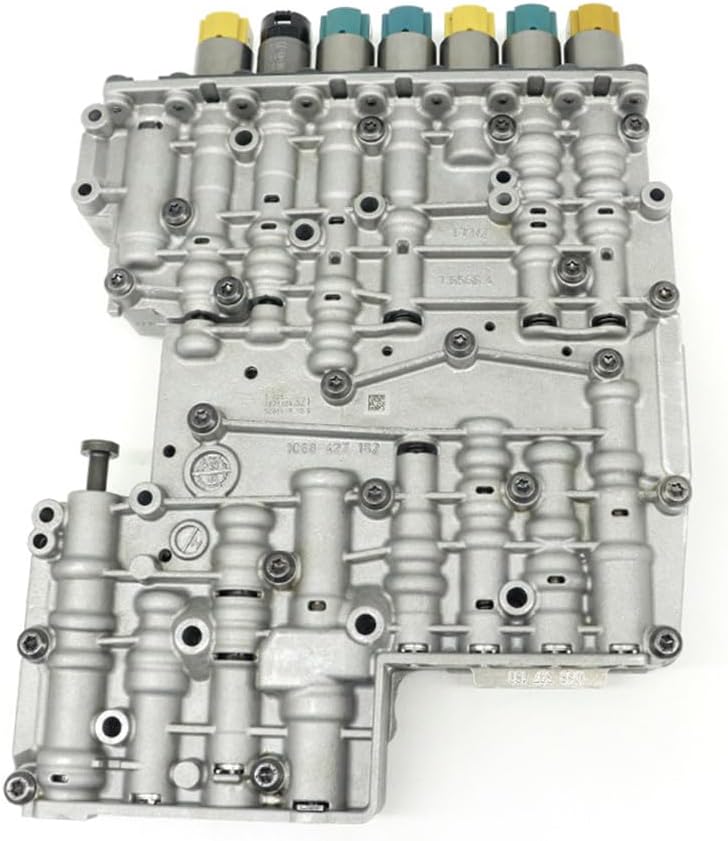
This is the cause with the cleanest paper trail. Sonnax's technical documentation for the Clutch C regulator valve states directly that in the ZF6 and related Ford transmissions, clutch C applies in both 2nd and 6th gear, and that as the regulator valve oscillates and strokes over tens of thousands of cycles, the aluminum bore around it wears. That wear lets commanded pressure leak past the valve instead of reaching the clutch, and Sonnax lists the resulting symptoms as slipping, gear-ratio codes, and poor shift quality in 2nd and 6th gear specifically, with outright clutch C failure as the end stage. Because the same valve feeds both gears, a 6HP that will not hold 6th and also feels soft or occasionally slips in 2nd is pointing at this one part, not two unrelated problems.
The fix Sonnax built for this is mechanical: their oversized Clutch C regulator valve (95740-40K) is machined to a tighter fit than the worn factory bore and uses a hardcoat anodized surface to resist repeating the same wear pattern, restoring normal hydraulic control without replacing the entire valve body. It is not compatible with units built with the 053 separator plate, so confirm which valve body you have before ordering.
Cause 2: Worn D1/E Control Valve Starving the Overdrive Clutch
The valve that manages clutch E's apply and release timing shares a bore with the D1 clutch control circuit, and Sonnax's documentation for it lists its best-known symptoms as excess clutch overlap, pressure control out-of-range codes, downshift bind-ups, and flare shifts, caused by bore wear that lets apply pressure leak away. Most of the specific complaints Sonnax catalogs for this valve show up in the lower and mid gears rather than 6th by name, but the valve is the same hydraulic circuit that has to deliver full pressure to the E clutch, and the E clutch is the one input clutch 6th gear cannot do without. In practice, bore wear severe enough to starve that circuit does not stop at the gears Sonnax lists first — it can just as easily show up as the transmission refusing to complete the shift into overdrive, or holding 6th only briefly before dropping back to 5th. If the Clutch C regulator valve above checks out, pull and inspect this valve next rather than jumping straight to a Mechatronic replacement.
Sonnax's oversized valve for this bore (95740-08K) fits first-generation 6HP19/26/32 units without the 053 separator plate, plus the related Ford 6R60/6R75/6R80/6R100 family. It is not compatible with Generation 2 6HP21/28/34 valve bodies, which use a different internal layout for the same clutches.
Cause 3: EDS4 Solenoid or Mechatronic Fault
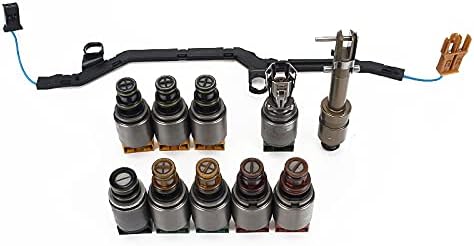
Everything above assumes the hydraulics are sound and the problem is a leaking valve. If the valve bores test fine, the next place to look is the solenoid that commands the E clutch electrically, and that solenoid's identity depends on which generation of 6HP you have. Per a direct technical comparison published by Vehicle Service Pros, first-generation 6HP19/26/32 units use a single normally-applied solenoid called EDS4 to control both the D and E clutch functions together, alongside a separate MV1 solenoid used nowhere in the later design. Generation 2 6HP21/28/34 units eliminated MV1 entirely and split the D/E function into two dedicated normally-vented solenoids: EDS6 for the D clutch and EDS4 for the E clutch. That means on a Gen 2 unit, a bad EDS4 solenoid affects the E clutch and nothing else, while on a Gen 1 unit the same part number is shared logic for both clutches, which changes how a flaky EDS4 presents on a scan tool.
We go deep on testing and replacing the full nine-solenoid bank in our ZF6HP shift solenoid symptoms guide, so we won't repeat the test procedure here. The point for this complaint specifically: pull the separator plate, confirm which generation you have before you order a solenoid kit or a replacement valve body, and do not assume a Gen 1 kit will drop into a Gen 2 unit or vice versa. The internal layouts, and in this case the solenoid count feeding clutch E, are genuinely different.
Cause 4: TCM Adaptation Holding the Shift Back on Purpose
Not every no-shift-to-6th complaint is a bad part. The ZF6HP's control strategy is adaptive: it learns fill times and apply pressures for every clutch, including clutch E, across the life of the transmission, and leans on those learned values to decide how and when to shift. A fluid change, a valve body swap, a Mechatronic replacement, or even a battery disconnect that clears those learned values without the technician completing ZF's adaptation reset and the required relearn drive cycle afterward can leave the TCM running on a blank or inconsistent baseline. In that state the control strategy can deliberately hold the transmission out of 6th as a protective measure, rather than risk commanding a clutch it no longer has a reliable pressure map for, even though the hardware underneath is completely healthy. If the no-overdrive complaint appeared immediately after a service rather than gradually over miles, run the adaptation reset and a full relearn cycle before you spend money on a valve kit or a solenoid.
Cause 5: Wrong or Low Fluid
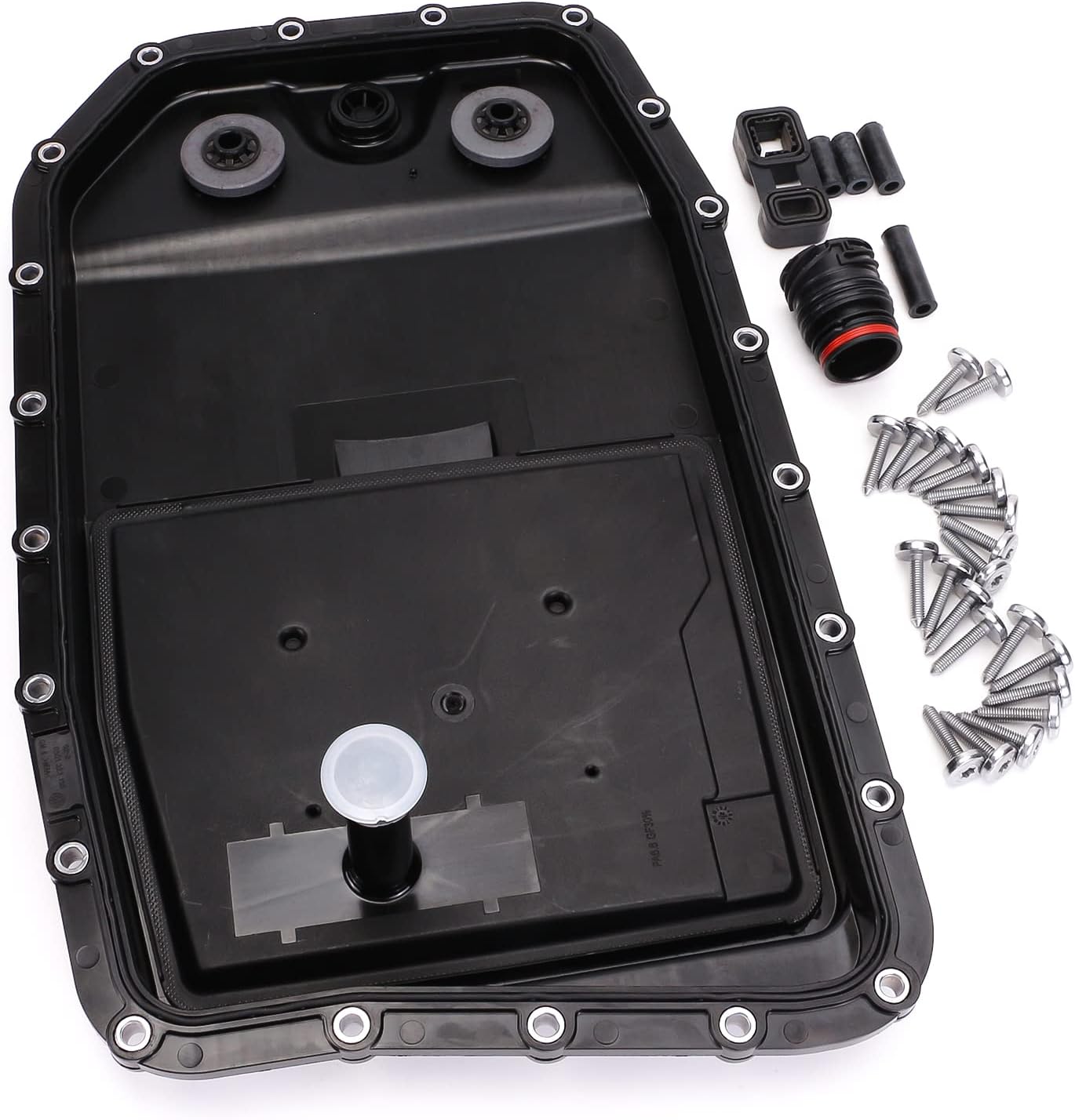
Check this first because it costs nothing to rule out and it compounds every other cause on this list. ZF's 6-speed family runs on LifeguardFluid 6 ATF, built and specified by ZF Aftermarket specifically for the 6HP transmission range, with friction behavior tuned so the clutches apply the way the control strategy expects. A unit that is low on fluid, or that has been serviced with the wrong fluid, starves every clutch of the same hydraulic margin a worn valve already compromises, and the overdrive clutch, with the least mechanical advantage holding it on, is often the first one that shows it. Confirm fluid identity and level against your specific build code before you start pulling valve bodies apart.
The Order I Work It
- Pull codes with a scan tool that reads manufacturer-enhanced data, and note whether the complaint started right after a fluid change, valve body service, or battery disconnect.
- Confirm fluid identity and level against the build code before touching anything mechanical.
- If the service history points at disturbed adaptive values, run ZF's adaptation reset and complete the full relearn drive cycle before replacing any part.
- Road test and note whether 2nd gear also feels soft, slips, or sets a ratio code alongside the no-6th complaint — that pattern points straight at the shared Clutch C regulator valve.
- Pull the separator plate, confirm Gen 1 vs. Gen 2 vs. the 053-plate "tween" valve body, then inspect or pressure-test the Clutch C and D1/E control valve bores.
- If the hydraulics check out clean, test the EDS4 solenoid circuit against the generation-specific wiring and logic before condemning the Mechatronic.
Worked in that order, the 2nd-gear cross-check in step 4 alone will steer most of these jobs straight to the Clutch C valve instead of a guessed-at Mechatronic swap.
Shop ZF6HP valve bodies, solenoid kits, seal kits and rebuild kits with clutches — shipped fast from the USA.
Shop ZF6HP parts →Frequently Asked Questions
My ZF6HP stays in 5th gear and never shifts to 6th. Is that the same problem as slipping?
No, and the diagnostic path is different. Slipping or flare means the transmission attempts the shift and the clutch loses apply pressure mid-shift, so the engine revs up before the gear catches. A no-shift-to-6th complaint means the TCM never commands the shift at all, or commands it and the gear never completes, so the transmission simply holds 5th regardless of speed or load. We cover the flare/slip complaint on its own in our ZF6HP slipping causes and fix guide. If your car does momentarily try for 6th and then flares or kicks back to 5th, read that guide alongside this one, because a worn Clutch C or D1/E control valve can produce either symptom depending on how far the bore has worn.
Is there a standard OBD-II code for a bad 6th gear on a ZF6HP?
Not a generic one. The SAE-defined generic gear-ratio codes only run P0730 through P0736, which cover gears 1 through 4 and the shift solenoid circuits, because 6-speed automatics were not common when that code set was standardized. A 6th-gear or E-clutch ratio fault on a ZF6HP shows up as a manufacturer-specific code read through the vehicle's own enhanced data stream, not a generic code a basic code reader will decode correctly, so pull codes with a scan tool that reads BMW, Jaguar, Land Rover, Audi or Chrysler enhanced PIDs rather than trusting a generic OBD-II reader's translation.
Can a fluid change or valve body service make a ZF6HP stop shifting into overdrive?
Yes, indirectly. The TCM is adaptive: it learns fill times and apply pressures for every clutch, including the E clutch that overdrive depends on, and stores them as a baseline. Disturbing that baseline, with a fluid change, a valve body swap, or a battery disconnect, without completing the proper adaptation reset and relearn drive cycle can leave the control strategy running on bad assumptions, and the TCM can hold the transmission out of 6th as a protective response even though the hardware underneath is fine. Always complete the full relearn procedure after any service that resets adaptive values.
Clutch C also controls 2nd gear. Why would a 2nd-gear part cause a 6th-gear problem?
Because the ZF6HP reuses the same brake element in both gears instead of giving each gear its own dedicated hardware. Clutch C applies in both 2nd and 6th, so a single regulator valve with a worn bore feeds both gears from the same degraded supply. Sonnax documents this directly: bore wear at the Clutch C regulator valve causes slipping, gear-ratio codes and poor shift quality in 2nd and 6th gear alike, plus outright Clutch C failure in more advanced cases. That shared-hardware design is exactly why a tech who only test-drives in 2nd and calls it good can still miss a 6th-gear complaint that comes from the identical valve.
Sources
- Sonnax — Oversized Clutch C Regulator Valve (95740-40K) product page. Backs clutch C's application in both 2nd and 6th gear on ZF6 and related Ford transmissions, the regulator valve bore wear mechanism, and the resulting slipping, gear-ratio codes and poor shift quality in 2nd and 6th gear plus outright clutch C failure. sonnax.com
- Sonnax — Oversized Clutch D1/E Control Valve Kit (95740-08K) product page. Backs the valve's role managing clutch D1/E apply and release timing, the bore-wear-causes-pressure-loss mechanism, the documented symptom set (clutch overlap, pressure control out-of-range codes, downshift bind-ups, flare shifts), and compatibility limited to first-generation 6HP19/26/32 (no 053 plate) and the related Ford 6R60/6R75/6R80/6R100, excluding Generation 2 6HP21/28/34. sonnax.com
- Vehicle Service Pros — "ZF Generation 1 and 2." Backs the Generation 1 (6HP19/26/32) versus Generation 2 (6HP21/28/34) solenoid architecture: Gen 1's MV1 solenoid plus a single normally-applied EDS4 solenoid handling the combined D/E clutch function, versus Gen 2 dropping MV1 and splitting that function into two normally-vented solenoids, EDS6 for the D clutch and EDS4 for the E clutch. vehicleservicepros.com
- ZF Aftermarket — LifeguardFluid 6 Safety Data Sheet. Backs ZF LifeguardFluid 6 as the ATF developed and specified by ZF for its 6HP automatic transmission range. aftermarket.zf.com
- Transmission Digest — "BMW ZF 6HP26 Keeps Going Back Into Park." Backs the general point that the Mechatronic's electronic inputs are sensitive to interference from unrelated vehicle electrical faults (in the documented case, a misfiring ignition coil), underscoring why a full code pull and ignition-system check belongs early in diagnosis rather than jumping straight to transmission hardware. transmissiondigest.com
Shop ZF6HP parts →