The complaint is rarely "solenoid." It is a 5 Series or X5 that bangs into Reverse, a Range Rover Sport that flares on the 2-3, a Jaguar XF that occasionally thinks it is in Neutral for half a second between gears. On the ZF6HP family, almost all of that traces back to one of nine solenoids threaded into the mechatronic, and the good news is that these units give you two clean, separate ways to test each one before you commit to a kit.
This is the shift solenoid bank, not the converter clutch circuit. If the complaint is a steady-throttle shudder at 35 to 55 mph, that is the WK release circuit, covered in our ZF6HP torque converter shudder guide. This article is for flare, neutral bump, harsh engagement, delayed engagement, and gear-ratio or solenoid performance codes.

Nine Solenoids, Two Generations, One Rule
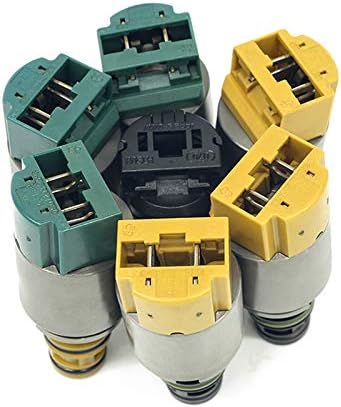
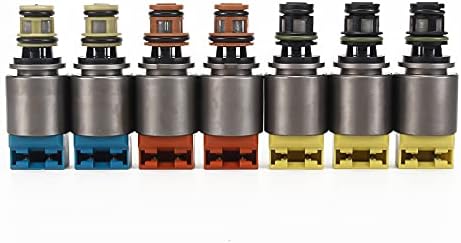
Every ZF6HP "E" valve body runs nine solenoids: a line pressure control solenoid plus eight shift and clutch solenoids working in normally-applied and normally-vented pairs. Per Sonnax, Generation 1 units (ZF6HP19, 6HP26, 6HP32) carry an MV1 solenoid and a single normally-applied EDS4 solenoid handling the D/E clutch function. Generation 2 (ZF6HP21, 6HP28, 6HP34) dropped MV1 entirely and split that function into two normally-vented solenoids, EDS6 for the D clutch and EDS4 for the E clutch, leaving only the line pressure solenoid as normally applied.
Connector color is a starting point, not proof. Sonnax's identification guide notes Gen. 1 EDS solenoids use blue and yellow connectors, but warns those colors drift toward green and tan with heat cycling, so do not stake a parts order on a faded cap. Gen. 2 kept blue and yellow at most locations but switched to orange connectors at EDS1 and EDS2. If you cannot read the cap color, the fix is mechanical: test-fit the solenoid into each color of Sonnax test manifold until one seats correctly, since the manifolds are keyed by ID groove count (orange has two grooves, blue has one, yellow has none).
| Generation | Models | Key solenoid difference | Connector note |
|---|---|---|---|
| Gen. 1 | ZF6HP19, ZF6HP26, ZF6HP32 | Has MV1; single normally-applied EDS4 for D/E clutch | Blue and yellow caps (fade to green/tan with heat) |
| Gen. 2 | ZF6HP21, ZF6HP28, ZF6HP34 | No MV1; EDS4 (E clutch) and EDS6 (D clutch) both normally vented | Blue/yellow retained at most ports, orange added at EDS1/EDS2 |
The rule that matters more than any color chart: during a rebuild, put a solenoid of the same band number back in the same bore. The TCM learns individual flow rates per location during shift adaptation, and swapping two otherwise-identical solenoids between ports reintroduces a shift complaint you just fixed.
The Full Symptom List
Sonnax's technical writeup on the solenoid pressure regulator circuit lists the complaints this family throws when a solenoid feed goes bad: flare shifts, neutral shifts, harsh upshifts and downshifts, gear ratio codes, solenoid performance codes, delayed Forward and Reverse engagement, wrong gear starts, and TCC slip. That is a long list for one circuit, and the reason is structural: every one of the nine solenoids draws its working pressure from a single solenoid pressure regulator valve. Wear that valve's bore and you do not get one solenoid failing, you get the whole bank running on the wrong feed pressure, with symptoms that drift as fluid temperature changes the clearance's leak rate.
- Low feed pressure at idle or cold produces delayed engagement and wrong-gear starts, because the solenoids cannot build commanded pressure fast enough.
- Excessive feed pressure floods the solenoids, which shows up as harsh upshifts, harsh downshifts, high line pressure complaints, and gear ratio or solenoid codes.
- A single leaking solenoid O-ring (rather than the shared regulator) tends to isolate to one gear or one clutch, which is the case where testing one solenoid off the car actually pays off.
Separately, Sonnax's Zip Kit writeup for this family lists the same complaint pattern from the O-ring and end-plug side: broken parts from excessive line pressure, excess heat, firm shifts, flare shifts and bind-ups, delayed engagement, and harsh engagement. The overlap is not a coincidence. Solenoid-circuit wear and valve-body O-ring leaks produce nearly identical driveability complaints, which is exactly why you test before you buy a kit.
Testing a Solenoid Off the Car
Do both tests. They check different failure modes and neither one alone is reliable.
Electrical: resistance check
Pull the circuit board off the mechatronic before you check resistance, not through the 16-pin connector. Per Sonnax/Transend's test manifold instructions, orange, blue and yellow-capped solenoids should read 5 to 6 ohms at 68°F (20°C), and the warning attached to that spec matters: do not use an ohmmeter that puts out more than 0.6 volts, or you risk damaging the solenoid coil during the test itself.
Mechanical: vacuum test
This is the test most shops skip, and Sonnax is explicit that it is the one that catches the actual leading failure mode: "internal mechanical sealing problems are the leading cause of failure for this family of solenoids." A resistance check alone will pass a solenoid that is mechanically bleeding pressure internally.
The procedure, using Sonnax's 95430-VTK test manifold kit with the VACTEST-01K vacuum stand: clean and dry the solenoid, seat it in the correctly color-matched manifold (orange, blue, or yellow, test-fitting if the cap color is unreadable), connect the vacuum test line, and pull vacuum while watching the gauge.
| Vacuum reading | Result |
|---|---|
| Over 21 in-Hg, holds steady | Good solenoid |
| Under 20 in-Hg | Compromised. Replace it. |
One catch specific to the yellow manifold: the solenoid under test must be energized to get a valid reading. An un-powered solenoid on the yellow manifold will fail a test it might otherwise pass. The kit covers Ford 6R60, 6R75, 6R80 (both 2009-2014 and 2015-later), 6R100, and ZF6HP19, 6HP21, 6HP26, 6HP28, 6HP32, and 6HP34, so the same tooling works across both generations and the Ford cousins.
ZF6HP Shift Kit
Addresses the shared solenoid pressure regulator and shift-circuit wear behind flare, neutral-bump and harsh-shift complaints on this family. Start here when more than one gear or clutch is affected.
See the kitWhich Kit Fixes Which Failure
Once testing points at the circuit instead of one solenoid, match the fix to the failure:
- Solenoid feed pressure wrong across multiple circuits (flare, neutral shifts, ratio codes on more than one gear): the solenoid pressure regulator valve bore is worn. Sonnax's oversized solenoid pressure regulator valve kit (95740-17K) is built for exactly this, fits Gen. 1 ZF6HP19/26/32 and Ford 6R60/6R75/6R80/6R100, and does not fit Gen. 2 6HP21/28/34.
- One solenoid fails the vacuum test, everything else is clean: replace that solenoid, matched to the correct generation and bore, and reuse the harness if it tests good.
- Pressure loss is at the O-rings and end plugs, not the regulator bore: a Zip Kit reseals the solenoid O-rings, accumulator pistons, and end plugs in one pass. These are also generation and plate specific: ZF6-053-ZIP for Gen. 1 with the 053 separator plate, ZF6-6R60-ZIP for Gen. 1 without it plus Ford 6R60/6R75/6R80, and ZF6-GEN2-ZIP for Gen. 2 6HP21/28/34.
Do not mix generation parts to save a step. A Gen. 1 solenoid or regulator kit will physically fit a Gen. 2 case in some spots and still be wrong, because the strategy, flow rate, and in some cases the bore spacing changed between generations. Confirm the model and the valve body generation off the transmission tag before ordering, the same way you would before ordering valve body hard parts.
Replacement Order
- Confirm the complaint is solenoid-circuit, not converter clutch. Steady-throttle shudder at light cruise is WK, not this circuit.
- Pull codes and note which gears or clutches are affected. One clutch isolates faster than "all gears feel off."
- Pull the mechatronic circuit board and resistance-test every solenoid at 68°F. Anything outside 5 to 6 ohms is suspect.
- Vacuum-test every solenoid on the correctly matched manifold. Anything under 20 in-Hg gets replaced regardless of resistance.
- If only one or two solenoids fail and the rest test clean, replace just those, in their original bores.
- If multiple circuits are affected or the symptom pattern matches the regulator-valve list (flare, neutral shifts, codes on more than one gear), go to the solenoid pressure regulator valve kit instead of chasing solenoids one at a time.
- Reinstall with new solenoid O-rings regardless of which path you took; a worn solenoid in a new bore surface, or a new solenoid in a worn bore, both leak.
- Clear adaptations and drive a full relearn cycle before calling the job done. Shift feel will not settle until the TCM has relearned the new flow rates.
Frequently Asked Questions
What are the first signs of a failing ZF6HP shift solenoid?
Flare shifts, neutral shifts (a bump to neutral feel between gears), harsh upshifts or downshifts, delayed engagement into Drive or Reverse, wrong-gear starts, and a stored gear ratio or solenoid performance code. The pattern usually changes with fluid temperature because the clearance that is leaking pressure changes with viscosity.
Can you replace one ZF6HP solenoid without replacing all of them?
Mechanically yes, the solenoids thread out individually and Sonnax sells single-manifold test tools to isolate one at a time. In practice most shops replace the full solenoid or shift kit for the generation in hand, because the solenoids work in combination, a surviving solenoid with 50,000 miles of wear on it will not match the flow rate of a new one, and the TCM has already adapted shift feel around all of them together.
How do you test a ZF6HP solenoid off the car?
Two checks, not one. Electrically, pull the circuit board and check resistance across the coil: 5 to 6 ohms at 68 degrees F for the orange, blue and yellow-capped solenoids, using an ohmmeter that does not exceed 0.6 volts. Mechanically, seat the solenoid in the correctly color-matched Sonnax test manifold and pull vacuum: a good solenoid holds over 21 in-Hg, and anything under 20 in-Hg should be replaced. The resistance check alone misses the leading failure mode, which is internal sealing, not the coil.
Are ZF6HP Generation 1 and Generation 2 solenoids interchangeable?
No. Generation 1 (ZF6HP19, 6HP26, 6HP32) uses a different solenoid count and the MV1 solenoid that Generation 2 eliminated, while Generation 2 (ZF6HP21, 6HP28, 6HP34) changed the EDS4 design into two normally-vented solenoids and moved to orange connectors at the EDS1 and EDS2 locations. The repair kits are generation-specific for the same reason: a Gen. 1 kit will not fit a Gen. 2 valve body and vice versa.
Why does a new ZF6HP solenoid still shift badly after installation?
Usually one of three things: the solenoid went back into the wrong bore (the TCM has learned a flow rate per location and per band number), the solenoid feed itself is still leaking because the solenoid pressure regulator valve bore is worn and feeding the whole bank low or high, or the shift adaptation was never relearned after the repair. Fix the regulator valve first if more than one solenoid circuit is acting up, and always drive a relearn cycle after the repair.
Tested right, this circuit is not a guessing game. Two checks per solenoid, a generation-correct kit, and bores that get the same solenoid back that came out of them, and a flare or neutral-bump complaint stops being a parts-cannon job.
Shop ZF6HP shift solenoid kits, solenoid regulator valve kits, Zip Kits, pans, filters and ZF-spec ATF — shipped fast from the USA.
Shop ZF6HP parts →Sources
- Sonnax — Oversized Solenoid Pressure Regulator Valve Kit (95740-17K) product page. Backs the full symptom list for solenoid-regulator wear (flare shifts, neutral shifts, harsh upshifts/downshifts, gear ratio codes, solenoid performance codes, delayed Forward/Reverse engagement, wrong gear starts, TCC slip), the root-cause explanation of shared feed pressure, and the Gen. 1-only application list (ZF6HP19/26/32, Ford 6R60/6R75/6R80/6R100), excluding Gen. 2 6HP21/28/34. sonnax.com
- Sonnax — "How to Identify Similar Ford & ZF6 Transmissions: Four Features to Check Before You Begin a Rebuild," by Maura Stafford, October 8, 2020. Backs the Gen. 1 vs. Gen. 2 solenoid connector colors (blue/yellow for Gen. 1, fading to green/tan with heat; orange added at EDS1/EDS2 for Gen. 2), and the same-bore/same-band-number rule for shift adaptation during a rebuild. sonnax.com
- Sonnax/Transend — Solenoid Test Manifold Kit 95430-VTK Instructions (95430-VTK-IN, 11-25-20). Backs the 5 to 6 ohm resistance spec at 68°F with the circuit-board-removed and 0.6-volt-ohmmeter cautions, the 21 in-Hg pass / under 20 in-Hg fail vacuum test thresholds, the orange/blue/yellow manifold color coding and ID-groove keying, the note that mechanical sealing is the leading failure mode, the yellow-manifold energized-solenoid requirement, and the full application list across Ford 6R60/6R75/6R80/6R100 and ZF6HP19/21/26/28/32/34. cdn.transend.us
- Sonnax — Zip Kit (ZF6-053-ZIP / ZF6-6R60-ZIP / ZF6-GEN2-ZIP) product page. Backs the O-ring/end-plug-side symptom list (broken parts from excessive line pressure, excess heat, firm shifts, flare shifts and bind-ups, delayed engagement, harsh engagement), the generation- and separator-plate-specific part number split, and the kit contents (solenoid O-rings, end plugs, accumulator pistons and springs, pressure regulator sleeve). sonnax.com
- ZF Friedrichshafen AG — ZF LifeguardFluid 6 Product Data Sheet (revision 2021-07-19). Backs the identification of LifeguardFluid 6 as the ZF-specified fluid for this transmission family, referenced here for readers correcting fluid condition alongside a solenoid repair. aftermarket.zf.com
- Vehicle Service Pros — "ZF Generation 1 and 2." Supporting trade-press summary of the Gen. 1/Gen. 2 solenoid location and strategy differences, including the elimination of MV1 in Gen. 2 and the EDS4/EDS6 split for the D and E clutch functions. vehicleservicepros.com