Pull the torque spec for "the ZF6HP pan" and you will get three different right answers, because ZF never built one pan for this family. Depending on the exact code stamped on your unit, you are looking at an aluminum finned pan with a separate bolt-in filter, a steel plate pan with its own separate filter, or a one-piece plastic pan with the filter molded in as a single disposable assembly. Cross-thread that distinction and you either strip an aluminum bolt hole at 12 Nm or leave a plastic pan weeping because it needed 10 Nm and got torqued like steel.
This is the pan and filter service worked off ZF's own bulletins for the 5HP/6HP oil change kit and the mechatronic guide sleeve, plus the real-world trap that catches Land Rover techs specifically. Sources are at the bottom.


Pan Material Decides the Torque, Not the Model Number
ZF's own service bulletin for the 5HP/6HP oil change kit spells this out in one small table that most techs never see because it is buried in a parts-kit document, not a repair manual: the pan bolt torque is set by what the pan is made of.
| Pan material | Pan bolt torque | Filter |
|---|---|---|
| Aluminum | 4 Nm + 45° (torque-to-yield) | Separate part, its own torque spec |
| Plastic | 10 Nm | Integrated into the pan (replace as one unit) |
| Steel plate | 12 Nm | Separate part, its own torque spec |
Two details matter as much as the numbers. First, the aluminum spec is torque-to-yield: run the bolts to 4 Nm, then turn each one an additional 45 degrees, not to a final Nm figure. Second, loosen and tighten every pan in a crosswise pattern working from the center bolts outward, never in a simple circle, because these are small bolts in a soft aluminum or plastic case and an off-pattern tightening sequence is what actually causes the warped flange and weeping pan rail that gets blamed on "a bad gasket."
Confirm Your Exact Code at the Drain and Filler Plugs
"ZF6HP" covers at least a dozen application-specific transmissions, per Vehicle Service Pros' breakdown of the Generation 1 (6HP19, 6HP26, 6HP32) and Generation 2 (6HP21, 6HP28, 6HP34) architecture, and the drain and filler plug hardware is not uniform across them. ZF's bulletin lists per-model dimensions, socket sizes and torque specs, and two plug systems in particular get mixed up:
| Variant / application | Drain plug | Filler plug |
|---|---|---|
| 6HP19/19X, 6HP21/21X (BMW); 6HP26, 6HP26X (BMW, Jaguar, Land Rover); 6HP28/28X, 6HP32 (BMW) | M24 x 1, 10 mm hex, 8 Nm | M18 x 1.5, 8 mm hex, 35 Nm ± 3.5 Nm |
| 6HP26X, 6HP32 (BMW metal-pan variant); 6HP26A61 (Audi, Bentley) | M10 x 1, 5 mm hex, 12 Nm ± 1.2 Nm | M30 x 1.5, 17 mm hex, 80 Nm ± 8 Nm |
| 6HP19A (Volkswagen) | M10 x 1, 5 mm hex, 12 Nm ± 1.2 Nm | M30 x 1.5, 17 mm hex, 80 Nm ± 8 Nm |
| 6HP28AF (Audi) | M30 x 1.5, 10 mm hex, 8 Nm | M18 x 1.5, 5 mm hex, 12 Nm ± 1.2 Nm |
The trap is that the same nominal code, 6HP26X on a BMW, shows up in ZF's own bulletin under two different plug systems depending on which specific pan and kit the vehicle actually has. Grab the wrong row and you either under-torque a filler plug that needs 80 Nm or round off a small drain plug by putting 12 Nm worth of force on a fitting spec'd for 8. Match the hardware in front of you, not just the badge on the valve cover, before you reach for a torque wrench.
Read the Pan Before You Clean It
ZF's own diagnostic flow for this service is worth following in order, because it is the cheapest check you get on this transmission. Before the pan comes down: does the fluid smell burned? After it is down: are there large chips or fragments in it? ZF's bulletin is blunt about what either answer means — stop the oil change and send the transmission to a service partner. A burned smell or hard metal in the pan is not something a fresh filter and fluid fixes, and continuing the service on a transmission that already has internal damage just buries the evidence you needed to diagnose it correctly.
On a clean pan with normal fine gray or silver fuzz on the magnet, proceed. Loosen the pan bolts crosswise to avoid warping the flange, as covered above, and lower the pan.
The Land Rover One-Piece Pan Problem
This is where the plastic-pan row in the torque table above turns into a real labor problem, not just a number. On the Land Rover LR3, LR4, Range Rover Sport and Range Rover Full Size L322, the stock ZF6HP26 ships with the one-piece plastic pan and integrated filter. Per Atlantic British's technical writeup for its conversion kit, the factory service procedure for that pan is "a very lengthy process" because fitting involves jacking the engine up, unbolting the mounts, and removing the exhaust just to get the one-piece unit out and a new one back in. That is a different job than the bolt-off, bolt-on aluminum-pan service on most BMW applications covered by the same transmission family name.
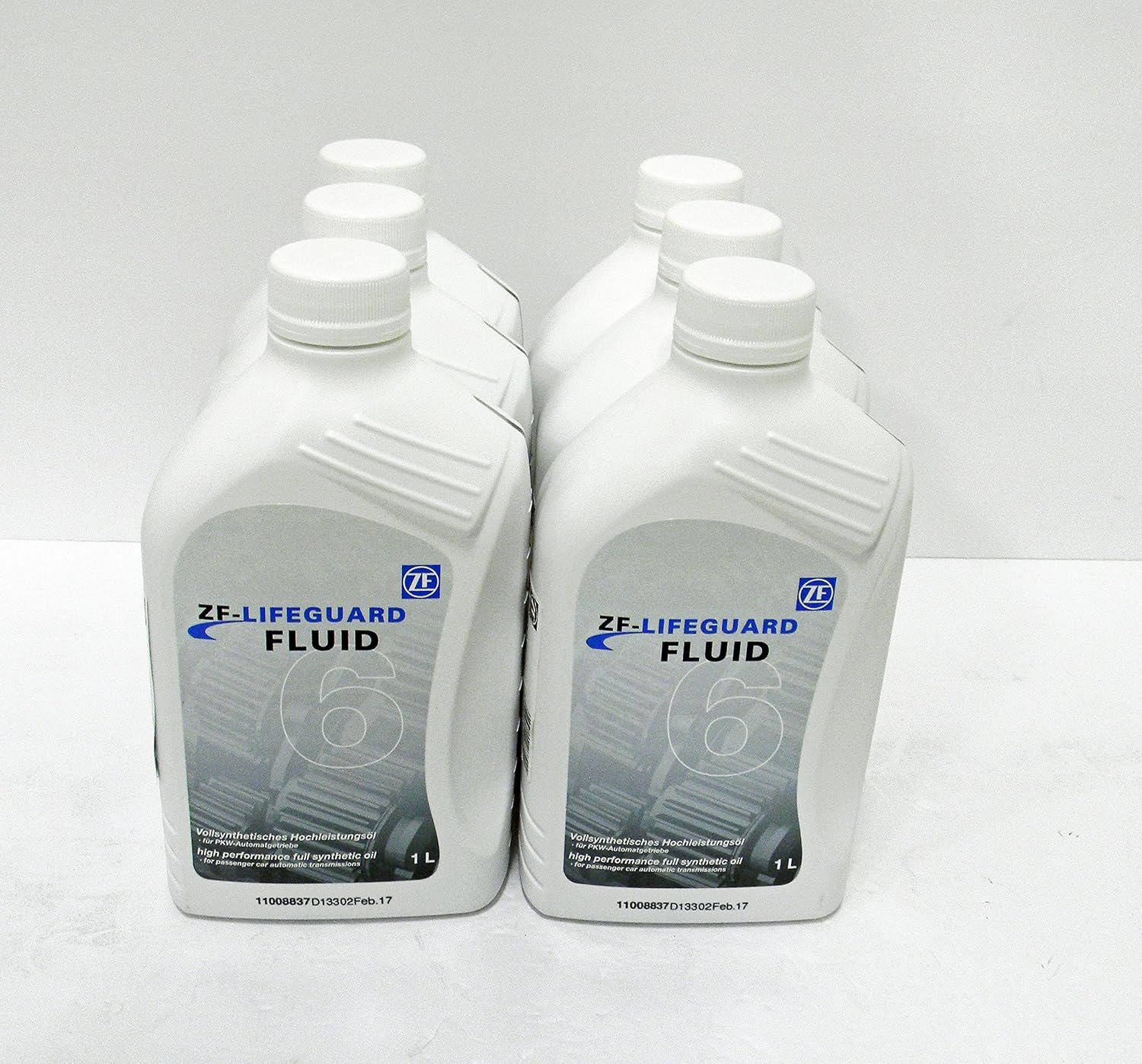
The common fix is a two-piece conversion kit that replaces the plastic pan with a separate steel pan and a separately replaceable filter, specifically so future services skip the engine-jacking step. Atlantic British's kit, for example, includes a steel sump pan, 7 liters of ZF LifeguardFluid 6, a new gasket, and a screw-in transmission sleeve, cross-referenced to OEM part numbers LR007474 (sump), LRN13754/TYK500050 (fluid) and TZV500010 (valve body sleeve). One install note worth keeping: before torquing new bolts into the case, run an M6 tap through each bolt hole to clear corrosion and debris, since a dirty thread will give a false torque reading on bolts this small.
While the Pan Is Down: The Mechatronic Guide Sleeve
ZF publishes a standalone bulletin just for the guide sleeve that seals the mechatronic unit's electrical connector, and the whole procedure assumes you already have the pan off for a fluid or filter service. The steps: disconnect the battery, release the bayonet catch on the electrical plug and pull it, remove the oil pan, release the sleeve's locking device and pull the old sleeve, lightly oil the new sleeve's seals with ZF LifeguardFluid, seat it, re-engage the locking device, reconnect the plug, then reinstall the pan to the torque spec from the table above.
This sleeve is the same TZV500010 part Land Rover techs replace as a matter of course in the conversion kit above, and for good reason: its O-rings harden with age and heat right next to the mechatronic unit, and a weep at that connector gets misdiagnosed as a pan gasket leak more often than it should. If the pan is already down for a filter change and the sleeve has any age on it, this is the point in the job to deal with it, not a second R&R later.
BMW's own bulletin on 6HP sealing sleeve seepage sets a useful bar: light oil wetness around the sleeve is not a reason to replace it, real fluid loss is. When you do fit one (BMW 24 34 7 588 725 on the affected BMW models), oil both O-rings, push the sleeve fully home before closing the locking tab, and confirm the harness connector sits no more than 3 mm from the case. A sleeve that is not seated can cause intermittent mechatronic communication faults, and forcing the connector can damage the mechatronic's connector pins beyond repair, per the bulletin summary in Vehicle Service Pros. For telling a sleeve leak from the other common 6HP leaks, see our ZF6HP fluid leak guide.
Filling It Right: No Dipstick
There is no dipstick on this transmission, and the level check is gated by fluid temperature, not a mark on a stick. ZF's fill procedure:
- Start the engine and confirm idle speed is in the 650-950 rpm range before doing anything else; outside that window, the fill cannot be set correctly.
- Fill with the prescribed ZF LifeguardFluid through the filler hole until it runs out.
- With the engine running, select R and D and cycle through the gears (hold each for roughly 3 seconds on most variants), engage the parking lock, then check the oil temperature.
- Between 30 and 35°C: open the filler screw and top off again until fluid runs out, then wait until the temperature reaches 40°C. Fluid must never exceed 50°C during this check.
- Once only single drops come from the filler hole, close the plug to the spec in the drain/filler table above.
Two failure modes come from skipping this gate: fill it cold and call it done, and the fluid overfills once it reaches operating temperature, pushing fluid out the vent and foaming the pump's intake. Check it above 50°C, and you will read it as overfull when it is actually correct, then drain good fluid back out. Either mistake gets blamed on "a bad transmission" when it is really a fill procedure that got rushed.
Capacity: Dry Fill vs. What a Pan Service Actually Recovers
Per ZF's own 6HP26A61 spare parts catalog, total dry-fill capacity on that variant runs 9.4 liters (10 quarts) plus 0.5 liter for the cooling system. A pan and filter service does not recover anywhere near that much, because fluid stays trapped in the torque converter and parts of the valve body regardless of how the pan is drained; expect roughly 5 to 7 liters back on a routine service. Buy accordingly: a single 5-quart bottle undershoots even a pan-drop refill, and a dry fill after a rebuild or converter swap needs two.
Fluid grade is its own variable worth a 10-second check before you buy. ZF's List of Lubricants TE-ML 11 assigns standard LifeguardFluid 6 to most of the family, but carves out exceptions by application code, not model number; our ZF6HP fluid type and capacity guide breaks out exactly which codes need the 6 Plus or 8 grade instead.
ZF6HP pan and filter kits, LifeguardFluid 6, and the solenoid and valve body parts for when the pan tells you there is more going on — shipped fast from the USA.
Shop ZF6HP parts →Related guides
- ZF6HP Fluid Type and Capacity
- ZF6HP Fluid Change Cost: What You're Actually Paying For
- ZF6HP Limp Mode: Causes and How to Diagnose It
- ZF6HP Torque Converter Shudder: Diagnosis and Fix
- ZF6HP vs ZF8HP: Differences, Interchange & Which Is Stronger
FAQ
What torque do I use on a ZF6HP transmission pan?
It depends on what the pan is made of, not which 6HP code you have. ZF's own service bulletin for the 5HP/6HP oil change kit lists 4 Nm plus a 45-degree turn for an aluminum pan, 10 Nm for a plastic pan, and 12 Nm for a steel plate pan. Tighten crosswise from the center outward, and torque by hand with a calibrated wrench, never an impact gun, since these are small bolts threading into aluminum or plastic.
Does every ZF6HP have a separate, replaceable filter?
No. ZF's service bulletin draws a hard line by pan material: on an aluminum or steel-plate pan, the filter is a separate part you unbolt and replace on its own torque spec. On a plastic pan, the filter is molded in as one piece with the pan, so you replace the entire plastic pan and filter assembly together. Many Land Rover and early BMW units ship with the plastic one-piece design.
Why is the Land Rover ZF6HP26 pan service so much more work than a BMW's?
Because the stock Land Rover LR3, LR4 and Range Rover pan is the one-piece plastic design, and on those chassis the factory procedure calls for jacking the engine, loosening the mounts and removing the exhaust just to drop the pan, according to Atlantic British's technical writeup for its conversion kit. Aftermarket two-piece conversion kits swap in a steel pan with a separate, replaceable filter specifically to avoid that teardown on future services.
How do I set the fluid level on a ZF6HP with no dipstick?
ZF's fill procedure is temperature-gated. Add fluid until it runs from the filler hole, cycle the shifter through the gears with the engine idling, then check the oil temperature: between 30 and 35 degrees C, open the filler plug and top off again until it flows out, then wait until the temperature reaches 40 degrees C and only single drops come from the hole before closing the plug. The oil must never exceed 50 degrees C during this check, or the level reading is invalid.
Should I replace the mechatronic guide sleeve while the pan is down?
It is worth checking. ZF publishes a standalone service bulletin for replacing the guide sleeve that seals the mechatronic unit's electrical connector, and the procedure assumes the pan is already off: disconnect the connector, pull the old sleeve, lube the new one's seals with ZF LifeguardFluid, and reinstall before buttoning up the pan. If that sleeve's seals have hardened, it is a known source of a weep at the connector that a fluid service alone will not fix.
Sources
- ZF Friedrichshafen AG — Service Information 50145 EN, "Oil change kit for ZF 5HP/6HP automatic transmission" (03.2023). Backs the pan bolt torque by material (aluminum 4 Nm + 45°, plastic 10 Nm, steel plate 12 Nm), the filter-integrated-vs-separate split by pan type, the crosswise bolting sequence, the burned-smell/large-chip diagnostic flowchart, the 650-950 rpm idle check, the temperature-gated fill procedure (30-35°C check, 40°C target, 50°C ceiling), and the per-model drain/filler plug dimensions and torques. aftermarket.zf.com (PDF)
- ZF Friedrichshafen AG — Service Information 50324 EN, "Guide Sleeve Mechatronics for ZF Automatic Transmission 6HP" (09.2018). Backs the guide sleeve replacement procedure performed with the pan already off: disconnecting the bayonet electrical connector, releasing and replacing the sleeve, and lubricating its seals with ZF LifeguardFluid before reinstalling the pan. aftermarket.zf.com (PDF)
- ZF Services — 6HP26A61 Automatic Transmission Spare Parts Catalog (2008), Oil Capacity section. Backs the 9.4-liter (10 qt) total dry-fill figure plus 0.5 liter for the cooling system, used here as the reference point against pan-drop recovery volume. audiclub.fi (ZF Services PDF)
- ZF Friedrichshafen AG — List of Lubricants TE-ML 11, edition 01.10.2026 (current, supersedes all prior editions). Backs the per-application fluid grade assignment: ZF LifeguardFluid 6 (ZF No. S671 090 255) is the approved service fill for the 6HP19, 6HP19A, 6HP19X, 6HP21, 6HP21X, 6HP26, 6HP26X, 6HP26A61 (except Audi W12 applications), 6HP28, 6HP28X, 6HP28A61, 6HP32, 6HP32A and 6HP32X group, cross-referenced to Audi/VW, BMW, Bentley, Jaguar and Land Rover oil numbers. vs-protech-portal.mmm.azure.zf.com (ZF PDF)
- Atlantic British Ltd. (RoverParts.com) — Transmission Filter Service Kit technical product page, for Land Rover LR3/LR4/Range Rover (ZF 6HP26). Backs the one-piece plastic pan requiring engine-mount loosening and exhaust removal on the factory procedure, the steel-pan conversion kit contents, OEM reference part numbers LR007474, TZV500010, LRN13754 and TYK500050, the 7-liter service fill, and the M6 tap bolt-hole cleaning step. roverparts.com
- Vehicle Service Pros — "ZF Generation 1 and 2." Backs the model breakdown by generation (Gen 1: 6HP19/26/32; Gen 2: 6HP21/28/34), used to explain why hardware specs vary by exact application code rather than by family name alone. vehicleservicepros.com
- Vehicle Service Pros — "Leaky Bimmer" (July 2012), summarizing BMW's 6HP mechatronic sealing sleeve seepage bulletin. Backs the wetness-vs-real-leak criterion, sleeve part number 24 34 7 588 725, O-ring lubrication and full seating before locking, the 3 mm connector gap check, and the connector pin damage warning. vehicleservicepros.com