"It revs up and then catches" is how most customers describe it. You are mid-shift, the tach climbs a few hundred rpm faster than the car accelerates, and then the gear catches and the shift finishes late and soft. On a ZF6HP19, 6HP26 or 6HP32 — the six-speed behind most 2002-and-up BMWs, early Audis, Jaguars, Land Rovers, Astons and Ford's 6R60/6R80 cousins — that complaint has a short list of real causes, and the fix depends on catching which generation of valve body you are actually working on.
This is not the same complaint as torque converter clutch shudder, which is a steady vibration at light-throttle cruise. We cover that separately in our ZF6HP TCC shudder guide. Slipping and flare mean the transmission is losing clutch apply pressure somewhere, either in a specific circuit or across the board, and it gets worse, not better, if you ignore it.
Why This Transmission Slips Differently Than the One You Grew Up On
The 6HP26 was ZF's first production application of the Lepelletier gear train: a simple planetary with its sun gear fixed to the case, feeding a Ravigneaux gearset behind it. Per Transmission Digest's Shift Pointers history of the unit, that arrangement gets six forward speeds out of only five clutches — three input clutches and two brakes — and critically, there is no direct-drive gear and no freewheeling clutch of any kind in the box. Every single gear, including the ones that used to coast through on a one-way clutch, depends entirely on the electronic control system holding the right clutches at the right pressure.
That matters for diagnosis because it removes your fallback. On an older four-speed, a one-way clutch could mask a weak element in a gear that did not need active holding. On a 6HP, there is no masking: if a clutch is not getting full apply pressure, it slips in whatever gear calls for it, full stop. The three 6HP displacements share the same basic architecture at different torque ratings:
| Model | Max engine torque | Typical application |
|---|---|---|
| 6HP19 | 400 Nm (295 lb-ft) | Smaller BMW/Audi inline engines |
| 6HP26 | 600 Nm (444 lb-ft) | BMW 5/7-Series, Jaguar, Land Rover |
| 6HP32 | 750 Nm (555 lb-ft) | Higher-output V8/V10 applications |
Gear ratios run 4.171 in first down to 0.691 in sixth, per the same Transmission Digest history, and the torque converter clutch is designed to run in controlled micro-slip rather than a hard lockup, which is why a healthy 6HP always has a small amount of "slip" present — the problem is when that slip goes uncontrolled or shows up as a flare between gears instead of a steady cruise feel.
Identify Your Valve Body Before You Order Anything
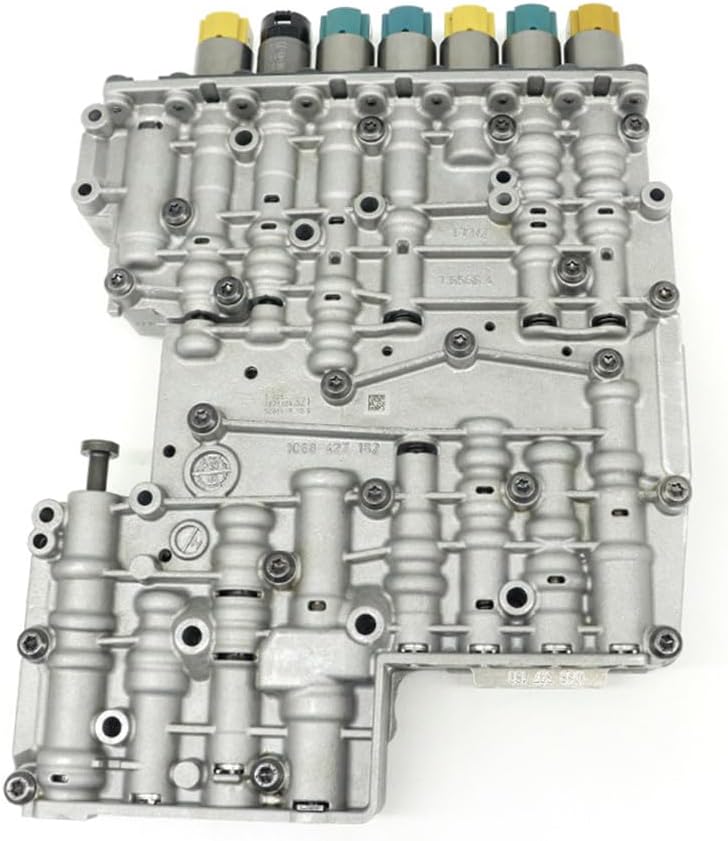
First-generation 6HP19/26/32 valve bodies are not interchangeable with the later, higher-torque-capacity Generation 2 ZF6HP21/24/34 units, and Transmission Digest's TASC Force Tips flag a third category that catches rebuilders off guard: a separator plate stamped A053 or B053, casting number 1068-327-189, most commonly found in 7-series BMWs. That plate shares most Gen 1 valve locations but mixes in a few Gen 2 features, and the pressure regulator sleeve measures differently from both. Treat it as its own thing. Pull the separator plate and read the stamped code before you buy a solenoid kit, a valve kit, or a complete valve body — a part built for the wrong generation will not seat correctly even though it looks like a match in a parts photo.
Cause 1: Wrong Fluid or Low Level
Check this first because it is free to rule out. ZF's 6-speed family runs on LifeguardFluid 6, an amber ATF, but ZF specifically requires the newer green LifeguardFluid 8 in the 6HP19A, 6HP19X, 6HP26A61 and 6HP28AF variants. Per ATRA's GEARS magazine coverage of ZF's fluid lineup, the friction behavior of each fluid is tuned to its transmission, and the practical risk of guessing wrong is not just shift quality: a service record showing the wrong color or spec fluid is itself grounds for a dealer to deny a warranty claim later, independent of whether the fluid actually caused the failure. Confirm the exact build code before you drain and fill, and check the level per ZF's hot/cold procedure rather than assuming a full pan means a full system — the torque converter and cooler lines hold fluid that a pan drain never touches, and a unit run low enough to slip will often show no other symptom until load goes up.
ZF's own oil change instructions (ZF Service Information 50145 EN, oil change kit for 5HP/6HP, 03.2023) spell out how to set the level so you are not guessing. With a scan tool reading transmission temperature, fill through the filler hole until fluid runs out, start the engine and fill again, cycle R and D and shift through the gears, then check at 30 to 35 °C: if nothing runs out of the filler hole the unit is low, so top up until it does, let it come up to 40 °C (never past 50 °C), and close the plug once only single drops come out. On versions with a thermostat valve, ZF says the fluid must reach at least 75 °C on the test drive so the valve opens, then cool and be rechecked at 35 °C. On BMW 6HP19/6HP21 units the filler plug is M18x1.5 (8 mm hex) at 35 Nm and the M24x1 drain plug (10 mm hex) takes just 8 Nm.
The same ZF sheet has a rule that matters for a slipping unit: if the drained fluid smells burned or has large chips or fragments in it, ZF says to abort the oil change because the transmission is defective. A fresh fill will not fix friction material that is already coming apart, and ZF's workshop guidance says to have it diagnosed instead. If the fluid comes out clean and the level was simply low, find the leak before you call it fixed.
ZF Lifeguardfluid 6 ATF, 6 Liter
The correct amber ATF for most 6HP19/26/32 applications. Confirm your build code is not one of the Lifeguard 8-only variants before ordering.
View the fluid →Cause 2: Bypass Clutch Control Valve Bore Wear
This is the single most common mechanical cause of slip-related complaints on Generation 1 6HP19/26/32 units, and Sonnax has built a specific fix around it. The bypass clutch control valve regulates torque converter clutch apply and release pressure. Per Sonnax's technical write-up, as the aluminum bore around that valve wears, the apply rate of the clutch slows down and the clutch's release pressure will not vent properly. The symptom set Sonnax lists is exactly what shows up on the service drive: torque converter clutch slip, firm shifts, cycling rpm, flare on shifts, and a converter that runs hotter than it should.
The correction is mechanical, not electrical: ream the worn bore back to tolerance and install an oversized valve. Sonnax's kit (part number 95740-13K) uses a hardcoat anodized aluminum valve that fits tighter to the bore than the factory part and has annular grooves to help it stay centered, which restores the factory apply and release rate without replacing the whole valve body. The important caveat is compatibility: this kit fits first-generation 6HP19/26/32 units (shared architecture with Ford 6R60/6R75/6R80/6R100) and is not compatible with the Generation 2 6HP21/24/34 — one more reason the valve body identification step above has to happen first.
Cause 3: Solenoid or Mechatronic Wear
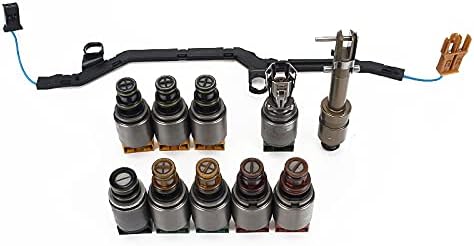
The Mechatronic unit on a 6HP combines the valve body's electronic control module with the transmission's speed and temperature sensors in one serviceable assembly; it cannot be serviced piece by piece. High-frequency solenoids inside it can wear internally, collect fluid contamination, or degrade electrically with heat and mileage, and when that happens the symptoms overlap heavily with a hydraulic valve problem: harsh or delayed engagement, flare on specific shifts, intermittent slip that worsens with heat, and stored fault codes once the control module can no longer compensate. Because Gen 1, Gen 2 and the "tween" 053-plate valve bodies carry different solenoid counts and connector layouts, match the solenoid kit or replacement valve body to the identification step above rather than ordering by vehicle year alone.
Cause 4: Worn Clutch Packs
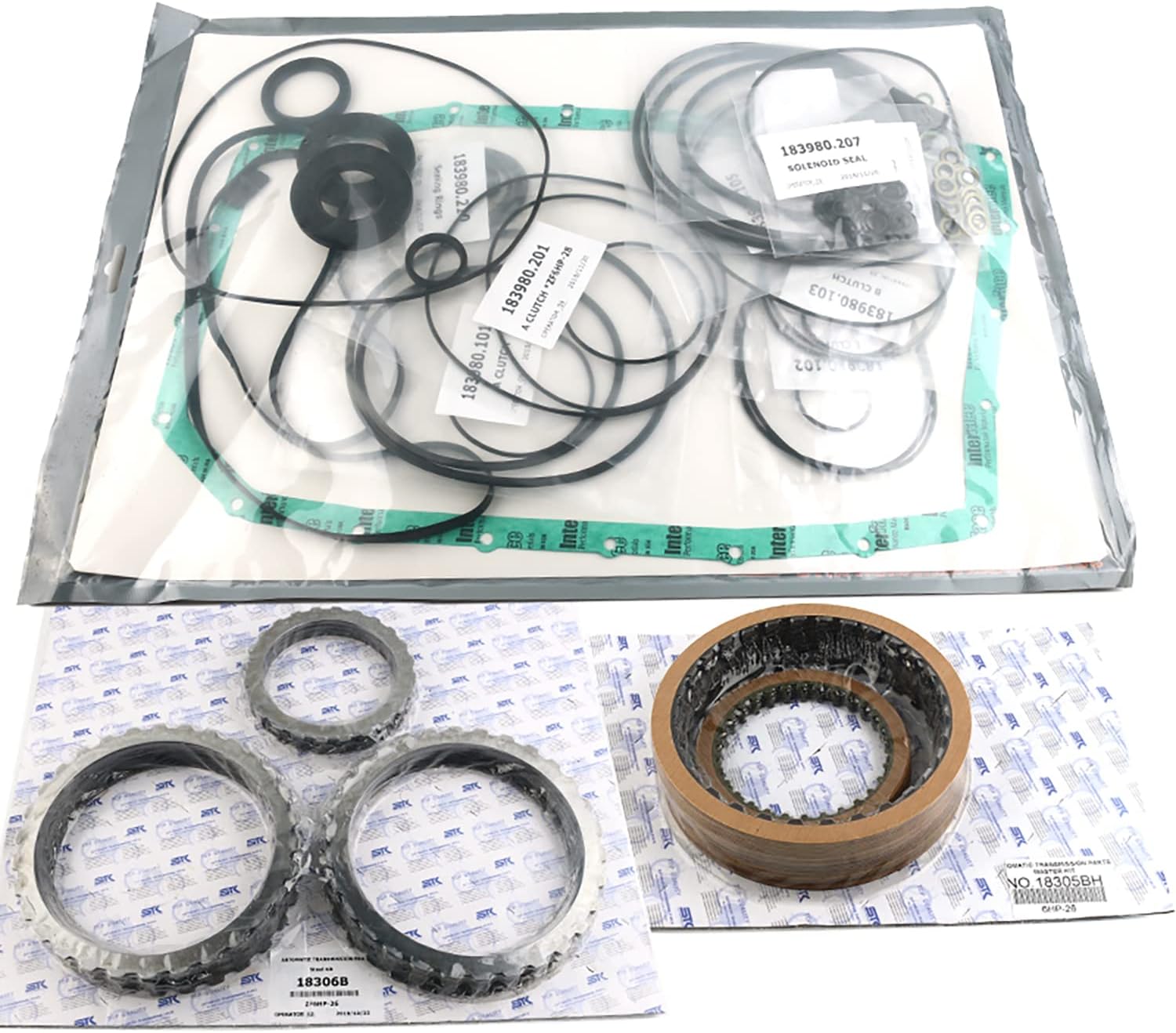
If the fluid is correct and full, the bypass clutch control valve bore tests fine, and a known-good Mechatronic still slips in a specific gear or two, the remaining answer is mechanical wear inside the clutch packs themselves — glazed friction material, a weak return spring, or a piston seal that will not hold pressure. Because this transmission has no freewheeling clutch anywhere in the gearset, a single worn clutch shows up as a flare in exactly the gear or gears that clutch controls, rather than a vague all-around softness. That is a rebuild, not a valve body swap, and it is the point where a master kit with the full clutch set earns its price over buying friction plates piecemeal.
The Order I Work It
- Pull codes and confirm fluid identity and level against the correct build code before touching anything mechanical.
- Road test and note exactly which gear(s) the flare happens in, and whether it is worse hot or cold.
- Pull the separator plate and identify Gen 1, Gen 2, or the 053-plate "tween" valve body before ordering any part.
- On Gen 1 units with TCC slip, firm shifts or a hot converter, vacuum test or inspect the bypass clutch control valve bore.
- If the hydraulics check out, scope the Mechatronic's solenoid commands against actual pressure response.
- If everything upstream is good and the flare is isolated to one or two gears, plan the rebuild around the clutch pack.
Worked in that order, you spend the diagnostic time once instead of replacing the Mechatronic first and finding the real problem in the valve body afterward.
Shop ZF6HP valve bodies, solenoid kits, rebuild kits with clutches and the correct ATF — shipped fast from the USA.
Shop ZF6HP parts →Frequently Asked Questions
Is ZF6HP slipping the same thing as torque converter clutch shudder?
No, and mixing them up sends you after the wrong part. Shudder is a steady, low-amplitude vibration at light throttle cruise, caused by the converter clutch's normal controlled micro-slip going unstable. Slipping or flare is the engine revving up without a matching increase in road speed, usually during a shift or under load, and it points at low fluid, a worn clutch pack, or a valve body problem serious enough to lose apply pressure. We cover shudder on its own in the ZF6HP TCC shudder diagnosis guide.
What fluid does a ZF6HP take, and does it matter which one?
Most 6HP19/26/32 units run ZF LifeguardFluid 6 (amber), but ZF requires LifeguardFluid 8 in the 6HP19A, 6HP19X, 6HP26A61 and 6HP28AF variants. Per ATRA's GEARS magazine, the fluid's friction behavior is tuned to the transmission, and a color or spec mismatch on a service record is grounds for a dealer to deny warranty coverage even if the fluid itself was adequate. Check your specific build before you drain and fill.
What causes torque converter clutch slip and overheating on a 6HP19/26/32?
On first-generation 6HP19/26/32 units, Sonnax documents a worn bypass clutch control valve as a common cause: the bore wears, the clutch applies too slowly and its release pressure will not vent fully, which shows up as TCC slip, firm shifts and a converter that runs hot. Sonnax's oversized valve kit 95740-13K reams the bore and restores the factory apply and release rate. It does not fit the later Generation 2 ZF6HP21/24/34.
How do I know if I have a Gen 1 or Gen 2 ZF6HP valve body?
Pull the separator plate and read its stamped code. Transmission Digest's TASC Force Tips identify a middle version, stamped A053 or B053 with casting number 1068-327-189, that shares Gen 1 valve locations with a few Gen 2 features mixed in, most commonly found in 7-series BMWs. Ordering a Gen 1 or Gen 2 kit for this valve body will not fit correctly, so identify the plate before you buy anything.
Sources
- Transmission Digest — Niel Speetjens (ATSG), "Shift Pointers: ZF 6HP Theory and Principles of Operation." Backs the Lepelletier gear train description (simple planetary with the sun gear fixed, feeding a Ravigneaux set), the five-clutch (three input clutches, two brakes) design with no direct drive and no freewheeling clutch, the gear ratios (4.171 to 0.691), and the torque ratings for 6HP19 (400 Nm/295 lb-ft), 6HP26 (600 Nm/444 lb-ft) and 6HP32 (750 Nm/555 lb-ft), plus the Mechatronic's combined hydraulic/electronic design and its controlled-slip converter clutch. transmissiondigest.com
- Transmission Digest — TASC Force Tips, "ZF 6HP Valve Body Identification." Backs the Generation 1 (6HP19/26/32) versus Generation 2 (6HP21/28/34) valve body distinction, the A053/B053 separator-plate "tween" valve body with casting number 1068-327-189 found most often in 7-series BMWs, its mix of Gen 1 valve locations with some Gen 2 features, and the differing pressure regulator sleeve dimension used to identify it. transmissiondigest.com
- Sonnax — Oversized Bypass Clutch Control Valve Kit 95740-13K product page. Backs the bypass clutch control valve's role regulating TCC apply/release pressure, bore wear slowing clutch apply and preventing release pressure from venting, the resulting symptom set (TCC slip, firm shifts, overheated converter), the oversized hardcoat-anodized valve correction, and compatibility limited to first-generation 6HP19/26/32 and Ford 6R60/6R75/6R80/6R100, excluding Generation 2 6HP21/24/34. sonnax.com
- ATRA GEARS Magazine — "ZF ATF: What Color Is Your ATF?" Backs the ZF Lifeguard fluid family (Lifeguard 6 amber, Lifeguard 8 green), the requirement for Lifeguard 8 in the 6HP19A, 6HP19X, 6HP26A61 and 6HP28AF variants, the friction behavior being tuned per transmission, and the warranty-denial risk from a fluid color/spec mismatch on the service record. gearsmagazine.com
- ZF Friedrichshafen AG — Service Information 50145 EN, “Oil change kit for ZF 5HP/6HP automatic transmission,” 03.2023. Backs the fill and level-check procedure (30 to 35 °C check, 40 °C settle, 50 °C maximum), the 75 °C test-drive requirement on thermostat-valve versions, the BMW 6HP19/6HP21 filler plug (M18x1.5, 35 Nm) and drain plug (M24x1, 8 Nm) torques, and the instruction to abort the oil change when the fluid smells burned or carries large chips. aftermarket.zf.com (PDF)
- ZF Aftermarket — “How to Change the Transmission Oil on a Passenger Car” (workshop tips). Backs the advice to contact a ZF service center rather than refill when drained oil smells burned or contains metal, and the shorter change intervals for towing, high-speed and sporty driving. aftermarket.zf.com
Shop ZF6HP parts →