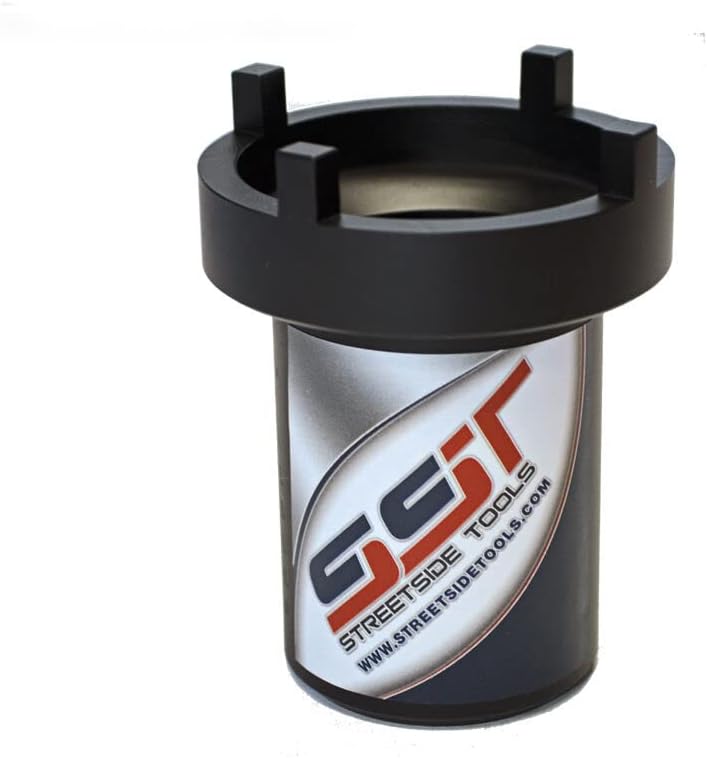
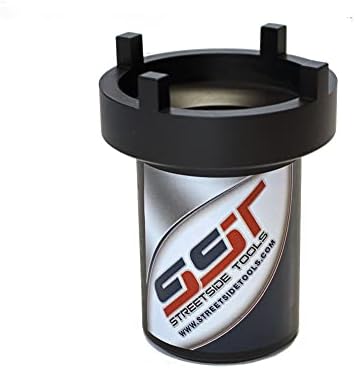
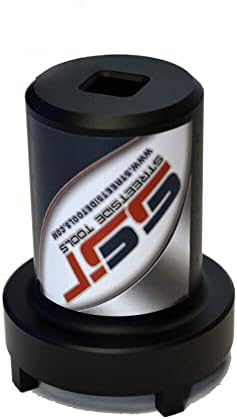
The output shaft retaining nut on an Allison LCT 1000 is a four-slot castellated nut, not a hex. There is no way to get a normal socket or wrench on it. Most shops end up beating it around with a punch and hammer, which chews the slots, distorts the nut, and makes it impossible to set the nut back to a real torque value on reassembly. This spanner socket engages all four slots at once on a 1/2 inch square drive, so a breaker bar takes it off and a torque wrench puts it back on.
Fits the Allison LCT 1000, 2000 and 2400 series 5-speed and 6-speed units used behind the Duramax in 2001 and up GM 2500HD and 3500 trucks, plus the same family in medium-duty chassis. You will need it any time you pull the output shaft, replace the rear seal or extension housing, or split the case for a rebuild, because that nut has to come off before the shaft comes out.
Bench use is straightforward: hold the output shaft with a shaft-holding fixture or the transmission in gear, drop the spanner over the nut so the four lugs seat fully in the slots, and break it loose with a 1/2 inch breaker bar. On the way back together, seat the socket the same way and pull the nut to the Allison spec for the year and model you are working on. Because the lugs share the load across all four slots, the nut face stays flat and reusable.
Carbon steel body with a black oxide finish. Roughly 5 inches long and 2.5 inches across, so it stores in a normal socket drawer rather than a dedicated case.