A 47RE behind a 5.9L Cummins lives a harder life than the same transmission behind a gas V8. The diesel makes its torque low and all at once, the truck usually has a trailer on it, and a lot of second-gen 2500s have had fuel added since they left the dealer. When one of these trucks comes in with "it slips," the job is to find out which apply element is letting go and why, before anybody quotes a rebuild that does not fix the cause.
This guide is specific to the 1998.5-2002 24-valve and the 1996-1998 12-valve Ram 2500 trucks that carry the 47RE. For the general 47RE slip list on any chassis, see our 47RE slipping causes and fix guide. Here we work it the way a Cummins truck needs it worked: map the slip to a gear, prove pressure, check heat and flow, and only then pull the unit.
What Is Actually Slipping: The 47RE Apply Chart
The 47RE is a TorqueFlite three-speed with a bolt-on overdrive unit at the back. That layout tells you most of what you need, because every slip complaint maps to the element that is holding in that range:
- Rear (forward) clutch: applied in every forward gear. If it slips, you will feel it in more than one forward gear.
- Overrunning clutch (low sprag): holds in first. A slip in first in Drive that goes away in manual 1 points here.
- Front (kickdown) band: holds second. Slip on the 1-2 shift or flare on a 3-2 kickdown points at the band, its adjustment, or its servo.
- Front (direct) clutch: applies in third, fourth and Reverse. Slip in third and Reverse points here.
- Rear (low-reverse) band: holds in manual 1 and Reverse.
- Overdrive clutch: applies only in fourth. Slip on the 3-4 shift or only in fourth is this pack.
- Overdrive direct clutch: applied by a large spring, in every range except fourth. When it fails you lose Reverse and you lose engine braking in manual 2 and 1.
That last one surprises people. TransGo's literature on the overdrive direct clutch spring lists exactly that symptom set: slip or no Reverse, reduced or no coast braking in manual 2nd or 1st, and burnt overdrive direct clutch plates. The spring that applies the pack fades with heat and clamping force drops.[1] On a Cummins truck that tows, that spring sees a lot of heat.
Step 1: Road Test and Write Down the Gear
Do not skip this. "It slips" means nothing until you know the range and the load. Drive it with a scan tool showing input and output speeds if you have one, or a tach and a speedometer if you do not, and note:
- Does it slip in first in Drive, but hold in manual 1? Overrunning clutch.
- Does it flare on the 1-2 shift or slip in second under load? Front band, servo, or band adjustment.
- Does it slip in third and in Reverse? Front clutch.
- Does third hold fine but it flares on the 3-4 or slips in fourth pulling a grade? Overdrive clutch.
- Does Reverse slip and the truck coast freely in manual 2 with no engine braking? Overdrive direct clutch and its spring.[1]
- Does rpm climb only at cruise with lockup commanded, and drop when you tap the brake? That is converter clutch slip, which is a different problem (covered below).
A road test points at the element. It does not tell you why that element is slipping. Low line pressure, a cross-leak, a worn seal or a cooked clutch pack all feel the same from the driver's seat, which is why the next steps are pressure and flow checks.
Step 2: Fluid, Level and Band Adjustment
Check the level hot, in Neutral, on level ground. The factory fluid is Mopar ATF+4 (Chrysler MS-9602 / Type 9602). The 2001 Ram service manual lists a 3.8 L (4.0 qt) service refill and 14-16 L for a dry fill, and notes the dry number changes with the cooler and line routing, so set the final level on the dipstick, not by the jug count. Smell and look at what comes out. Black, burnt fluid with friction material in the pan means a pack has already been cooked and a band adjustment will not bring it back.
Bands are part of maintenance on this unit and they get skipped. The service manual procedure for the front band is tighten the adjuster to 72 in-lb and back it off 1-7/8 turns; the rear band is 72 in-lb and back off 3 turns. A loose front band is a classic soft or slipping 1-2 and a flared kickdown on a truck that otherwise drives fine.
Step 3: Prove Line Pressure, Then Governor Pressure
Here is the part that makes the 47RE different from the 48RE that replaced it. The 47RE has no electronic line pressure control. As the GEARS article on a 1999 Ram 2500 Cummins notes, the 47RE uses a governor pressure solenoid rather than a line pressure control solenoid.[2] Line pressure comes from the pump and the pressure regulator, and it is raised with throttle by the throttle valve (TV) cable. That means two very ordinary things can cause a slip that looks like a hard-parts failure:
- A misadjusted or binding TV cable. If the TV system thinks the throttle is closed while the driver is in it, line pressure stays low under load and the clutches slip and burn. Check that the cable moves freely and is adjusted per the service manual before any pressure test.
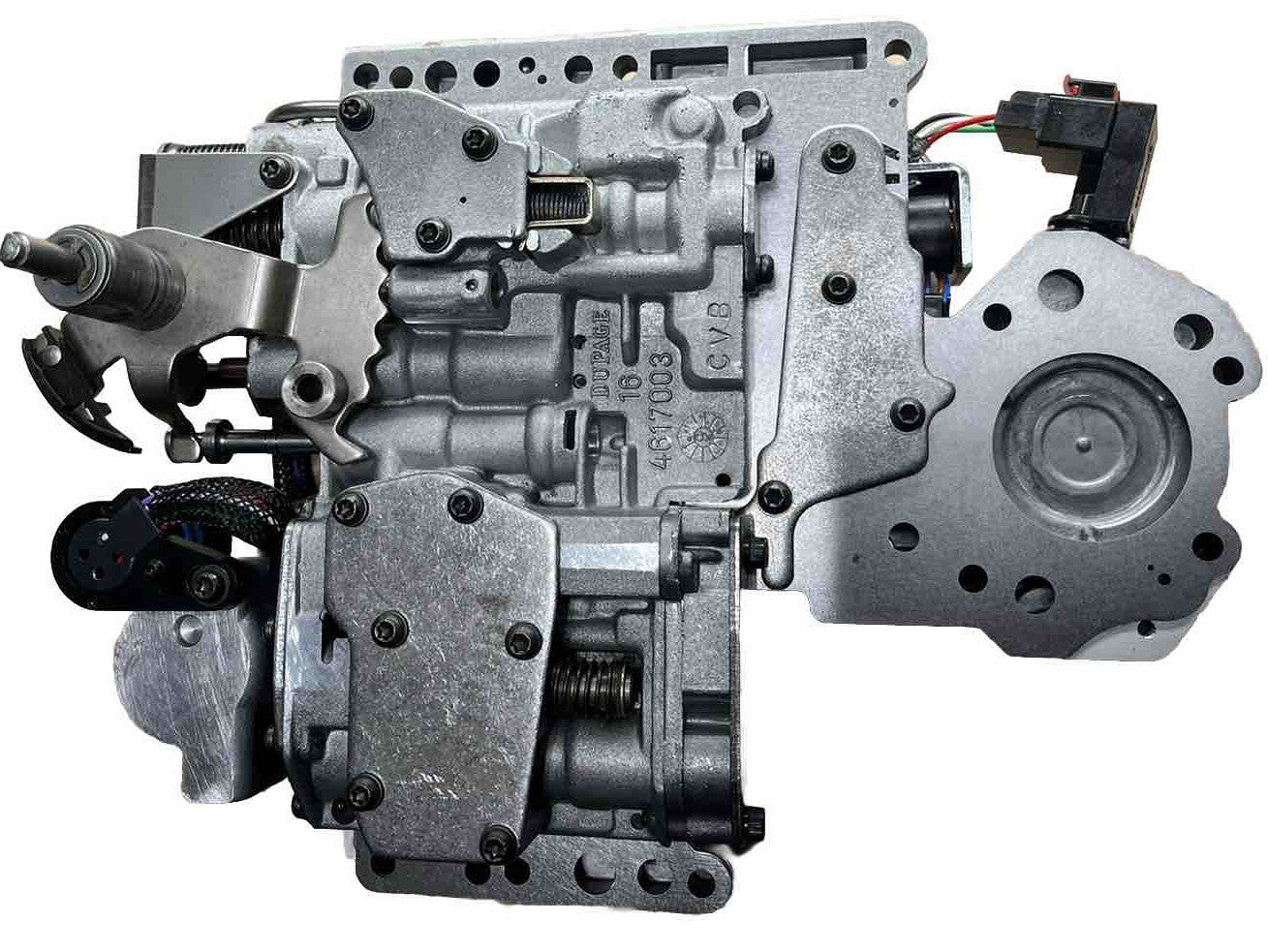
- A worn pressure regulator bore or a cross-leak. Sonnax's comparison of the RE valve bodies is useful here: on the 46/47RE the regulator only raises line pressure about 10-15 psi in third with the converter clutch on and in fourth, while the 48RE raises it about 22-28 psi in the same conditions. Sonnax also notes that a 46/47RE valve body installed in a 48RE often works at first but can lead to a failed converter clutch or overdrive clutch after time on the road.[3] Read that the other way: the 47RE's overdrive and lockup clamping margin was always thin for Cummins torque, so any pressure loss shows up as an overdrive or lockup slip first.
Put a gauge on the line pressure tap and compare to the service manual chart for your year at the specified rpm and TV position. Then check governor pressure, because a governor problem is the most common thing customers call "slipping" when it is really a shift timing complaint.
Dave Skora's GEARS troubleshooting article gives the numbers: governor pressure should be zero at a stop and rise about 1 psi per mph up to about 40 mph, after which mainline is routed to the governor port. His procedure is to compare three values on a drive: Governor Desired (what the PCM is commanding), Governor Measured (the transducer signal) and a gauge on the governor port. All three should agree. The transducer reads roughly 0.60-0.66 V at zero psi, about 3.0 V at 60 psi and about 4.5 V at 110 psi.[4] His key line for this job: if governor pressure is okay, look for a transmission problem such as sticking shift valves or burnt clutches.[4] In other words, a good governor reading moves the slip complaint firmly onto the hydraulics and the clutch packs.
Step 4: Heat, Cooler Flow and Converter Clutch Slip
On a tow truck, a lot of "slipping at highway speed" is the converter clutch, not a clutch pack. Watch engine rpm against output speed with lockup commanded. If rpm wanders up a couple hundred while the PCM says lockup is on, you have TCC slip.
Sonnax's write-up on 46/47RH-RE cooler and converter flow lists TCC slip at high torque, delayed engagements, slow converter fill, excessive stall speed and 740/1740 codes as symptoms of restricted flow, and names cooler restriction as the most common issue. Restriction becomes a problem as head pressure approaches about 80 psi, and the test is to bypass the cooler circuit temporarily and retest; if the complaint goes away, the restriction is in the cooler circuit.[5] On a second-gen Cummins that means the radiator tank cooler, any aftermarket auxiliary cooler, and the lines. A plugged cooler also starves lube, so a truck that has lived with one usually has a hot, glazed overdrive pack by the time it slips.
A cross-leak at the front of the unit does the same thing to apply oil. In the GEARS case study on a 1999 Dodge 2500 with the 5.9L Cummins and 47RE, the root cause of a lockup-related stall was a warped stator support on the pump. An air test on the front clutch circuit showed air coming out of both converter passages.[2] The author checked pump flatness with a flat file and confirmed with compression film or Plastigauge. If you are chasing a front clutch or lockup slip that keeps coming back, air-check the circuits and look hard at the pump before you blame a converter.
Step 5: Added Fuel and the Input Shaft
Ask about the tune. A 2500 with injectors, a box or a programmer will slip and break parts that a stock truck never touches. Sonnax describes input shaft failure in Dodge diesel transmissions as legendary, lists spline twist, shaft breakage and clutch hub failure on the OE two-piece shaft, and says the OE design is barely suitable for stock applications.[6] A twisted spline at the front clutch hub can present first as a slip in third and Reverse before it lets go completely.
Sonnax's upgrade parts for the 47RH/RE and 48RE are the 22121B-01 heavy duty input shaft (1994-later units with the 1.245 in. sealing ring), the 22121B-02K Smart-Tech input shaft and piston kit, and the 22121B-08K big input shaft kit for converters with a 35-spline turbine hub.[6] If the truck makes more power than stock and you are already in the front of the case, quote the shaft. Putting a stock shaft back into a truck that twisted one is selling the same job twice.
The Fix: Matching the Repair to What You Found
- Low level or wrong fluid, no debris: correct the fluid with ATF+4, adjust both bands, re-test. If it holds, you caught it early.
- TV cable out of adjustment or binding: fix the cable, then check whether it has already cooked a pack. A short drive that still flares on the 3-4 means the overdrive clutch is done.
- Reverse slip with no coast braking: overdrive direct clutch. Replace the frictions and steels, and replace the apply spring with an upgraded high-temp spring. TransGo lists its TFOD-SP as a direct replacement for OEM 4461027 that fits 1988-on TorqueFlite overdrives including the 47RE, and lists it as not requiring transmission removal.[1]
- 3-4 flare or fourth-gear slip: overdrive clutch pack. Check line pressure first; on a 47RE with a worn regulator or leaking overdrive piston seals, a new pack alone will burn again.
- Converter clutch slip at cruise: cooler flow test and bypass, then valve body (regulator and switch valve bores), then pump cross-leak, then the converter.[2][5]
- Slip in multiple ranges, burnt fluid, debris: rebuild. On a Cummins 2500 that means new frictions and steels in every pack, all seals, both bands, a valve body that has had its regulator and switch valve bores addressed, and an input shaft matched to the power level.
Prevention on these trucks is simple and mostly ignored: ATF+4 and a filter at the service interval, both bands adjusted at every service, a cooler that actually flows, and a transmission temperature gauge for anybody who tows. The 47RE does not like heat, and nearly every slip I see on a 2500 Cummins started with heat.
For fill and filter details, see the 47RE fluid type and capacity guide, and keep the transmission fluid spec chart handy for the rest of the fleet.
47RE master rebuild kits, clutch modules, valve bodies and solenoids for the 1996-2002 Ram 2500 Cummins — shipped fast from the USA.
Shop 47RE parts →Shop the part for this fix
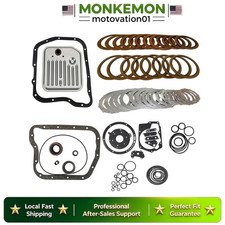
When the road test and pressure checks say the packs are burnt, the 1990-2002 RE overhaul kit covers the seals, gaskets and frictions a 47RE needs to go back together right.
Shop the 90-02 overhaul kit → All RE-series partsFAQ
Why does my 47RE slip in Reverse but drive fine forward?
Reverse uses the front clutch, the rear band and the overdrive direct clutch. If Reverse slips and the truck also has no engine braking in manual 2 or 1, the overdrive direct clutch and its apply spring are the usual cause. If coast braking is normal, check the front clutch and the rear band adjustment.
What makes a 47RE slip going into overdrive on a Cummins?
A flare on the 3-4 shift or slip only in fourth is the overdrive clutch. The 47RE regulator only raises line pressure about 10-15 psi in fourth, so low line pressure from a misadjusted TV cable, a worn regulator or leaking seals shows up there first under Cummins torque.
Can a bad governor pressure solenoid cause slipping on a 47RE?
It mostly causes shift timing problems such as no upshift or third-gear starts, which drivers often describe as slipping. Governor pressure should be zero at a stop and rise about 1 psi per mph up to about 40 mph. If it reads correctly on a gauge, the slip is in the hydraulics or the clutch packs.
Will a fluid change fix a slipping 47RE?
Only if the level was low or the fluid was wrong and no pack is burnt yet. Refill with ATF+4, set the level hot on the dipstick and adjust both bands. If the fluid comes out black with friction material in the pan, the slipping element is damaged and needs to be rebuilt.
How do I know if it is the torque converter clutch slipping and not the transmission?
Watch engine rpm against output speed with lockup commanded at cruise. If rpm creeps up while the PCM says lockup is on, it is converter clutch slip. Test cooler flow and bypass the cooler first, since restriction is the most common cause of TCC slip on these units.
Related 47RE guides
Sources
- TransGo — TFOD-SP High-Temp Overdrive Direct Clutch Spring, technical product page. Backs the overdrive direct clutch spring function, its fade under heat, the slip/no-Reverse and no-coast-braking symptoms, burnt overdrive direct plates, fitment to 1988-on TorqueFlite overdrives including the 47RE, OEM 4461027 replacement, and no transmission removal required. transgo.com
- ATRA GEARS Magazine — "A Dead Stop: A Typical Dodge 47RE Problem with an Unexpected Solution." Backs the 47RE using a governor pressure solenoid rather than a line pressure control solenoid, the 1999 Ram 2500 5.9L Cummins case, the cooler flow and valve body checks, and the warped pump stator support cross-leak found by air testing the front clutch. gearsmagazine.com
- Sonnax Tech Resources — "Dodge 48RE Hydraulic Features Revealed." Backs the 46/47RE line pressure rise of about 10-15 psi in third with TCC on and in fourth versus 22-28 psi on the 48RE, and the note that a 46/47RE valve body in a 48RE can lead to TCC or overdrive clutch failure. sonnax.com
- ATRA GEARS Magazine, October 2006 — "Troubleshooting the 42-47RE Transmissions," Dave Skora. Backs governor pressure at zero stopped and about 1 psi per mph to about 40 mph, the Desired/Measured/gauge comparison, the transducer voltages, and "if governor pressure is okay, look for sticking shift valves or burnt clutches." atracom.blob.core.windows.net (PDF)
- Sonnax Tech Resources — "46-47RH/RE Cooler and Converter Flow," Bob Warnke. Backs TCC slip at high torque and 740/1740 codes as restricted-flow symptoms, cooler restriction as the most common issue, the roughly 80 psi head pressure threshold, and the cooler bypass test. sonnax.com
- Sonnax Tech Resources — "Dodge Diesel Input Shaft Upgrades for Every Performance Level." Backs the OE two-piece input shaft's spline twist, breakage and clutch hub failures, and the 22121B-01, 22121B-02K and 22121B-08K upgrade parts. sonnax.com
Fluid type, refill and dry-fill capacity and band adjustment figures are from the Chrysler 2001 Dodge Ram Truck (BR/BE) Service Manual, transmission section 21 (47RE specifications and fluid service), as cited in our 47RE fluid guide.