The 47RE is the four-speed automatic that most second-generation Ram 2500 Cummins trucks left the factory with. Wayne Colonna of ATSG puts it plainly: the 1998 to mid-2003 5.9L 24-valve trucks that carry both a PCM and a separate engine controller (ECM) use the 47RE, and the package changed to the 48RE during 2003.[1] The 1996 to early-1998 12-valve trucks with the mechanical injection pump run a 47RE too. Same transmission, very different inputs, and that difference is why a 2500 Cummins 47RE gets misdiagnosed so often.
This post is not the general 47RE failure list. That lives in our 47RE common problems guide. This is the short list of complaints that actually bring a 1996-2002 Ram 2500 Cummins through the door, in the order I check them, with the test that separates each one from the others.
First, Figure Out Which Cummins You Have
Before anything else, write down which engine is in front of the transmission. It decides where the 47RE gets its throttle information, and on this transmission throttle information is half of every shift decision.
- 1996 to early 1998, 12-valve: mechanical injection pump. The throttle position sensor rides on the pump and is driven by the throttle linkage. The transmission computer reads it directly.
- 1998.5 to 2002, 24-valve: electronic injection pump. The driver's pedal is an accelerator pedal position sensor (APPS) wired to the Cummins ECM. The ECM then builds a throttle position signal and passes it to the PCM, which runs the 47RE. Two computers, one throttle signal, and a wire between them.[1]
- 2003: a changeover year. Colonna notes that in 2003 the PCM was eliminated and the engine controller took over, and that the shuttle complaint dropped considerably once it did.[1] Read the transmission tag before ordering parts on a 2003.
The mechanical side of the transmission is the same across all of these. The electronics feeding it are not, and the most common 24-valve complaint is electrical, not hydraulic.
Problem 1: Lockup and Overdrive Cycling at Cruise (the 24-Valve Shuttle)
The complaint: the truck gets up to cruising speed and the converter clutch starts a rhythmic apply and release, or the transmission hunts between 3rd and 4th. Put a scan tool on it and you will see the computer is commanding it. Nothing is slipping. The PCM is reacting to something it believes.
The Motor Age list of causes for TCC/OD cycling on RE-series trucks runs to 27 items, and five of them apply only to the 24-valve diesel: the PCM's sensitivity to throttle signal noise from the ECM, lift pump interference, a faulty ECM, a loose or poor ECM connector, and an APPS that needs a relearn.[2] Colonna names the noisy TPS signal sent from the ECM to the PCM as the usual culprit on the 1998-2003 trucks, and notes that factory bulletin 18-02-99 called for a PCM re-flash that usually calmed it down.[1] He is also clear that the re-flash and the add-on noise filters compensate for the noise; they do not remove its source.
How I work a shuttle on a 24-valve
- Unplug the scan tool and drive it. A generic scan tool hanging on the bus is on the Motor Age list as a cause in its own right. Confirm the complaint exists without it.[2]
- Batteries and grounds first. Voltage drop test both cables. A negative cable bolted to a painted spot on the block, dirty terminals, or a cable end that is loose on the post all show up here.[1][2] These trucks have two batteries, so test both.
- Rule out the alternator. Alternator noise affects both diesel and gas RE trucks. The published test is to disconnect the alternator's battery feed wire and drive it; if the cycling stops, you have found your noise.[2]
- APPS ground and relearn. The APPS terminal 4 ground circuit is known to get compromised and put noise on the signal. The relearn is simple: key on, engine off, push the pedal to the floor, release it slowly once, then key off before starting.[2]
- ECM connector and lift pump. Check pin fit at the ECM connector and look at the lift pump, which is on the 24-valve list as an interference source.[2]
- Then the shared items. Brake switch, low coolant, a faulty ECT sensor, an engine that runs too cool, the transmission temperature sensor, an erratic vehicle speed signal, the early three-prong park/neutral switch, and a restricted fuel filter all apply to every RE truck.[2]
Only after all of that is ruled out does the TCC solenoid itself come up. On a 12-valve truck the list is shorter but different: worn TPS cam or bushings on the injection pump, and worn plastic throttle rod ball joints. The Motor Age list cites steel throttle rods under part number 5011959AB as the replacement for the plastic ones.[2]
Problem 2: No Upshift, or It Starts in Third
This one is hydraulic first and electronic second. As Dave Skora explains in GEARS, the 47RE is basically a hydraulically controlled transmission through its first three gears. Governor pressure strokes the shift valves, the same as a TH350 or a C-4. The electronics only create that governor pressure, using a duty-cycled solenoid.[3]
The spec to remember: governor pressure is zero at a stop and rises about 1 psi per mph up to about 40 mph. Above roughly 40 mph the system routes mainline pressure to the governor port, so the reading stops tracking road speed.[3] The 2001 Ram service manual allows 0-1.5 psi with the truck stopped.
Skora's procedure is to install a gauge in the governor pressure port, connect a scan tool, drive the truck, and compare three numbers: Governor Desired pressure (what the computer is asking for), Governor Actual (what the transducer reports) and the gauge reading. All three should match.[3]
- All three match and rise correctly: the electronics are fine. Look for sticking shift valves or burnt clutches.
- No Desired signal: the computer does not think the truck is moving. Check the output shaft speed sensor and its wiring.
- Desired is fine, but no Actual or gauge pressure: governor solenoid, or a blockage feeding it.
- Third-gear starts: in limp mode the computer de-energizes the governor solenoid, which opens it fully and puts mainline pressure in the governor circuit. Check case connector pin 1, which supplies power to the transmission solenoids and should have system voltage with the key on. Losing it puts the system in limp.[3]
- Governor pressure in Park, Reverse or Neutral: there should be none in those ranges. Pressure there means a crossleak in the case, valve body or governor body. Skora calls a loose or warped governor body a common problem.[3]
For the transducer itself, Skora's voltage chart lists roughly 0.60-0.66 V at zero psi, about 3.0 V at 60 psi and about 4.5 V at 110 psi. If Governor Actual reads above 105 psi at wide-open throttle in 3rd or 4th, suspect high line pressure or a bad transducer.[3] His chart is published for the gas-engine PCM, so use it for the transducer voltages, not the PCM pin numbers, on a diesel.
Problem 3: Heat, Converter Slip and Lockup Codes
A Cummins 2500 that tows makes heat, and the 47RE's converter circuit is where heat shows up first. Sonnax's write-up on 46/47RH-RE cooler and converter flow names cooler restriction as the most common issue in this circuit, and lays out the bypass and flow checks for it.[4]
Ed Lee's Transmission Digest article on Chrysler 740/1740 codes makes the important point: the TCC slip code does not mean the converter is bad. Cooler restriction, the wrong fluid, and valve body or pump leaks all set it. He also gives the converter-to-flexplate clearance to check on installation, 0.125-0.250 inch.[5] If a 2500 comes in with a converter code and a history of "new converter, same problem," check cooler flow before you order another one.
The truck will also protect itself. Per the 2001 Ram service manual, above about 260 F the PCM forces a 4-3 downshift, applies the converter in 3rd and lights the O/D OFF lamp, and fourth returns at about 230 F. A driver who reports "it drops out of overdrive and the light comes on when I pull a hill" may be describing a hot transmission, not a failed one.
Problem 4: Input Shaft and Clutch Failure Behind an Added-Fuel Truck
A lot of second-gen 2500s have been turned up, and the 47RE input shaft is the weak link the first time someone adds fuel. Sonnax describes the OE two-piece input shaft design as having problems with spline twist, shaft breakage and clutch hub failure, and calls it barely suitable for stock applications.[6]
The upgrade path Sonnax lists for 47RH/RE and 48RE:[6]
- 22121B-01 heavy-duty input shaft (1994-later units with the 1.245 in. sealing ring)
- 22121B-02K Smart-Tech input shaft and piston kit
- 22121B-08K Smart-Tech big input shaft kit, which requires a converter fitted with a 35-spline turbine hub
If the truck has a tuner or bigger injectors and came in with no movement, ask about the tune before you quote a stock rebuild. Putting a stock shaft back in a truck that broke one is quoting the same job twice.
Problem 5: The Service Was Done Wrong
Plenty of 47RE complaints follow a "routine" service. The 2001 Ram service manual specifies Mopar ATF+4 (Type 9602), a 3.8 L (4.0 qt) service refill, and 14-16 L for a dry fill, with the note that dry fill changes with cooler type, line length and any auxiliary cooler. Set the final level on the dipstick hot, not by a number.
The bands are part of the service on this transmission and they get skipped. The manual's front band procedure is 72 in-lb then back off 1-7/8 turns; the rear band is 72 in-lb then back off 3 turns. A loose front band shows up as a soft or slipping 2-3 or kickdown complaint that no amount of new fluid fixes.
Triage Order for a 1996-2002 Ram 2500 Cummins
- Record the engine (12-valve or 24-valve), any tuning, tire size and trailer weight.
- Check fluid level and condition hot, and confirm cooler return flow.
- If the complaint is cycling at cruise on a 24-valve, work grounds, alternator, APPS relearn and ECM connector before any transmission part.
- If it will not upshift or starts in 3rd, put a gauge on the governor port and compare Desired, Actual and gauge.
- Pull codes. A lockup slip code sends you to cooler flow before the converter.
- Check band adjustment, then decide between a valve body repair and a rebuild.
For fill specs and filter service, see our 47RE fluid type and capacity guide, and keep the transmission fluid spec chart handy for the rest of the fleet.
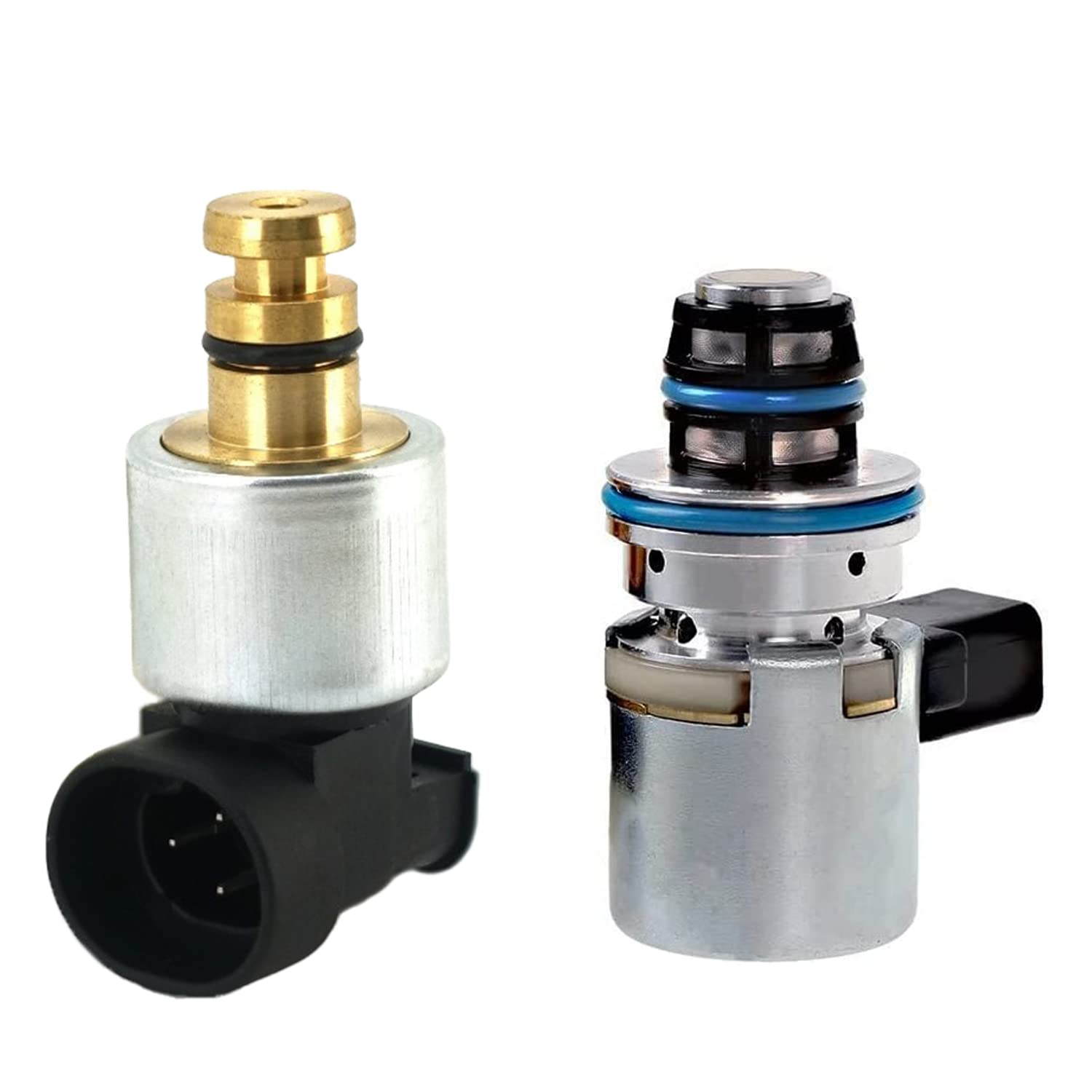
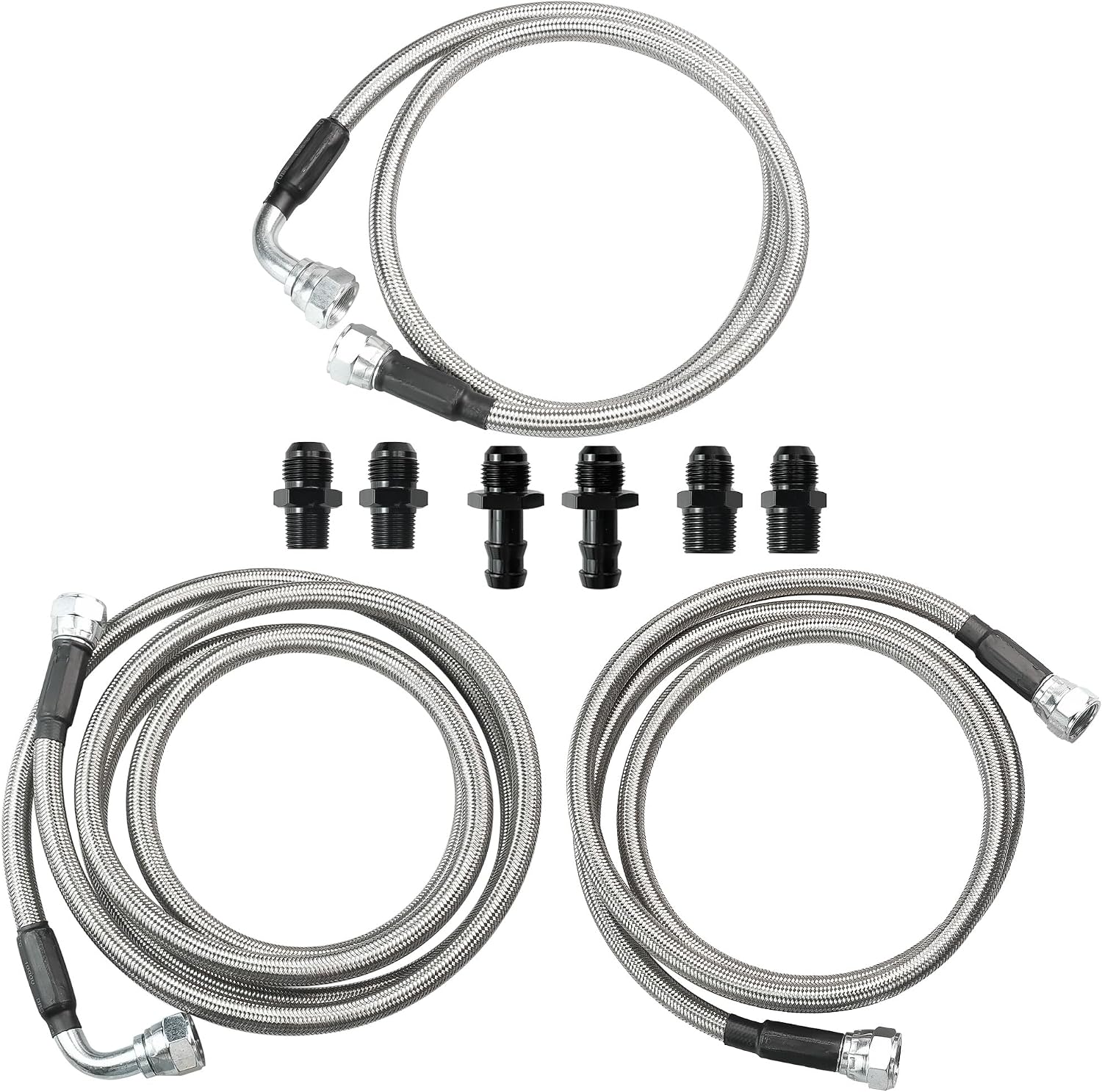
47RE governor pressure solenoid kits, TCC solenoids, cooler lines, valve bodies and master rebuild kits for the 1996-2002 Ram 2500 Cummins — shipped fast from the USA.
Shop 47RE parts →Shop the 4617210 kit → All RE-series parts
FAQ
What is the most common 47RE problem on a 24-valve Ram 2500 Cummins?
Converter clutch and overdrive cycling at cruise. The PCM commands it because it sees a noisy throttle signal passed from the Cummins ECM, and ATSG's Wayne Colonna names that as the usual cause on 1998-2003 trucks. Check grounds, batteries, the alternator and the APPS relearn before replacing transmission parts.
How do I do the APPS relearn on a 24-valve Cummins?
With the key on and the engine off, push the accelerator pedal to the floor, release it slowly once, then turn the key off before starting. Motor Age lists a needed APPS relearn as one of the 24-valve-only causes of lockup and overdrive cycling.
Why does my 47RE start in third gear?
In limp mode the computer turns the governor solenoid off, which sends full line pressure into the governor circuit and starts the truck in third. Per GEARS, check for power at transmission case connector pin 1 and compare Governor Desired, Actual and gauge pressure. A crossleak or warped governor body can cause third-gear starts without limp mode.
What should 47RE governor pressure read?
Zero at a stop, rising about 1 psi per mph up to about 40 mph, after which mainline pressure is routed to the governor port. The 2001 Ram service manual allows 0 to 1.5 psi with the truck stopped. Always confirm the scan tool reading with a gauge on the governor port.
Which years of Ram 2500 Cummins have the 47RE?
The 1996 to early-1998 12-valve trucks and the 1998.5 to 2002 24-valve trucks use the 47RE. ATSG places the change to the 48RE in 2003, so check the transmission tag on any 2003 truck before ordering parts.
Related 47RE guides
Sources
- FenderBender / POWERTRAIN PRO — "Dodge Diesel Transmission Dilemmas," Wayne Colonna, president of ATSG. Backs the 1998 to mid-2003 24-valve PCM/ECM trucks using the 47RE and the 2003 change to the 48RE, the noisy ECM-to-PCM TPS signal as the main shuttle cause, factory bulletin 18-02-99 PCM re-flash, the noise filter workaround, battery cable and ground causes, and the drop in shuttle complaints once the PCM was eliminated. fenderbender.com
- FenderBender / Motor Age — "Dodge and Jeep Vehicles with RE Series Transmissions TCC/OD Cycling Problems." Backs the 27-cause list and which causes are 24-valve, 12-valve or shared, the APPS terminal 4 ground, the APPS relearn steps, the alternator feed wire test, the generic scan tool cause, and steel throttle rods 5011959AB for 12-valve trucks. fenderbender.com
- ATRA GEARS Magazine, October 2006 — "Troubleshooting the 42-47RE Transmissions," Dave Skora. Backs governor pressure at zero stopped and about 1 psi per mph to 40 mph, the Desired/Actual/gauge comparison, the OSS check, limp mode and third-gear starts, case connector pin 1, crossleak and warped governor body checks, the transducer voltages and the 105 psi WOT note. atracom.blob.core.windows.net (PDF)
- Sonnax Tech Resources — "46-47RH/RE Cooler and Converter Flow." Backs cooler restriction as the most common issue in the converter circuit and the bypass and flow checks. sonnax.com
- Transmission Digest — "740/1740 Codes and Chrysler Converter Flow," Ed Lee. Backs the non-converter causes of TCC slip codes (cooler restriction, wrong fluid, valve body and pump leaks) and the 0.125-0.250 in. converter-to-flexplate clearance. transmissiondigest.com
- Sonnax Tech Resources — "Dodge Diesel Input Shaft Upgrades for Every Performance Level," October 18, 2019. Backs the OE two-piece input shaft's spline twist, breakage and clutch hub failures, and the 22121B-01, 22121B-02K and 22121B-08K (35-spline turbine hub) upgrade parts. sonnax.com
Fluid fill, band adjustment, governor-at-rest and overtemperature figures are from the Chrysler 2001 Dodge Ram Truck (BR/BE) Service Manual, transmission section 21 (47RE specifications, fluid service and transmission temperature sensor pages), cited by page in our 47RE fluid guide.