If you own a 5.9 Cummins, you already know these two transmissions are the same family with a different last chapter. The 47RE and 48RE both trace back to Chrysler's A518/A618 lineage, both bolt behind the 5.9, and both use the same 2.45/1.45/1.00/0.69 gear spread. Stand them side by side on a stand and a lot of guys cannot tell them apart. That surface similarity is exactly what gets people in trouble, because the differences that matter are inside the pump, the clutch packs, and the valve body, and they change how you build one and whether you can swap one for the other.
This is the builder-to-builder version. What actually changed, what interchanges and what does not, and which one to start with if you are chasing power. For the broader family history, see our 46RE / 47RE / 48RE transmission guide.
The Short Version
| Spec | 47RE | 48RE |
|---|---|---|
| Model years (Cummins) | ~1996–2002 | 2003–2007 |
| Gear ratios (1-4 / R) | 2.45 / 1.45 / 1.00 / 0.69 / 2.21 | 2.45 / 1.45 / 1.00 / 0.69 / 2.21 |
| Input torque rating | ~450 lb-ft | ~560–570 lb-ft |
| Throttle valve control | Mechanical throttle cable/lever | Electric TTVA motor |
| Governor pressure | Solenoid + transducer | Solenoid + transducer |
| Fluid | ATF+4 | ATF+4 |
| Dry fill | ~14.5–16.5 qt | ~14.5–16.5 qt |
| VIN 8th digit (engine code) | 6 (standard output 5.9L) | C (high output 5.9L) |
Per Engine Builder, the 47RE ran 1996 through 2002 behind the 12-valve and early 24-valve Cummins, and the 48RE ran 2003 through 2007 behind the high-output common-rail 5.9L; both trace back to the A518/A618 and both carry a cast-iron center support. Same ratios, same fluid, different strength and different brains. The 48RE is the stronger, later unit, and it earned that with hardware, not marketing. But the 47RE is not a bad core, and behind a stock or mild 24-valve it will run a long time if you keep the bands adjusted and the fluid fresh.
Control: Where the Two Really Split
Neither of these is a modern solenoid-shifted transmission like the 68RFE. Both still schedule shifts hydraulically inside the valve body, with governor pressure playing throttle pressure to decide when to shift. What changed between them is how each side of that balance gets its signal.
On the 47RE, throttle pressure comes from a mechanical throttle valve driven by a cable and lever off the injection pump linkage. Governor pressure is handled electronically by a governor pressure solenoid working with a governor pressure sensor, so the computer controls shift timing and firmness by regulating governor pressure rather than a spinning mechanical governor. Torque converter clutch apply and overdrive are electric as well. That transducer is a known failure item on these trucks; the factory plastic sensor gets cranky, especially on units running higher line pressure, and it will throw you into limp or give you erratic shifts before it dies outright.
The 48RE moved throttle control off the cable and onto an electric stepper motor called the Transmission Throttle Valve Actuator, or TTVA. The computer commands the TTVA to position the throttle valve a calculated distance based on engine throttle and load. The governor pressure solenoid and transducer carry over. Per ATRA's Gears magazine, the catch with the TTVA is that it is an open-loop mechanical calculation with no direct feedback on the resulting pressure, so when the throttle bore wears, the actual pressure no longer matches the commanded throttle position and you get early or late shifts that scan data will not obviously explain. That is a 48RE-specific diagnostic trap worth knowing before you start chasing shift-quality complaints.
Hardware: Why the 48RE Holds More
The 48RE's higher torque rating is not a paper number. It came with real changes. The pump flows more oil, the direct drum is larger and carries an extra clutch, and the overdrive pack picked up capacity over the 47RE. More clutch area and more oil to apply it is the whole story of how you raise a transmission's torque capacity without redesigning the case, and that is what Chrysler did here. The published input torque rating climbs from roughly 450 lb-ft on the 47RE to about 560 to 570 lb-ft on the 48RE, and the unit gained weight to match at around 248 pounds.
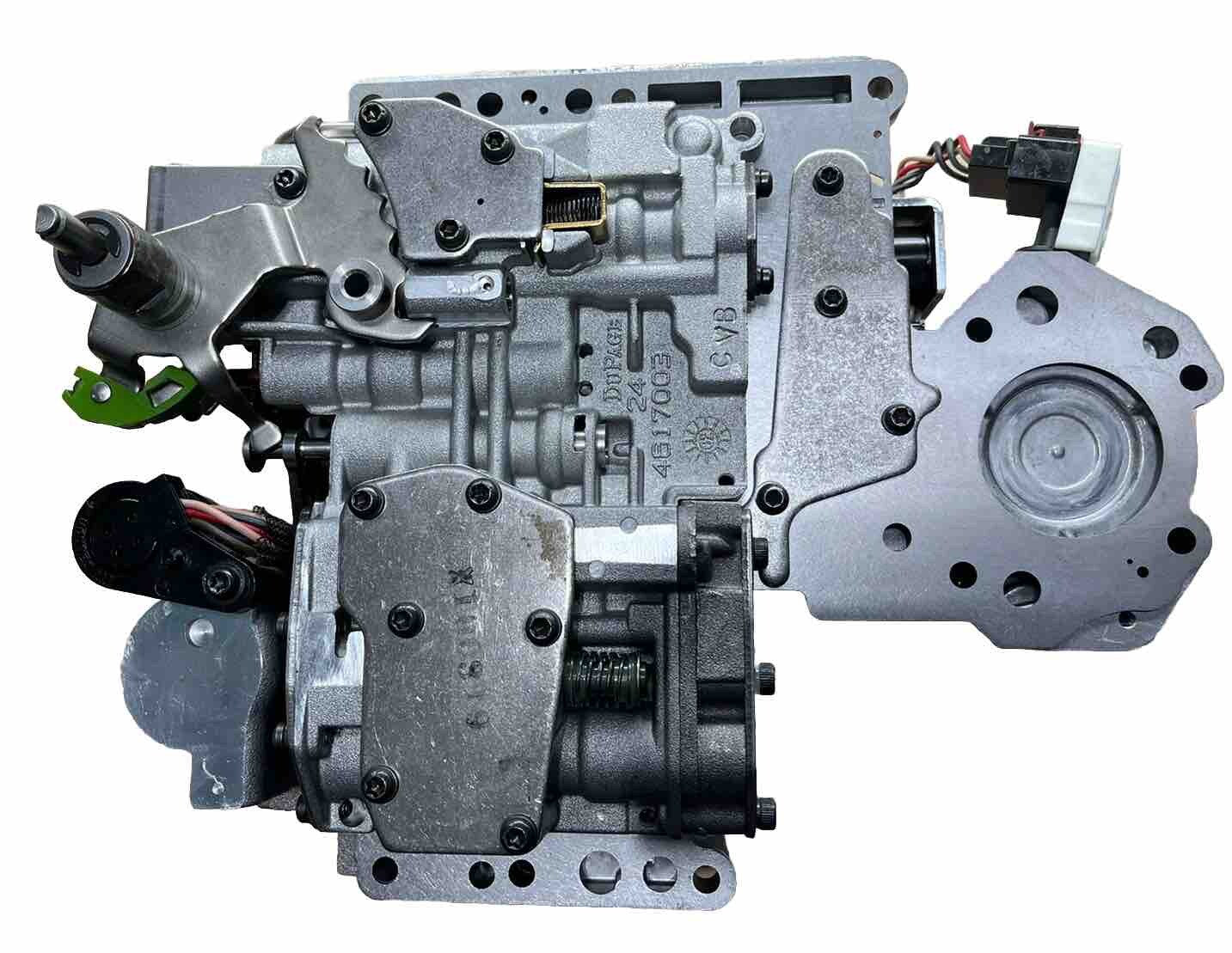
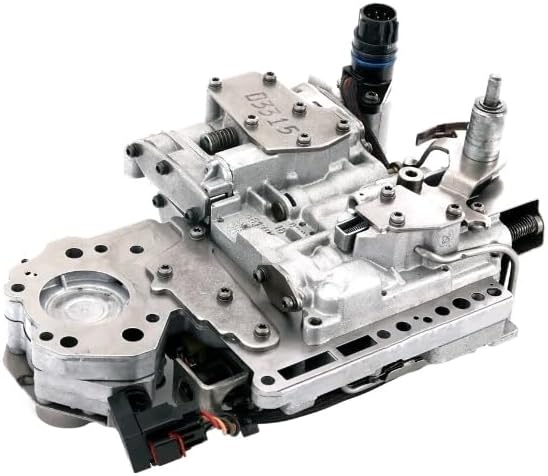
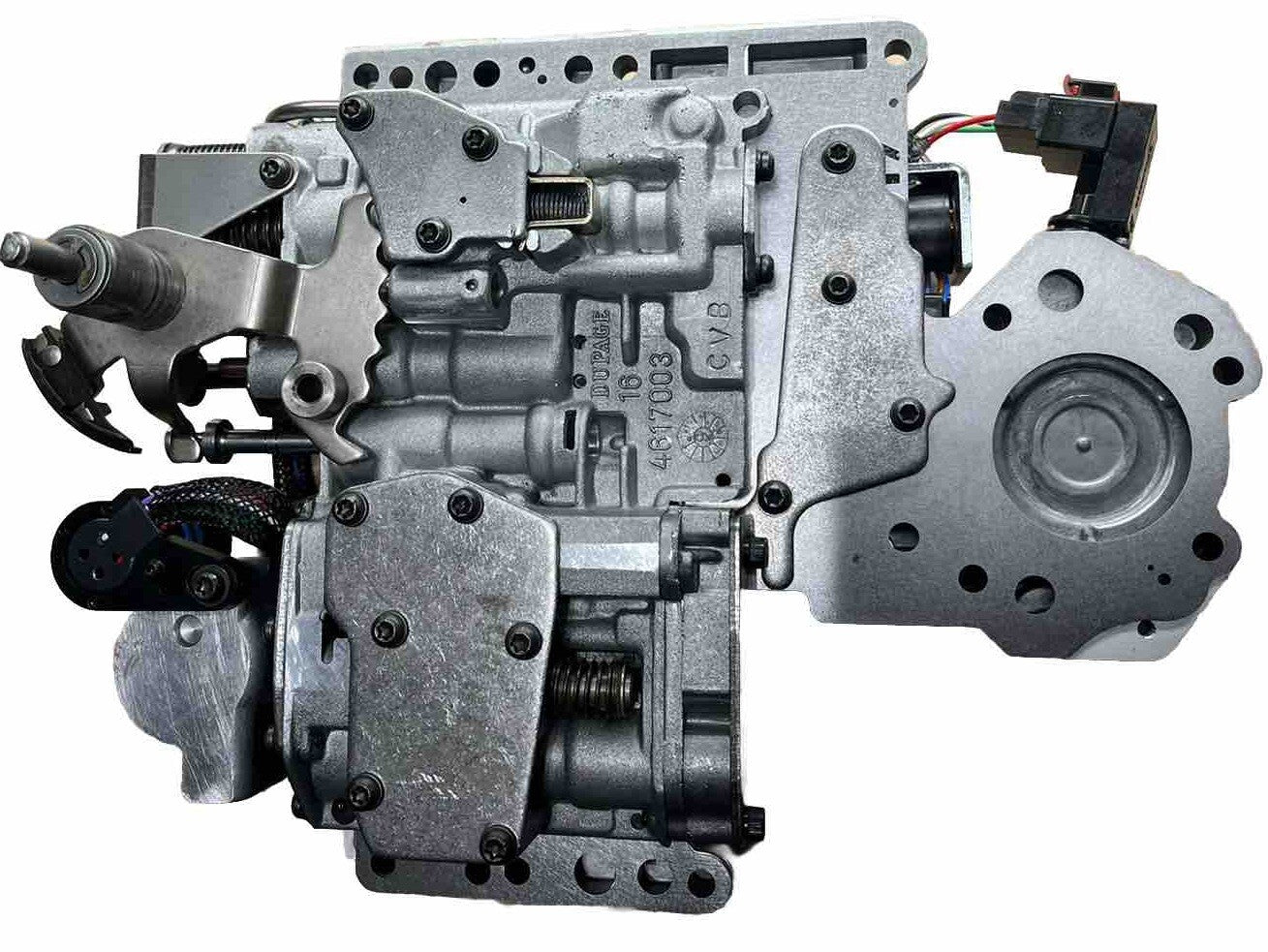
The valve body is the other big hardware difference, and it is the one that bites people on interchange. Sonnax's teardown of the 48RE hydraulics lays out that the 48RE and the 46/47RE valve bodies differ in the pressure-regulator pressure curve and in the torque converter clutch feed circuit. The 48RE lets apply pressure from the TC and overdrive circuits move the boost valve so the pressure regulator raises line pressure substantially more in third-gear-with-lockup and in overdrive, which is what clamps the converter clutch and the OD clutch hard enough to survive diesel torque. The 46/47RE raises line pressure only modestly in those same ranges by comparison. That extra clamping is engineered into the casting, and it is why you cannot borrow a valve body across the two.
Building one of these this week?
Whether you are freshening a 47RE core or stepping up a 48RE for more power, get the right master kit, hard parts, servo and band pieces, and the governor solenoid the first time.
Shop 48RE parts →Torque Converter Lockup: The Real Difference
People fixate on the converter itself, but the meaningful lockup difference between these two lives in the valve body pressure strategy. On the 48RE, when the converter clutch applies in third or you are in overdrive, the boost valve gets pushed by TC and OD apply pressure and the regulator adds a bigger slug of line pressure to squeeze the TCC. Per Sonnax, that boost is roughly 22 to 28 psi on the 48RE in those ranges, versus about 10 to 15 psi on the 46/47RE. That is why a healthy 48RE holds lockup under load that would make a 47RE slip and shudder its converter clutch.
Diagnostically, this matters two ways. First, if someone put a 46/47RE valve body in a 48RE, the low clamping pressure will cook the TCC or the OD clutch after a few hundred miles even though the truck drove fine on the test loop. Second, when you are chasing a converter shudder on either unit, verify line pressure in the lockup range before you condemn the converter, because a worn line pressure plug and sleeve or a tired governor transducer can starve the apply circuit and mimic a bad converter. For the diagnostic routine, our TCC shudder diagnosis walkthrough covers the pressure checks in order.
Interchange: What Swaps and What Does Not
The 48RE-for-47RE swap is one of the most common upgrades on second-gen trucks, and it works, but only if you treat it as a systems job rather than a bolt-in.
- Bellhousing and mounting: Both bolt to the 5.9 Cummins, so the case fits. That is the part everyone gets right.
- Throttle control: This is the gotcha, and the year matters. A 47RE truck has a throttle cable, and so does an '03-'04 48RE. Per Sonnax, Dodge introduced the TTVA in 2005 on 48RE diesel 2500 and 3500 trucks: an electromechanical unit with two potentiometers and a DC motor that replaces the TV cable outright. Drop an '05-later 48RE into a cable truck and you have to bring the controls with it, which means the matching computer calibration and wiring. Two details save you a comeback on a TTVA unit: it has to be initialized, so hold the ignition on for at least 30 seconds after install to let the ECM find the zero position, and the throttle shaft adjustment bolt needs 0.905 in. of spacing between the pressure regulator spring retaining bracket and the inside edge of the bolt head. An old cable-type bracket is around 0.820 in., and that shortfall alone will set the calibration codes P1751 and P1752.
- Valve body: Does not cross. Keep each unit's own valve body for the pressure and TCC reasons above.
- Input shaft and converter: The 47RH, 47RE, and 48RE share an input shaft family, so converter interchange within that family is possible with matching turbine hub spline count. Sonnax's big-shaft kit, for example, is listed to fit all three.
- Governor solenoid and transducer: Shared across 47RE and 48RE, so those service parts cross over.
- ID: The VIN transmission digit is 6 for a 47RE and C for a 48RE if you are verifying what is actually under a truck.
Bottom line on interchange: the mechanical swap is easy, the electronic side is the work. Budget for the controls up front and the 48RE upgrade is worth doing.
Common Failures on Each
47RE
The governor pressure transducer and solenoid top the list, followed by neglected front and rear band adjustment, overdrive clutch wear, and converter clutch shudder as the unit ages. None of that is a design flaw so much as a light-duty transmission living behind a torque-heavy diesel. Keep the bands set, service the fluid, and watch the transducer.
48RE
At stock or mild power the 48RE is durable, but push it and three things surface. The stock input shaft twists and breaks, which is why Sonnax built a 35-spline big-shaft system it rates as 35% stronger than the best heavy-duty 23- or 29-spline shafts for trucks reaching beyond 1,000 HP. The rear band apply lever and the aluminum servo pin fail under reverse load. And the valve body wears at the throttle bore (worse on the TTVA cars), the 1-2 and 2-3 governor plugs, and the line pressure plug and sleeve, per Gears. On top of that, these units protect themselves with a downshift when fluid temperature climbs past about 260°F, so a marginal cooling package on a loaded truck will surface as heat-related shift behavior long before anything is actually worn out.
For the deeper dives, we have separate write-ups on 48RE Cummins problems, the governor pressure solenoid symptoms, and 47RE valve body testing.
Which Is Stronger, and Which to Build
The 48RE is the stronger transmission. Higher torque rating, more clutch capacity, more pump flow, and a valve body that clamps the converter and overdrive clutches harder. If you are starting a build and you have the choice, start with a 48RE core and the controls to run it. It gives you more headroom before the first upgrade and it is the platform every serious Cummins builder supports with parts.
That said, do not throw away a good 47RE. Behind a stock or lightly tuned 24-valve, a properly adjusted and maintained 47RE will live. Where you commit to power, either unit needs the same short list once you get past roughly 500 to 600 rear-wheel horsepower: a billet input shaft, a heavy-duty rear band apply lever and servo, valve body wear repairs, a converter matched to your combination, and a cooling system that keeps you under that 260-degree line. The 48RE just gives you a taller starting point on the same climb.
Shop 48RE parts →
FAQ
Is a 48RE stronger than a 47RE?
Yes. The 48RE carries a higher factory input torque rating (roughly 560 to 570 lb-ft versus about 450 lb-ft on the 47RE), a larger direct drum with extra clutch plates in the direct and overdrive packs, a higher-flowing pump, and a valve body that raises line pressure more aggressively in lockup and overdrive to hold the torque converter clutch and OD clutch. It is the stronger core out of the box, but at real diesel power both still need a billet input shaft, band and servo work, and valve body attention.
Will a 48RE bolt in place of a 47RE?
Physically they are close cousins and both bolt to the 5.9 Cummins, so the swap is popular. It is not plug and play, though. The 47RE positions its throttle valve with a mechanical throttle cable and lever, while the 48RE uses an electric Transmission Throttle Valve Actuator (TTVA) motor, so a 48RE needs the matching TCM/PCM calibration and TTVA wiring to shift correctly. Plan the controls, not just the bellhousing.
Can you swap a 47RE valve body into a 48RE?
No. The two valve bodies look nearly identical but the pressure curve and the torque converter clutch feed circuit are different. A 46/47RE valve body dropped into a 48RE will usually drive fine at first, then come back with a burned torque converter clutch or overdrive clutch because it does not build the line pressure the 48RE relies on to clamp those clutches. Keep the correct valve body with the unit.
What fluid does a 47RE or 48RE take and how much?
Both units run ATF+4. Dry-fill capacity is roughly 14.5 to 16.5 quarts with the torque converter and cooler lines empty. A routine pan drop and filter change replaces far less, generally about 4 to 7 quarts depending on the pan. Do not shortcut the fluid spec; the wrong friction properties change shift feel and clutch life.
What is the weak point on a built 48RE?
Three things show up first at power: input shaft spline twist and breakage, the rear band apply lever and servo, and valve body wear. The stock input shaft twists once you push serious torque, which is why builders move to a 35-spline billet shaft. The rear band apply arm and the aluminum servo pin fail under reverse load, and the valve body wears at the throttle bore, the governor plugs, and the line pressure plug and sleeve.
Sources
- Sonnax — "Dodge 48RE Hydraulic Features Revealed." Backs the 48RE valve body differences from the 46/47RE in pressure-regulator curve and TCC feed circuit, and the larger line-pressure boost in lockup and overdrive ranges (about 22–28 psi on the 48RE versus about 10–15 psi on the 46/47RE) that clamps the converter and OD clutches. sonnax.com
- Sonnax — "End 48RE Input Shaft Failure" (Smart-Tech Big Input Shaft Kit). Backs the 35-spline billet input shaft rated 35% stronger than the best heavy-duty 23- or 29-spline shafts, protection against spline twist and shaft breakage beyond 1,000 HP, and its fitment across Chrysler 47RH, 47RE, and 48RE units. sonnax.com
- Gears Magazine (ATRA), Keith Clark — "Bringing it Back to Life: A Logical Approach to the RE Valve Body." Backs the RE valve body being the nerve center with no hydraulic control circuits outside it, the four common wear areas (throttle valve bore, 1-2 and 2-3 governor plugs, line pressure plug and sleeve), and the TTVA open-loop throttle control causing early/late shifts when the throttle bore wears on 48RE applications. gearsmagazine.com
- Engine Builder Magazine — "The 47 & 48RE Remain Go-To Transmissions in Diesel Performance," Greg Jones, May 26, 2025. Backs the 47RE production run of 1996 through 2002 behind the 12-valve and early 24-valve Cummins; the 48RE running 2003 through 2007 behind the high-output 5.9L common-rail; the shared A518/A618 lineage; the cast-iron center support, planetary gearsets and converter lockup common to both; the hybrid control strategy of hydraulic line pressure and shift actuation with electronic governor pressure solenoid and shift timing control; and the 48RE’s more robust overdrive section and stronger internal hard parts. enginebuildermag.com
- Sonnax — "Preventing 48RE Transmission Throttle Valve Actuator Codes," Jeff Parlee. Backs the TTVA being introduced by Dodge in 2005 on 48RE diesel 2500 and 3500 Ram trucks as an electromechanical replacement for the TV cable, using two potentiometers and a DC motor to regulate throttle pressure; the initialization requirement of holding the ignition on for at least 30 seconds so the ECM can establish the zero position; the 0.905 in. spacing between the pressure regulator spring retaining bracket and the inside edge of the throttle shaft adjustment bolt head, versus about 0.820 in. on the older cable-type bracket; and DTCs P1749 through P1755, with P1751 and P1752 set by calibration range failures from restricted shaft movement. sonnax.com