Every 47RE that comes across the bench with burnt fluid and cooked planetaries gets the same diagnosis from the customer: it needs a bigger cooler. Sometimes that is true. Far more often the truck already has enough cooling capacity and the fluid simply is not getting to it. Heat in a 47RE is a flow problem before it is a capacity problem, and if you bolt a big stacked-plate cooler onto a circuit that is already restricted, you have added restriction, not cooling.
The short version: The torque converter is the heat source. The 47RE sends that heat out through 5/16 in cooler lines — smaller than the 3/8 in lines most manufacturers moved to, and worth more than 30 percent in flow. Add a partially plugged drainback fitting, an aged radiator cooler, or debris from a failed converter, and cooler flow collapses. Sonnax's own bulletin calls cooler restriction the most common issue on this family by a wide margin. Flow test the circuit before you buy anything.
Where the Heat Comes From
Almost all the heat you are fighting in a 47RE is made in the torque converter. Any time the impeller turns faster than the turbine — pulling away from a light, climbing a grade at part throttle, backing a trailer — that speed difference becomes heat in the fluid. Clutch packs contribute in short, violent bursts; GEARS Magazine notes surface temperatures can momentarily exceed 650°F during application. But the sustained load that turns fluid brown and cooks a planet is converter slip.
That is why the torque converter clutch matters so much here. Applied, the converter is mechanically locked and stops making slip heat. Unlock it — overdrive switch off, towing in a gear the TCC does not apply in, or a fault in the TCC circuit — and it goes right back to being a heater. A 47RE dragging a trailer up a long grade with the converter unlocked is the worst thermal load this unit ever sees.
The fluid carries that heat out through the cooler circuit: converter charge oil feeds the converter, exits as lube oil, and runs out to the cooler in the radiator and back. Everything downstream of that decides whether the heat leaves the transmission or stays in it.
The 47RE Weak Link: 5/16 in Cooler Lines
Here is the detail most people miss. The Sonnax SonnaFlow reference chart for the 42-47RE units states plainly that flow on these transmissions is lower because they use 5/16 in cooler line rather than 3/8 in. That sounds trivial. It is not.
Wayne Russell, writing for the Sonnax TASC Force in Transmission Digest, put a number on it: manufacturers moving oil-line sizes from 5/16 in to 3/8 in gained more than 30 percent in flow. In his words, although it is a small increase in diameter, it "can make a big difference in keeping a transmission cool and lubricating vital transmission components."
So the 47RE starts life on the wrong side of that line-size change, with a Cummins or a V10 in front of it and very little margin. Every additional restriction you stack on top of it eats into a reserve that was thin to begin with.
How a Restriction Turns Into a Failure
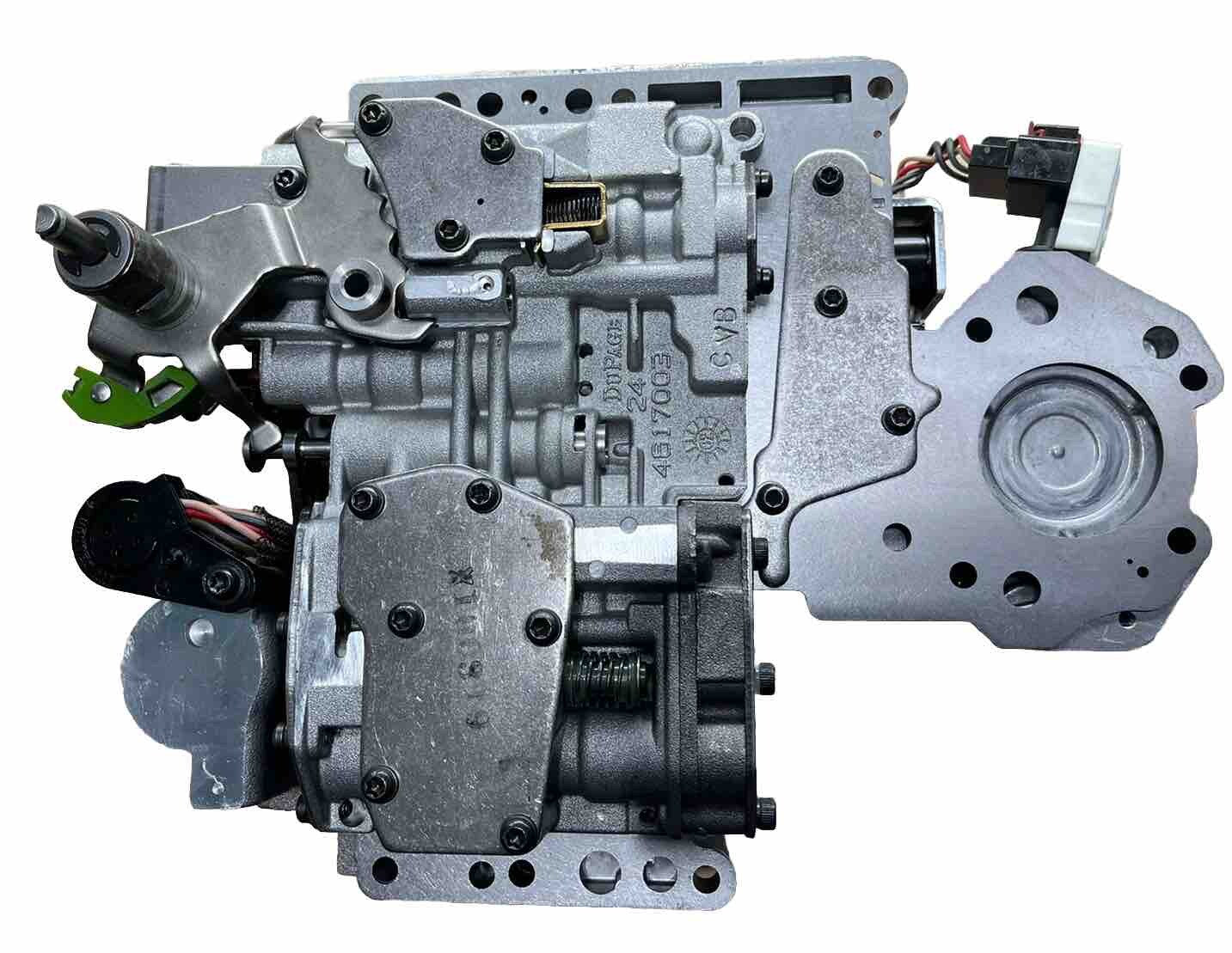
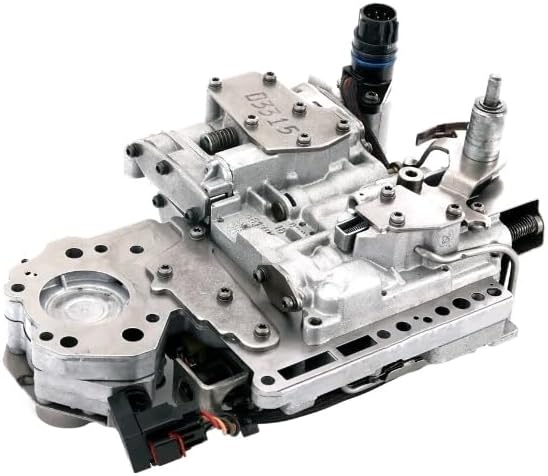
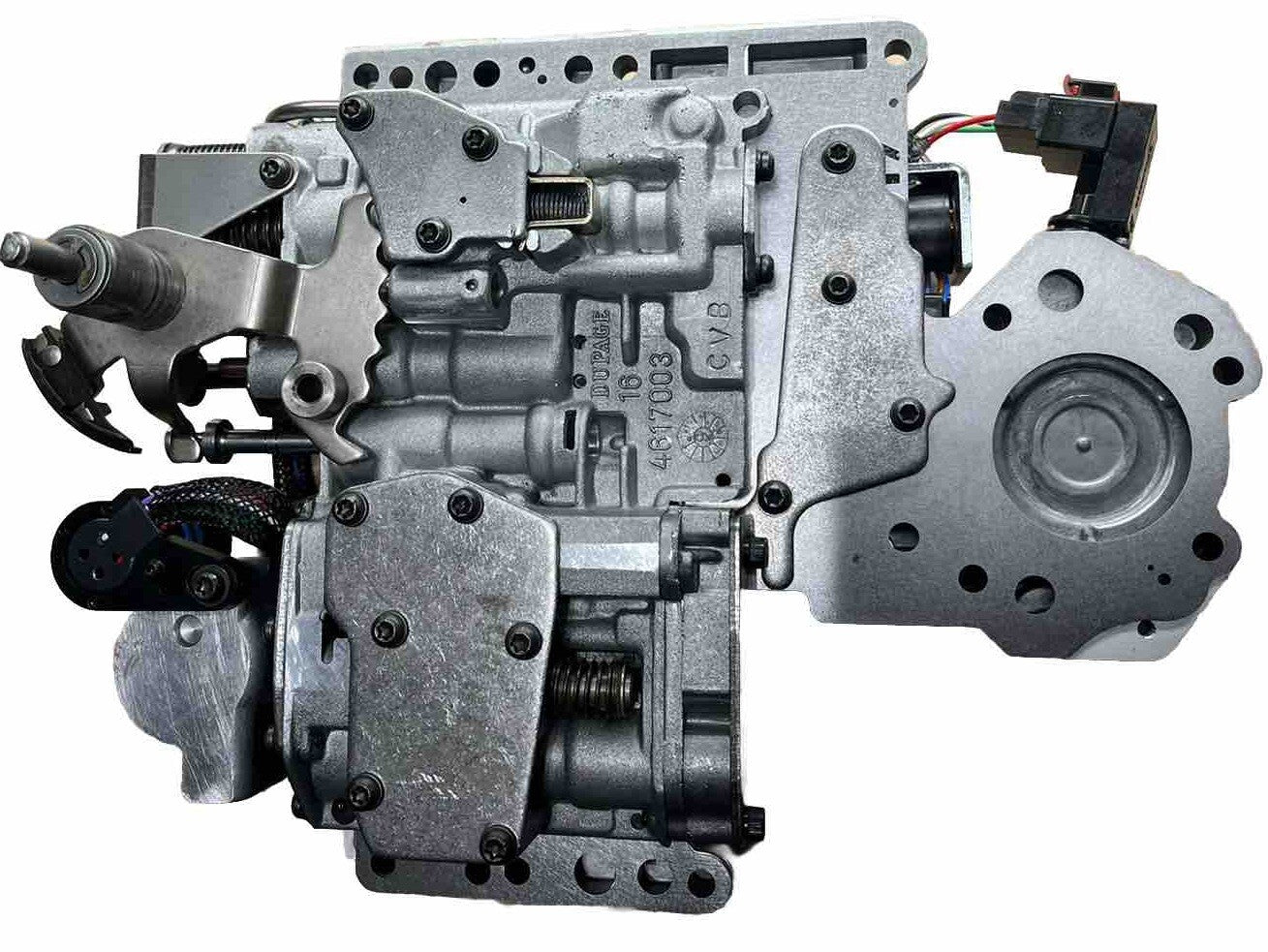
The Sonnax bulletin on 46-47RH/RE cooler and converter flow, by Bob Warnke, lists cooler restriction as by far the most common issue in this family and names the suspects: the drainback fitting, the auxiliary or radiator-mounted cooler, and the lines themselves. What makes it more than a simple flow loss is what the restriction does to the valve body.
The restriction creates back pressure — head pressure — in the converter and cooler circuit. That pressure acts on the largest diameter of the switch valve and pushes it toward its spring. Instead of sitting at either end of its bore, the valve stages part way, mid-circuit, and its spools begin partially covering the ports they are supposed to open. Per the bulletin, that further restricts converter and cooler flow. The restriction makes the valve close down, and the valve closing down makes the restriction worse. Warnke notes this becomes a problem as head pressure approaches 80 psi or more.
The symptom list that comes out the other side of that loop is specific:
- P0740 / P1740 torque converter clutch codes
- TCC slip at high torque, exactly when you are towing
- Delayed engagements
- Slow converter fill
- Excessive stall speed
- Hydraulic noise in Drive or Reverse
Then comes the hardware bill. The Sonnax SonnaFlow chart for the 42-47RE records the consequence of poor flow as repeated planetary failure and TCC lining failure, noting that converter failure plugs the lines and then overheats the planets. That is the cycle that kills rebuilt 47REs: the converter comes apart, debris packs the cooler and lines, the shop installs a fresh unit without replacing that circuit, lube flow to the planetaries is choked from day one, and the new transmission is on borrowed time. The stated correction is not subtle — replace the cooler lines and/or the radiator.
Measuring It Instead of Guessing
1. Find out what the fluid temperature actually is
The 47RE does not hand you a fluid temperature reading — no factory dash gauge, no useful temperature PID on a generic scan tool. If you tow with one, add a sender. Read from the pan: that is the fluid about to go back through the pump. A sender in the cooler return line reads lower and flatter and will lie to you about what the converter is doing.
Targets to work against: ATRA's GEARS Magazine puts the range where transmission fluid works well at 160–200°F. The Transmission Digest cooler article says most specialists want fluid under 200°F, and points out how hard that is when engine coolant sits at 210°F or higher — exactly the situation with an oil-to-water cooler in the radiator. Sustained readings well above 200°F under load mean a flow or capacity problem, not a gauge problem.
2. Flow test the cooler circuit
This is the test that separates a restricted circuit from a genuinely undersized one, and it takes about ten minutes.
- Identify the cooler return line — it is the lower line at the transmission on this family, per the Sonnax SonnaFlow chart. Getting this backwards is the most common way this test gets botched.
- Route it into a clean, graduated container. Keep fresh ATF+4 on hand and do not let the pan level drop.
- Bring the fluid to operating temperature first. Cold, thick fluid fails any flow test.
- Run at idle in Neutral and catch the output for a measured interval. Compare against a known-good truck if you have one, and always compare before and after each change you make.
- Watch the character of the flow, not just the volume. The Sonnax charts note that a healthy circuit shows low flow at low pump speed and a sharp rise on the 1-2 shift, plus a distinct drop in flow at TCC apply. Those transitions are the switch valve and the converter clutch regulator doing their jobs. Flat, mushy transitions point at a staged switch valve or a restricted converter.
3. Bypass to confirm
Warnke's recommended verification is the cleanest step in the whole procedure: temporarily bypass the cooler circuit and re-test. Loop the transmission's cooler outlet straight back to its inlet with a short hose, keep the test brief so you do not cook anything, and see whether the complaint goes away. If it does, the restriction is out in the lines, radiator, or aux cooler. If it does not, you are looking at the converter or the valve body, and monitoring flow from Drive at idle through lockup will tell you which. Low flow until the TCC applies, with a slow apply or a shudder on apply, points at release oil restricted inside the converter.
Fixing It in the Right Order
Restore the circuit first. If the truck has ever had a converter or clutch pack come apart, the lines and radiator cooler are contaminated until proven otherwise. Flushing a stacked-plate or fin-and-tube cooler after a debris failure is a gamble; the Sonnax correction is to replace the lines and the radiator. Inspect the drainback fitting while you are in there — it is a named restriction point on this family, and it is easy to overlook because it looks like a plain fitting.
Then upsize the lines. Since the 47RE's 5/16 in lines are the documented flow limiter, going to 3/8 in where you can do it cleanly buys back real flow before you spend a dollar on cooling area. Use hose rated for the job — SAE J1532 transmission oil cooler hose — and keep the bends gentle. A tight radius in a soft line is its own restriction.
Then add cooling capacity, correctly. This is where most installs go wrong, and the Transmission Digest cooler sizing article gives the rules that matter:
- Read the GVW rating correctly. It is the total rating when the cooler is used in addition to the OE cooler, not as a replacement for it. A 40,000 GVW cooler running stand-alone is not a 40,000 GVW cooling system.
- Stacked-plate beats fin-and-tube for stand-alone duty. The parallel paths slow fluid across the plates and give it more time to reject heat. Cheap fin-and-tube coolers with a flat twisted turbulator look identical from outside to good extruded designs and perform nothing like them.
- Doubling thickness does not double the cooling. Ambient air temperature, fluid temperature, flow rate, airflow, pressure drop, and mounting location all set the result.
- A finned oil pan is not a cooler. Russell is blunt: pan designs contribute little to cooling and mostly just add volume. A deep pan is worth having for the extra fluid and the drain plug, but do not count it as heat rejection.
- Watch what you mount it in front of. Air passing through a transmission cooler picks up heat before it reaches the A/C condenser and radiator. Put a big one in the wrong place and you trade a transmission problem for an engine cooling problem.
Low pressure drop designs exist specifically because of the trap this article opened with: adding a restrictive cooler to a 47RE's already marginal 5/16 in circuit can leave you worse off than you started.
Tru-Cool LPD47391 40,000 GVW stacked-plate cooler
Low pressure drop stacked-plate design, which is what you want on a circuit that is flow-limited to begin with. Ships with mounting hardware. Remember that the GVW number counts the OE radiator cooler as part of the system.
View the cooler →Do not forget cold weather
Cooling is only half of thermal management. ATF gels around −32°F, and Russell points out that even at 0–10°F, starting a truck and driving off means the lube system is effectively dry until the fluid thins out. A big auxiliary cooler makes that worse. If the truck sees real winter, plumb in a bypass: passive designs route around the finned section, while thermal bypasses use a wax element that expands with temperature and gradually opens flow to the cooler as the fluid warms.
The failure mode to know about on any thermal bypass is stuck closed. Transmission Digest documented exactly this on GM units, where the thermal valve's plastic spring cup gets punctured by the point of the valve and the valve jams shut, with overheating complaints as the result. If a truck with a bypass suddenly runs hot, test the bypass before you condemn the cooler.
Fluid and Service
Use ATF+4, Chrysler Material Standard MS-9602. ATF+4 was specified for its oxidation and thermal stability, and those are the properties a hot-running unit consumes first. A universal fluid that merely claims coverage is not the same thing as a fluid licensed to the standard. Two habits keep a towing 47RE alive:
- Shorten the interval to match the heat. Oxidation accelerates dramatically as temperature climbs. A truck that lives at 180°F and one that spends its summers at 230°F are not on the same service schedule no matter what the manual says.
- Read the fluid, not the mileage. Brown, varnished fluid that smells burnt has already oxidized. Once varnish is forming, it goes on to stick the valves in the valve body, which changes pressures, which makes more heat. That is the second feedback loop in this transmission and it is the one that ends in a rebuild.
When you drop the pan, replace the filter and use a pan with a drain plug so the next service is a fifteen-minute job. On a unit that has been hot, cut the old filter open and look at the media before you decide the cooler circuit is clean.
46RE / 47RE / 48RE oil pan with drain plug and filter kit
A drain plug turns fluid service from a chore into something you actually do on schedule, which matters more on a hot-running unit than any single part you can bolt on.
View the pan and filter kit →The Prevention Checklist
- Install a temperature gauge with the sender in the pan. Know your baseline before you tow.
- Keep the TCC working. A converter that will not lock is a heater. Chase P0740 / P1740 codes instead of living with them.
- After any converter or clutch failure, replace the cooler lines and radiator cooler rather than flushing and hoping. Inspect the drainback fitting any time the circuit is open.
- Flow test the circuit — return is the lower line at the transmission — and confirm restrictions with a temporary bypass.
- Go to 3/8 in line where practical before spending on cooler area.
- Add a low-pressure-drop stacked-plate cooler, sized knowing the GVW rating assumes the OE cooler is still in the system, and do not mount it where it starves the condenser and radiator of clean air.
- Add a thermal or passive bypass if the truck sees cold weather.
- ATF+4 / MS-9602 only, on an interval that reflects how hot the unit actually runs.
Transmission coolers, cooler line and fitting kits, disconnect tools, pans and filters, and master rebuild kits for the 47RE — shipped fast from the USA.
Shop 47RE parts →Related reading: our 46RE / 47RE / 48RE family guide covers the unit end to end, and 47RE harsh or delayed shifts walks through the three pressures that control shift quality — worth reading, because a restricted cooler circuit shows up as a shift complaint long before it shows up as a temperature complaint.
Sources
- Sonnax — Bob Warnke, "46-47RH/RE Cooler and Converter Flow" (December 22, 2005). Backs cooler restriction being by far the most common issue on this family; the drainback fitting, auxiliary/radiator cooler and lines as the restriction points; head pressure acting on the largest switch valve diameter and staging the spools mid-circuit; the 80 psi head pressure threshold; the symptom list (740/1740 codes, TCC slip at high torque, delayed engagements, slow converter fill, excessive stall speed, hydraulic noise); the temporary cooler bypass as the verification method; and low flow until TCC apply indicating restricted release oil inside the converter. sonnax.com/tech_resources/199-46-47rh-re-cooler-and-converter-flow
- Sonnax — "SonnaFlow Chart: 42-47RE (Normal & Poor)." Backs the 5/16 in versus 3/8 in cooler line difference on 42RE and 47RE units and the resulting lower flow; the cooler return line being the lower line at the transmission; the repeated planetary failure and TCC lining failure signature; converter failure plugging the lines and then overheating the planets; the correction of replacing cooler lines and/or radiator; and the healthy-circuit flow signature of a sharp rise on the 1-2 shift with a drop in flow at TCC apply. sonnax.com/tech_resources/461-sonnaflow-chart-42-47re-normal-poor
- Transmission Digest — Wayne Russell (Sonnax TASC Force), "Transmission Coolers, Part 2" (November 1, 2003). Backs the greater-than-30-percent flow gain from 5/16 in to 3/8 in lines; the rule that a cooler's GVW rating is the total rating when used in addition to the OE cooler; keeping fluid under 200°F against 210°F-plus engine coolant; stacked-plate coolers being better suited to stand-alone use; turbulator design variation in fin-and-tube coolers; doubling thickness not doubling cooling; finned oil pans contributing little heat rejection; ATF gelling around −32°F and dry lube on 0–10°F starts; passive and wax-element thermal bypass designs; and the effect of cooler placement on the A/C condenser and radiator. transmissiondigest.com/transmission-coolers-part-2
- Transmission Digest — Mike Greer, "Potential causes of an overheated transmission: It's not always what you think" (May 25, 2023). Backs the thermal bypass valve stuck-closed failure mode, including the plastic spring cup punctured by the point of the thermal valve, and the general point that an overheat complaint is not always caused by the transmission itself. transmissiondigest.com/potential-causes-overheated-transmission
- Transmission Digest — Ed Lee (Sonnax TASC Force), "740/1740 Codes and Chrysler Converter Flow." Backs the converter charge oil path through the input shaft, around the turbine hub bushing grooves and past the lockup piston before exiting as lube oil, and the internal restrictions in RWD Chrysler converters that produce 740/1740 codes. transmissiondigest.com/740-1740-codes-and-chrysler-converter-flow
- ATRA / GEARS Magazine — "Engine & Transmission Thermal Management Systems." Backs the 160–200°F range in which transmission fluid works well, the statement that ATF oxidation accelerates dramatically with heat and lowers fluid life expectancy, and the effect of cold, thickened fluid on hydraulic response. gearsmagazine.com/magazine/engine-transmission-thermal-management-systems
- ATRA / GEARS Magazine — "The One, Two, Threes of ATFs, Part I." Backs clutch and component surface temperatures exceeding 650°F during application, and the varnish, sludge and acid formation that follows fluid oxidation. gearsmagazine.com/magazine/the-one-two-threes-of-atfs-part-i