The 47RE is the heavy-duty four-speed Chrysler put behind the 5.9L Cummins and 8.0L V10 in 1996-2002 Ram trucks. It is an old design at heart. For the first three gears it is a hydraulically shifted transmission, much like a TH350 or a 727, with one electronic twist: instead of a mechanical governor on the output shaft, it uses a duty-cycled solenoid to build governor pressure. The computer only takes direct control of the 3-4 shift and converter lockup.
That split matters when you diagnose one. Most 47RE complaints fall into a short list of repeat failures, and knowing which half of the system you are dealing with, hydraulic or electronic, saves a lot of parts. Below are the problems we see over and over, what causes each one, how to confirm it, and what fixes it. The diagnostic procedures come from ATRA's GEARS magazine and the wear points from Sonnax's RE-family tech library. Sources are listed at the end.
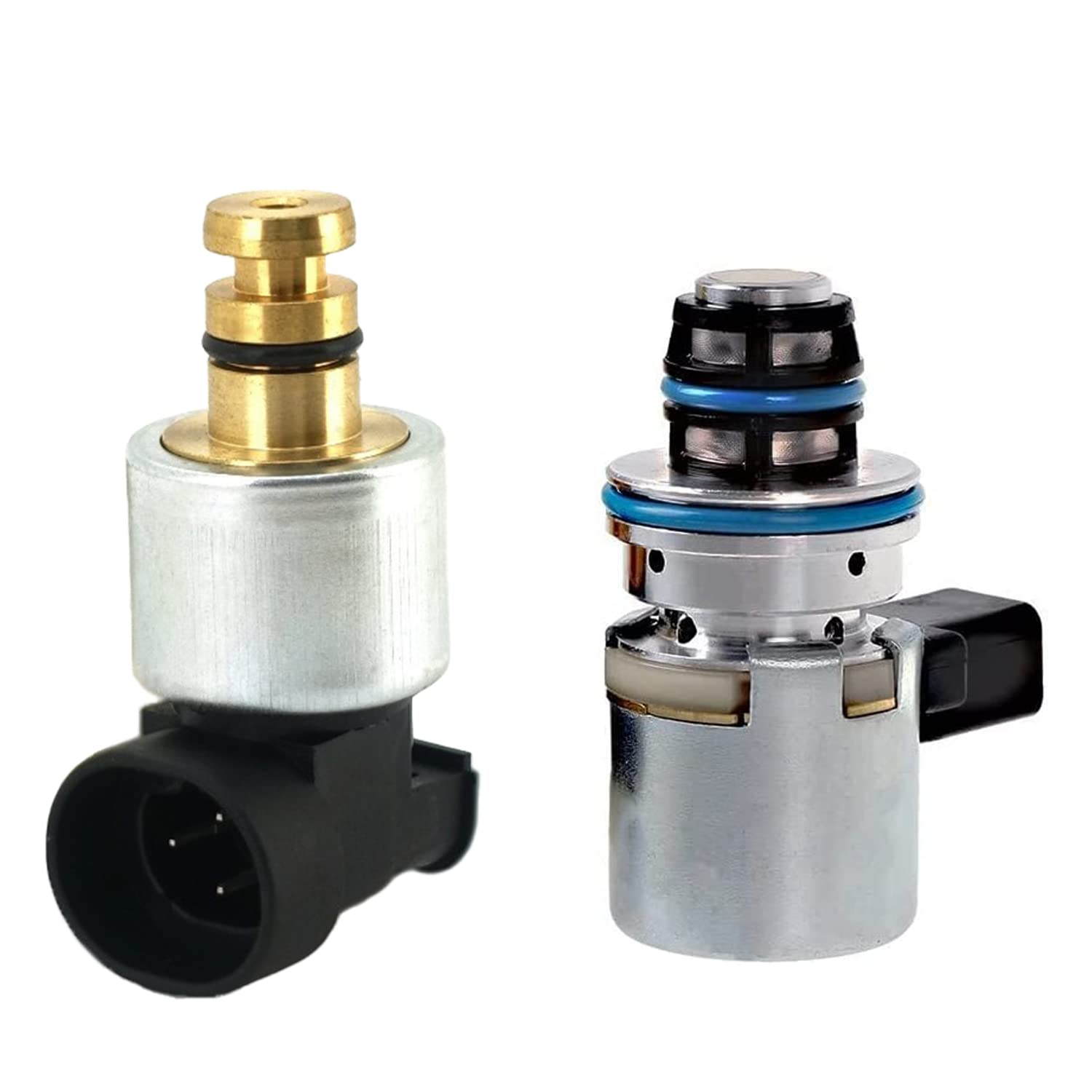
1. Governor Pressure Problems: No Upshift or 3rd Gear Starts
If a 47RE does not shift correctly from first through third, ATRA's first check is always governor pressure, per the October 2006 GEARS troubleshooting article on the 42-47RE. Governor pressure should be zero at a stop and rise about 1 psi per mph up to roughly 40 mph. Above about 40 mph the system routes line pressure into the governor circuit, so the reading stops following road speed until you drop back below 40.
Do not trust the scan tool alone. Tee a gauge into the governor pressure port, drive the truck, and compare three numbers: Governor Desired pressure (what the computer is commanding), Governor Actual pressure (what the transducer reports), and the gauge. All three should match. If they do and the truck still shifts wrong, the electronics are fine and the problem is hydraulic or mechanical: sticking shift valves, burnt clutches, the same things you would look for in any old hydraulic unit.
Stuck in first
If there is no Desired signal at all, the computer does not think the truck is moving. Check the output shaft speed sensor and its wiring first. If the OSS signal is good, check the transducer signal, because a false pressure reading can convince the computer it is already making pressure. If Desired is correct but Actual and gauge pressure are both missing, look for a failed governor solenoid or a blockage in the feed to or from it.
Starts in third
Third gear starts mean full line pressure is getting into the governor circuit. In limp mode, the computer de-energizes the governor solenoid, which opens it all the way and does exactly that. But GEARS points out you can get 3rd starts without limp mode too: crossleaks in the governor circuit and sticking shift valves do the same thing. The difference is that the computer only goes into limp when it sets a code or loses power.
- Code sets key on, engine off: a hard electrical fault. Check connections and transducer ground, and verify reference, ground and signal voltages. On the gas-engine PCM chart in that article, the transducer signal runs about 0.60-0.66 V at 0 psi, about 3.0 V at 60 psi and 4.5 V at 110 psi, with a 5 V reference.
- Governor pressure in Park, Reverse or Neutral: there should be none, because the manual valve closes the governor feed in those ranges. Pressure there means a crossleak in the case, valve body or governor body.
- Pressure the moment you select Drive: a crossleak in the governor body or the solenoid itself. GEARS calls a loose or warped governor body a common problem. Electrically, check indicated gear range, any stray signal on the OSS circuit at a stop, and power at pin 1 of the case connector, which feeds the solenoids. Losing pin 1 puts the unit in limp.
- Goes into limp while driving: if the gauge follows Desired right up until the code sets, suspect the transducer. If the gauge follows Actual, suspect the solenoid, a warped valve body adapter or an internal leak. A reading over 105 psi at WOT in 3rd or 4th points to excessive line pressure or a bad transducer.
One more quirk from the same article: starting in 1999 some trucks switched from a negative to a positive temperature coefficient fluid temperature sensor. If the scan tool shows fluid starting hot and cooling as you drive, someone installed the wrong sensor.
2. Converter Clutch Stalls the Engine at a Stop
The classic 47RE complaint: cold, the truck is fine. Warm, it starts to drag the engine coming to a stop, and eventually stalls it. The converter clutch is not releasing. The August/September 2022 GEARS article "A Dead Stop!" lays out the order to check it, easiest first:
- Cooler flow. Loop the cooler lines to bypass the cooler. Also blow no more than 40 psi of air into the rear cooler fitting; it should go in with little resistance. A restricted return inside the transmission acts like a plugged cooler.
- Electrical. Unplug the transmission connector and retest. On units with an electronic line pressure control this test misleads, but because the 47RE uses a governor solenoid rather than a pressure control solenoid, unplugging it kills TCC control without changing line pressure. It is a valid test here.
- Valve body. Inspect the switch valve bore for wear, since switch valve timing governs TCC apply and release. Check the castings for warpage and flat sand them on glass with 220 wet/dry paper.
- Pump. In the GEARS case, the fault turned out to be a warped stator support. Air applied to the front clutch passage came out of both converter passages. The support was warped around the feed holes, causing a crossleak. Check the support with a flat file and Plastigage before assembly.
- Converter. Least likely, but an aggressive multi-disc aftermarket converter can magnify a marginal valve body into a stall.
3. Cooler and Converter Restriction: Overheating, 1740 Codes, Lockup Slip
Sonnax's cooler and converter flow write-up for the 46/47RH-RE calls cooler restriction "by far the most common issue." The drainback fitting, auxiliary or radiator coolers and the lines themselves can all restrict flow. The effects go beyond heat: a restriction pushes back on the largest diameter of the switch valve and can stage its spools mid-circuit, which restricts converter and cooler flow even more. Sonnax notes this can become a problem as cooler head pressure nears 80 psi. Symptoms on their list include 740/1740 codes, TCC slip under high torque, delayed engagement, slow converter fill, excessive stall speed and hydraulic noise.
The fastest check is the same one GEARS uses for stalling: temporarily bypass the cooler and retest. If the problem goes away, go find the restriction. If it does not, measure cooler flow from Drive at idle through lockup. Low flow until the TCC applies, then a slow apply or slip, points to release oil trapped inside the converter.
Transmission Digest's companion article on 740/1740 codes adds the converter side. The code means the TCC is slipping while commanded on. Before blaming the converter, rule out a restricted cooler, wrong fluid, worn valve body bores and pump crossleaks. On the converter itself, check installed depth: pushed back until the hub bottoms in the pump, the gap between flexplate and converter pad should be at least 0.125 in. and no more than 0.250 in. A bent flexplate that lets the converter sit too far back can restrict flow at the turbine shaft enough to set the code.
Our 47RE overheating guide goes deeper on cooler sizing and flow testing.
4. Worn Valve Body Bores
RE valve bodies have been in service since the mid-1990s, and the same bores wear on almost every one. The Sonnax 46RE/47RE vacuum test guide maps them to symptoms:
- Pressure regulator valve and line pressure plug and sleeve: delayed engagement, pressure regulator buzz, lube failures, converter bushing failure, reverse slip, poor forward and reverse engagement, poor line pressure control.
- Switch valve: lockup shudder, overheated converter, low cooler flow, no cooler flow in Park, soft TCC apply, forward clutch drag in Park.
- Throttle valve: shift timing concerns, throttle buzz, poor kickdown, late 2-3, oversensitive 3-2.
- 1-2 and 2-3 governor plugs: 1-2 shuttle, oversensitive 2-3 and 3-2 shifts, early upshifts, and trouble setting shift timing with the TV linkage.
- 3-4 quick fill and 3-4 timing valves: burned overdrive clutch, no 4th, gear ratio codes.
A vacuum test on the bench finds these in minutes. Our 47RE valve body testing guide walks through the procedure. For a truck with a pile of these symptoms at once, Sonnax packages the updated regulator valve, switch valve, manual valve, throttle valve kit and line pressure plug and sleeve, along with hard-part updates, in its Sure Cure kit for the 46/47RH-RE.
5. Broken or Bent Kickdown Band Strut
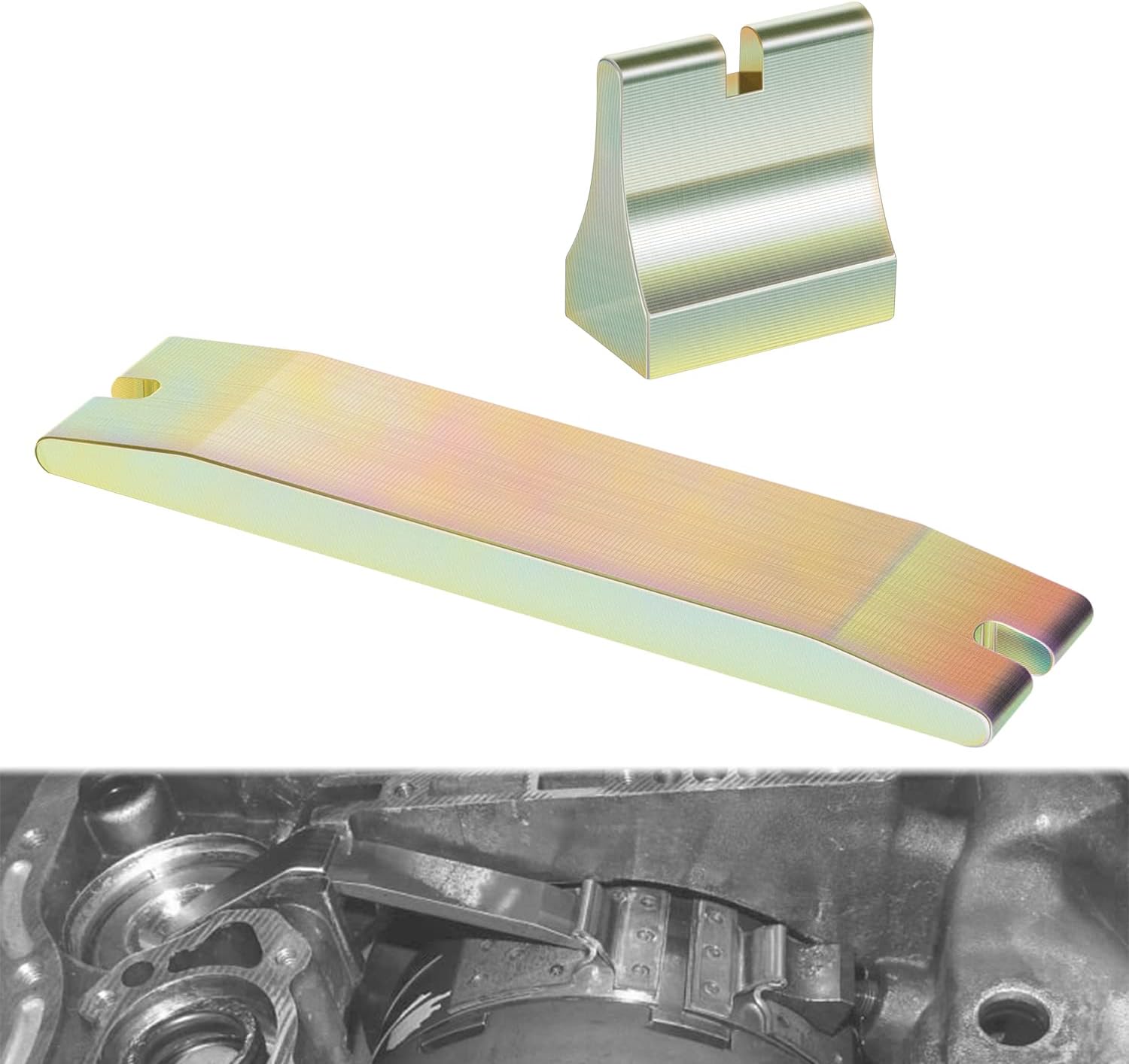
The front (kickdown) band holds second gear, and the stamped OE strut that anchors it is a known weak link. Sonnax states plainly that 46RH/RE, 47RH/RE, 48RE and A727 units "often bend or break the kickdown band strut." When it goes, second gear goes with it: the truck shifts 1-3, or 2nd slips and flares under load, and the pieces end up in the pan. The fix is a solid, heat-treated heavy-duty strut, which Sonnax sells as 22825-01 and includes in its Sure Cure kit. Check front band adjustment after installing it.
6. Overdrive Lube Loss and Planetary Failure
The overdrive section at the back of the 47RE is where a lot of units come apart. Sonnax notes that it is common for the overdrive section in these transmissions to suffer from poor lube oil control, which burns planetaries and fails bushings. Two leak paths are to blame:
- Overdrive piston retainer to intermediate shaft. Excess clearance there reduces lube flow to the gear train, and Sonnax adds that many OE supports do not seal well against the case, which bleeds off lube and pump volume. Their fix is the 22754N-01K piston retainer kit, with an O-ring for the case seal, and an oversized 22754N-02K version to salvage a damaged reverse drum.
- Intermediate shaft pilot and end plug. Sonnax's 22171A-02K pilot uses a reduced orifice for better lube flow, and its end plug lets you clean the shaft galley and install a new plug.
If you pull a 47RE with blued or welded planetaries, fix the lube path, not just the gears, or the new ones will go the same way.
7. Input Shaft Failure Behind Modified Diesels
Behind a stock 5.9L Cummins, the OE input shaft is usually fine. Add power and towing and it becomes a weak link, because the factory design is a two-piece shaft and forward clutch hub. Sonnax describes the joint between those two pieces as the weak connection, and its heavy-duty 22121B-01 shaft replaces both with a one-piece shaft forged from 300M steel. Any 47RE going behind a tuned diesel should get the shaft upgrade during the rebuild, along with the converter and clutch capacity to match.
8. Lost Reverse: Rear Servo Piston and Direct Clutch Spring
Two Reverse failures show up again and again. The first is the rear servo. Sonnax says the '97-later 47RE rear servo piston (OE 52118745) can wedge in its bore and bind in Reverse. That wears the bore and burns the low-reverse band, and the result is no Reverse. The aluminum reverse servo plug inside the piston can also gall and break at its spring seat under Reverse loads.
The second is the overdrive direct clutch spring. It applies the direct clutch with spring force, not oil pressure. TransGo says that once it fades, clamping force drops, and you get slipping or no Reverse, little or no coast braking in manual 2 or 1, and burnt direct clutch plates. Replace the spring (OEM 4461027) whenever you replace those plates. Our 47RE no reverse guide walks through the full diagnosis.
Where to Start on a 47RE Complaint
- Check fluid level and condition hot. ATF+4 only. Look at what is in the pan.
- Scan for codes and look at Governor Desired, Actual and OSS on the scan tool.
- Put a gauge on the governor port. Zero at a stop, about 1 psi per mph to 40 mph, zero in P, R and N.
- For stalling, lockup slip or heat, bypass the cooler and retest before anything else.
- Vacuum test the valve body if pressures or shift quality are off.
- If it comes apart, address the known weak points while it is open: kickdown strut, overdrive lube path, stator support flatness, and the input shaft on a modified truck.
Sonnax Piston Retainer Kit 22754N-01K
Seals the overdrive support to the case and restores lube flow to the gear train. Fits 46RE, 47RE and 48RE per Sonnax. Cheap insurance on any RE rebuild.
View the piston retainer kit →Shop the Sonnax piston retainer kit →
Frequently Asked Questions
What is the most common problem with the 47RE transmission?
Shift complaints traced to the electronic governor system are the most common, because governor pressure is what strokes the 1-2 and 2-3 shift valves. A faulty governor solenoid, a bad pressure transducer, a warped governor body or a lost output speed signal can all cause no upshift or 3rd gear starts. Put a gauge on the governor tap before replacing parts.
Why does my 47RE start in third gear?
Third gear starts mean the governor circuit is seeing full line pressure. That happens in limp mode, when the computer shuts the governor solenoid off, and it also happens without a code when there is a crossleak in the governor body, valve body or case, or a sticking shift valve. A gauge on the governor port should read zero in Park, Reverse and Neutral.
What governor pressure should a 47RE have?
Governor pressure should be zero at a stop and rise about 1 psi per mph up to roughly 40 mph. Above that, the system routes line pressure to the governor circuit, so the reading stops following road speed. The desired pressure, the transducer reading on the scan tool and your gauge reading should all agree.
Why does my 47RE stall the engine when I come to a stop?
The converter clutch is not releasing. Check cooler flow first by bypassing the cooler, then unplug the transmission connector to kill TCC control, then inspect the switch valve and valve body flatness. If it still stalls, a warped stator support on the pump can crossleak front clutch oil into the converter passages, which needs the transmission out to fix.
Is the 47RE a reliable transmission?
It is a simple, mostly hydraulic four-speed that holds up well when it is kept cool and built right. Most failures trace to known weak points: valve body bore wear, cooler restriction, the stamped kickdown band strut and poor overdrive lube control. Rebuilds that address those points with updated parts tend to last.
Sources
- ATRA GEARS Magazine, October 2006 — "Troubleshooting the 42-47RE Transmissions." Backs the governor pressure spec (zero at a stop, about 1 psi per mph to about 40 mph), the Desired/Actual/gauge comparison, the no-upshift and 3rd-start diagnostics, limp mode behavior, case connector pin 1, the transducer voltages, the 105 psi WOT note and the 1999 PTC temperature sensor change. atracom.blob.core.windows.net (PDF)
- ATRA GEARS Magazine, August/September 2022 — "A Dead Stop! A Typical Dodge 47RE Problem With an Unexpected Solution." Backs the TCC stall check order, the 40 psi cooler air check, why unplugging the connector is a valid test on the 47RE, switch valve and flat-sanding notes, and the warped stator support crossleak. gearsmagazine.com
- Sonnax — 46/47 RH-RE Cooler and Converter Flow. Backs cooler restriction as the most common issue, the switch valve staging effect near 80 psi head pressure, the symptom list and the bypass and flow-monitoring tests. sonnax.com
- Transmission Digest — "740/1740 Codes and Chrysler Converter Flow" (Ed Lee). Backs the TCC slip code definition, the non-converter causes, and the 0.125-0.250 in. converter-to-flexplate clearance. transmissiondigest.com
- Sonnax — Chrysler 46RE, 46RH, 47RE, 47RH Vacuum Test Guide. Backs the valve body wear points and their symptoms. sonnax.com
- Sonnax — Heavy Duty Kickdown Band Strut 22825-01. Backs the statement that RE units often bend or break the kickdown band strut and the solid heat-treated replacement. sonnax.com
- Sonnax — Piston Retainer Kit 22754N-01K and Intermediate Plug & Pilot Kit 22171A-02K. Back the overdrive lube loss causes, the poorly sealing OE support, and the retainer and pilot fixes. sonnax.com (retainer) · sonnax.com (pilot)
- Sonnax — Heavy Duty Input Shaft 22121B-01 and Sure Cure Kit SC-46-47RHE-OS. Back the two-piece OE input shaft weak point and the one-piece 300M replacement, and the Sure Cure kit contents. sonnax.com (input shaft) · sonnax.com (Sure Cure)
- Sonnax — Rear Servo Piston 22912C (47RE, 48RE '97-later). Backs the OE piston (52118745) wedging in its bore, binding in Reverse, wearing the bore and damaging the band, with no Reverse and burnt bands listed as symptoms. sonnax.com
- TransGo — TFOD-SP Overdrive Direct Clutch Spring. Backs the faded direct clutch spring reducing clamping force, causing slipping or no Reverse, lost coast braking in manual 2nd or 1st and burnt direct clutch plates, and the OEM 4461027 interchange. transgo.com
Shop 47RE rebuild kits, governor pressure solenoids, valve bodies and band struts — shipped fast from the USA.
Shop 47RE parts →