The 47RE is the four-speed that lived behind the 5.9L Cummins and the big-block gas engines in Dodge Ram 2500 and 3500 trucks from roughly 1996 through 2002. It is a torquey, durable box, but it is also the transmission that sends the most people chasing their tail. The reason is the valve body. Unlike the old hydraulic-governor units it grew out of, the 47RE controls shift timing electronically through a governor pressure solenoid and a governor pressure sensor (transducer) that feed the valve body, and it still relies on a stack of spool valves in aluminum bores that wear with age and heat [2].
When those bores wear or a valve sticks, the truck develops a personality: it starts in the wrong gear, bangs shifts, slips, refuses to lock the converter, or drops into limp mode with no clean code to explain it. This is how to tell a worn valve body apart from a bad solenoid or a tired clutch pack — and how to test it with gauges instead of guessing.
The short version: Most 47RE shift complaints are a governor-circuit or valve-body hydraulic problem, not a worn-out gearset. Before you pull the pan or buy a solenoid, put a governor pressure gauge and a line pressure gauge on it. Governor pressure should read zero at a stop and climb roughly one PSI per MPH; line pressure should track the throttle and sit within the factory spec [6]. If those numbers are wrong with a good solenoid and sensor, the valve body is where the money is.
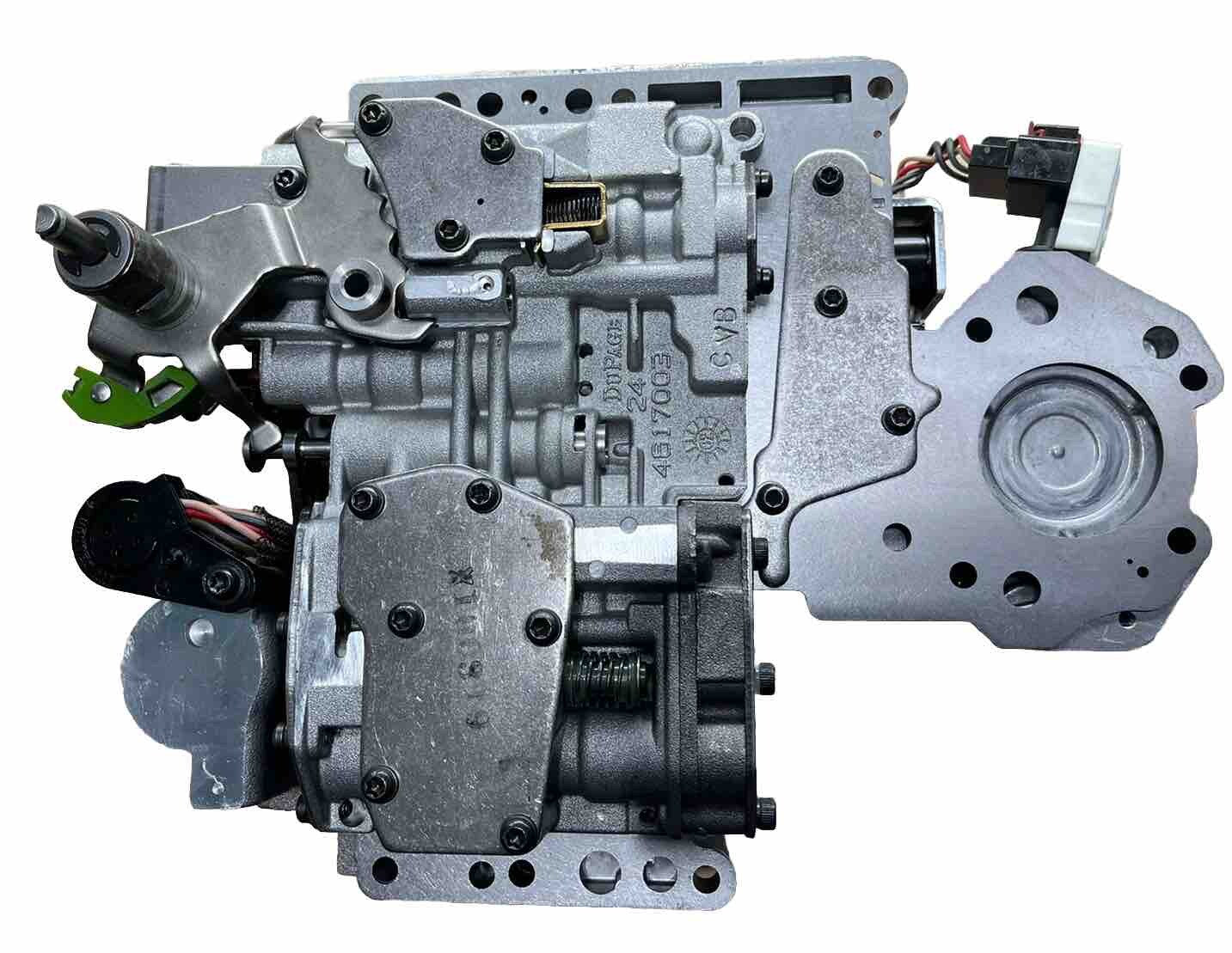
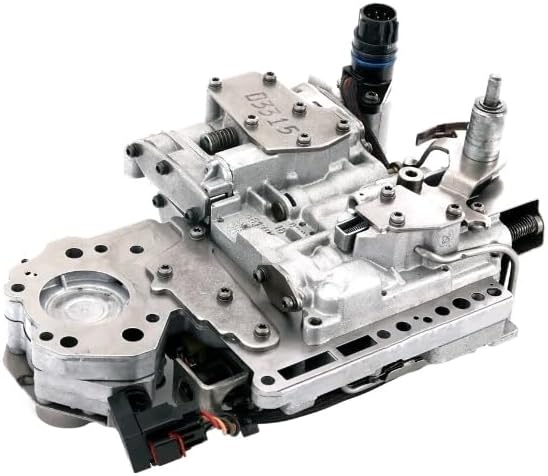
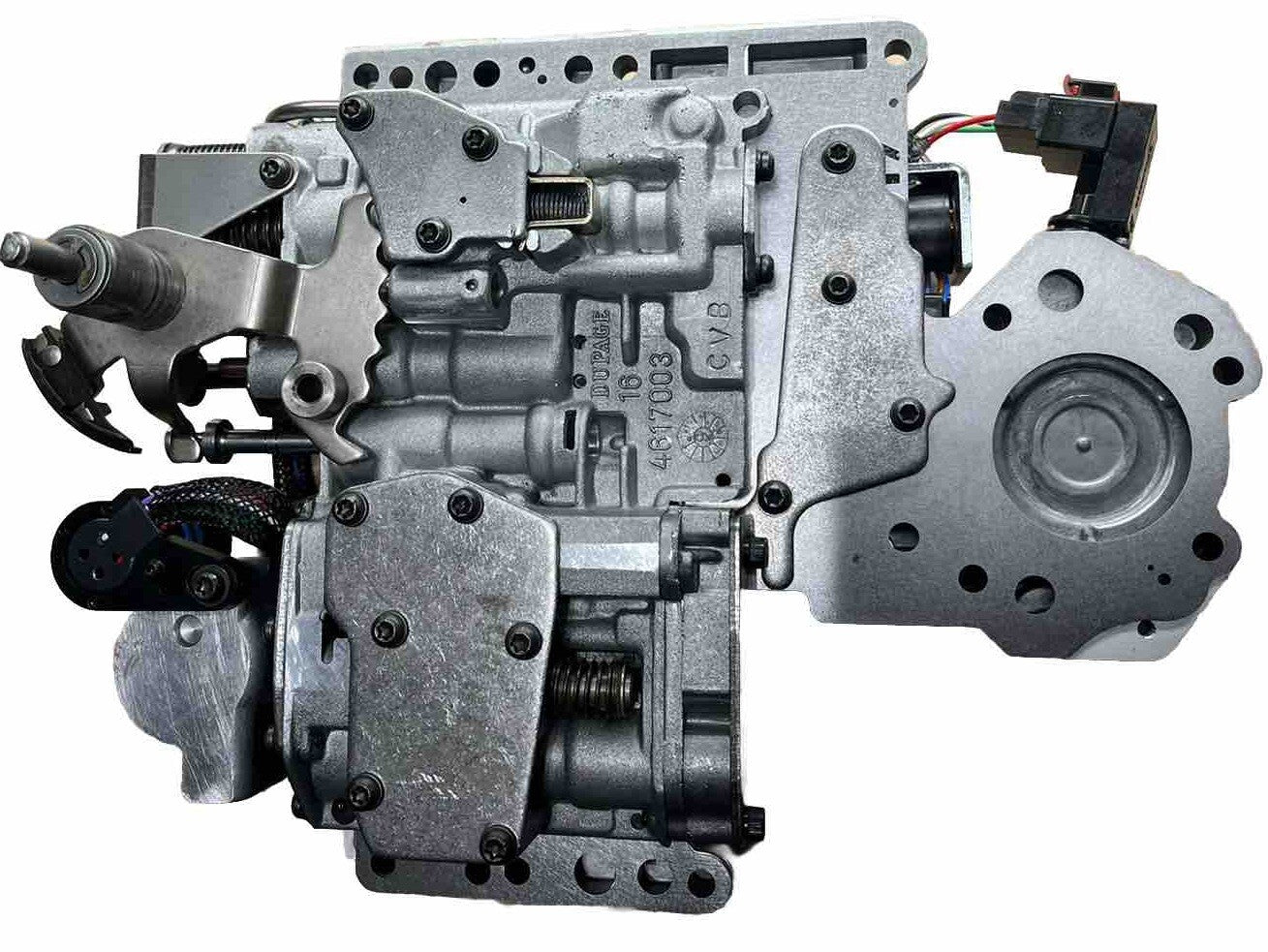
How the 47RE Valve Body Actually Works
The 47RE valve body is a hybrid. It carries the traditional hydraulic shift logic — a manual valve, 1-2 and 2-3 shift valves, a pressure regulator, a boost/lockup valve, and a switch valve that times the torque converter clutch — but it hands shift timing to the PCM. The PCM pulses the governor pressure solenoid to create a governor pressure signal, then reads that signal back through the governor pressure sensor. That closed loop is what tells the transmission how fast you are going and when to shift [2].
Sonnax's valve body layout for the 42-44-46-47RH/RE family lays out exactly which valve lives where — the pressure regulator, the boost valve and sleeve, the switch valve, and the shift valves — and it is the reference to have open on the bench when you are inspecting bores [1]. One trap worth knowing before you order parts: these units came with more than one style of pressure sensor and pump inlet, so you have to identify which electronic valve body you actually have before you match components to it [3].
Symptoms of a Failing 47RE Valve Body
Valve-body and governor-circuit problems on the 47RE show up as drivability complaints long before anything actually breaks. The common ones:
- Starts in second or third gear (a "2nd gear start" or high-gear start), often after warm-up, because the governor pressure signal is wrong.
- Erratic, harsh, or delayed 1-2 and 2-3 shifts, or shifts that come at the wrong speed and change with fluid temperature.
- Slipping or flare between gears from cross-leaks at a worn bore that bleed off apply pressure.
- Torque converter clutch (TCC) problems — shudder, soft or no lockup, or a converter that stays applied and stalls the engine as you coast to a stop [5].
- Limp mode (locked in a single gear), sometimes with a governor pressure code, sometimes with none at all.
- Overheating and TCC slip when a worn lockup boost valve loses converter and lube flow.
What makes the 47RE frustrating is that a stuck valve, a worn bore, a bad governor solenoid, a failed pressure sensor, PCM wiring, or line pressure set too high can all produce the same wrong-gear or harsh-shift complaint [6]. That is why you test instead of throwing parts at it.
How to Test Your 47RE Valve Body
You do not need a lift and a teardown to find most 47RE valve-body faults. You need a governor pressure gauge, a line pressure gauge (0–300 psi), a scan tool, and a methodical order of operations. Work through it in this sequence — each step narrows down where the fault is before you open anything.
- Read codes and live data first. Scan for governor pressure solenoid and sensor codes, then watch commanded versus actual governor pressure on the scan tool during a road test. If commanded and actual disagree, you have a governor-circuit or hydraulic problem, not a gearset problem.
- Do the unplug test. Because the 47RE uses a governor pressure solenoid rather than a line-pressure control solenoid, disconnecting the transmission connector is a valid diagnostic: with it unplugged the transmission defaults to a fixed hydraulic state, which quickly separates an electrical fault from a mechanical one [5].
- Gauge the governor pressure. Tap the governor pressure port and road test. Governor pressure should read zero at a standstill and rise about one PSI for every one MPH, up to roughly 40 MPH. Use a 0–100 psi gauge here — a 0–300 gauge is too coarse to read the low governor pressures accurately [6]. Pressure that is high at a stop, won't climb, or is erratic points at the solenoid, sensor, or a sticking governor plug in the valve body.
- Gauge the line pressure. Connect a 0–300 psi gauge to the line pressure tap and record pressure in Park, Reverse, and each drive range at idle and at part throttle. Line pressure should be stable, rise cleanly with throttle demand, and fall within the factory service spec for the year and engine. Line pressure that reads too high across the board is a classic cause of governor codes and wrong-gear starts, and it also loads the whole valve body [6].
- Correlate pressure with the symptom. Wrong governor pressure with correct line pressure and a good solenoid/sensor circuit means the governor plug or its bore in the valve body. Wrong line pressure means the pressure regulator or boost valve circuit. TCC shudder or a converter that won't release points at the switch valve and lockup boost valve.
- Pull the pan and inspect the valve body for worn bores. With the valve body out, remove each valve and check the aluminum bore. Look for a sticking 1-2 shift valve, 2-3 shift valve, governor plug, or broken springs — all common on the 47RE and 46RE [6]. The lockup boost valve and its bore are a known wear point; when that bore opens up it loses converter and lube flow and lets line pressure climb [4]. Inspect the switch valve bore closely too — TCC apply timing is critical and a worn switch valve bore causes soft or shuddering lockup.
- Check the mating surfaces for warpage. Lay the valve body and separator plate on glass and check flatness; minor warpage that lets circuits cross-leak can be corrected by flat-sanding, while a warped pump or stator support is a deeper fault that mimics a valve-body problem and needs machining or replacement [5].
Run those seven steps in order and the 47RE stops being a mystery. In most cases the fault reveals itself at the gauge in step 3 or 4, long before you commit to pulling the transmission.
Causes: Why 47RE Valve Bodies Wear Out
Three things kill these valve bodies, and they usually work together:
1. Worn aluminum bores
The valves are steel spools riding in soft aluminum bores. Decades of heat, dirty fluid, and pressure cycling wear the bores oval, and once the clearance opens up the valve no longer seals. Pressure cross-leaks past it, and the symptom depends on which valve: shift valves give harsh or missed shifts, the boost valve gives high line pressure and TCC/lube loss, the switch valve gives converter-clutch complaints [4].
2. High line pressure and heat
Line pressure set too high — whether from a shift kit, a stuck regulator, or a worn boost valve — accelerates bore wear and pushes governor pressure up with it, which is why an over-pressured 47RE throws governor codes and starts in the wrong gear [6]. On Cummins trucks that tow, sustained heat only speeds this up.
3. Governor solenoid and sensor failure
The governor pressure solenoid and the governor pressure sensor are electro-hydraulic parts that live in the fluid and do fail. When they do, the shift-timing signal goes bad even though the mechanical valve body is fine — which is exactly why the unplug test and the pressure gauges in the procedure above matter before you condemn the valve body itself [5].
Repair or Replace? Making the Call
Once the diagnosis points at the valve body, you have three honest options:
- Targeted valve repair. A single worn bore — say a boost valve or switch valve — can be reamed and fitted with an oversized Sonnax valve to restore the seal. This is the cheapest fix when only one circuit is bad and the rest of the body is clean.
- Full valve-body correction kit. When several bores are worn or the truck has high miles, a comprehensive kit such as the Sonnax Sure Cure addresses the root causes together by sealing the pressure losses across the main line, converter clutch, throttle, and lube circuits at once, rather than fixing one leak while the next one waits its turn [4].
- Remanufactured valve body. If the bores are badly worn, the casting is warped, or you simply want a bench-tested drop-in with the correct governor solenoid and sensor already fitted and calibrated, a remanufactured valve body is the fastest way to a known-good result — and it removes the guesswork of matching the right sensor and pump-inlet configuration to your unit [3].
Whichever route you take, correct the line pressure at the same time. Dropping a fresh valve body into a transmission that is still running high line pressure just wears the new bores the same way the old ones went.
Remanufactured 47RE Valve Bodies & Rebuild Parts
We stock remanufactured 47RE valve bodies with the correct governor pressure solenoid and sensor already fitted, plus boost valve kits, Sure Cure and Zip kits, shift kits, governor solenoids/sensors, and rebuild kits — matched to your year and engine so you get the right pressure-sensor and pump-inlet configuration the first time.
Shop remanufactured 47RE valve bodies →Doing the job yourself? Our line pressure testing walkthrough covers the gauge hookup in detail, the valve body cleaning and inspection guide shows how to check bores for wear, and the Dodge 46RE/47RE/48RE guide covers the rest of the unit.
Sources
- Sonnax — Chrysler 42-44-46-47RH/RE, 48RE Valve Body Layout, the reference diagram identifying the pressure regulator, boost/lockup valve, switch valve, and shift valves and their bores. sonnax.com/tech_resources/586
- Sonnax — Chrysler 47RE Transmission (unit overview), on the 47RE's electronic governor pressure solenoid/sensor control and valve-body architecture. sonnax.com/units/421-47re
- Sonnax — Chrysler 42RE, 46RE, 47RE Valve Body Identification, on determining the correct pressure-sensor type and pump-inlet size before matching parts to an electronic valve body. sonnax.com/tech_resources/253
- Sonnax — Sure Cure Kit SC-46-47RHE-OS, on the worn boost/lockup and other bores that cause line-pressure, converter-clutch, throttle, and lube-circuit pressure losses, and the kit that seals them. sonnax.com/parts/4466-the-sure-cure-kit
- Gears Magazine (ATRA) — A Dead Stop! A Typical Dodge 47RE Problem With an Unexpected Solution, on unplug testing, valve-body warpage inspection, TCC/coast-stall behavior, and process-of-elimination diagnosis. gearsmagazine.com/magazine/a-dead-stop
- ATRA Gears — "The 42-47RE Transmissions" (October 2006), on governor pressure testing (zero at stop, ~1 PSI per MPH), the 0–100 psi gauge recommendation, switch-valve TCC timing, and common sticking shift valves and governor plug. atracom.blob.core.windows.net/gears/2006/2006-10/2006_10_46.pdf