If your 2003–2007 RAM 2500 or 3500 with the 5.9L Cummins and the 48RE automatic has started shifting strangely — slamming from gear to gear, taking off from a stop already in second, "shuttle shifting" back and forth at steady speed, or dropping into a single gear and refusing to shift — there is one small pair of parts that causes the overwhelming majority of it: the governor pressure solenoid and the governor pressure sensor. Understand how they work together and this transmission goes from baffling to straightforward.
The 48RE is the last and strongest of Chrysler's venerable torque-converter automatic line, tracing straight back to the 727 TorqueFlite through the A518/46RE and 47RE. What sets it apart from its ancestors is how it decides when to shift. The old boxes used a mechanical governor spun by the output shaft. The 48RE deleted that and went electronic.
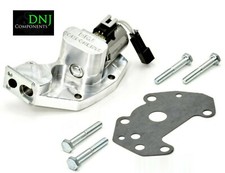
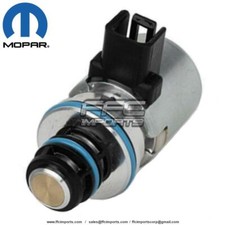
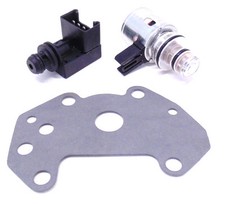
The short version: The 48RE controls shift timing with a governor pressure solenoid (which sets the pressure) and a governor pressure sensor (which tells the computer what the pressure actually is). They work as a closed loop. When either drifts or fails, shift timing goes haywire — shuttle shifts, starting off in 2nd or 3rd, harsh 2-3, or limp mode. Replace them as a matched pair, verify with a gauge, and address the heat that killed them.
How the 48RE Electronic Governor Works
On the 48RE, governor pressure is what tells the valve body when to upshift and how firmly. Two components in the valve body create and monitor that pressure, and the powertrain control module (PCM) runs them as a feedback loop:
- Governor pressure solenoid — a PCM-controlled solenoid that regulates how much governor pressure is applied. More pressure, later/firmer shift points scaled to speed and load.
- Governor pressure sensor (transducer) — reports the actual governor pressure back to the PCM so it can trim the solenoid to hit the target. It is the feedback half of the loop; without a believable signal, the PCM is driving blind.
Because it is a closed loop, a fault in either part corrupts the whole thing. A solenoid that sticks or leaks delivers the wrong pressure; a sensor that reads high, low, or erratic feeds the PCM bad data and makes it command the wrong pressure. Both roads end at the same symptoms, which is exactly why you deal with the pair, not one piece in isolation.
What a healthy sensor reads
A useful bench fact for diagnosis: the governor pressure sensor should read a low, steady voltage at rest — on the order of 0.5 volts with the truck stationary and governor pressure near zero — and that voltage should climb smoothly as road speed and governor pressure rise. A sensor sitting well above that at a standstill, or one that jumps around, is suspect. Watch it live on a scan tool that shows the governor pressure PID in both volts and psi.
The Symptoms, and What Each One Is Telling You
These are the complaints that walk in the door on a 48RE, and they nearly always trace to the governor circuit:
- Starting off in 2nd or 3rd gear. The truck feels gutless from a stop because it is not in first. Classic wrong-governor-pressure behavior.
- Shuttle shifting. At a steady cruise the transmission hunts up and down between two gears because the pressure signal is unstable.
- Harsh or delayed 2-3 shift. Shift feel is set by governor pressure; when it is wrong, the 2-3 bangs or hangs.
- Shift points that change with temperature. As the valve body and fluid heat up, a marginal solenoid or sensor drifts, so the truck shifts fine cold and badly hot (or the reverse).
- Limp mode. When the PCM sees a governor signal it cannot trust, it protects the transmission by locking it in a single gear and lighting a code.
The codes to expect
The governor circuit throws a recognizable family of codes. P0868 flags a transmission fluid/line pressure problem, and the Chrysler-specific governor pressure sensor codes are P1762 (governor pressure sensor offset volts too low or high), P1763 (governor pressure sensor volts too high), and P1764 (governor pressure sensor volts too low). See any of the P176x codes on a 48RE and your diagnosis starts at the governor circuit, not the clutches.
Do not confuse the governor codes with the throttle-valve-actuator (TVA) codes. The 48RE also has an electric throttle valve actuator on the outside of the case that sets throttle-pressure/kickdown, and it has its own separate codes. A truck with harsh shifts can have a TVA problem instead of a governor problem — read the exact code and confirm which circuit before you buy parts.
How to Test It Right
Do not shotgun parts at a 48RE. The circuit is easy to verify:
- Scan live data. With the truck stationary, confirm the governor pressure sensor sits near that ~0.5-volt / near-zero-psi baseline. Road test and watch the value climb smoothly with speed. Jumpy, stuck, or offset readings condemn the sensor.
- Back it up with a mechanical gauge. The most reliable check is a real pressure gauge on the governor pressure tap. Sonnax makes the point that governor oil pressures are low, so you need a 0 to 100 psi gauge to read them accurately — a 0-300 or 0-400 psi gauge is not sensitive enough to show the low governor pressures with any precision. Compare commanded pressure on the scan tool against actual pressure on the gauge; a big gap points at the solenoid or a worn valve-body circuit rather than the sensor.
- Inspect for debris and heat damage. A failing solenoid sheds material that can take out the sensor, and vice versa. If the fluid is burnt, you have your root cause for why the parts died.
The Fix: Replace the Pair, Then Fix the Heat
When the governor circuit is confirmed, replace the governor pressure solenoid and the governor pressure sensor together. They are a matched wear pair living in the same hot oil; replacing only one and reusing the other is the single most common reason a 48RE governor repair comes back a few thousand miles later. Use quality parts — Sonnax, for example, offers an upgraded Rostra governor pressure sensor for the 42/44/46/47/48RE family — because a cheap sensor with a loose tolerance reintroduces the exact erratic-signal problem you are trying to cure.
Two more points that separate a lasting repair from a repeat:
- Address the heat. These trucks tow, and heat is what cooks the governor components and the fluid around them. If the truck runs hot, an auxiliary cooler and fresh fluid protect the new parts. A governor pack that keeps failing is usually a heat or contamination problem, not a bad-luck streak of parts.
- Check the valve-body circuit. On high-mileage units the bores the governor circuit runs in can be worn, so the pressure never regulates cleanly no matter how good the new solenoid is. If commanded and actual pressure still disagree with fresh parts, the valve body itself needs attention.
Bottom line: the 48RE's electronic governor is a two-part closed loop. Read the code, verify the ~0.5-volt sensor baseline, confirm with a 0-100 psi gauge, then replace the solenoid and sensor as a set with quality parts and fix the heat that killed them. Do that and the shuttle-shifting, start-in-2nd, limp-mode 48RE drives like new again.
Going deeper on this transmission? Our 46RE/47RE/48RE family guide covers the whole unit, 48RE Cummins problems covers the towing failure modes, and how to read transmission live data walks through the scan-tool side.
Sources
- Sonnax — Chrysler 48RE Transmission unit page, reference for 48RE components including governor pressure sensor/solenoid offerings. sonnax.com/units/388-48re
- Sonnax — "Transmission Diagnostics Using Pressure Gauges," on using a 0–100 psi gauge to read low governor pressures accurately when diagnosing shift-timing complaints. sonnax.com/tech_resources/314-transmission-diagnostics-using-pressure-guages
- Transmission Digest — "A Significant Departure – the 48RE Transmission," on the 48RE's electronic governor pressure control and how it differs from the earlier mechanical-governor units. transmissiondigest.com/a-significant-departure-the-48re-transmission
- Transmission Digest — "Preventing 48RE Transmission Throttle-Valve-Actuator Codes," on distinguishing the TVA circuit and its codes from the governor pressure circuit. transmissiondigest.com/preventing-48re-transmission-throttle-valve-actuator-codes