The 48RE is the heavy-duty end of the Chrysler TorqueFlite line — the four-speed automatic behind the 5.9L Cummins in 2003–2007 Dodge Ram 2500 and 3500 trucks, and behind the big gas V8s and V10s of that era. It is a strong unit, but it lives and dies by its valve body. That aluminum casting is the hydraulic brain of the transmission: it routes pump pressure to the clutches and bands, sets line pressure, controls torque converter clutch (TCC) apply, and works with the governor circuit to time shifts. When the bores in that casting wear, the truck develops a whole catalog of drivability complaints that get blamed on solenoids, converters, and clutches that are often perfectly good.
This is what actually goes wrong inside a 48RE valve body, how to test it the right way with a pressure gauge and a scan tool before you tear anything down, and how to decide between a targeted repair and a remanufactured valve body.
The short version: Most 48RE valve body complaints trace to a handful of worn bores — the pressure regulator valve, the lockup boost valve, the 4-spool switch valve, and the line pressure plug and sleeve. Worn bores leak internally, so you lose line rise, TCC clamp, and cooler/lube flow. Confirm it with a line-pressure gauge and governor-pressure scan data before you condemn the governor solenoid, the converter, or the clutch packs. A worn casting mimics all three.
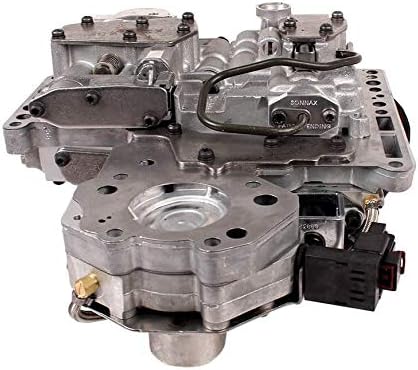
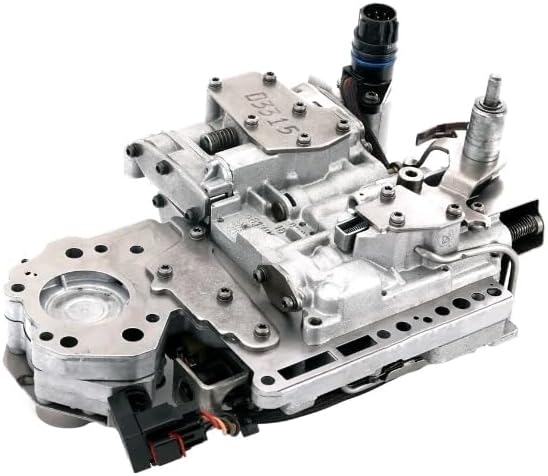
What the 48RE Valve Body Actually Does
The pressure regulator valve on the TorqueFlite family works a little backwards compared to most transmissions: it has several reduction points that push the valve toward lower line pressure, and throttle (TV) pressure works against them to raise it. When Dodge needed more clamping force for the higher-torque diesels, they added a boost valve near the pressure regulator that strokes when the TCC or overdrive circuit applies. On a 46/47RE that boost is worth roughly 10–15 psi of extra line pressure in lockup or 4th. On the 48RE, the geometry was changed so that boost is worth about 22–28 psi — a substantial jump in converter-clutch and overdrive clamping that the heavier-duty applications need, especially towing [2].
That is exactly why you can't just drop a 46/47RE valve body into a 48RE. It runs fine at first, then comes back with a burned converter clutch or overdrive clutch because the pressure curve is wrong [2]. The valve body also feeds the TCC control valves and the governor pressure circuit, so a worn casting shows up as shift-quality, converter, and shift-timing problems all at once.
Symptoms of a Worn 48RE Valve Body
Because different bores control different circuits, the complaints depend on which valve has worn. Sonnax maps the common 48RE wear areas to symptoms like this [1][4]:
| Worn valve / bore | Circuit | Typical symptoms |
|---|---|---|
| Pressure regulator valve | Line pressure | Delayed engagement, pressure regulator "buzz," lube failures, converter bushing failure |
| Lockup boost valve | TCC / line rise | TCC slip under load, no line rise during TCC apply in 4th, overheated converter, TCC cycling, no lockup |
| 4-spool switch valve | TCC / cooler | Lockup shudder, soft TCC apply, low cooler flow, overheated converter |
| Line pressure plug & sleeve | Line pressure | Reverse slip, poor forward and reverse engagement, poor line pressure control |
| Governor plugs / bore | Shift timing | 1-2 shuttle, 2-3 and 3-2 oversensitive, early upshifts |
| TCC apply / limit valve | Converter | Damaged converter, internal converter damage, converter concerns |
| Throttle valve | Shift timing | Throttle buzz, 2-3 late, 3-2 oversensitive, poor kickdown |
In plain shop terms: harsh or slipping shifts, a converter that won't lock or won't stay locked, overheating on the highway or while towing, delayed engagement into drive or reverse, and erratic shift points under load are all classic worn-valve-body signatures on this unit. The trap is that every one of them can also be caused by something else — which is why you test before you tear down.
The Governor Circuit: The 48RE's Own Special Headache
The 48RE controls shift timing electronically through a pulse-width-modulated governor pressure solenoid and a governor pressure sensor (transducer), both bolted to the valve body. The PCM commands the solenoid, which regulates line pressure down into governor pressure; the sensor reports back what the circuit is actually producing. The relationship is inverse — roughly one amp of solenoid current produces about zero psi of governor pressure, and zero amps produces maximum governor pressure [6].
This matters because a huge share of "valve body" and "no upshift" complaints on the 48RE are actually the governor solenoid or sensor — and, notoriously, cheap aftermarket governor solenoids. The Valve Body Pro hotline documented 48RE diesels that wouldn't upshift at wide-open throttle where the shop had already replaced the solenoid and transducer; the fix in every case was installing an OE governor solenoid instead of the aftermarket one, because the aftermarket units delivered unstable governor pressure that never rose to equal line pressure when commanded [5]. So confirm the governor circuit with scan data before you blame the casting.
How to Test Your 48RE Valve Body
Work from the outside in and from cheap to expensive. The goal is to prove which circuit is failing before the pan ever comes off.
- Pull codes and read them literally, not by their name. Note anything in the transmission family — especially governor-pressure-sensor codes such as P0868 (fluid pressure too high) or the sensor-circuit codes. A "governor pressure sensor" code does not automatically mean the sensor is bad; a hydraulic leak or an aftermarket solenoid can set it [5][6].
- Check the fluid and the basics first. Verify fluid level and condition. Dark, burnt fluid with debris points toward already-failed frictions or a cooked converter (a mechanical outcome), while clean fluid with pressure complaints leans toward a hydraulic/valve-body cause. Confirm the throttle valve (TV) linkage or the electronic TV actuator is adjusted correctly — a mis-set TV alone will throw shift timing off.
- Hook up a line-pressure gauge. Line pressure is read at the accumulator/line port on the case; the governor and rear-servo ports are at the right rear of the case [6]. Take readings in park/neutral at idle, in gear, and while raising throttle. You want to see line pressure rise smoothly with throttle and hold steady, with no wandering or "buzz." Low or unstable line pressure that won't build points at the pressure regulator valve or line pressure plug and sleeve.
- Verify line rise on TCC/4th apply. On a healthy 48RE, line pressure should step up meaningfully (on the order of ~22–28 psi over the un-boosted value) when the converter clutch applies or the unit shifts to overdrive, because the boost valve strokes [2]. If you get no line rise during TCC apply in 4th, that is a textbook worn lockup boost valve [1][4]. High line pressure with no sign of boost points the same direction.
- Watch governor pressure on a scan tool. With the truck in drive and stopped, both commanded (target) and actual governor pressure should read 0 psi. As you accelerate, both should climb together, running in the general range of a few psi up to low double digits in normal cruise, and at wide-open throttle the commanded low-duty-cycle signal should drive actual governor pressure up to equal line pressure. If target and actual diverge — especially actual that stays low or oscillates — suspect the governor solenoid (frequently an aftermarket unit) or sensor before the casting [5][6].
- Vacuum-test the valve body off the vehicle. Once the valve body is out, vacuum testing is the fastest way to find worn bores. Apply vacuum to each test location listed by Sonnax; a healthy bore holds vacuum, and a low reading means the bore has worn and is leaking [4]. The 48RE critical wear areas to test are the pressure regulator valve, lockup boost valve, 4-spool switch valve, line pressure plug and sleeve, throttle valve, TCC apply/limit valve, manual valve, and the governor plugs [1][4]. This is where a specific worn bore gets confirmed instead of guessed.
- Only then judge the hard parts. If line pressure, boost, governor data, and the vacuum test all check out and the truck still misbehaves, now you look at the converter, the clutch packs, and the overdrive unit — the expensive stuff you didn't want to condemn on a hunch.
Causes, and the Repair-vs-Replace Decision
The root cause on almost every high-mileage 48RE is simple bore wear. Aluminum valve bores wear against steel valves over years of heat cycles and towing loads; the clearances open up, the valves stop sealing, and pressure bleeds off internally. The lockup boost valve and 4-spool switch valve are the usual first offenders on the TCC side, and the pressure regulator valve and line pressure plug on the pressure side [1][2][4].
You have three realistic paths:
1. Targeted bore repair
If vacuum testing shows one or two worn bores in an otherwise good casting, you can ream the bore oversize and install a Sonnax oversized valve kit — an oversized 4-spool switch valve, oversized lockup boost valve kit, or oversized lube-regulated pressure regulator valve and line/TV pressure plug kit for the 48RE. Sonnax bundles the common ones into the 48RE-ZIP kit and the more comprehensive Sure Cure (SC-48RE) kit, which together address TCC slip, lockup shudder, overheated converter, reverse slip, and soft TCC apply [1][3]. This is the most cost-effective fix when the casting is sound and you have the reaming fixtures.
2. Remanufactured valve body
If the casting is worn in multiple places, if you don't have the tooling, or if you simply want a known-good unit with the corrected valves already installed, a remanufactured valve body is the clean answer. Salvageable 48RE cores are genuinely hard to find, so a properly reman'd unit with the upgraded pressure and TCC circuits is often the smart call [1][2]. It also removes the guesswork on a truck that has to get back to work.
3. Replace the governor components
If your testing pointed at the governor circuit rather than the casting, replace the governor pressure solenoid and/or transducer — with OE-quality parts, not the cheapest aftermarket you can find, for the reasons above [5]. This is a bolt-on repair that doesn't require pulling the valve body apart.
We Sell Remanufactured 48RE Valve Bodies
If your testing confirms a worn 48RE valve body, we stock remanufactured 48RE valve bodies built with the corrected pressure-regulator and TCC circuits, along with the oversized valve kits, governor solenoids and transducers, shift kits, and rebuild parts to do the job right. Everything ships fast from the USA. You can shop all 48RE parts and valve bodies here.
Remanufactured 48RE Valve Bodies & Repair Kits
Reman valve bodies with upgraded valves, oversized valve kits, governor solenoids and sensors, shift kits, and the tools to install them — for 2003–2007 Dodge Ram 5.9L Cummins and gas 48RE units.
Shop 48RE parts →Doing the job? Our line pressure testing walkthrough covers the gauge-hookup steps that apply directly here.
Sources
- Sonnax — Chrysler 42-44-46-47RH/RE, 48RE Valve Body Layout, the exploded-view reference identifying each 48RE valve train (pressure regulator, lockup boost, 4-spool switch, line pressure plug & sleeve, governor plugs, TCC apply/limit, throttle valve) and mapping wear to symptoms and repair parts. sonnax.com/tech_resources/586-chrysler-42-44-46-47rh-re-48re-valve-body-layout
- Sonnax — Dodge 48RE Hydraulic Features Revealed, on the 48RE pressure regulator/boost valve circuit, the ~22–28 psi line rise on TCC/4th apply vs. 10–15 psi on the 46/47RE, and why a 46/47RE valve body burns converters and OD clutches when swapped into a 48RE. sonnax.com/tech_resources/239-dodge-48re-hydraulic-features-revealed
- Sonnax — The Sure Cure Kit SC-48RE, the comprehensive 48RE valve body kit addressing TCC slip, lockup shudder, overheated converter, reverse slip, and soft TCC apply. sonnax.com/parts/3465-the-sure-cure-kit
- Sonnax — Chrysler 48RE Vacuum Test Guide, the critical-wear-area map and vacuum test locations for the 48RE upper and lower valve body, with the symptoms each worn bore produces. sonnax.com/tech_resources/1483-chrysler-48re-vacuum-test-guide
- Gears Magazine (ATRA) — "It Can't Be the Solenoid…I Replaced It!," on 48RE no-upshift-at-WOT diagnosis, governor pressure vs. line pressure, and OE vs. aftermarket governor solenoid behavior. gearsmagazine.com/magazine/it-cant-be-the-solenoidi-replaced-it
- ATRA / Gears Magazine — "Getting to Know the 42-48RE Series Transmissions," on governor pressure control (PWM solenoid, current-vs-pressure relationship), pressure test port locations, and normal governor pressure behavior. atracom.blob.core.windows.net/gears/2006/2006-07/2006_07_22.pdf