A 48RE that will not go into overdrive shifts 1-2-3 and then just stays there. Highway RPM sits a few hundred higher than it should, fuel mileage falls off, and on a Cummins truck the fluid temperature starts climbing because the converter is working harder. Owners call it "no overdrive" or "stuck in third." Before you buy anything, it helps to know that fourth gear on this transmission comes from a completely separate unit bolted to the back of the case, and that the computer has several legitimate reasons to refuse to use it.
So the diagnosis splits cleanly in two. Either the PCM is not commanding fourth, or it is commanding fourth and the overdrive unit is not holding it. This guide walks both halves in the order we use on the bench. Specs come from the Chrysler 48RE service manual, ATSG and Sonnax, listed at the bottom.
How a 48RE Gets Into Fourth
ATSG's 46RE/47RE/48RE manual puts it simply: first through third come from the clutches, bands and planetary sets in the main case, and fourth gear is provided by the overdrive unit in the rear section, which contains an overdrive clutch, an OD/direct clutch, an overrun roller clutch and its own planetary gearset. First, second and third are controlled by the electronic governor.[4] The shift into fourth has its own solenoid.
The Chrysler service manual describes the 3-4 sequence. The overdrive solenoid is not energized in first, second, third or reverse. While it is off, its check ball leaves a vent port open, and line pressure from the 2-3 shift valve is bled away from the 3-4 shift valve. When the PCM energizes the solenoid, the ball closes the vent, line pressure pushes the 3-4 shift valve over, and oil is sent through the 3-4 timing valve, the 3-4 quick fill valve and the 3-4 accumulator to the overdrive piston. The direct clutch releases first, then the overdrive clutch applies, and the gear ratio drops from 1.00:1 to 0.69:1.
The part people forget is the direct clutch. Per the factory manual, the overdrive direct clutch and the overrunning clutch are applied in every range except fourth, and the overdrive clutch is applied in fourth only. The direct clutch is held on by a large coil spring, the direct clutch spring, not by oil. The overdrive piston has to overcome that spring to release the direct clutch and apply the overdrive clutch. So the overdrive unit carries torque in every gear.
Sonnax adds one more 48RE-specific detail. When the overdrive apply circuit is charged, the boost valve moves and line pressure goes up roughly 22-28 psi, compared with about 10-15 psi on the 46RE and 47RE.[5]
Step 1: Is the PCM Even Asking for Fourth?
Most no-overdrive trucks we see are not broken inside. The computer is holding fourth out on purpose. Rule these out first, because they cost nothing.
The tow/haul overdrive switch
The service manual is direct about this: the switch must be in the ON position to energize the solenoid and allow a 3-4 upshift. Pressing it once puts the truck in tow/haul overdrive OFF mode and lights the lamp, and it goes back to ON every time the key is cycled. If the lamp is lit and the truck will not go to fourth, press the switch before anything else. The manual also warns that the switch is not indexed and its pins bend easily on reinstallation, a real cause of intermittent no-overdrive.
The fluid temperature lockouts
The temperature thermistor is built into the governor pressure sensor, and per the factory manual its readings are used to control engagement of the overdrive clutch, the converter clutch and governor pressure. There are two limits:
- Cold: the PCM prevents overdrive and converter clutch engagement when fluid is below approximately 10C (50F). On a winter morning a healthy 48RE will run in third until it warms up.
- Hot: above about 126C (260F), the PCM forces a 4-3 downshift, applies the converter clutch in third, and lights the Tow/Haul lamp. It will not allow fourth again until the fluid drops to about 110C (230F).
That hot limit explains a lot of "it drops out of overdrive when I tow in summer" complaints. The fix is cooler flow, fluid level and converter clutch condition, not a solenoid. By the time the PCM forces that downshift, the damage clock is already running: per ATRA's GEARS Magazine, the ideal maximum is 200 F and every 20 degrees above that cuts expected life in half, so 260 F is one-eighth life.[8] GEARS lists plugged cooler lines, a plugged cooler, a plugged filter, overloading, engine overheating and a bad fan clutch as the usual causes, and calls for at least 1 gallon per minute of cooler flow, measured with a flow meter or into a bucket.[8] The manual lists the thermistor at approximately 2,000 ohms at room temperature. If the scan tool shows a fluid temperature that does not make sense for how long the truck has been running, a bad thermistor can hold it out of overdrive on a perfectly good transmission.
Codes and the third-gear default
If the truck is stuck in third in every forward range and there are codes stored, the PCM has probably dropped the transmission control relay. ATSG explains that the relay feeds 12 volts to pin 1 of the case connector, which powers all three valve body solenoids. Losing that feed puts the unit in its third-gear default. That is a circuit problem to diagnose, not a no-overdrive problem, and our 48RE P0700 guide walks through it.
Step 2: The Overdrive Solenoid Circuit
If the switch is on, the fluid is between 50F and 230F, and there is no relay fault, check that the solenoid can actually do its job. The factory manual says the switch and solenoid continuity should be tested any time the transmission fails to shift into fourth, using a 12-volt test lamp or a volt/ohmmeter.
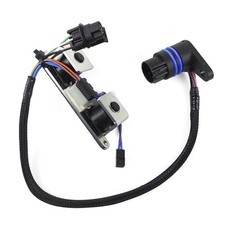
The quick version, from ATSG: unplug the 8-pin case connector and measure pin 1 to pin 6 on the transmission side. The overdrive solenoid should read 25 to 40 ohms. Then check pin 6 to the case for any short. With the connector plugged in, back-probe pin 6 with a test lamp to battery positive and confirm the PCM grounds it when it wants fourth. On the 48RE the overdrive solenoid is part of the internal harness and case connector assembly along with the TCC solenoid, so a bad reading means replacing the assembly. Our 48RE shift solenoid guide has the full pinout and test sequence.
If the solenoid ohms good and the PCM is grounding pin 6 but you still get no 3-4, you have moved past the electrical side. Now the question is whether oil is reaching the overdrive piston and whether the clutch can hold.
Step 3: It Commands Fourth but Will Not Hold It
This is where P0783 lives. It sets when the PCM commands the 3-4 and does not see the RPM drop. The road test tells you a lot. Per the Chrysler clutch application analysis, if the transmission slips in fourth but not in third, the overdrive clutch is slipping, and if slippage shows up during the 3-4 shift or only in fourth, the overdrive clutch is the unit at fault. A flare on the 3-4, or a 3-4 that happens and then slides back to third-gear RPM under load, is the classic picture.
The overdrive clutch pressure test
Do not condemn the clutch on feel alone. The factory Test Six reads apply pressure right at the overdrive clutch:
- Install a 300 psi gauge at the overdrive clutch pressure port on the left rear of the case.
- Turn the OD switch on, secure the gauge where you can read it from the seat, and drive in D (on the road or a chassis dyno).
- Accelerate gradually until the 3-4 shift happens and read the gauge.
| Condition (4th gear) | Factory spec |
|---|---|
| Closed throttle | 76-82 psi (524-565 kPa) |
| 1/2 to 3/4 throttle | 100-130 psi (690-896 kPa) |
| Full throttle | Around 140 psi (965 kPa) |
The manual's pressure analysis chart is blunt about what a low reading means: pressure low in D fourth gear range points to the overdrive clutch piston seal, or a check ball problem. If pressure is in spec and it still slips, the clutch pack itself is worn or burnt. If there is no pressure rise at all when the PCM commands fourth, go back to the solenoid; it may have a good coil and a stuck ball.
The direct clutch and its spring
The direct clutch is the other half of the overdrive unit, and it fails in a different way. The factory manual notes that if the direct clutch fails, the transmission loses both reverse and overrun braking in manual second. So a truck with no reverse and weak engine braking in 2 is telling you about the back of the transmission, not the front. The 48RE direct clutch uses 23 single-sided discs that must go back in the same orientation, and the manual says to replace the direct clutch spring if it is collapsed, distorted or cracked. A spring that has lost height puts less clamp on the direct clutch in every gear but fourth, which is how those plates end up burnt.
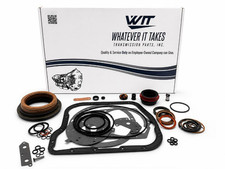
Taking that spring apart is not a driveway job: the manual calls for a shop press and a compressor tool on the clutch hub. Once you are in the clutch packs, a master kit makes more sense than piecing in frictions.
The Valve Body Mismatch Trap
Sonnax warns about one failure that looks like a bad overdrive clutch but starts somewhere else. People have fitted 46RE/47RE valve bodies to 48RE transmissions. It seems fine at first, then after some road time the truck comes back with a failed converter clutch or overdrive clutch. The older valve body does not give the 48RE its 22-28 psi line rise with overdrive applied, so the overdrive clutch runs on less clamp than the unit was designed for. If a truck is on its second or third overdrive clutch, confirm the valve body is a true 48RE unit before you rebuild it again. Our 48RE valve body guide covers what to look for.
An Order That Gets You to the Answer
- Check the OD switch and lamp. Cycle the key and try again.
- Scan for codes and read fluid temperature. Under 50F or over 260F, the PCM is doing what it should.
- Check fluid level and condition. ATF+4 only, checked hot in Neutral; per Valvoline's own ATF+4 full synthetic product documentation, the fluid is engineered and officially licensed to meet FCA/Stellantis automatic transmission requirements, so a generic Dexron or universal ATF has no business in this unit. Burnt fluid with a fourth-gear slip usually means the overdrive clutch is already done. See our 48RE fluid guide.
- Test the overdrive solenoid circuit at the case connector: 12V on pin 1, 25-40 ohms pin 1 to pin 6, and PCM ground on pin 6.[4]
- Run the overdrive clutch pressure test. Low in fourth only means piston seal or check ball; good pressure with slip means the clutch pack.
- Check reverse and manual-2 engine braking. Losing both points at the direct clutch and its spring.
- Verify the valve body if the truck has a history of repeat overdrive or converter clutch failures.
48RE Overdrive and Lock-Up Solenoid Assembly, 8-Pin (2003-2007)
The one-piece overdrive/TCC solenoid pack with harness and case connector. It is the part to replace when pin 1 to pin 6 reads open, shorted or well outside 25-40 ohms.
View the 48RE OD/TCC solenoid →Shop 48RE transmission parts →
Frequently Asked Questions
Why won't my 48RE shift into overdrive when it is cold?
The Chrysler 48RE service manual says the PCM will not engage the overdrive clutch or the converter clutch until transmission fluid temperature is above approximately 10C (50F). On a cold morning the truck will run 1-2-3 only until the fluid warms up. That is normal. If it never gets fourth even fully warmed up, check the fluid temperature reading on a scan tool, because a bad thermistor can hold it out of overdrive.
Why does my 48RE drop out of overdrive when towing?
If fluid temperature goes above about 126C (260F), the PCM commands a 4-3 downshift, applies the converter clutch in third and lights the Tow/Haul lamp. It will not allow fourth again until the fluid cools to about 110C (230F). That is overheat protection, not a failed part.
What does P0783 mean on a 48RE?
P0783 means the PCM commanded the 3-4 shift and did not see the engine RPM drop it expected. If the solenoid circuit tests fine electrically, the cause is usually mechanical: a sticking overdrive solenoid, low overdrive clutch apply pressure, or a burnt overdrive clutch. An overdrive clutch pressure test on the road separates those.
What should 48RE overdrive clutch pressure be?
The factory Test Six specification is 76-82 psi at closed throttle after the 3-4 shift, rising to 100-130 psi at half to three-quarter throttle, and up to around 140 psi at full throttle. It is read at the overdrive clutch test port on the left rear of the case with a 300 psi gauge. Low pressure only in fourth points to the overdrive clutch piston seal or a check ball.
Can the overdrive switch stop a 48RE from shifting into fourth?
Yes. The switch has to be in the overdrive-on position for the PCM to energize the overdrive solenoid. One press puts the truck in tow/haul overdrive-off mode and lights the lamp, and the mode resets to on each time the key is cycled. A switch that is stuck or has bent pins can hold the truck in third.
Sources
- Chrysler 48RE Automatic Transmission service manual — Fourth gear powerflow and 3-4 shift sequence (Powerflow section, p. 10). Backs the overdrive solenoid being off in 1st-3rd and reverse, the vent port and check ball operation, the 3-4 timing, quick fill and accumulator feed to the overdrive piston, direct clutch release before overdrive clutch apply, and the 0.69:1 fourth gear ratio. The manualslib.com scan previously cited for these pages no longer resolves (403, bot-blocked as of October 2026); cited here as the factory manual by page number pending a working public mirror.
- Chrysler 48RE service manual — Diagnosis, clutch application analysis and hydraulic pressure Test Six (Clutch application analysis p. 12; Test Six and analysis chart p. 14). Backs overdrive clutch applied in fourth only, direct clutch and overrunning clutch applied in all other ranges, slip in fourth but not third meaning overdrive clutch, direct clutch failure causing loss of reverse and manual-2 overrun braking, the overdrive clutch test port location, the 76-82 / 100-130 / 140 psi specs, and the low-in-fourth analysis (overdrive piston seal or check ball). Same manualslib.com scan, no longer publicly resolvable; cited by page number pending a working mirror.
- Chrysler 48RE service manual — Transmission temperature sensor, overdrive switch, and overdrive unit inspection (Temperature sensor p. 138; overdrive switch p. 133; overdrive unit inspection p. 97). Backs the 10C (50F) overdrive and TCC lockout, the 126C (260F) 4-3 downshift and 110C (230F) return to fourth, the roughly 2,000 ohm thermistor reading, the switch having to be ON for a 3-4 upshift and resetting at key cycle, and the direct clutch spring inspection criteria. Same manualslib.com scan, no longer publicly resolvable; cited by page number pending a working mirror.
- ATSG (Automatic Transmission Service Group) — 46RE, 47RE, 48RE Technical Service Information. Backs fourth gear being provided by the rear overdrive unit (overdrive clutch, OD/direct clutch, overrun roller clutch, planetary), governor control of 1st-3rd with a separate solenoid for fourth, and the transmission control relay, case connector pin functions and 25-40 ohm solenoid spec. atsg.biz (manual preview PDF)
- Sonnax — Jim Dial, "Dodge 48RE Hydraulic Features Revealed." Backs the 22-28 psi line pressure rise with the overdrive apply circuit charged (versus 10-15 psi on the 46/47RE) and the warning that a 46/47RE valve body in a 48RE leads to converter clutch or overdrive clutch failure. sonnax.com
- Transmission Digest — Wayne Colonna (ATSG), "A Significant Departure: the 48RE Transmission." Background on the 48RE hydraulic changes versus the 46/47RE, including the TCC solenoid feed change on the shared overdrive/TCC solenoid assembly. transmissiondigest.com
- Amalie Oil Company — Full Synthetic ATF+4 product data sheet (2/2024). Backs the Chrysler MS-9602 and MS-7176E/D specifications an ATF+4 must meet for a 48RE, confirming the "ATF+4 only" fluid call. Replaces a retail product page. amalie.com (PDF)
- GEARS Magazine (ATRA) — "48RE/68RFE/AS68RC Transmission Overheating" (September 2019). Backs the 200 F ideal maximum, the rule that every 20 F above it halves expected life, the six common overheating causes, and the 1 gallon-per-minute minimum cooler flow test. gearsmagazine.com