A 47RE that bangs into second, slams the 2-3, or sits there for two seconds before it takes hold in Drive is not a mystery box. This transmission is hydraulically shifted — a duty-cycled solenoid makes governor pressure, but the actual shift decision happens at shift valves, exactly like a 727 or a TH400. That means every shift-quality complaint on a 47RE traces back to one of three pressures being wrong: line pressure, throttle valve (TV) pressure, or governor pressure.
The short version: Governor pressure decides when the shift happens. TV pressure and line pressure decide how hard. A harsh shift is almost always high line pressure, a mis-adjusted or binding TV cable, or a worn throttle valve. A delayed shift is almost always low or erratic governor pressure, a worn governor plug, or a leaking pressure regulator circuit. Measure before you replace.
Before You Touch a Gauge: Fluid and Level
Two minutes here saves an afternoon. The 47RE takes ATF+4, which is Chrysler material standard MS-9602. That is not a Dexron/Mercon interchange — ATF+4 has a specific friction profile, and a unit filled with a generic multi-vehicle fluid will shift harsh and shudder on lockup no matter how healthy the hydraulics are. Shell's technical data sheet for Pennzoil Platinum ATF+4 spells out what that standard actually means: the fluid is approved against Chrysler specification MS-9602 and is intended as the hydraulic fluid for Chrysler automatics where ATF+3, ATF+2 or the original ATF+ (MS-7176) was specified. The same sheet lists, in writing, the fluids it is not a substitute for: DEXRON III (H), MERCON, MERCON V, MERCON LV and MERCON SP. That list is the reason a "multi-vehicle" jug off the shelf is not a shortcut here.
The numbers behind the friction profile are on the same data sheet, and they explain the cold-morning complaints on these trucks: kinematic viscosity of 7.71 cSt at 100 C and 35.13 cSt at 40 C, a pour point of -48 C, and a Brookfield viscosity of 9,300 cP at -40 C (ASTM D2983). A 47RE that clunks into gear on a cold start and cleans up after five minutes is often running a heavier or wrong-spec fluid, not a failing front clutch. Check the fill before you write the estimate.
Check level hot, in Park, engine idling, on level ground. A quart low gives you a delayed engagement and a flare on the 1-2 that mimics a clutch problem. Smell the dipstick: burnt fluid means you are diagnosing the aftermath of a failure, not the cause of one.
The Three Pressures, and Where the Ports Are
Sonnax's pressure regulator valve instruction sheet puts the line pressure tap on the passenger side, middle of the case, between the accumulators. The governor pressure tap is its own port; that is the one you want for shift-timing work.
One thing that trips people up: gauge range matters. Governor oil operates at low pressure. A 0-300 or 0-400 psi gauge does not have the resolution to show you a 6 psi error in the governor circuit, and 6 psi is enough to move a shift point noticeably. Use a 0-100 psi gauge on governor and save the high-range gauge for line pressure and reverse.
| Circuit | What it should read | Gauge |
|---|---|---|
| Line pressure, idle in Drive | 62–65 psi (Sonnax setting spec) | 0–300 psi |
| Line pressure, idle in Drive — red flag | Over 80 psi causes binding from cross-leaks and excessive throttle sensitivity | 0–300 psi |
| Governor pressure, vehicle stopped | Zero psi in P, R, N and at a stop in Drive | 0–100 psi |
| Governor pressure, rolling | Rises roughly 1 psi per mph up to about 40 mph | 0–100 psi |
| Governor pressure needed to make the 2-3 | About 36 psi, to overcome TV pressure at the 2-3 shift valve | 0–100 psi |
| Forward clutch port, 1200 rpm in Drive | Roughly 60–110 psi (ATRA case data) | 0–300 psi |
Sonnax explicitly warns that line pressure in excess of 80 psi may cause binding due to cross-leaks and excessive throttle sensitivity. A lot of "I put a shift kit in it and now it bangs" complaints are just a pressure regulator spring set too tight.
Line pressure also climbs further than most people expect. The boost valve raises line 8–10 psi on TCC apply and the 3-4 shift with no TV influence, and Sonnax notes that at heavy throttle, line at TCC apply and in 4th can run as much as 40% over the idle setting — up to 200 psi with a very strong regulator spring, which is enough for valve body warpage and converter damage. If the complaint is "harsh only in 4th or at lockup," measure line pressure in 4th first.
Harsh Shifts: Work the Line and TV Side
1. Line pressure at idle in Drive
Warm the unit, gauge on the line tap, selector in Drive, foot on the brake. If you are over 70 psi at idle you have found your harsh shift, or at least a large part of it. On a valve body with a Sonnax pressure regulator valve installed, the adjustment is mechanical: each full clockwise turn of the adjuster moves the plate .050", and the target gap between the inside of the plates is .300–.350", which is what lands you at 60–65 psi at idle in Drive.
2. The TV cable, which is the single most common cause
The 47RE still uses a mechanical throttle valve cable off the throttle body or injection pump lever. That cable is not a kickdown cable in the casual sense; it directly meters TV pressure, which is what raises line pressure with throttle opening. Too tight and the transmission thinks you are at half throttle at idle: line pressure stays high, shifts come in late and hard. Too loose and you get slipping, flare, and burnt clutches because line pressure never rises when the engine is actually making torque.
Before you go inside the unit, verify the cable moves freely through its full stroke, that the sheath is locked into its bracket, and that the lever returns fully to the closed-throttle stop. A cable that has gone stiff internally will hang TV pressure up and produce a shift that feels harsh only once the truck is warm.
3. Throttle valve wear in the valve body
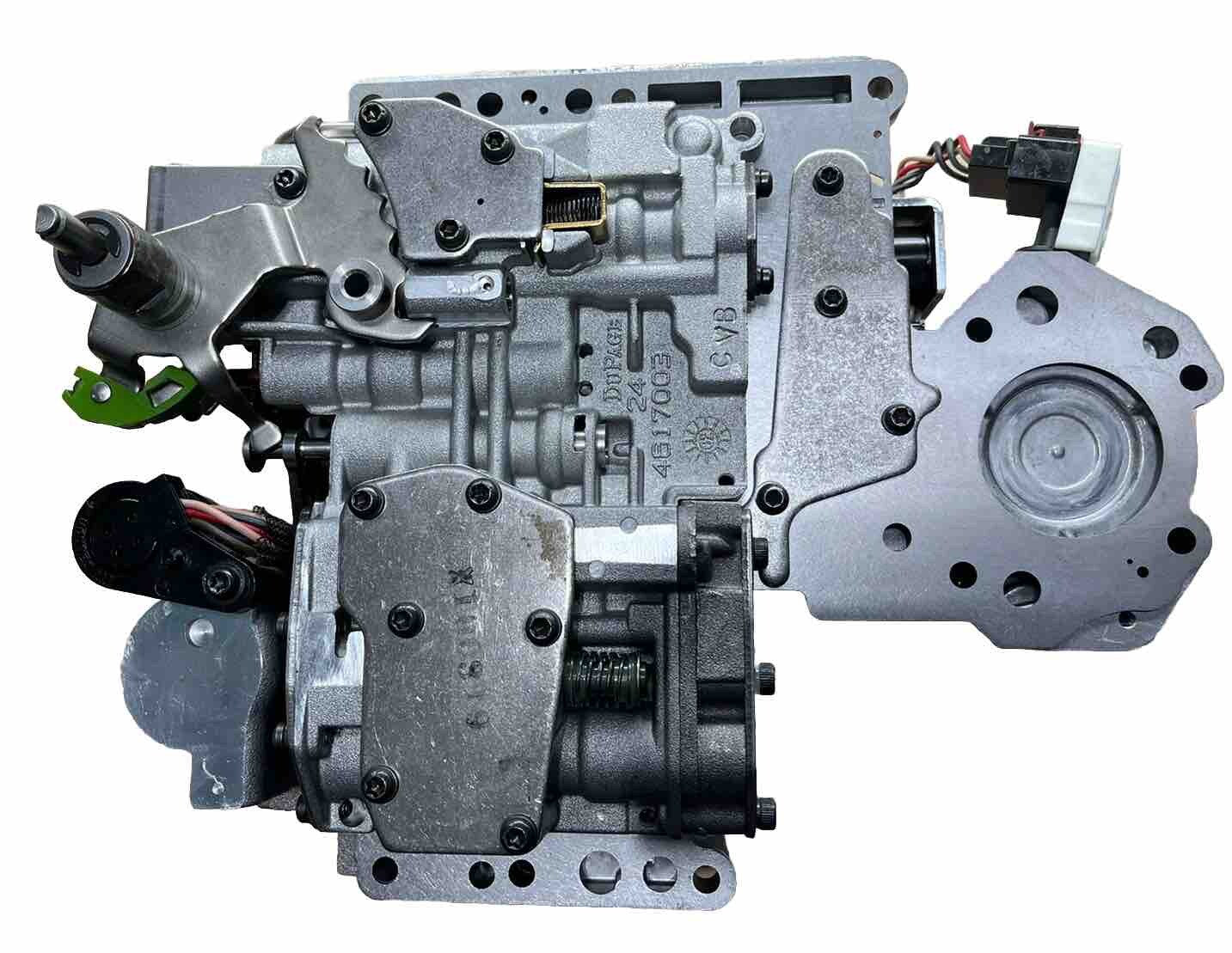
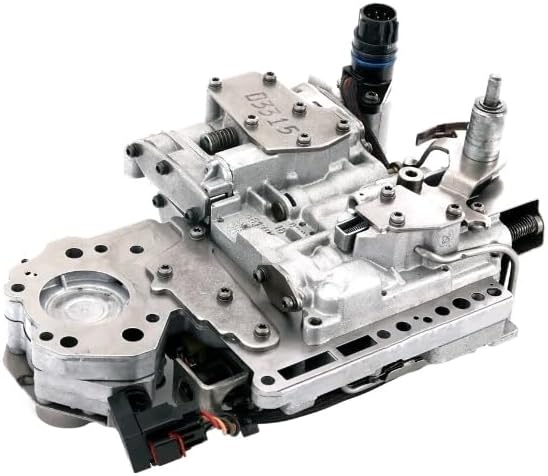
If the cable checks out, the throttle valve itself is the next suspect. Per Sonnax's vacuum test guide for the 46RE/47RE, a worn throttle valve bore produces shift timing concerns, throttle buzz, poor kickdown, a late 2-3, and an oversensitive 3-2 — Sonnax addresses that bore with part numbers 22771-03K and 22771-04K. A worn pressure regulator valve gives you delayed engagement, regulator buzz, lube failures, reverse slip, and poor line pressure control (22771A-02K or 22771A-07K), and a leaking line pressure plug and sleeve is a direct cause of poor line pressure control (22229-01K in.200" diameter, 22229-04K in.264").
4. Check the separator plate if someone has been in there
ATRA published a case on a 2005 Ram 48RE with firm shifts plus slipping in 3rd and reverse. Forward clutch pressure measured 95–150 psi against a normal of roughly 60–110 psi. The tech had installed a 47RE separator plate on a 48RE valve body; the 47RE plate has a different TCC pressure boost, TCC signal feed, and manual 3-2 circuit, and it shut off all pressure regulator balance oil in reverse. The lesson runs both directions — if a 47RE valve body has been apart, confirm the plate before you chase pressure numbers.
That same case gives you a useful rule for the 3rd gear circuit: with the solenoid harness unplugged (which drops the unit into 3rd) at 1200 rpm in Drive, the 3rd gear / front servo release port and the forward clutch port should be within 5–8 psi of each other. A 24 psi reading against 100 psi, as in that case, means a large leak in the 3rd gear / front servo release circuit.
Delayed or Wrong-Gear Shifts: Work the Governor Side
ATRA's rule for the 42-47RE family: if the unit does not shift properly through the first three gears, governor pressure is always your first check. It should read zero at a stop and rise about 1 psi per mph up to roughly 40 mph. Above 40 mph the system routes mainline to the governor port, so the reading stops tracking road speed — the computer shuts the governor solenoid off around 40 mph and uses the overdrive solenoid for 4th, at which point the transducer is effectively watching line pressure.
Compare three numbers, not one
Put a gauge on the governor tap, connect a scan tool, and drive it. You now have three values that must agree:
- Governor Desired Pressure — what the computer is commanding the solenoid to make.
- Governor Actual (Measured) Pressure — what the transducer is reporting back.
- Gauge Pressure — what is really in the circuit.
All three should be equal and should rise about 1 psi per mph to 40 mph. From there the split tells you the part:
- Desired is fine, Actual and Gauge are both missing — faulty governor solenoid, or a blockage in the feed to the solenoid or between the solenoid and the governor circuit.
- Gauge follows Desired right up until the code sets — suspect the transducer.
- Gauge follows Actual — suspect the governor solenoid, a warped valve body adapter, or an internal leak.
- No Desired signal at all — the computer does not think the truck is moving. Check the output shaft speed (OSS) sensor and its wiring before anything else.
- Any governor pressure in Park, Reverse, or Neutral — the manual valve closes that passage in those ranges, so pressure there means a cross-leak in the case, valve body, or governor body. A loose or warped governor body is a common find.
- Actual over 105 psi in 3rd or 4th at WOT — excessively high line pressure, or the transducer is bad.
Transducer voltages worth having on paper
ATRA published the PCM terminal chart for 1996-2003 Dodge RWD applications. The governor transducer signal lands on PCM pin B29, light green/white:
| Pin / circuit | Value |
|---|---|
| B29 — governor transducer signal | .60–.66 V at zero psi |
| B29 — governor transducer signal | About 3.0 V at 60 psi |
| B29 — governor transducer signal | About 4.5 V at 110 psi |
| B8 — governor solenoid control (violet/white) | About 1 amp for zero psi |
| B28 — OSS signal (light green/black) | About 3.0 VAC at 30 mph |
| B31 — 5-volt reference (orange) | 5 V, ignition on |
| B30 — transmission relay control (pink) | 0.0 V running, no codes |
A transducer sitting well above the.60–.66 V rest value fools the computer into thinking the solenoid is closed when it is still passing oil — a shift-timing complaint with no code and no obvious fault.
Why it starts off in 3rd
Limp mode de-energizes the governor solenoid, which opens it fully and dumps mainline straight into the governor circuit. Full governor pressure at a standstill strokes the shift valves and the truck takes off in 3rd. The distinction that matters: a cross-leak in the governor circuit or a sticking shift valve produces identical behavior with the computer not in limp mode at all. No code means stop looking at electronics and find the cross-leak. Also check pin 1 at the case connector — it feeds the solenoids, and losing power there forces limp mode.
The Valve-Body Wear Map
Once you know which pressure is wrong, the Sonnax vacuum test guide for the 46RE/47RE tells you which bore to test. Low vacuum at a test location means bore wear. The mapping that matters for shift-quality work:
| Valve | Complaint when worn | Sonnax part |
|---|---|---|
| Pressure regulator valve | Delayed engagement, regulator buzz, reverse slip, poor line pressure control, poor cooler charge at idle | 22771A-02K / 22771A-07K |
| Throttle valve | Shift timing concerns, throttle buzz, poor kickdown, 2-3 late, 3-2 oversensitive | 22771-03K / 22771-04K |
| 1-2 and 2-3 governor plugs | 1-2 shuttle, 2-3 and 3-2 oversensitive, difficulty adjusting shift timing with TV linkage, early upshifts | 22771-14K |
| Line pressure plug and sleeve | Poor line pressure control | 22229-01K (.200"), 22229-04K (.264") |
| 4-spool switch valve | No cooler flow in Park, lockup shudder, soft TCC apply, converter bushing failure | 22771A-01 |
| 3-4 quick fill valve | Burnt OD clutch, no 4th, gear ratio codes | 22771A-44K |
| Lockup boost valve | TCC slip under load, no line rise during TCC apply in 4th, high line with no indication of boost | 22771-19K |
Read the governor plug line closely: "difficulty in adjusting shift timing with TV linkage" and "early upshifts." If you have chased the cable adjustment three times and it still will not come in right, worn governor plugs are a likely reason. Sonnax bundles the common circuit repairs for this valve body in the 46-47RHE-ZIP Zip Kit.
When the valve body goes back on, torque the valve-body-to-case bolts to 110 in-lb per the Sonnax instruction sheet, and resurface the cast aluminum pieces flat first — a warped valve body cross-leaks and reintroduces exactly the pressure problems you just fixed.
Delayed Engagement Specifically
A 47RE that takes several seconds to engage after sitting overnight but shifts fine once moving has a drain-back complaint, not a shift-timing complaint: the oil has left the converter and pump. Sonnax's pressure regulator instructions name one common cause directly — if a line-to-lube hole has been drilled in the pressure regulator circuit, it should be plugged to reduce converter drain-back. The same sheet flags a worn manual valve as a delayed-engagement contributor, and notes that leakage at the TV checkball separator plate seat may produce stacked shifts and/or no kickdown.
Band adjustment
Both bands are set by torquing the adjusting screw to 72 in-lb and then backing it off a fixed number of turns — commonly published as 1-7/8 turns on the front band and 3 turns on the rear, with many builders running the front slightly looser at 2 to 2-1/4. Those figures shifted across model years, so confirm them against the factory service manual for your year. A front band too tight gives a harsh 1-2 and can drag; too loose gives a flare.
Governor pressure solenoid and sensor kits, valve body repair kits, filters and pans, master rebuild kits, and the tools to install them — shipped fast from the USA.
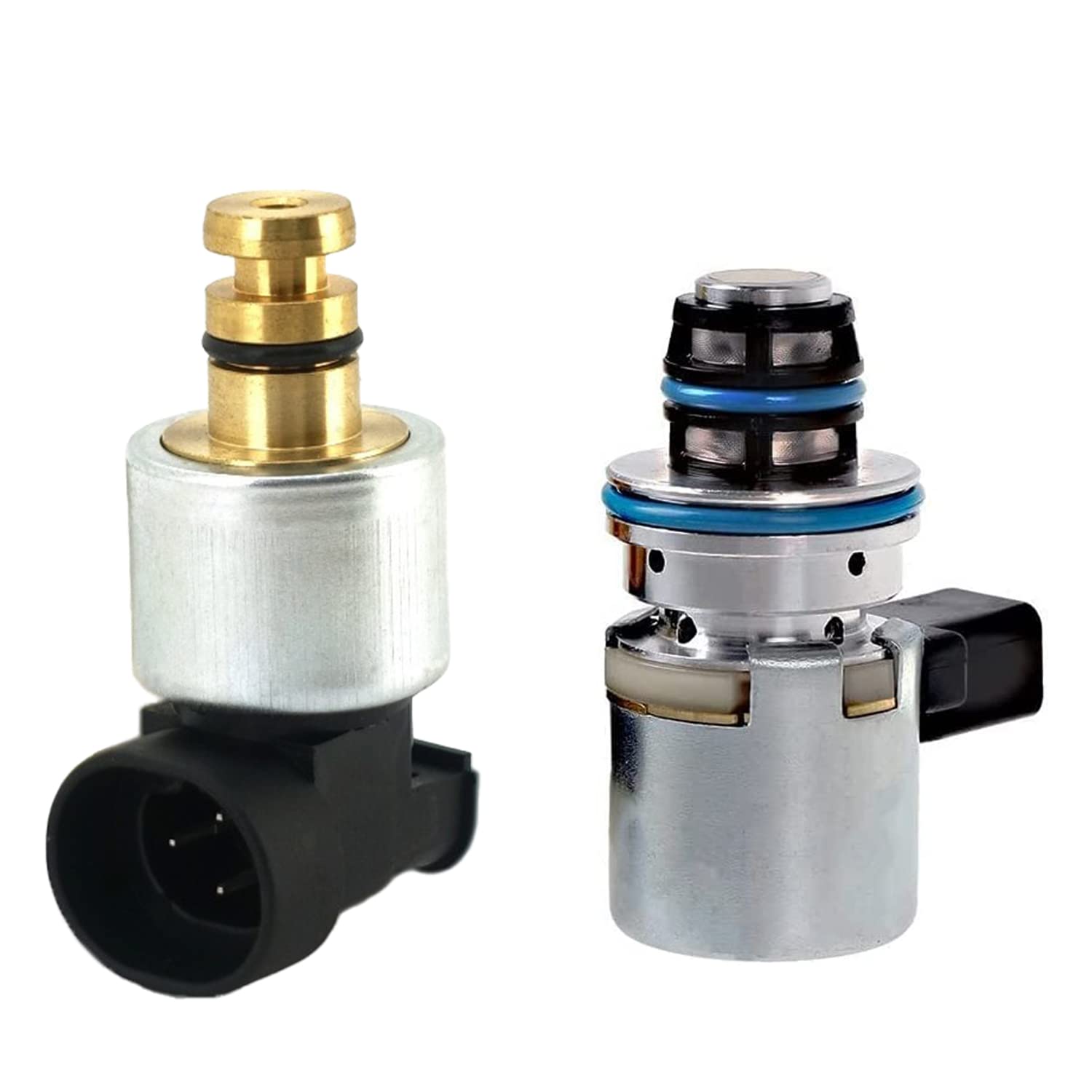
Shop 47RE parts →A518 / 46RE / 47RE governor pressure solenoid and sensor kit (4617210)
If the three governor readings disagree and the circuit tests confirm the solenoid or transducer, replace them as a pair. Reusing one of them is the usual reason a governor repair comes back.
View the kit →The Order to Work It
- Fluid level and condition. ATF+4 / MS-9602 only.
- Line pressure at idle in Drive. Target 62–65 psi. Over 80 psi is your harsh shift.
- TV cable free travel, sheath locked in its bracket, lever returning to the closed stop.
- Governor pressure on a 0-100 psi gauge: zero at a stop, about 1 psi per mph to 40 mph, no pressure in P/R/N.
- Compare Desired vs Actual vs Gauge on a road test. The split names the part.
- Transducer signal.60–.66 V at zero psi, about 3.0 V at 60 psi.
- If pressures are wrong and the electronics check out, vacuum test the valve body against the Sonnax map.
- Reassemble flat, 110 in-lb on the valve body bolts, and re-verify line pressure with a gauge before it leaves.
Related reading: our 46RE / 47RE / 48RE family guide covers the unit end to end, the 48RE governor pressure solenoid write-up goes deeper on the electronic governor itself, and checking transmission line pressure walks through the gauge procedure.
Sources
- Sonnax — "Chrysler 46RE, 46RH, 47RE, 47RH Vacuum Test Guide." Backs the valve-by-valve wear map: pressure regulator, throttle valve, 1-2 and 2-3 governor plugs, line pressure plug and sleeve, 4-spool switch valve, 3-4 quick fill and lockup boost valve, with the symptoms each produces and the corresponding Sonnax part numbers. sonnax.com/tech_resources/529-chrysler-46re-46rh-47re-47rh-vacuum-test-guide
- Sonnax — instruction sheet, Lube Regulated Pressure Regulator Valve 22771A-02K (42RE, 46RE, 47RE, 48RE, A727, A904). Backs the line pressure tap location (passenger side, middle of case, between the accumulators), the 62–65 psi idle-in-Drive setting, the.300–.350" plate gap, the "over 80 psi causes binding and excessive throttle sensitivity" warning, and the drilled line-to-lube hole / converter drain-back note. Sonnax 22771A-02K instruction sheet (PDF)
- Sonnax — instruction sheet, 4-Spool Switch Valve 22771A-01. Backs the boost valve raising line pressure 8–10 psi on TCC apply and the 3-4 shift, the up-to-40-percent-over-idle line rise at heavy throttle (up to 200 psi recorded), the.050"-per-turn regulator adjuster, and the 110 in-lb valve-body-to-case bolt torque. Sonnax 22771A-01 instruction sheet (PDF)
- ATRA / GEARS Magazine, October 2006 — Dave Skora, "Troubleshooting the 42-47RE Transmissions." Backs governor pressure being zero at a stop and rising about 1 psi per mph to 40 mph, the Desired vs Actual vs Gauge comparison and what each split indicates, no governor pressure allowed in Park/Reverse/Neutral, the over-105-psi WOT rule, limp-mode 3rd gear starts, case connector pin 1, and the PCM terminal voltage chart including B29 at.60–.66 V, 3.0 V and 4.5 V. GEARS, October 2006 (PDF)
- ATRA / GEARS Magazine, October/November 2012 — Mark Puccinelli, "Unbalanced Regulation: 47-48RE Valve Bodies." Backs the 60–110 psi normal forward clutch pressure against the 95–150 psi measured, the 5–8 psi maximum spread between the forward clutch and 3rd gear/front servo release ports at 1200 rpm in Drive, and the 47RE-versus-48RE separator plate mismatch (different TCC pressure boost, TCC signal feed, and manual 3-2 circuit). GEARS, October/November 2012 (PDF)
- GEARS Magazine, March 2016 — Jesse Zacarias, "It Can't Be the Solenoid...I Replaced It!" Backs the roughly 36 psi of governor pressure required to overcome throttle valve pressure at the 2-3 shift valve on a cable-TV RE unit, and the no-upshift-at-wide-open-throttle failure mode caused by governor pressure that never rises to equal line pressure. gearsmagazine.com/magazine/it-cant-be-the-solenoidi-replaced-it
- Shell — Technical Data Sheet, Pennzoil Platinum ATF+4 Automatic Transmission Lubricant (Chrysler MS-9602), v 1.1. Backs the fluid specification used throughout this article: approval against Chrysler specification MS-9602; the intended application as the hydraulic fluid for Chrysler automatics specifying ATF+3, ATF+2 or ATF+ (MS-7176); the explicit statement that it is not for use where DEXRON III (H), MERCON, MERCON V, MERCON LV or MERCON SP is required; and the typical physical characteristics quoted here — 7.71 cSt at 100 C and 35.13 cSt at 40 C (ASTM D445), -48 C pour point (ASTM D97), 9,300 cP at -40 C (ASTM D2983) and a 410 F (210 C) COC flash point (ASTM D92). shell-livedocs.com (PDF)