A 48RE that sits in gear for two or three seconds before the truck moves, or that clunks into Reverse after a long pause, is telling you it cannot fill a clutch piston fast enough. That is all delayed engagement is: line pressure is not reaching the apply piston quickly, or it is reaching it and leaking away. The trick is figuring out where the oil is going, because Chrysler's own diagnosis chart lists thirteen separate causes for this one complaint, and they range from a dipstick check to pulling the transmission.
This guide sorts those thirteen causes by what you can see from the driver's seat, then walks through the pressure test and the internal parts that actually fail. The factory facts come from the Chrysler 48RE service manual. The wear patterns and repair parts come from Sonnax, whose valve body and hard-part kits for the RE family are what most rebuilders use. Sources are listed at the end.
What Has to Happen When You Pull It Into Gear
The 48RE is the heavy-duty end of the Chrysler RE family used behind the 5.9L Cummins and 8.0L V10 in 2003-2007 Ram trucks. Moving the selector moves the manual valve in the valve body, which sends line pressure to the clutch or band that holds the first gear you asked for.
- Drive (first gear): the rear clutch applies, and the transmission overrunning clutch holds. The rear clutch is the forward clutch; if it does not fill, the truck does not move forward.
- Reverse: the front clutch drives the sun gear and the rear (low-reverse) band holds the low-reverse drum.
- Both ranges: the overdrive direct clutch at the back of the case carries torque, held on by its spring.
Every one of those apply circuits is fed by the same pump, regulated by the same pressure regulator valve, and routed through rotating seal rings on the reaction shaft support and input shaft. That shared plumbing is why the first question to answer is simple: is it slow into Drive, slow into Reverse, or slow into both?
The Factory List, Sorted So It Means Something
The Chrysler service manual's diagnosis chart for "Delayed Engagement From Neutral to Drive or Reverse" lists these causes: fluid level low, filter clogged, gearshift linkage misadjusted, torque converter drainback, rear band misadjusted, valve body filter plugged, oil pump gears worn or damaged, governor circuit and solenoid valve electrical fault, hydraulic pressure incorrect, reaction shaft seal rings worn or broken, rear clutch/input shaft and rear clutch seal rings damaged, regulator valve stuck, and cooler plugged.
Read as a flat list, that is a parts cannon. Grouped by symptom, it becomes a diagnosis.
Slow into both Drive and Reverse, worst after sitting
This is the classic morning complaint: first start of the day, the truck takes a few seconds to engage, then it is fine for the rest of the day. That is the converter draining down while the truck sits. When you shift into gear, the pump has to refill the converter and the circuit before it can put full pressure on the clutch. The factory correction is specific: if the vehicle moves normally within 5 seconds of the shift, no repair is necessary. If it takes longer, inspect the pump bushing for wear and replace the pump.
The pump bushing matters because the converter hub rides in it. A worn bushing is a leak path right at the pump, and the same wear lets oil escape the converter circuit once the engine is off.
Slow into both, all the time, hot or cold
Now you are looking at something that lowers line pressure in every range: low fluid, a clogged pan filter, a plugged valve body filter, worn pump gears, a stuck pressure regulator valve, or incorrect hydraulic pressure. These are the causes the pressure test below will confirm or rule out. A plugged cooler also belongs here, and the factory note on it is worth remembering on a 4x4: a transfer case failure can plug the cooler.
Slow into Drive only
The rear clutch is the only Drive-side apply that uses oil to engage, so a Drive-only delay points at the rear clutch circuit: the rear clutch piston seals, the input shaft seal rings that feed it, and the reaction shaft support seal rings upstream of them. If the delay is worst on a cold morning and goes away as the fluid warms, the rear clutch inner lip seal is the first suspect. Sonnax describes the failure plainly: a shrunken or deteriorated inner lip seal in the rear (forward) clutch piston causes delayed or no forward engagement, especially cold, and a burnt forward clutch if it is ignored.
The same factory chart lists "no Drive range, Reverse OK" separately, with a burnt rear clutch, worn input shaft seal rings and a broken overrunning clutch among the causes. A long Drive delay is often the early stage of that complaint.
Slow into Reverse only
Reverse is the front clutch plus the rear band. A misadjusted rear band is on the factory delayed engagement list for exactly this reason: the servo has to take up the slack before the band grabs. Set it before you blame anything internal. Our 48RE no reverse guide covers the front clutch and rear servo checks if adjusting the band does not help.
Step 1: The Checks That Cost Nothing
- Fluid level and condition, hot. ATF+4 only. Low fluid is the first line on the factory chart, and it makes the pump pull air, which is exactly what a delay feels like. Dark fluid with a burnt smell and friction material in the pan means a clutch is already cooked, and a fluid change will not bring it back. Our 48RE fluid guide has the capacity and check procedure.
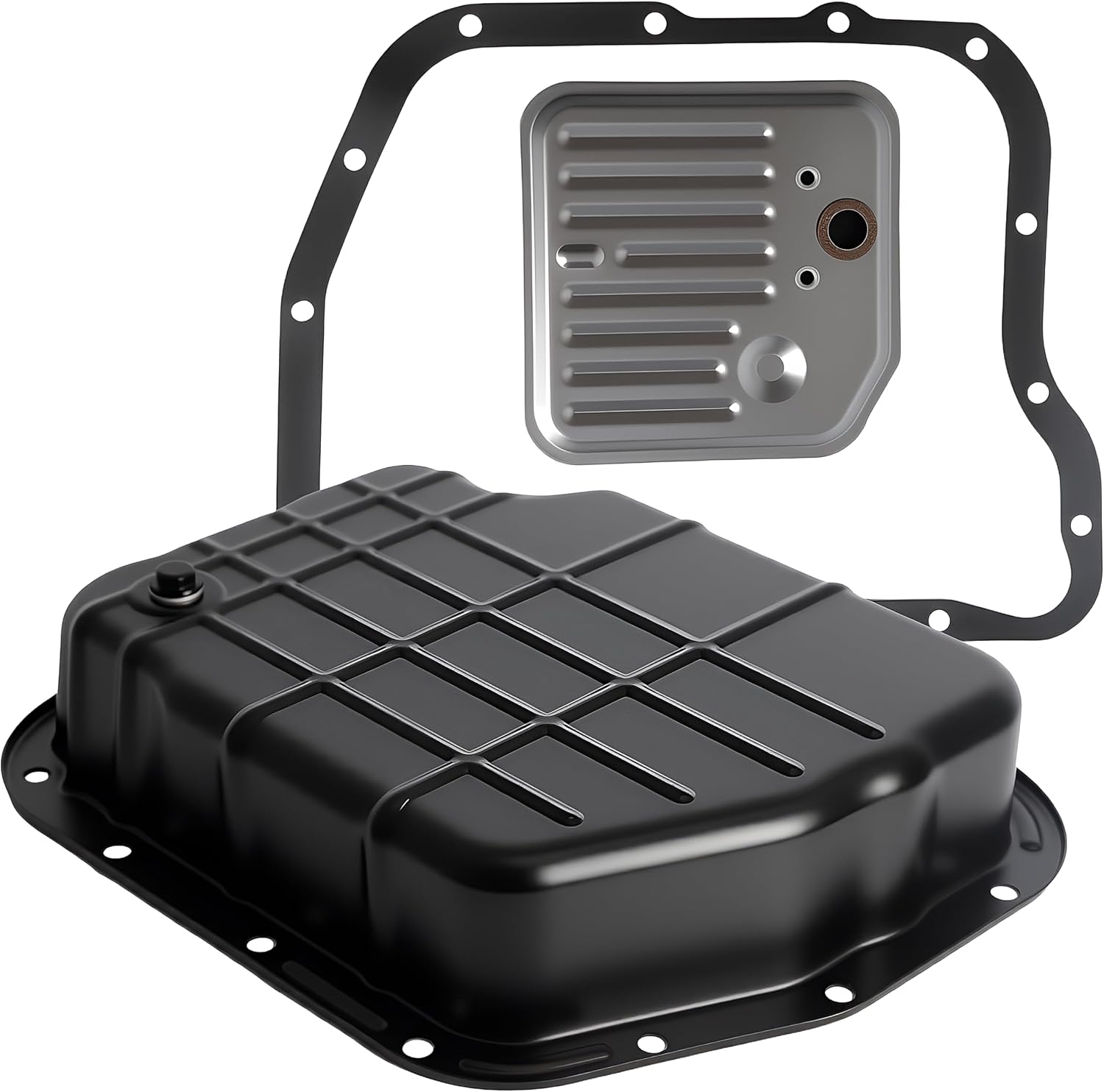
- Pan and filter. A clogged filter starves the pump. A pan full of clutch material tells you the delay is a symptom of wear, not the cause of it.
- Shift linkage. If the transmission lever is not landing squarely in its detent, the manual valve only partly opens the apply circuit. Put the selector in D and R and confirm the lever under the truck is fully in each detent.
- Codes. The factory list includes a governor circuit and solenoid electrical fault, with the correction being a scan tool test. Pull codes before you put a gauge on it.
- Rear band adjustment if the complaint is Reverse.
Step 2: Put a Gauge on It
If the free checks pass, stop guessing and measure. The factory pressure tests use a 100 psi gauge on the accumulator port and a 300 psi gauge on the servo port. In Test One (manual low, engine at 1000 rpm), line pressure at the accumulator port should read 54-60 psi with the throttle lever all the way forward, rising to 90-96 psi as the lever is moved rearward. Rear servo pressure should match line pressure within 3 psi. Test Four checks Reverse at the rear servo port, and the manual notes it covers pump output, pressure regulation and the front clutch and rear servo circuits in one test.
How to read it for a delay complaint:
- Line pressure low in every range: pump, filter, regulator valve or fluid. The pressure regulator and line pressure plug are covered in Step 3.
- Line pressure correct but it takes a long time to come up after the shift: the converter and cooler circuits are refilling first. That is drainback, or a restriction slowing the refill. Sonnax's "The Cure for the Common (Chrysler RWD) Cold" explains why RE units are prone to it: the OE manual valve does not charge the converter in Park, so the fill only starts once you pull the lever into gear. The same article warns that a drilled line-to-lube hole, an old lube-failure fix, gives the converter another path to drain when the engine is off. Plug it if you find it.
- Line pressure correct and steady, but the truck still lags in one range: the oil is getting to the circuit and leaking out before it strokes the piston. That is seal rings or piston seals, and it is an internal repair.
Step 3: The Valve Body and Case Wear Points
RE valve bodies wear in predictable bores, and Sonnax's 48RE vacuum test guide ties several of them directly to engagement complaints. A worn pressure regulator valve bore causes delayed engagement, regulator buzz, lube failures and converter bushing failure. A worn switch valve bore causes delayed engagement and no cooler flow in Park. A worn line pressure plug and sleeve causes poor forward and Reverse engagement and poor cooler charge at idle. Vacuum testing the valve body on the bench finds these bores in minutes; our 48RE valve body testing guide covers the procedure.
The regulator valve is the one to understand. Sonnax's lube-regulated pressure regulator valve (22771A-02K) was designed because the OE valve can become restricted under extreme pressure or temperature, which starves converter feed and causes delayed engagement and pump bushing failure. The redesigned valve improves converter feed at low rpm and is built to help charge the converter in Park. The factory chart's own correction for a stuck regulator valve is simply to clean it, which is fine if the bore is not worn.
There is also a case wear point that people miss. The intermediate accumulator piston oscillates in its bore on every shift, and Sonnax notes that the resulting case wear causes loss of line pressure, with delayed forward engagement, forward clutch failure, soft 1-2 shifts and low line rise listed as symptoms. Their sleeve kit (22841-01K) restores the bore without scrapping the case.
The drainback valve: factory versus aftermarket
The factory 48RE uses a converter drainback check valve in the cooler outlet line. The service manual gives it an opening pressure of about 2 psi, warns that a restricted, backwards or misplaced valve causes overheating and possible transmission failure, and says to replace it as an assembly, including any time a failure has pushed debris through the cooler circuit.
Sonnax takes a different approach with its lube-regulated regulator valve: the installation note says to remove the cooler line drainback valve to prevent converter slippage, restricted cooler flow and hydraulic noise, since the new valve handles drainback in the valve body. Either approach can work. Running both, or running a debris-packed factory valve, is how you end up with a truck that engages slowly and runs hot. Bob Warnke's "46-47RH/RE Cooler and Converter Flow" in Transmission Digest lists delayed engagement and slow converter fill among cooler-flow complaints and calls cooler restriction "by far the most-common issue." Back pressure can stage the switch valve mid-circuit as head pressure nears 80 psi. His check is to bypass the cooler circuit temporarily and retest; if the delay goes away, find the restriction before you condemn the converter.
Step 4: The Internal Parts
If the pressure is correct and the delay is in one range, or the pressure is low and the valve body checks out, the transmission is coming out. The factory corrections for the internal causes are blunt: for reaction shaft seal rings, remove the transmission, remove the pump and replace the rings; for rear clutch and input shaft seal rings, remove and disassemble the transmission; for worn pump gears, remove the transmission and replace the pump.
While it is apart:
- Pump. Check the gear clearances and the converter hub bushing. Sonnax lists damaged pump gears and low line pressure as the reasons for its 48RE pump gear set (22530-D). A scored pump body or a worn bushing is a reason to replace the pump rather than reuse it.
- Reaction shaft support and input shaft seal rings. These feed the clutches while spinning. Check the ring grooves for wear steps and the bores they seal against for scoring. New rings in worn grooves leak.
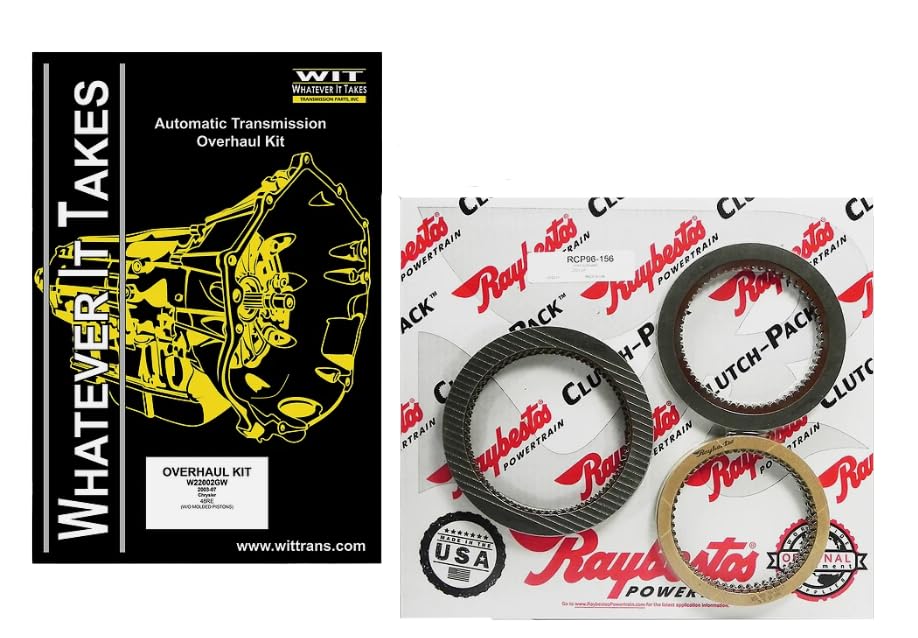
- Rear clutch. Replace the piston seals with an upgraded inner lip seal. Sonnax recommends prepping the drum surface with 600 grit paper and installing the seal well lubricated. Check the clutch pack clearance; burnt frictions from a long delay are common.
- Front clutch and rear servo if the delay was in Reverse.
- Cooler and lines. Flush them and replace the drainback valve if you are keeping it. A new unit bolted to a plugged cooler will show the same symptoms.
A Diagnosis Order That Works
- Note which range is slow, and whether it is worse cold or after the truck sits.
- Check fluid level and condition hot. ATF+4 only.
- Pull codes and check shift linkage.
- Adjust the rear band if the complaint is Reverse.
- Service the pan filter and look at what is in the pan.
- Pressure test. Low everywhere means pump, filter or regulator. Correct but slow to build means drainback or cooler restriction. Correct and steady with a lag means seals.
- Check cooler flow and the drainback valve.
- Vacuum test the valve body if pressure is off.
- If the delay is past 5 seconds and the above check out, the pump, seal rings or rear clutch seals are the repair.
Sonnax Rear (Forward) Clutch Inner Lip Seal 3647-01
The longer-lip Viton seal Sonnax makes for the cold-morning delayed-Drive complaint in 46RE, 47RE and 48RE rear clutch pistons. Cheap insurance on any 48RE rebuild.
View the 3647-01 lip seal →Shop the 48RE rear clutch lip seal →
Frequently Asked Questions
How long should a 48RE take to engage Drive or Reverse?
Chrysler's own diagnosis chart treats up to about 5 seconds after the shift as acceptable when the delay comes from converter drainback. If the truck moves normally within 5 seconds, no repair is called for. Longer than that, the factory says to inspect the pump bushing and replace the pump if it is worn.
Why is my 48RE slow to go into gear only when it is cold?
If the delay is into Drive only and it clears up as the truck warms, the rear (forward) clutch piston inner lip seal is the prime suspect. Sonnax notes that this seal shrinks and deteriorates, causing delayed or no forward engagement when cold, and sells a longer-lip Viton replacement (3647-01) for it.
Can low fluid cause delayed engagement in a 48RE?
Yes. Low fluid is the first cause on the factory delayed engagement list, followed by a clogged filter. Check the level hot with ATF+4 before doing anything else, because a pump that pulls air cannot build line pressure fast enough to stroke the clutch pistons.
Does the 48RE have a converter drainback valve?
Yes. The factory 48RE uses a drainback check valve in the cooler outlet line that opens at about 2 psi and keeps the converter from draining into the cooler when the truck sits. If it is restricted or installed backwards it causes overheating, and it is replaced as an assembly rather than cleaned.
Will a rebuild fix a 48RE delayed engagement?
Only if the rebuild addresses the cause. Several of the factory causes, such as reaction shaft seal rings, rear clutch and input shaft seal rings, and worn pump gears, are internal and do need the transmission out. But a clogged filter, low fluid, linkage, rear band adjustment and a stuck regulator valve are fixed without a rebuild.
Sources
- Chrysler 48RE Automatic Transmission Service Manual — Diagnosis Chart, Delayed Engagement From Neutral to Drive or Reverse. Backs the thirteen listed causes, the 5-second drainback rule and pump bushing correction, the seal ring and pump corrections, "transfer case failure can plug cooler," and the separate no-Drive-range causes. The 48RE shares this RE-family chart with the 46RE/47RE. The identical thirteen-cause "Delayed Engagement (From Neutral to Drive or Reverse)" chart, including the 5-second drainback rule, the pump bushing correction and "transfer case failure can plug cooler," appears in the Chrysler 1998 Ram Truck Service Manual, Group 21, 46RE/47RE diagnosis charts: archive.org — 1998 Dodge Ram Truck Service Manual.
- Chrysler 48RE Automatic Transmission Service Manual — Hydraulic Pressure Tests. Backs the gauge ports, Test One's 54-60 psi rising to 90-96 psi at 1000 rpm, rear servo within 3 psi of line, and Test Four's coverage of pump output, regulation, front clutch and rear servo. The same Test One values (54-60 psi rising to 90-96 psi as the throttle lever is moved) appear in the Chrysler 1998 Ram Truck Service Manual, Group 21, 46RE/47RE Hydraulic Pressure Tests: archive.org — 1998 Dodge Ram Truck Service Manual.
- Chrysler 48RE Automatic Transmission Service Manual — Torque Converter Drainback Valve. Backs the cooler outlet line location, the roughly 2 psi opening pressure, the overheating warning and the replace-not-clean instruction. The cooler outlet (pressure) line location, the approximately 2 psi opening pressure, the do-not-clean/replace instruction and the overheating warning for a restricted or reversed valve are reproduced in the Chrysler 1998 Ram Truck Service Manual, Group 21, Converter Drainback Check Valve Service: archive.org — 1998 Dodge Ram Truck Service Manual.
- Sonnax — Rear (Forward) Clutch Inner Lip Seal 3647-01. Backs the shrunken or deteriorated inner lip seal as a cause of delayed or no forward engagement when cold, the burnt forward clutch symptom, and the 600 grit prep and lubrication install notes. sonnax.com
- Sonnax — Lube Regulated Pressure Regulator Valve 22771A-02K. Backs the OE regulator valve restriction causing delayed engagement and pump bushing failure, improved converter feed and charge in Park, and the instruction to remove the cooler line drainback valve. sonnax.com
- Sonnax — Chrysler 48RE Vacuum Test Guide. Backs the pressure regulator, switch valve and line pressure plug and sleeve bores and their engagement symptoms. sonnax.com
- Sonnax — "The Cure for the Common (Chrysler RWD) Cold" (November 2004). Backs the OE manual valve not charging the converter in Park, the drilled line-to-lube hole increasing drainback, and the RE-family fitment of the lube-regulated PR valve and manual valve. sonnax.com
- Transmission Digest — Bob Warnke, "46-47RH/RE Cooler and Converter Flow" (December 2005). Backs delayed engagement and slow converter fill as cooler-flow complaints, cooler restriction as the most common issue, switch valve staging near 80 psi head pressure, and the bypass-and-retest check. transmissiondigest.com
- Sonnax — Intermediate Accumulator Sleeve Kit 22841-01K. Backs accumulator bore wear causing loss of line pressure, delayed forward engagement and forward clutch failure. sonnax.com
Shop 48RE pumps, rebuild kits, filters and valve bodies — shipped fast from the USA.
Shop 48RE parts →