A 48RE that drives forward fine but will not back up is one of the more useful failures to get on the bench, because reverse on this transmission uses a short, specific list of parts. Drop it into R and nothing happens, or the truck creeps back with the engine flaring, or it takes a big bump of throttle before it finally grabs. Owners assume the whole transmission is gone. Sometimes it is. Often it is one clutch pack, one band, or one servo, and a pressure gauge will tell you which before the pan comes off.
ATSG's 46RE/47RE/48RE manual lays the unit out as three driving clutches (front, rear and OD/direct) and a set of holding members (kickdown band, low/reverse band, low roller, overdrive and overrun clutches), and Reverse uses the front clutch with the low/reverse band. This guide covers what actually applies in reverse on a 48RE, the quick checks that cost nothing, the factory reverse pressure test with its specs, and what each result points to. The numbers come from the Chrysler 48RE service manual, with Sonnax and Transmission Digest filling in the known weak parts. Everything is listed at the bottom.
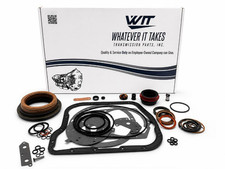
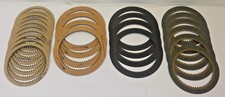
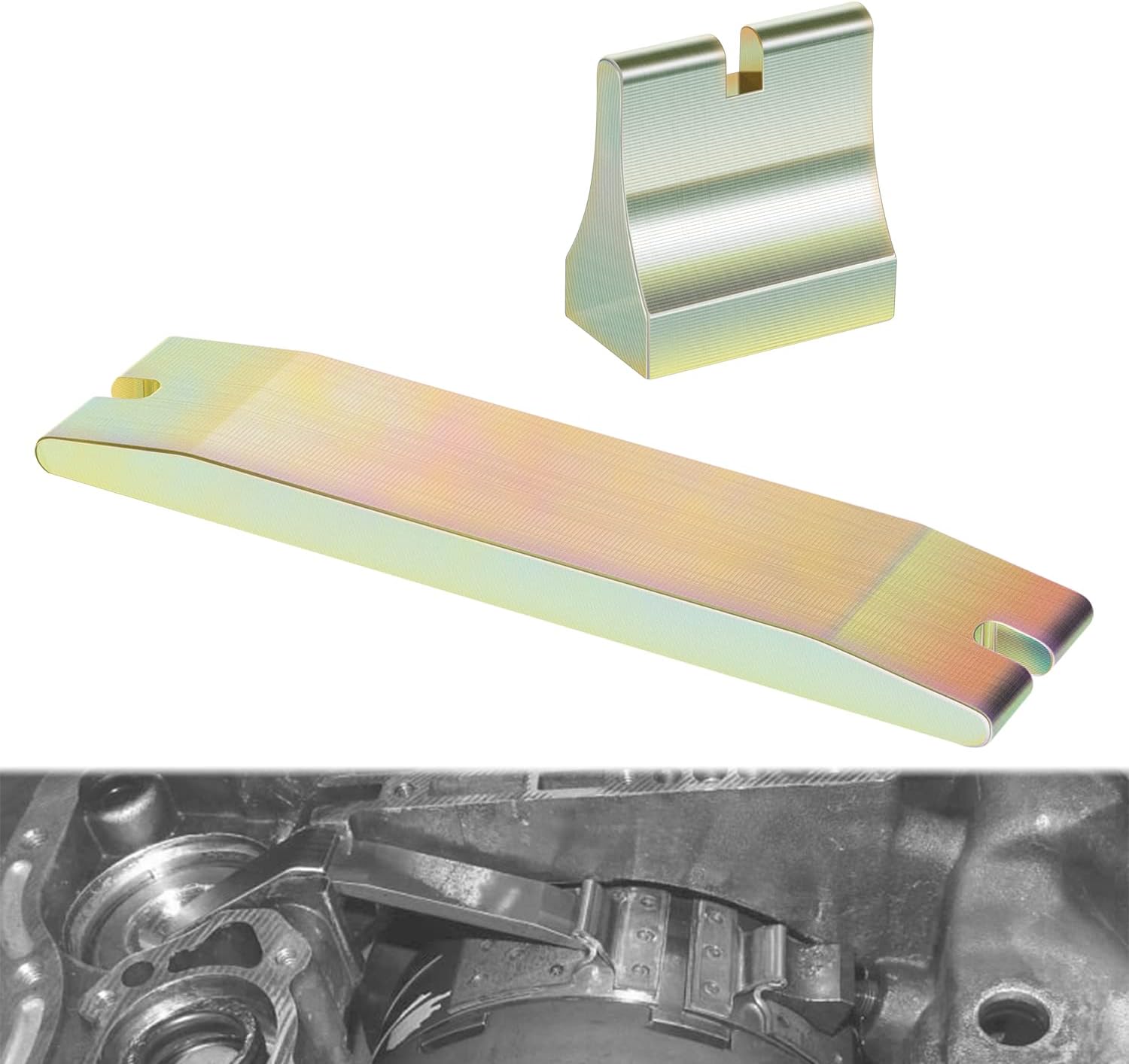
What Holds Reverse in a 48RE
The Chrysler service manual's clutch and band application chart is short for reverse: the front clutch and the rear band are applied, and nothing else in the main case. The front clutch drives the sun gear. The rear band, also called the low-reverse band, clamps the low-reverse drum, which is tied to the rear planetary carrier. With the carrier held and the sun driven, the rear pinions turn the rear annulus backward, and the rear annulus is splined to the output shaft. The manual points out that the front planetary just idles the whole time you are in reverse.
There is a third part people forget, and it is at the back of the case. The overdrive unit carries torque in every gear except fourth, through the overdrive direct clutch, which is held on by a large spring rather than oil. The factory manual says it plainly: if the direct clutch were to fail, the transmission would lose both reverse and overrun braking in the 2 position. So a 48RE with no reverse has four suspects:
- Front clutch (the pack that drives the sun gear in reverse and third)
- Rear band and rear servo (the band that holds the low-reverse drum in reverse and manual 1)
- Overdrive direct clutch and its spring (carries torque through the back of the unit in reverse)
- Hydraulic feed: the manual valve and shift linkage, fluid level, and the valve body
The trick is that every one of those parts also works in some forward gear. That overlap is what lets you find the failure from the driver's seat.
Step 1: The Free Checks
Fluid level and condition
Check it hot, in Neutral, with ATF+4 only. Low fluid lets the pump suck air when the fluid sloshes, and reverse is a high-pressure range, so it is often the first thing to go soft. Chrysler's 2006 Ram Body Builder chart lists the 48RE at 3.8 L (8 pints) for a service fill and 14-16 L (29-33 pints) after an overhaul, so a unit that was "topped off" after a pan job can easily be a couple of quarts short. Burnt fluid with friction material in it tells you a clutch pack or band has already given up. Our 48RE fluid guide covers the capacity and the correct check procedure.
Shift linkage and the manual valve
The factory diagnosis chart lists a loose or misadjusted gearshift linkage or cable as a cause of no drive or reverse, and it is the cheapest fix there is. If the manual valve inside the valve body is not being pulled fully into its reverse detent, the reverse circuit never gets full line pressure. Put the selector in R, crawl under, and make sure the transmission lever is actually in its reverse detent and that the neutral safety/backup switch agrees. A worn shift lever bore in the case can let the lever wobble; Sonnax sells a repair sleeve for exactly that.
Does it have manual 1 and manual 2?
This is the most useful 30 seconds of the whole diagnosis. Drive it gently in the manual ranges on a safe road:
- Manual 1 slips or has no engine braking, and no reverse: the rear band holds in both. That points at the rear band, its adjustment, or the rear servo.
- Third gear slips, and no reverse: the front clutch applies in both. The factory clutch application analysis says if the transmission also slips in reverse, the front clutch is slipping (Chrysler service manual, p. 21-215).
- No engine braking in manual 2, and no reverse: that is the direct clutch signature the manual describes, so look at the overdrive unit.
Step 2: The Reverse Pressure Test
Do not condemn a clutch on feel. The factory Test Four reads reverse apply pressure at the rear servo, and the manual says it checks pump output, pressure regulation, and the front clutch and rear servo circuits in one shot.
If Test Four reads low and the fluid is clean, look at the valve body before the clutches. Per Sonnax, excess wear at the inside diameter of the 48RE line pressure sleeve allows pressure loss that hinders line rise, and the listed complaints are delayed engagement, soft or slipping Reverse and poor line pressure control. Their repair is the line pressure plug and sleeve kit 22771A-19K, with the oversized regulator and plug kit 22771A-16K if the regulator bore is also worn. Reverse runs the highest line pressure in the unit, so it is the first range to expose that leak.
- Warm the fluid, raise the truck, and leave the 100 psi gauge on the accumulator port.
- Move a 300 psi gauge to the rear servo port, on the right rear of the case.
- Put the selector in R with the throttle lever on the side of the case where you can move it.
- Read pressure with the throttle lever all the way forward, then move it gradually rearward.
| Throttle lever (in R) | Factory spec at rear servo port |
|---|---|
| Fully forward | 145-175 psi (1000-1207 kPa) |
| Moved gradually rearward | Rises to 230-280 psi (1586-1931 kPa) |
Reading the result
The manual's pressure test analysis chart does the thinking for you when you compare reverse against the forward tests:
- Pressure OK in 1 and 2 but low in D3 and R: leakage in the front clutch area.
- Pressure OK in 2 but low in R and 1: leakage in the rear servo.
- Line pressure OK in R but low in D, 2 and 1: the opposite problem, a rear clutch leak. Reverse is fine, drive is not.
- Pressure low in every position: clogged filter, stuck regulator valve, worn pump, or low fluid.
If reverse pressure is in spec and the truck still will not back up, the circuits are sealing and the hard parts are the problem: burnt frictions, a glazed or broken band, or a direct clutch with a tired spring.
Step 3: Air Test Before You Tear It Down
With the pan and valve body off, the manual's air test confirms which apply component is leaking. Use clean, dry, regulated shop air:
- Front clutch: air into the front clutch apply passage with a finger or two on the clutch housing. You should feel the piston move and hear a soft thump as it applies. A long hiss and no thump means a leaking piston seal or sealing ring.
- Rear servo: air into the rear servo apply passage. The servo rod should extend and tighten the band around the drum, then spring pressure should release it when the air comes off.
If both work on air but reverse pressure tested low, look at the valve body and the manual valve before you pull the transmission.
The Parts That Actually Fail
Rear band out of adjustment or worn
A band that has worn thin, or was never adjusted after a rebuild, gives you delayed reverse, then slipping reverse, then no reverse. The factory procedure with the pan off: loosen the locknut, tighten the adjusting screw to 72 in-lb (8 N-m), back it off exactly 3 turns, and hold the screw while you tighten the locknut to 25 ft-lb (34 N-m), per the Chrysler band adjustment procedure (service manual pp. 21-308/309). For reference, the front band on the same unit is 72 in-lb, back off 1-3/4 turns, and a 30 ft-lb locknut. If the adjustment takes up a lot more screw than it should, the band lining is gone and adjustment will not save it.
Rear servo
The manual describes the rear (low-reverse) servo as a single-diameter piston with a spring-loaded plug that cushions the band apply. When you have it apart, replace the piston seal ring every time, replace the spring if it is collapsed or distorted, and replace the piston or plug if either is cracked or worn. A cut or rolled seal ring here is the classic "low in R and 1" pressure result.
Front clutch
The 48RE front clutch uses five frictions, five steels and a waved reaction snap ring, with inner and outer piston seals and nine return springs. The factory assembly notes warn never to push the piston straight in, because it folds the seals over and causes leakage and clutch slip, and never to use a metal tool on the seals. Rebuilds that come back with no reverse after a few hundred miles are very often a folded front clutch piston seal. Sonnax also warns that the OE cast front clutch piston in the 46RE, 47RE and 48RE can crack and break, which kills the front clutch without warning; they make a reinforced replacement for the 1998-later piston.
Overdrive direct clutch and spring
If reverse and manual-2 engine braking are both gone, pull the overdrive unit. The direct clutch is held by its spring in every gear except fourth, and the manual says to replace the spring if it is collapsed, distorted or cracked. A weak spring lets the direct clutch slip under reverse torque until the plates burn. Our 48RE overdrive guide covers the overdrive unit and the tools needed to compress that spring.
Reverse drum and lube loss
Sonnax documents reverse drum, retainer and planet failures on the 46RE through 48RE caused by excess clearance between the overdrive piston retainer and the intermediate shaft, which bleeds off lube oil meant for the gear train. If the reverse drum is scored at the retainer, their oversized retainer kit salvages it once the drum is machined. When you find a scored drum, fix the lube leak or the new parts will follow the old ones.
The 48RE was built for Cummins torque, and Transmission Digest notes that Chrysler raised the torque capacity of the clutch drums compared with the 47RE. It still sees the same failure pattern when the truck tows heavy and backs trailers up hills, which loads the front clutch and rear band harder than anything else a 48RE does.
A Diagnosis Order That Works
- Check fluid level and condition hot, in Neutral, ATF+4 only.
- Verify the shift linkage puts the manual valve fully in the reverse detent.
- Road test manual 1, manual 2 and third. Match the slip to the part: rear band (1 and R), front clutch (3 and R), direct clutch (manual-2 braking and R).
- Run Test Four at the rear servo port, engine at 1600 rpm: 145-175 psi rising to 230-280 psi, per the Chrysler service manual Test Four procedure (pp. 21-217/218).
- Compare against the forward tests using the factory chart to split front clutch leakage from rear servo leakage.
- Adjust the rear band to 72 in-lb, back off 3 turns, 25 ft-lb locknut, if pressure is good but reverse is late or slipping.
- Air test the front clutch and rear servo with the valve body off before committing to a teardown.
48RE Low Reverse Super Servo
A replacement low-reverse servo piston kit for the rear band. It is the part to put in when Test Four reads low in R and 1 and the air test shows the rear servo leaking.
View the 48RE low reverse servo →Shop 48RE transmission parts →
Frequently Asked Questions
What applies in reverse on a 48RE?
Per the Chrysler 48RE service manual, the front clutch and the rear (low-reverse) band are applied in reverse. The front clutch drives the sun gear and the rear band holds the low-reverse drum and rear carrier, so the rear annulus and output shaft turn backward. The overdrive direct clutch at the back of the case also has to hold, because it carries torque in every gear except fourth.
What should 48RE reverse pressure be?
The factory Test Four spec, read with a 300 psi gauge at the rear servo port on the right rear of the case, is 145-175 psi with the throttle lever forward, rising to 230-280 psi as the lever is moved rearward. Low pressure in R and 1 but good in 2 points to the rear servo. Low in D3 and R but good in 1 and 2 points to the front clutch area.
How do you adjust the rear band on a 48RE?
With the pan off, loosen the locknut, tighten the adjusting screw to 72 in-lb, back it off exactly 3 turns, then hold the screw and tighten the locknut to 25 ft-lb. That is the Chrysler factory procedure. If the screw goes in much farther than expected, the band lining is worn and needs replacing.
Why does my 48RE have drive but no reverse?
The most common causes are a slipping front clutch, a rear band that is worn or out of adjustment, a leaking rear servo, or a failed overdrive direct clutch. Road test manual 1 and third gear: if manual 1 also slips it is the rear band side, and if third also slips it is the front clutch. Losing engine braking in manual 2 as well points at the direct clutch.
Can low fluid cause no reverse on a 48RE?
Yes. Reverse runs at high line pressure, and low ATF+4 lets the pump pull air, so reverse is often the first range to go soft. The factory diagnosis chart lists low fluid and a misadjusted shift linkage first for no drive or reverse. Check the level hot in Neutral before anything else.
Sources
- Chrysler Corporation, 1998 Dodge Ram Truck Service Manual, Group 21 (46RE/47RE), clutch application chart, p. 21-216. Backs the front clutch and rear band being applied in Reverse along with the overdrive direct clutch. The 48RE is the heavy-duty development of this same 46RE/47RE gear train, so the Reverse application is unchanged. The front clutch driving the sun gear, the rear band holding the low-reverse drum and the rear annulus output follow from that application. archive.org — 1998 Dodge Ram Truck Service Manual.
- Chrysler Corporation, 1998 Dodge Ram Truck Service Manual, Group 21 (46RE/47RE), "Clutch and Band Application Analysis" (p. 21-215) and "Test Four—Transmission In Reverse" (pp. 21-217/218). Backs "if the transmission also slips in Reverse, the front clutch is slipping," the Test Four setup (300 psi gauge C-3293-SP at the rear servo port, engine at 1600 rpm), and the 145-175 psi rising to 230-280 psi Reverse spec. The test checks pump output, pressure regulation and the front clutch and rear servo circuits. archive.org — 1998 Dodge Ram Truck Service Manual.
- Chrysler Corporation, 1998 Dodge Ram Truck Service Manual, Group 21 (46RE/47RE), band adjustment, pp. 21-308/309. Backs the rear band procedure (72 in-lb, back off 3 turns, 25 ft-lb locknut) and the front band adjusting-screw torque of 72 in-lb with a 30 ft-lb locknut in the procedure text. The 1998 47RE front band back-off is 1-7/8 turns. The 1-3/4 turn figure in this article is the later 48RE value, so confirm the back-off count for your model year. The same manual's "Air Testing Transmission Clutch and Band Operation" section backs the air test, which requires the oil pan and valve body to be removed. archive.org — 1998 Dodge Ram Truck Service Manual.
- Sonnax — Reinforced Front Clutch Piston 22965A-01. Backs the OE cast front clutch piston in the 46RE, 47RE and 48RE cracking and breaking, causing unexpected clutch failure. sonnax.com
- Sonnax — Oversized Piston Retainer Kit 22754N-02K. Backs reverse drum, retainer and planet failure from lube loss between the overdrive piston retainer and intermediate shaft on 46RE through 48RE units, and the machined-drum repair. sonnax.com
- Transmission Digest — Wayne Colonna (ATSG), "A Significant Departure: the 48RE Transmission." Backs the 48RE changes over the 46/47RE, including increased clutch drum torque capacity for heavy-duty trucks. transmissiondigest.com
- ATSG — 46RE/47RE/48RE Technical Service Information (manual excerpt), 2011. Backs the driving and holding component layout (front, rear and OD/direct clutches; kickdown and low/reverse bands; low roller, overdrive and overrun clutches) and the 2003-07 Ram pickup 48RE application. atsg.biz (PDF)
- Sonnax — 48RE Line Pressure Plug & Sleeve Kit 22771A-19K. Backs the line pressure sleeve wear mechanism, the soft or slipping Reverse and delayed engagement complaints, and the 22771A-16K oversized regulator kit. sonnax.com
- Chrysler / Ram Body Builder Guide 2006 — Fluid Capacities. Backs the 48RE 3.8 L (8 pint) service fill and 14-16 L (29-33 pint) overhaul fill. Fluid capacities (PDF)