The complaint almost always sounds the same. The truck pulls fine through the gears, settles into overdrive around 45 or 50 mph, and then a buzz comes through the floor and the steering wheel like driving over rumble strips. Touch the brake or give it more throttle and it goes away. Let it settle into light-throttle cruise again and it comes right back. Owners call it a driveline vibration, a bad U-joint, or an engine miss. On a 48RE it is very often the torque converter clutch slipping and grabbing as it tries to hold lockup.
Shudder is a symptom, not a part. The converter clutch lining can be glazed or worn out, but the clutch can also be starved of apply pressure, fed release oil it cannot get rid of, or running on fluid that lost the friction properties it needs to engage smoothly. Replace a converter on a truck with a worn lockup boost valve or a plugged cooler and the new one will shudder too. This guide walks through how the 48RE controls lockup, how to confirm the shudder really is the converter clutch, and the checks that separate a converter problem from a hydraulic one. The factory facts come from the Chrysler 48RE service manual, with Sonnax filling in the known valve body wear points. Everything is listed at the bottom.

How the 48RE Applies the Converter Clutch
Per the Chrysler 48RE service manual, the torque converter clutch is hydraulically applied and released when fluid is fed or vented by the TCC solenoid on the valve body, and the solenoid is commanded by the PCM. On a 48RE, lockup is limited to third and fourth gear in normal Drive operation (the valve-body quirk that also lets it lock up in manual second and first is covered below). The PCM releases the clutch momentarily under a sudden increase in engine load, such as starting up a hill or opening the throttle hard, so the converter can slip briefly instead of lugging the engine.
That last point matters for diagnosis. A converter that unlocks every time you add throttle is doing what it was designed to do. A converter that stays locked but shakes while it is locked is the problem you are chasing.
What is different about the 48RE
The 48RE is not just a 47RE with a new tag. Sonnax's breakdown of the 48RE hydraulics shows two changes that directly affect lockup:
- More line rise at lockup. The 46/47RE raises line pressure about 10-15 psi in third with the TCC on, or in fourth. The 48RE raises it 22-28 psi, because it exhausts two reduction points at the boost valve (A and D) instead of one. That extra pressure is what clamps the converter clutch and the overdrive clutch against Cummins torque.
- Different TCC solenoid feed. On the 46/47RE the TCC solenoid is fed from the 1-2 shift valve, and a manual 2/1 passage on the spring side of the lockup valve blocks lockup in manual second. On the 48RE the TCC solenoid feed comes from the manual valve in any drive position, so the PCM can lock up in manual second and even manual first. Wayne Colonna of ATSG, writing in Transmission Digest, explains that Chrysler made this possible by changing the channel and spacer plates and eliminating the No. 2 checkball so the TCC solenoid is fed with forward-clutch pressure. The catch: a restricted TCC solenoid on a 48RE can fully apply the converter as soon as Drive is selected and stall the engine, something no older RE unit does, so a stall in Drive is not automatically a pump or cooler problem.
Sonnax states flatly that putting a 46/47RE valve body in a 48RE seems fine at first but comes back with a failed converter clutch or overdrive clutch after time on the road. If the truck has a history of a valve body swap, find out what went in before you blame anything else. Our 47RE vs 48RE comparison covers the other differences.
Step 1: Confirm It Is the Converter Clutch
A lot of trucks get a converter they did not need because a driveline problem felt like shudder. Prove it before you spend money.
- Watch the tach. When the clutch locks at cruise, engine RPM drops by a couple hundred and the tach needle goes steady. If the shake starts at the same moment the RPM drops, and stops when the RPM climbs back as lockup releases, you are looking at the converter clutch. A scan tool that shows TCC command alongside engine RPM makes this obvious.
- Tap the brake. The brake switch drops lockup. If a light brake tap at the vibrating speed kills the shudder instantly without the vehicle slowing much, it is lockup related. A U-joint, tire or driveshaft angle problem stays with road speed regardless of lockup.
- Try the O/D switch. Turn overdrive off at the same speed. The truck drops to third and may lock up again in third. If the shudder follows the lockup event into third, that confirms it again.
- Pull codes. The PCM watches for the RPM drop that should follow a lockup command. A converter or hydraulic circuit that cannot hold will eventually set a TCC performance code (P0740 on these trucks), while a fault in the solenoid or its relay circuit sets an electrical code. Our 48RE solenoid guide covers the codes and the 25-40 ohm solenoid check at the case connector.
Step 2: Fluid Level, Condition and Type
Check the fluid first because it is cheap and because it causes shudder on its own. The 48RE uses ATF+4 to Chrysler specification MS-9602 only. The friction modifiers in a correct MS-9602 fluid are what let a lockup clutch engage and slip slightly without chattering; Pennzoil's technical data sheet for its MS-9602-approved ATF+4 lists friction durability and retention as a core design goal. A generic multi-vehicle fluid, a Dexron-type fluid, or old ATF+4 that has been cooked past its service life can all produce shudder on a converter that is mechanically fine.
Check the level hot, in Neutral, on level ground. Look at it on a white towel. Dark, burnt-smelling fluid with black flecks in it means the converter lining or a clutch pack has been cooking, and a fluid change will not bring the lining back. Clean red fluid that is simply old or the wrong type is the case where a fluid change can cure shudder.
Remember what a pan drop actually replaces: the 48RE holds 14 to 16 liters dry, and a pan and filter change takes out about 3.8 liters. Most of the old fluid is still in the converter and cooler. If you suspect the fluid, do two or three pan changes a few hundred miles apart, or a cooler-line exchange, to actually get the percentage of new ATF+4 up. Capacities and the fill procedure are in our 48RE fluid guide.
Step 3: Check Cooler and Converter Flow
This is the check most people skip, and it is the one Sonnax says is behind a large share of RE lockup complaints. In their write-up on 46/47RH/RE converter and cooler flow, cooler restriction is described as by far the most common issue, and it comes from drainback fittings, auxiliary coolers, radiator-mounted coolers, or the lines themselves.
Here is why a plugged cooler shows up as shudder. Release oil is what holds the converter clutch piston away from the cover. When the PCM commands lockup, that release oil has to exhaust past the switch valve and through the separator plate so the piston can apply. If the cooler circuit is restricted, head pressure builds, the switch valve gets pushed toward its spring, and the spools stage mid-circuit, which restricts converter and cooler flow even further. Sonnax notes this becomes a problem as head pressure approaches 80 psi or more. The result is a clutch that applies slowly against trapped release oil, and slips or shudders on apply.
The Sonnax test procedure is simple: monitor cooler flow from idle through lockup. Low flow until the TCC applies, followed by a slow apply or a slip or shudder on apply, points to restricted release oil. To isolate the cooler, temporarily bypass the cooler circuit and retest. If the shudder goes away with the cooler bypassed, the fix is in the cooler, not the converter.
The drainback valve
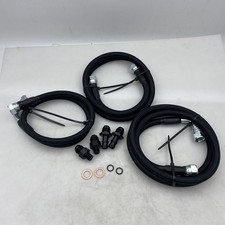
The 48RE uses a torque converter drainback valve/fitting in the cooler outlet line to keep the converter from draining into the cooler when the truck sits. Sonnax's own cooler-and-converter-flow diagnosis lists the drainback fitting as one of the possible restriction points in that circuit, right alongside the cooler and the lines themselves, and a restricted cooler circuit is what drives the high head pressure and lube failures that show up as a shudder or a slow lockup apply. Chrysler's factory service manual is blunt about it: the valve opens at about 2 psi, it is serviced only as an assembly and is not to be cleaned, it must be replaced after any failure that generates sludge, clutch particles or metal, and a restricted or backwards valve causes overheating and possible transmission failure. On a truck with a new converter that still shudders, a debris-packed drainback fitting is a prime suspect.
Step 4: Look at the Lockup Boost Valve
If fluid and cooler flow check out, go to the valve body. Sonnax identifies the lockup boost valve in the 42-46-47-48RH/RE family as prone to wear. When it wears, it reduces oil to the switch valve and restricts converter and lube flow. The symptom list on their oversized lockup boost valve kit (22771-19K, for 1994-later units with the boost oil tube) reads like a shudder complaint:
- TCC slip under load
- No line rise during TCC apply in fourth
- Overheated converter
- Loss of lube oil
- No lockup, or TCC cycling
"No line rise during TCC apply" is the one you can measure. With a line pressure gauge on the truck, you should see line pressure climb when lockup applies in fourth. On a 48RE that rise should be in the 22-28 psi range Sonnax documents. A worn boost valve or a 47RE valve body in the case will not give you that, and the converter clutch ends up clamped at pressure meant for a lighter-duty unit. That is a slow road to a glazed lining and a shudder that comes back after every converter.
Rebuilders deal with this in one of two ways: rebuild the valve body with an oversized boost valve and a fresh switch valve, or install a remanufactured 48RE valve body that has already been corrected. Either way, confirm the valve body is the correct 48RE calibration. Our 48RE valve body testing guide covers the other wear points worth checking while it is out.
Step 5: When the Converter Itself Is Done
If lockup applies with correct line rise, cooler flow is good, the fluid is correct ATF+4, and it still shudders, the converter clutch lining is glazed, worn or contaminated, and the converter has to be rebuilt or replaced. The factory diagnosis chart in the Chrysler RE service manual lists a faulty converter clutch as a cause of harsh engagement too, and the correction is the same one to follow any time you replace a converter: replace the converter and flush the cooler and lines before installing the new one.
There is also a known mechanical reason these converters shudder. JASPER's transmission division, in a 2012 update published by Underhood Service, called the converter a critical weak point of the 47RE/48RE at the inner seal of the lockup piston. JASPER found the piston wears that seal on one side only, because it is not properly centered on the turbine hub, and the result is shudder on lockup or loss of lockup altogether. If you send the converter out, ask whether the rebuilder centers the piston sleeve to the damper assembly, not to the piston. JASPER says centering it to the piston does not eliminate the wear.
That flush step is not optional. A failed lining sheds material into the fluid, the cooler catches it, and the drainback valve and cooler then restrict flow to the new converter. You end up right back at Step 3 with a new converter shuddering. Flush the cooler and lines, replace the drainback valve, install a new filter, and refill with fresh ATF+4.
Towing matters here. The lockup clutch sees the most heat when it is held on a long grade with a trailer, and heat is what glazes the lining. A truck that tows heavy should have a working cooler, a transmission temperature gauge, and a fluid change schedule to match the work. GEARS magazine (ATRA) puts the ideal maximum transmission temperature at 200°F, with fluid life cut to about half at 220°F, a quarter at 240°F and an eighth at 260°F, and gives about one gallon per minute as the minimum cooler flow to verify with a flow meter or a timed bucket before a new converter goes in.
A Diagnosis Order That Works
- Confirm lockup is the trigger: shudder starts with the RPM drop, stops with a brake tap or throttle increase.
- Scan for codes: separate a TCC performance code from a solenoid circuit fault.
- Check fluid: level hot in Neutral, condition on a towel, and confirm it is MS-9602 ATF+4.
- Check cooler flow from idle through lockup; bypass the cooler and retest if flow is low before lockup.
- Inspect the drainback valve for direction, location and debris.
- Gauge line pressure at lockup and look for the 22-28 psi rise. No rise points to the lockup boost valve or a wrong valve body.
- Replace the converter last, and flush the cooler and lines when you do.
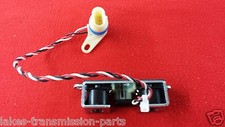
48RE TCC Lock-Up Solenoid
If the scan tool shows a lockup circuit fault or the solenoid fails its resistance check, this is the replacement lock-up solenoid for the 48RE valve body.
View the 48RE TCC lock-up solenoid →Shop 48RE transmission parts →
Frequently Asked Questions
What causes torque converter shudder on a 48RE?
The converter clutch lining can be glazed or worn, but shudder is just as often caused by wrong or worn-out fluid, a restricted cooler or drainback valve that traps release oil, or a worn lockup boost valve that keeps line pressure from rising at lockup. Check those before replacing the converter, or the new one will shudder too.
How do I know if the shudder is the converter or the driveline?
Watch the tach at the speed where it shakes. If the vibration starts when RPM drops as the converter locks, and stops with a light brake tap or more throttle that releases lockup, it is the converter clutch. A U-joint, tire or driveshaft problem stays with road speed whether lockup is on or off.
Can a fluid change fix 48RE lockup shudder?
Sometimes. If the fluid is clean but old or is not MS-9602 ATF+4, fresh ATF+4 can cure the shudder because its friction modifiers are designed for smooth lockup. A single pan drop only replaces about 3.8 liters of a 14-16 liter system, so it may take two or three changes. Burnt fluid with debris means the lining is already damaged.
How much should line pressure rise at lockup on a 48RE?
Sonnax documents a 22-28 psi line rise on the 48RE in third with the TCC on or in fourth, compared with 10-15 psi on the 46/47RE. No rise on a gauge points to a worn lockup boost valve or a 46/47RE valve body installed in a 48RE.
What do I do after replacing a 48RE torque converter?
Flush the cooler and lines before the new converter goes in, as the factory diagnosis chart specifies, and replace the drainback fitting if there's any sign of debris packed into it — it's a serviced assembly, not something worth cleaning and reinstalling. Install a new filter and refill with ATF+4. Skipping the flush lets old lining material restrict flow to the new converter.
Sources
- Chrysler, 1998 Dodge Ram Truck Service Manual — Group 21, RE automatic transmission: torque converter clutch description and operation, and transmission temperature sensor. Backs the converter clutch being hydraulically applied and released when fluid is vented by the TCC solenoid on the valve body under PCM control, engagement in 4th (and 3rd with O/D off) once warmed up and cruising, release when the throttle is applied, and the PCM forcing a 4-3 downshift when the cooler-line temperature sensor sees roughly 280 F on heavy-duty units. The 48RE inherits this RE-family lockup control. archive.org (1998 Ram FSM)
- Chrysler, 1998 Dodge Ram Truck Service Manual — Group 21, converter drainback check valve service and diagnosis charts. Backs the drainback check valve sitting in the cooler outlet (pressure) line with about a 2 psi opening pressure, being serviced only as an assembly and never cleaned, required replacement after any failure that generates sludge, clutch particles or metal, the overheating that follows a restricted or backwards valve, converter drain-back as a delayed-engagement cause (more than 5 seconds points at pump bushing wear), and the "replace converter and flush cooler and line" correction for a faulty converter clutch. archive.org (1998 Ram FSM)
- Sonnax — "Dodge 48RE Hydraulic Features Revealed." Backs the 10-15 psi (46/47RE) vs 22-28 psi (48RE) line rise at lockup, the A and D reduction points, the TCC solenoid feed from the manual valve on the 48RE vs the 1-2 shift valve on the 46/47RE, and the warning against 46/47RE valve bodies in a 48RE. sonnax.com
- Sonnax — "46-47RH/RE Converter and Cooler Flow." Backs cooler restriction as the most common issue, the switch valve staging mid-circuit near 80+ psi head pressure, release oil exhaust at TCC apply, the idle-through-lockup flow check, and the cooler bypass retest. sonnax.com
- Sonnax — Oversized Lockup Boost Valve Kit 22771-19K. Backs lockup boost valve wear in 42-48RH/RE units, the resulting loss of converter and lube flow, and the symptom list (TCC slip under load, no line rise on TCC apply, overheated converter, no lockup, TCC cycling). sonnax.com
- Shell / Pennzoil — Pennzoil Platinum ATF+4 Technical Data Sheet. Backs the approval against Chrysler MS-9602, the friction durability/retention design goal, and its use where ATF+3, ATF+2 or ATF+ (MS-7176) is specified. shell-livedocs.com (PDF)
- Underhood Service — “47RE/48RE Converter Update from JASPER,” April 24, 2012. Backs the lockup piston inner seal as the converter weak point, one-sided seal wear from the piston not being centered on the turbine hub, shudder or loss of lockup, lining delamination clogging the cooler, and centering a sleeve kit to the damper rather than the piston. underhoodservice.com
- Transmission Digest — "A Significant Departure: the 48RE Transmission," Wayne Colonna (ATSG), August 2012. Backs the channel/spacer plate change and No. 2 checkball elimination, the forward-clutch-fed TCC solenoid that allows lockup in manual 1 and 2, and the restricted-TCC-solenoid stall in Drive. transmissiondigest.com
- GEARS Magazine (ATRA) — "48RE/68RFE/AS68RC Transmission Overheating." Backs the 200°F ideal maximum temperature, fluid life halving every 20°F above it, and the one-gallon-per-minute minimum cooler flow. gearsmagazine.com