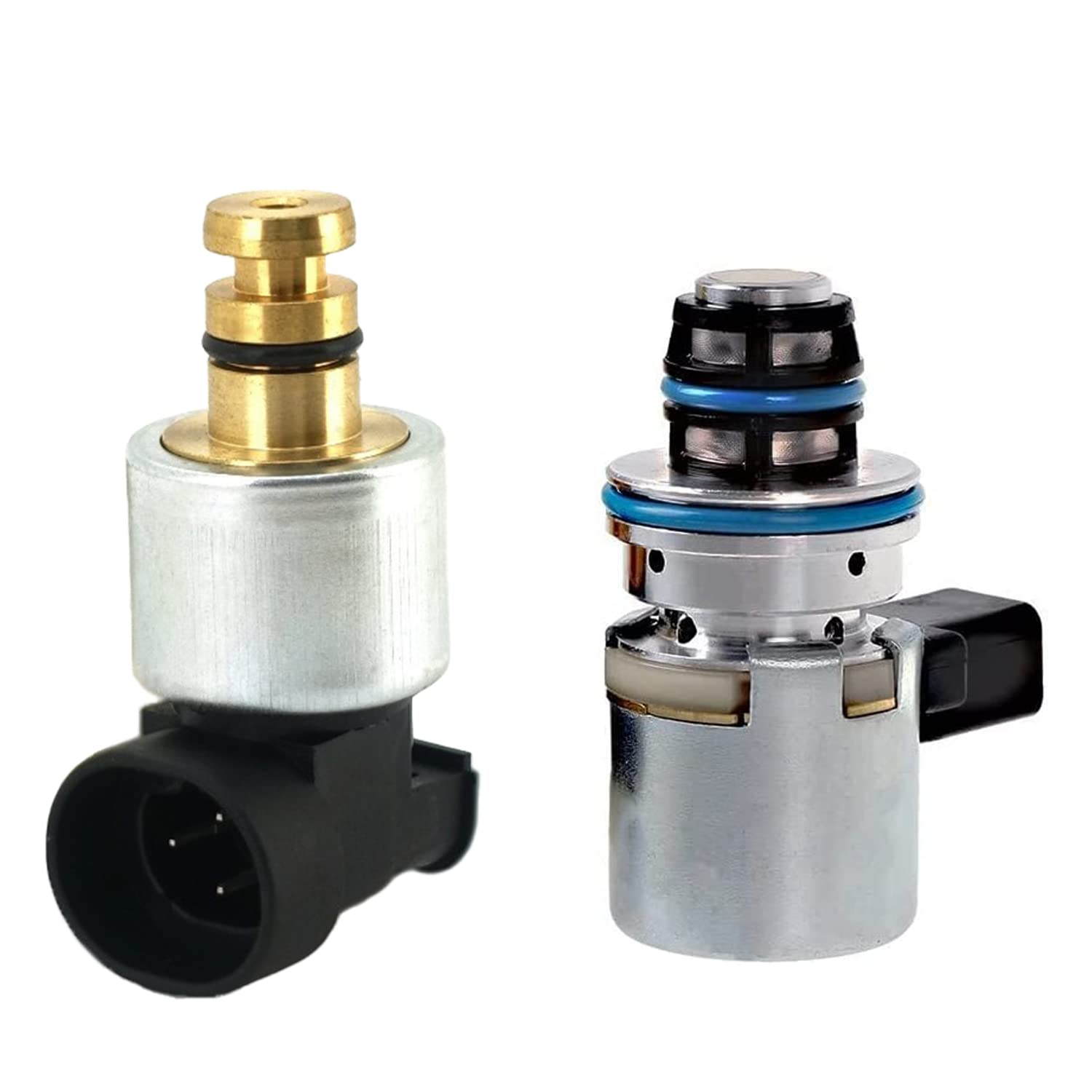
The 47RE does not have an EPC solenoid the way a Ford or a 68RFE does. What parts sellers list as the "47RE EPC" or "pressure control solenoid" is the governor pressure solenoid and governor pressure sensor (the transducer), mounted in a small governor body under the valve body transfer plate. This guide covers what that system does on 1996-2002 Ram 2500 and 3500 trucks with the 5.9L Cummins or 8.0L V10, how it fails, and how to prove it before you buy parts.
The factory numbers come from Chrysler's 2001 Dodge Ram Truck (BR/BE) service manual. The diagnostic approach comes from ATRA's GEARS magazine. Sources are listed at the end.
What the Governor Pressure Solenoid Actually Controls
The 47RE is a hydraulic transmission for its first three gears. Dave Skora put it plainly in GEARS (July 2006): the 42-48RE family still uses governor pressure to move the 1-2 and 2-3 shift valves, just like the old TorqueFlite. Only fourth gear is electronically controlled. The difference is that there is no mechanical governor weight on the output shaft. The PCM makes governor pressure with a solenoid instead.
That changes how you diagnose it. If governor pressure is right, the electronics are doing their job and a first-through-third shift problem is inside the transmission. If governor pressure is wrong, you have a control-system problem. One gauge reading splits the job in half.
Per the 2001 service manual (pages 21-710 to 21-711), the system is made up of the governor body, the valve body transfer plate, the governor pressure solenoid valve, the governor pressure sensor, the fluid temperature thermistor, the throttle position sensor, the output speed sensor and the PCM. How it works:
- Inverse control. The inlet side of the solenoid sees line pressure. The solenoid bleeds it down to make governor pressure. The manual states that 1 amp of average current produces 0 psi governor pressure and 0 amps gives maximum governor pressure. Maximum governor pressure equals line pressure, so with the solenoid off you should see roughly the idle line pressure Sonnax specifies for this family, 60-65 psi in Drive (per Sonnax's 22771A-01 switch valve instructions).
- Power and ground. The PCM turns on the transmission control relay, which feeds 12 volts to the solenoid. The PCM controls the ground side with a duty-cycled signal. Higher duty cycle means lower governor pressure.
- Closed loop. The governor pressure sensor reads what the solenoid actually made and reports back, and the PCM corrects the duty cycle. GEARS gives the example: at 25 mph the PCM wants about 25 psi, and it keeps adjusting until the sensor says 25 psi.
- Four curves. The PCM runs separate governor curves for cold fluid (at or below 30F), normal driving (at or above 50F), wide-open throttle, and transfer case low range. The cold curve runs higher governor pressure so the unit does not hang in gear with late, harsh shifts. The low-range curve runs higher to upshift sooner.
- The 40 mph handoff. GEARS notes that at about 40 mph the PCM turns the solenoid off, which sends full line pressure into the governor circuit. The 1-2 and 2-3 shifts are done by then, and full pressure just holds the shift valves over.
That is why a bad solenoid can ruin the 1-2 and 2-3 shifts while the truck cruises fine above 40 mph. Also note that the governor pressure sensor and the fluid temperature thermistor are one assembly. Per the manual (page 21-779), the thermistor reads about 1000 ohms at room temperature and also controls overdrive and converter clutch engagement, so a bad sensor can affect lockup and fourth gear too.
Symptoms of a Failing 47RE Governor Pressure Solenoid or Sensor
Because governor pressure moves the shift valves, the symptoms are all about when the truck shifts, not whether it pulls:
- Stuck in first, or starts in first and will not upshift. Governor pressure stays near zero, so the 1-2 shift valve never moves. Classic sign of no output speed signal (GEARS notes the PCM will not open the governor solenoid without an OSS signal) or an open solenoid circuit that the PCM has shut down.
- Late, high-rpm upshifts, especially with light throttle. Governor pressure is lagging behind road speed.
- Early, lazy upshifts, or starting in second. Governor pressure too high.
- No downshift, or no kickdown at a stop. The service manual pressure spec calls for 0-1.5 psi governor pressure stopped in D, 2 or 1, and says anything above 1.5 psi at a standstill prevents downshifts. The truck coasts to a light still in second or third and takes off like it.
- Erratic shifts that change with temperature, often worse cold. The PCM recalibrates the sensor zero offset every time output speed falls below 200 rpm, and the manual notes that below 50F the solenoid can respond too slowly to reach 0 psi during that pulse.
- No 2-3 upshift at wide-open throttle, fine at part throttle. GEARS traced this to aftermarket solenoids (below).
The Codes That Point Here
The 2001 Ram's trouble code list gives six codes on this circuit:
- P1756 — Governor Pressure Not Equal to Target @ 15-20 PSI. The sensor says the solenoid is not making the pressure the PCM asked for in the middle of its range. Solenoid, a plugged solenoid filter screen, a leak in the governor circuit, or a sensor reading wrong.
- P1757 — Governor Pressure Above 3 PSI In Gear With 0 MPH. Pressure is not bleeding off at a stop. Sticking solenoid, debris, or sensor offset. This is the no-downshift-at-a-stop complaint.
- P1762 — Governor Pressure Sensor Offset Volts Too Low or High. The zero-pressure calibration is out of range.
- P1763 — Governor Pressure Sensor Volts Too High.
- P1764 — Governor Pressure Sensor Volts Too Low.
- P1765 — Trans 12 Volt Supply Relay Control Circuit. The relay that powers the solenoid. Check the relay and its circuit before condemning anything in the pan.
P1763 and P1764 are electrical codes against the sensor signal; start with a meter. P1756 and P1757 are performance codes: the circuit is intact but the pressure is wrong, so start with a gauge.
How to Test It: Scan Tool, Meter and Gauge
Step 1: Check fluid and look in the pan
The solenoid has a small inlet filter screen on its tip (the manual's Figure 69 labels it). Burnt fluid and clutch debris plug that screen and stick the solenoid. If the pan is full of friction material, a new solenoid alone is a temporary fix.
Step 2: Compare desired and actual on the scan tool
Because the system is closed loop, the PCM's desired governor pressure, the sensor's actual governor pressure, and a mechanical gauge on the governor port should all agree. GEARS lays out the logic:
- Desired, actual and gauge all agree but shifts are wrong: the controls are fine. Look at the valve body and hard parts.
- Gauge agrees with desired, but the actual PID reads something else: the governor pressure sensor is lying. Replace the sensor.
- Actual PID agrees with the gauge, but neither matches desired: the sensor is honest and the solenoid (or its supply, screen or circuit) cannot make the pressure.
- Any governor pressure in Park, Reverse or Neutral: per Dave Skora's October 2006 GEARS troubleshooting article, there should be none, because the manual valve closes the passage that feeds the governor circuit in those ranges. Pressure there is a cross-leak in the case, valve body or governor body, not a bad solenoid, and a loose or warped governor body is a common cause.
Always put a mechanical gauge on it. The scan tool only shows what the sensor reports, and a bad sensor makes a good solenoid look bad.
Step 3: Governor pressure test
The governor test port is at the right rear of the case, next to the rear servo port. From the 2001 manual's Test Five, using a 100 psi gauge (C-3292):
- Put the gauge on the governor port and the shifter in D. Run the engine at curb idle with the service brakes firmly applied so the wheels do not turn.
- Governor pressure should be no more than 3 psi at idle with the wheels stopped. Above that, the manual says a fault exists in the governor pressure control system.
- Release the brakes and slowly raise speed, not exceeding 30 mph on the speedometer. Governor pressure should rise smoothly in proportion to speed, about 1 psi per 1 mph.
- Bring it back to idle with the brakes applied. Pressure should drop back to no more than 3 psi.
The manual's analysis chart reads the results for you: governor pressure too high at idle points to a governor pressure solenoid valve system fault. Governor pressure low at all speeds points to a faulty governor pressure solenoid, the control module, or the governor pressure sensor. Do this test on a hoist with the rear wheels free, or on the road with a helper watching the gauge.
Step 4: Electrical checks
- Solenoid resistance: GEARS gives about 3.8-4.0 ohms at 70F. It is a low-resistance solenoid, so read it at the connector and again at the PCM to catch harness damage.
- Sensor voltage: the sensor is a three-wire part (5-volt reference, ground, signal). GEARS gives about 0.60 volts at 0 psi rising to about 4.8-4.9 volts at maximum, which is 100 psi. If actual governor pressure exceeds 100 psi, the signal goes above its limit and sets a sensor-shorted code, so a high-voltage code on a unit with high line pressure is not automatically a bad sensor.
- Relay feed: confirm 12 volts at the solenoid with the key on. No feed is a relay or circuit problem, not a solenoid.
- Unplug test: Gears Magazine (August/September 2022) points out that unplugging the case connector on a 47RE does not drive line pressure to maximum, because the 47RE uses a governor pressure solenoid rather than a line pressure control solenoid. With the connector off, governor pressure goes high (the solenoid is inverse), so the truck should take off in a high gear. If it still starts in first with the connector unplugged, look for a stuck 1-2 shift valve or a governor circuit leak, not electronics.
- Output speed sensor: no OSS signal means governor pressure stays at zero. Confirm the two-wire AC signal rises with shaft speed before blaming the governor.
- Codes that set in third or fourth: the same GEARS article says to watch Governor Actual during a wide-open-throttle pull. Above about 40 mph the solenoid is off and the sensor is really reading line pressure, so more than about 105 psi points at excessively high line pressure (often a modified valve body) or a bad sensor, not the solenoid. Also confirm battery voltage at case connector pin 1 with the key on; losing it puts the unit in limp mode.
The Aftermarket Solenoid Trap
GEARS ran a HotLine case titled, roughly, "it can't be the solenoid, I replaced it." The truck would not make the 2-3 shift at wide-open throttle. The cause was an aftermarket governor solenoid that produced an unstable pressure signal and could not reach line pressure when the PCM commanded maximum (about 1% duty cycle). The TV limit valve cuts throttle pressure to the shift valve at around 36 psi governor pressure, so a solenoid that cannot climb cleanly past that point cannot stroke the 2-3 valve against throttle pressure. ATRA reported the problem traced back to a few aftermarket solenoids and did not show up with factory solenoids.
The rule: after replacing the solenoid, watch desired versus actual at wide-open throttle with a gauge on the port. If actual will not climb to line pressure when commanded, the new part is the problem.
Replacing the Governor Solenoid and Sensor
This is an in-pan job. From the 2001 manual (pages 21-712 to 21-713):
- Raise and support the truck. Remove the pan and filter.
- Unplug the pressure sensor and solenoid connectors.
- Remove the screws holding the solenoid retainer to the governor body, then pull the solenoid and the pressure sensor straight out of their bores.
- If you are replacing the governor body gasket, unbolt the governor body from the valve body and clean both gasket surfaces.
- Fit new o-rings. Lubricate the sensor and solenoid o-rings with transmission fluid, align each part to its bore and push it in. Install the retainer and screws.
- Reconnect, install a new filter and pan gasket, and refill with Mopar ATF+4 (MS-9602). Check the level hot.
Replace the solenoid and sensor as a pair unless your testing clearly clears one of them. They share the same bore area, the same fluid, the same heat and the same age, and the sensor carries the fluid temperature thermistor too. Order by model year: the catalog splits 47RE governor parts between 1996-1999 and 2000-up applications, and the wrong one will not fit or will not read correctly. If the year is in doubt, Sonnax's valve body identification chart gives a visual check: the early (1999 and earlier) governor pressure sensor has an oval electrical connector, while the late (2000-up) sensor is rectangular and plastic-bodied — look at the connector before you order rather than guessing from the model year alone, since a swapped valve body can carry the other generation's sensor.
After the swap, clear codes and road test warm with the scan tool connected, making a few stops so the PCM recalibrates sensor offset before you judge shift quality.
Preventing a Repeat Failure
Keep the fluid clean, because the solenoid meters line pressure through a tiny screen. Control heat: per the manual, above 260F the PCM forces a 4-3 downshift and lights the O/D OFF lamp, and fluid that hot is what fouls the solenoid (see our 47RE overheating guide). If the old solenoid was packed with debris, something upstream is wearing, so a governor code on a slipping unit is a symptom, not the diagnosis.
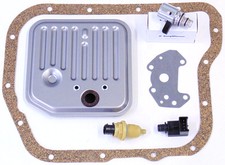
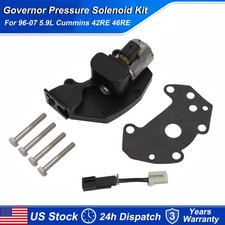
Governor Pressure Solenoid Kit 4617210 with Sensor (2000-up RE family)
The solenoid and transducer pair from this guide, replaced together, for 2000-up 47RE and 48RE governor bodies. Sold by CoreTransmissionParts.
View the solenoid and sensor kit →Shop RE-family governor parts →
Frequently Asked Questions
Does the 47RE have an EPC solenoid?
Not in the Ford or 68RFE sense. The 47RE's electronic pressure control is the governor pressure solenoid and governor pressure sensor, mounted in a governor body under the valve body transfer plate. Parts sellers list that pair as the 47RE EPC or pressure control solenoid kit.
What should 47RE governor pressure be?
Per the 2001 Chrysler service manual, no more than 3 psi at idle in D with the wheels stopped, rising smoothly about 1 psi per mph as speed increases, and dropping back to 3 psi or less at a stop. The pressure spec table calls for 0-1.5 psi stopped, and above that downshifts are prevented.
What does code P1757 mean on a 47RE?
P1757 is Governor Pressure Above 3 PSI In Gear With 0 MPH. Governor pressure is not bleeding off at a stop, usually from a sticking or debris-fouled solenoid or a sensor offset problem, and the truck may not downshift to first when it stops.
Should I replace the governor solenoid and sensor together?
In most cases, yes. They live in the same governor body, see the same fluid and heat, and the sensor also carries the fluid temperature thermistor. Replace both unless a gauge test clearly clears one, and match the parts to a 1996-1999 or 2000-up application.
Sources
The factory pressure specs, DTC definitions and removal/installation steps cited above come from Chrysler's 2001 Dodge Ram Truck (BR/BE) Service Manual, section 21, pages 21-710 through 21-713 and 21-779 (shop reference copy; this edition is no longer hosted at a stable public URL, so it is cited by section and page rather than linked). The sources below are the publicly verifiable ones behind this guide's diagnostic approach.
- ATRA GEARS Magazine — Dave Skora, "Getting to Know the 42-48RE Series Transmissions, Part 1" (July 2006). Backs the hydraulic first-three-gears design, the OSS requirement for governor solenoid operation, inverse duty-cycle control, the 40 mph solenoid-off handoff, 3.8-4.0 ohm solenoid resistance at 70F, the 0.60 V to 4.8-4.9 V sensor range with 100 psi maximum, and the closed-loop desired/actual/gauge comparison. gearsmagazine.com (PDF)
- ATRA GEARS Magazine — "It Can't Be the Solenoid... I Replaced It!" Backs the aftermarket governor solenoid failure (unstable pressure, no 2-3 shift at wide-open throttle), governor pressure equal to line pressure at about 1% commanded duty cycle, the roughly 36 psi TV limit cutoff, and the note that factory solenoids did not show the problem. gearsmagazine.com
- Sonnax — "Dodge 48RE Hydraulic Features Revealed," Jim Dial, October 27, 2015. Backs the shared valve body architecture across the 46RE, 47RE and 48RE, the real differences being the pressure regulator valve's pressure curve and the torque converter clutch solenoid feed circuit, and the warning that swapping a 46/47RE valve body onto a 48RE can run fine briefly before returning with a burned torque converter clutch or overdrive clutch — the same wear pattern this guide's governor diagnosis is meant to catch before it reaches that point. sonnax.com
- Sonnax — "Chrysler 42RE, 46RE, 47RE Valve Body Identification." Backs the visual difference between the early (1999 and earlier) governor pressure sensor, which has an oval electrical connector, and the late (2000-up) sensor, which is rectangular and plastic-bodied, plus the small-pump-inlet/large-pump-inlet distinction that affects which replacement parts fit. sonnax.com
- Gears Magazine (ATRA) — "A Dead Stop: A Typical Dodge 47RE Problem With an Unexpected Solution" (August/September 2022). Backs the point that the 47RE uses a governor pressure solenoid rather than a line pressure control solenoid, so unplugging the transmission connector removes solenoid control without driving line pressure to maximum. gearsmagazine.com
- Sonnax — 4-Spool Switch Valve 22771A-01 installation instructions (42RE through 48RE). Backs the 60-65 psi idle line pressure in Drive for this family, which is the ceiling governor pressure reaches with the solenoid off, and the line pressure tap location between the accumulators. Sonnax instruction sheet (PDF)
- ATRA GEARS Magazine, October 2006 — Dave Skora, "Troubleshooting the 42-47RE Transmissions." Backs the zero-governor-pressure check in Park, Reverse and Neutral and the cross-leak/warped governor body diagnosis, the 105 psi wide-open-throttle check in third and fourth, the 40 mph solenoid-off note, and the case connector pin 1 limp mode check. atracom.blob.core.windows.net (PDF)
Shop 47RE governor pressure solenoids, sensors, solenoid kits, valve bodies and hard parts, shipped fast from the USA.
Shop 47RE parts →Related 47RE guides
- Dodge/RAM 48RE Governor Pressure Solenoid Failure: Symptoms and Fix
- 47RE Harsh or Delayed Shifts: A Diagnostic Walkthrough
- 47RE Won't Shift Into Overdrive: Causes and Fix
- 47RE Limp Mode Causes and Fix
- 47RE Valve Body Problems: Symptoms, How to Test, and Replacement
- 47RE Common Problems and Fixes
- 46RE Pressure Control (EPC) Solenoid Symptoms