A 47RE in limp mode launches in third, will not upshift or downshift, has no overdrive and no converter lockup, and still has reverse. On a 1996-2002 Ram 2500 or 3500 with a 5.9L Cummins, 5.9L gas or 8.0L V10 behind it, that usually means the computer has given up on one thing: governor pressure.
Specs below come from Chrysler's 2001 Dodge Ram Truck service manual, ATRA's GEARS magazine, Transmission Digest and Sonnax. Sources are listed at the end.
What Limp Mode Means on a 47RE
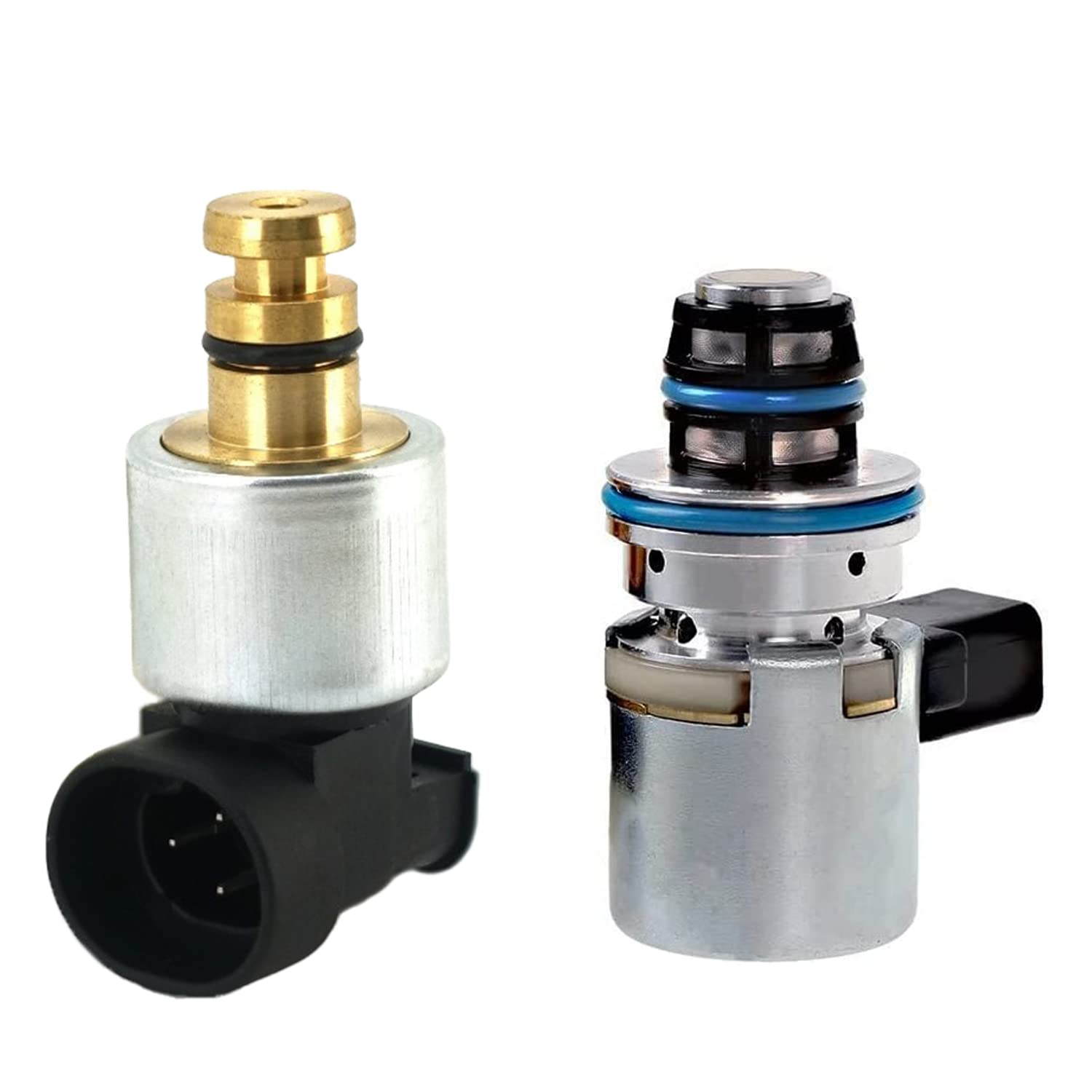
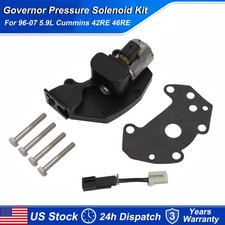
The 47RE is a hydraulic transmission for its first three gears. As ATRA's GEARS magazine puts it, governor pressure strokes the shift valves, the same as a TH350 or a C-4. Chrysler's 2001 manual lists the parts of the electronic governor system: the governor body, valve body transfer plate, governor pressure solenoid, governor pressure sensor, fluid temperature thermistor, throttle position sensor, transmission speed sensor and the PCM. The solenoid is a duty-cycle valve that regulates governor pressure for upshifts and downshifts, and the sensor reads that pressure back to the computer.
The solenoid is fail-high. GEARS' PCM chart for 1996-2003 gas trucks shows about 1 amp of governor solenoid current for zero psi. Take the current away and the solenoid opens all the way. In limp mode the PCM does exactly that: it de-energizes the governor solenoid, full mainline pressure goes into the governor circuit, and full governor pressure strokes the 1-2 and 2-3 shift valves. The truck starts in third and stays there. The overdrive and converter clutch solenoids go dead at the same time, which is why there is no fourth and no lockup.
The key point from GEARS: the computer will only go into limp mode if it sets a code or loses power. That one sentence splits your diagnosis in half.
Third-Gear Starts That Are Not Limp Mode
A 47RE can start in third with no code at all. GEARS lists the common causes as crossleaks in the governor circuit and sticking shift valves. The feel is identical, but no code is set.
No stored code means you are chasing a hydraulic problem, not limp mode. Sonnax's 46RE/47RE vacuum test guide lists the 1-2 and 2-3 governor plug bores among the valve body bores to test, and a worn bore there will change shift timing no matter what the electronics do. Our 47RE valve body testing guide walks through the vacuum test.
Also rule out the normal strategies. Chrysler programs four governor pressure curves into the PCM: one for fluid at or below -1C (30F), one for normal driving at 10C (50F) and above, one for wide-open throttle, and one for a 4x4 in transfer case low range (1998 Ram service manual, Group 21). Those still upshift from first; true limp mode never does.
One more that fools people on a towing truck: the overheat strategy. Per the 2001 Chrysler service manual (page 21-779), the fluid temperature thermistor lives in the governor pressure sensor, and if fluid temperature passes 126C (260F) the PCM forces a 4-3 downshift, applies the converter clutch on the third gear schedule and lights the overdrive OFF lamp. Fourth gear stays locked out until the fluid cools to about 110C (230F). The same logic blocks overdrive and converter lockup when fluid is below about 10C (50F). That is a truck that will not use fourth, not a limp mode: it still starts in first and upshifts normally through third. If the O/D OFF lamp comes on by itself pulling a grade, treat it as a heat problem. Our 47RE overheating guide covers the cooler flow test.
The Codes Behind 47RE Limp Mode
The Ram service manual's DTC table (1998 Group 25, carried through 2001) lists the transmission codes that matter here. Read every module, then match what you find:
- P1756 — Governor pressure not equal to target at 15-20 psi.
- P1757 — Governor pressure above 3 psi in gear at 0 mph.
- P1762 — Governor pressure sensor offset volts too low or high.
- P1763 — Governor pressure sensor volts too high.
- P1764 — Governor pressure sensor volts too low.
- P1765 — Trans 12 volt supply relay control circuit.
- P1740 — TCC or O/D solenoid performance.
- P1899 — P/N switch stuck in Park or in gear.
Know Your Numbers Before You Test
GEARS' voltage chart for the gas-engine PCM gives you the values to compare against. Diesel trucks use a different controller, so confirm pins on your wiring diagram:
- Governor pressure sensor signal (B29): about 0.60-0.66 V at zero psi, about 3.0 V at 60 psi, about 4.5 V at 110 psi.
- 5 volt reference (B31): 5 V with the ignition on.
- Transmission relay control (B30): 0.0 V with the engine running and no codes.
- Output speed sensor signal (B28): about 3.0 V AC at 30 mph.
- Overdrive (B21) and TCC (B11) solenoid controls: 0.0 V when on, about 12 V with the ignition on and the solenoid off, and no voltage at all in limp mode.
And the hydraulic numbers, from Chrysler's Test Five governor pressure test. Put the 100 psi gauge on the governor pressure port, select D, hold the brakes at curb idle. Governor pressure should be no more than 3 psi. If it is higher, the manual says a fault exists in the governor pressure control system (Chrysler 1998 Ram service manual, Test Five). Release the brakes and accelerate gently (under 30 mph per the manual); pressure should rise about 1 psi per mph, and fall back to 3 psi or less when you stop. GEARS adds that the rise continues to roughly 40 mph, after which the system routes mainline pressure to the governor port.
Diagnose by When the Code Sets
GEARS' approach is to watch when the truck drops into limp. The timing tells you whether it is a wiring fault, a hydraulic leak or a bad part.
Key on, engine off, code sets right away
That is a hard electrical fault that is present right now. Check every connection and make sure the governor pressure sensor circuit is properly grounded. Measure reference voltage, ground and signal against the chart above.
Engine running in Park, Reverse or Neutral
Suspect a hard electrical failure such as a shorted solenoid. There is a hydraulic test here too. With a gauge on the governor tap, there should be zero governor pressure in Park, Reverse and Neutral, because the manual valve closes the passage that feeds the governor circuit in those ranges. Any governor pressure in those ranges means a crossleak in the case, valve body or governor body.
Pressure appears the moment you select Drive
GEARS names a loose or warped governor body as a common hydraulic cause, along with a leak in the solenoid itself. On the electrical side, check these on the scan tool:
- Indicated gear range: it must read Drive. If the PCM thinks it is in any other range, it leaves the governor solenoid off, and full line pressure hits the governor circuit when you select Drive.
- Output speed at a stop: it must read 0 mph. Any AC noise or electromagnetic interference on the sensor circuit looks like road speed, and the PCM builds governor pressure for a truck that is not moving.
- Governor sensor accuracy: at a stop the PCM raises solenoid duty cycle just enough to close it off. If the sensor reads low, the PCM thinks pressure is zero when the solenoid is still feeding the circuit. A gauge will show pressure the scan tool does not.
Drops into limp while driving
This is the classic intermittent. If the code sets at low speed, connect the gauge and scan tool and compare three numbers: governor desired, governor actual (the sensor) and the gauge. GEARS' rule:
- If the gauge follows desired until the code sets, the sensor is lying. Replace the transducer.
- If the gauge follows actual, the pressure really is wrong. Suspect the governor solenoid, a warped valve body adapter (transfer plate) or an internal leak.
If the code sets in third or fourth, watch governor actual at wide open throttle. More than 105 psi on the scan tool points to excessive line pressure or a bad transducer. Remember that above about 40 mph the PCM turns the governor solenoid off and the sensor is really reading line pressure, which is why high line pressure can set a sensor code on a truck with a perfectly good sensor.
When the transducer does need replacing, order by year, not by part name. Sonnax's 42RE/46RE/47RE valve body identification guide splits the RE family into two sensor generations: the early governor pressure sensor has an oval-shaped electrical connector and goes with '99-and-earlier valve bodies, while the late sensor is plastic and rectangular and goes with '00-and-later units. A used valve body or transfer plate from the wrong side of that line will not take your harness plug, so check the connector before you bolt anything in.
P1763 on Gas Trucks: Check the O2 Sensors First
Transmission Digest documented a chronic problem on 1996-and-later Dodge and Jeep trucks with RE-series transmissions behind gasoline engines. P1763 sets when the PCM sees 4.89 volts or higher on the governor pressure sensor circuit for eight seconds or more, which corresponds to about 90-96 psi governor pressure, and the transmission goes to third-gear failsafe.
The sensor is often fine. TD lists three causes: a compromised ground circuit, line pressure above factory spec, and an alternator producing voltage spikes. The governor sensor shares its ground path with other sensors, and TD says failing heated oxygen sensors are the most common cause of that bad ground. Their field test is simple: unplug the O2 sensors, road test it, and if the code does not return, find which O2 sensor is bad and replace it. On a V10 or 5.9 gas 47RE, do this before you buy a transducer.
P1765 and Loss of Power: The Relay and Pin 1
The other way into limp mode is losing power. Pin 1 of the transmission case connector supplies power to the transmission solenoids and should have system voltage whenever the key is on. GEARS is blunt about it: if pin 1 loses power, the system goes into limp mode and sends full mainline pressure to the governor circuit. That feed comes through the transmission control relay, which is why a relay control fault logs P1765.
Test it with the key on: system voltage at case connector pin 1. If it is missing, work back through the relay, fuse and harness. If it drops out over bumps or when hot, look at a fluid-soaked or corroded case connector, a pushed-back pin, or a chafed harness; a moment without power sets the code and locks the truck in third until the key is cycled. On Cummins trucks, clean both batteries' terminals and the engine grounds too; weak grounds cause voltage faults the PCM reads as circuit failures.
With the pan off, check the internal harness from the case connector to the solenoids for cracked insulation and loose terminals.
A Test Order That Works
- Confirm it is true limp mode: starts in third, no upshift, no fourth, no lockup, code stored. No code means a hydraulic crossleak or sticking valve, not limp mode.
- Read codes in every module. O2 sensor and charging codes matter on gas trucks.
- Check fluid level and condition hot. The 47RE takes Mopar ATF+4 per the factory manual. Burnt fluid plus limp mode can mean clutch damage on top of the electrical fault.
- Key on: system voltage at case connector pin 1, 5 V reference, good sensor ground, sensor signal about 0.60-0.66 V at zero pressure.
- Scan tool at a stop in Drive: indicated gear range Drive, output speed 0 mph, governor actual near zero.
- Gauge on the governor port: 3 psi max at idle in Drive, zero in P/R/N, about 1 psi per mph rolling.
- Compare desired, actual and gauge on a road test to decide between the sensor, the solenoid and a hydraulic leak.
- Governor fault: replace the solenoid and sensor together and check the governor body for flatness and tight bolts.
RE-Family Governor, Solenoid and Rebuild Parts
CoreTransmissionParts stocks governor solenoids, sensors, valve bodies and overhaul kits for the Dodge RE family. The 47RE shares many of these parts with the 48RE, but fitment changes by model year, so confirm your year before ordering.
Browse RE-family parts →Shop RE-family transmission parts →
Frequently Asked Questions
What gear is a 47RE in when it goes into limp mode?
Third gear and reverse. In limp mode the PCM de-energizes the governor pressure solenoid, which opens it fully and sends mainline pressure into the governor circuit. Full governor pressure strokes the shift valves to third. The overdrive and converter clutch solenoids lose power too, so there is no fourth and no lockup.
What codes put a 47RE into limp mode?
The governor system codes are the usual ones: P1756 and P1757 for governor pressure not matching target, P1762, P1763 and P1764 for the governor pressure sensor, and P1765 for the transmission 12 volt supply relay control circuit. The computer only goes into limp mode if it sets a code or loses power, so a third-gear start with no code points to a hydraulic crossleak or a sticking shift valve instead.
Can bad O2 sensors cause 47RE limp mode?
On gas-engine trucks, yes. Transmission Digest found that the governor pressure sensor shares a ground path with other sensors and that failing heated oxygen sensors are the most common cause of that bad ground. The result is P1763, sensor volts too high, and third-gear failsafe. Unplug the O2 sensors and road test it; if the code does not come back, replace the bad O2 sensor.
How do I test the 47RE governor pressure solenoid?
Put a 100 psi gauge on the governor pressure port. In Drive at curb idle with the brakes held, Chrysler's spec is no more than 3 psi; it should rise about 1 psi per mph as you drive and drop back to 3 psi or less at a stop. Compare the gauge to governor desired and actual on a scan tool. If the gauge follows actual, the solenoid or a leak is the problem; if it follows desired, the sensor is bad.
Sources
- Chrysler — 1998 Dodge Ram Truck (BR) Service Manual, Group 21, 46RE/47RE Electronic Governor, Description and Operation. Backs the list of governor control components (governor body, transfer plate, governor pressure solenoid, governor pressure sensor, thermistor, TPS, speed sensor, PCM), the duty-cycle solenoid where 1 amp gives zero governor pressure and zero amps gives maximum, and the four governor pressure curves: cold (at or below -1C/30F), normal (10C/50F and above), wide-open throttle and transfer case low range. The 1998 electronic governor carries over to the 2001 47RE. archive.org — 1998 Dodge Ram Truck Service Manual
- Chrysler — 1998 Dodge Ram Truck Service Manual, Group 21, Hydraulic Pressure Test Five, Governor Pressure. Backs the 100 psi gauge C-3292 at the governor port, no more than 3 psi (20.6 kPa) at curb idle in D with brakes applied, a higher reading meaning a fault in the governor pressure control system, the 30 mph test limit and the roughly 1 psi per mph rise. archive.org — 1998 Dodge Ram Truck Service Manual
- Chrysler — 1998 Dodge Ram Truck Service Manual, Group 25 Emissions Control, Diagnostic Trouble Code descriptions. Backs the definitions of P1740, P1756 (not between 10 and 25 psi when 15-20 psi is requested), P1757 (above 3 psi when 0 psi is requested), P1762 (offset out of calibration for 3 consecutive Park/Neutral occurrences), P1763 (above 4.89 volts), P1764, P1765 and P1899. archive.org — 1998 Dodge Ram Truck Service Manual
- ATRA GEARS Magazine — "Troubleshooting the 42-47RE Transmissions" (October 2006). Backs governor pressure stroking the shift valves, zero pressure at a stop rising about 1 psi per mph to roughly 40 mph, limp mode de-energizing the governor solenoid for full mainline and third-gear starts, limp mode requiring a code or loss of power, crossleaks and sticking valves causing third starts without limp mode, the diagnose-by-condition steps, the 105 psi WOT check, the gas PCM voltage chart, and case connector pin 1 powering the solenoids. atracom (PDF)
- Transmission Digest — March 2006 issue, RE-series governor pressure sensor volts too high. Backs P1763 on 1996-and-later gas-engine RE trucks, the 4.89 volt for eight seconds set condition (about 90-96 psi), third-gear failsafe, and the three causes: shared ground (heated O2 sensors most common), high line pressure and alternator voltage spikes. transmissiondigest.com
- Sonnax — Chrysler 46RE, 46RH, 47RE, 47RH Vacuum Test Guide. Backs testing the 1-2 and 2-3 governor plug bores along with the other valve body bores. sonnax.com
- Chrysler — 1998 Dodge Ram Truck Service Manual, Group 21, Transmission Fluid Temperature Thermistor, Description and Operation. Backs the thermistor being part of the governor pressure sensor, about 1000 ohms at room temperature, overdrive and converter clutch lockout below about 10C (50F), the forced 4-3 downshift with third-gear converter clutch apply and O/D OFF lamp above 126C (260F), and fourth gear returning at about 110C (230F). archive.org — 1998 Dodge Ram Truck Service Manual
- Sonnax — "Chrysler 42RE, 46RE, 47RE Valve Body Identification," January 1, 2013. Backs the two governor pressure sensor generations: the early sensor with an oval-shaped electrical connector on '99-and-earlier valve bodies and the late plastic, rectangular sensor on '00-and-later units, and the need to identify the sensor type before choosing a valve body. sonnax.com
Shop 47RE governor solenoids and sensors, internal harnesses, valve bodies and rebuild kits — shipped fast from the USA.
Shop 47RE parts →