A 48RE in limp mode is easy to recognize from the driver's seat. The truck pulls away in what feels like a high gear, it never shifts, and it will not come out of that gear no matter how you drive it. Owners say it "starts in third" or "is stuck in third." Some trucks do it every time the key goes on. Others drive fine for twenty minutes and then drop into it on the highway, and come back after a restart. There is almost always a stored code behind it.
The important thing to understand before buying parts is that limp mode is not a failure. It is the transmission doing exactly what Chrysler designed it to do when the PCM stops trusting its own shift control. The job is finding out why it stopped trusting it. On this unit the answer is usually in the electronic governor circuit, the wiring and grounds that feed it, or, on 2005-2007 diesel trucks, the throttle valve actuator. Specs below come from the Chrysler 48RE service manual, Transmission Digest and Gears Magazine, listed at the bottom.
Why a 48RE Defaults to Third Gear
The 48RE is a hydraulic transmission with an electronic governor bolted onto it. First, second and third are decided by the valve body, the same way a 727 decided them, by balancing governor pressure against throttle pressure at each shift valve. What changed is where governor pressure comes from. The Chrysler manual describes the governor pressure solenoid as a duty-cycle solenoid on the valve body transfer plate that regulates line pressure down to the governor pressure needed for upshifts and downshifts. A governor pressure sensor next to it reads that pressure back to the PCM.
Here is the line from the factory manual that explains limp mode: one amp of current to the solenoid produces zero psi governor pressure, and zero amps sets the maximum governor pressure. The solenoid is fail-high. The manual also notes the PCM energizes the transmission control relay, which supplies 12 volts to the solenoid, and the PCM controls the ground side.
Put those two facts together. When the PCM sees a fault it does not like, it drops the relay. The governor solenoid loses power, its current goes to zero, and governor pressure goes to maximum. Maximum governor pressure overpowers throttle pressure at both the 1-2 and 2-3 shift valves, so the valve body strokes straight to third and stays there. The overdrive and converter clutch solenoids lose power at the same time, so there is no fourth and no lockup. Reverse still works because it is not a governor-controlled range. You get a truck that moves, slowly, in third and reverse. That is the whole failsafe.
ATSG's 46RE/47RE/48RE manual describes the same split: first, second and third gear shifts are controlled by the electronic governor solenoid on the valve body, while the shift into fourth and the converter clutch are controlled by their own separate solenoids. That is why losing power to the solenoids costs you fourth and lockup but leaves the hydraulic 1-2-3 path intact.
This is also why a truck in limp mode "starts in third" rather than "stays in second." If yours launches in second and stays there, you are probably looking at an RFE unit or a different problem.
Fake Limp Mode: Rule These Out First
Not every stuck-in-a-gear 48RE is in failsafe. The PCM has legitimate reasons to hold gears out, and they cost nothing to check.
- Cold fluid. Per the factory manual (Chrysler 1998 Ram service manual, p. 21-212), the PCM will not engage the converter clutch or overdrive below approximately 10C (50F). On a winter morning a healthy 48RE runs 1-2-3 until it warms up. The manual also programs a separate cold governor curve below about -1C (30F) that runs higher governor pressure so the truck still shifts at normal speeds.
- Hot fluid. Above about 126C (260F) the PCM forces a 4-3 downshift and will not allow fourth again until the fluid cools to about 110C (230F); the overdrive OFF lamp comes on when it drops back to third, which owners often mistake for limp mode (Chrysler service manual, Group 21). The temperature reading comes from a thermistor inside the governor pressure sensor assembly, roughly 1000 ohms at room temperature, so a sensor fault can hit both governor pressure and temperature logic at once. A truck that drops out of overdrive towing a grade in July is being protected, not failing.
- Transfer case in low range. The PCM compares the vehicle speed signal to the transmission output shaft speed to decide when the transfer case is in low range, and then uses a higher governor pressure curve to bring upshifts in sooner. A bad speed signal can make shifts feel wrong without any hardware fault.
The difference is simple. Those conditions still upshift from first. A true limp-mode 48RE does not upshift at all, and it sets a code.
Cause 1: Governor Pressure Sensor Reading Too High (P1763 / P0868 family)
This is the one we see most. Transmission Digest documented a chronic RE-series complaint where the governor pressure sensor circuit reads too high and the PCM places the transmission in third-gear failsafe. The article gives the set condition: the code sets when the PCM sees 4.89 volts or higher on the governor pressure sensor circuit for eight seconds or more. On the scan tool that is P1763, governor pressure sensor volts too high. If your truck is showing a pressure code in the P0868 range instead, our 48RE P0868 guide covers it.
What surprises people is that the sensor is often fine. TD lists three causes:
- A compromised ground. The governor pressure sensor shares its ground path with the battery temperature sensor and the heated oxygen sensors. TD says malfunctioning heated O2 sensors are the most common cause of a bad shared ground. The test is crude but it works: unplug the O2 sensors one at a time and drive it. If the limp mode goes away, you found it.
- Line pressure above spec. If the valve body has been modified or is malfunctioning, line pressure runs high, governor pressure follows it up, and the sensor reports a legitimately high reading. That is not a sensor problem.
- Charging system trouble. An alternator throwing voltage spikes or running high output can push the signal over the threshold.
So before you replace the transducer, look at the sensor signal and the O2 sensor codes on the same scan, and check alternator output at the battery.
Cause 2: Governor Pressure Solenoid Not Tracking
The PCM constantly compares the governor pressure it is commanding to the pressure the sensor reports. The manual notes the sensor offset is calibrated each time output shaft speed falls below 200 RPM, so the PCM knows what "zero" looks like at every stop. If commanded and actual drift apart, it assumes the system cannot be trusted and defaults. A sticking solenoid, a leaking transfer plate gasket, or a blocked governor screen can all do this.
Do not skip the casting. Sonnax's 48RE vacuum test guide lists worn 1-2 and 2-3 governor plugs as the cause of a 1-2 shuttle, early upshifts, oversensitive 2-3 and 3-2 shifts, and shift timing you cannot dial in with the TV linkage. When governor oil leaks past those plugs, a brand-new solenoid and sensor still cannot hold the pressure the PCM is asking for, and the desired-versus-actual comparison drifts again. Vacuum test both plug bores before you condemn the electronics a second time; Sonnax repairs them with its 22771-14K governor plug kit.
Watch the parts you install here. Gears Magazine ran a Valve Body Pro HotLine piece on 48RE diesels that would not upshift at wide open throttle even after the solenoid was replaced. The cause was aftermarket governor solenoids. With an OE solenoid, governor pressure is stable and rises to equal line pressure when the PCM commands 1% duty cycle. Several aftermarket units never got there. Installing an OE solenoid fixed virtually all of those trucks. Their test is the one to use: command maximum governor pressure on the scan tool and confirm desired pressure equals actual pressure.
The governor pressure test
A gauge settles the argument. The factory governor pressure test is done at the governor port with the 100 psi gauge:
| Condition | Factory spec |
|---|---|
| Idle, in gear, brakes applied | No more than 3 psi (20.6 kPa) |
| Rolling, steady acceleration | Rises about 1 psi per 1 mph |
| Back to curb idle | Drops back to no more than 3 psi |
| Line pressure, manual 2 (Test Two) | 54-60 psi throttle forward, rising to 90-96 psi |
The manual's analysis chart says it plainly: governor pressure too high at idle is a governor pressure solenoid valve system fault. If you see 20 or 30 psi sitting at a stop, the solenoid is not regulating, and the truck will start off in second or third even before it officially goes into limp. Compare against the scan tool reading at the same time. Gauge and scan tool agree and both are wrong, suspect the solenoid. Gauge is right and the scan tool is wrong, suspect the sensor or its circuit.
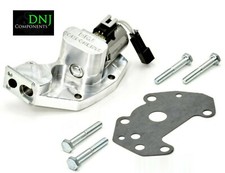
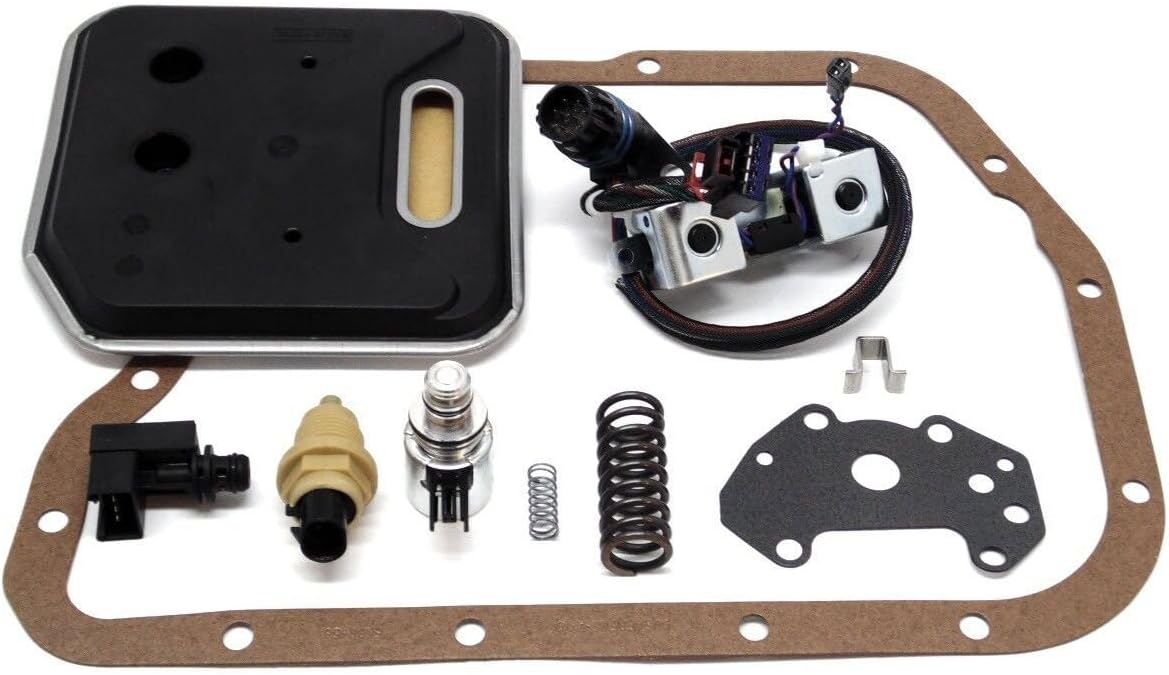
Replace the solenoid and sensor as a pair with a new transfer plate gasket. Our governor pressure solenoid guide walks the removal.
Cause 3: TTVA Faults on 2005-2007 Diesel Trucks
Starting in 2005, Cummins-backed 48RE trucks replaced the throttle valve cable with an electronic Transmission Throttle Valve Actuator. Transmission Digest lists its code set: P1749 and P1750 (TV position sensor circuit low/high), P1751 (minimum range performance), P1752 (span performance), P1753 (mechanical performance), P1754 (actuator stuck) and P1755 (control circuit). Any of them can put the truck in a failsafe with harsh shifts, and they often show up with governor codes because the PCM is now unsure of both inputs that decide the shift.
TD's two service points matter on a truck that went into limp right after a pan drop or a valve body swap:
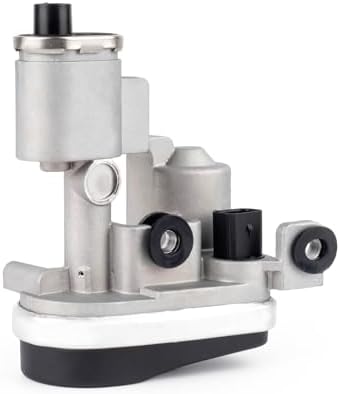
- The distance between the pressure regulator spring retaining bracket and the adjustment bolt head must be 0.905 inch. The cable-type bracket sets about 0.820 inch, which does not give the TV shaft enough travel and sets P1751 and P1752.
- After any TTVA or valve body work, hold the ignition in the on position for at least 30 seconds so the ECM can relearn the actuator. It needs to see at least 48 degrees of shaft movement to set its range.
If a TTVA code is present, fix it before chasing the governor. Our 48RE harsh shift guide covers the TTVA failsafe shift feel.
Cause 4: Power, Grounds and the Case Connector
Because limp mode is triggered by the PCM dropping the relay, anything that makes the PCM see a solenoid circuit fault will do it: a corroded 8-pin case connector, a chafed harness at the transmission crossmember, a weak transmission control relay, or poor battery and engine grounds. On a Cummins truck with two batteries, clean both batteries' terminals and the engine block ground before you condemn anything expensive. A truck that goes into limp only over bumps or only when hot is almost always a connection. If a P0700 is stored, our 48RE P0700 guide has the relay and connector test sequence.
A Diagnostic Order That Works
- Confirm it is true limp. No upshift from a stop, third and reverse only, code stored. Rule out cold fluid, hot fluid and low range.
- Read every module's codes, not just transmission. O2 sensor, charging system and TTVA codes all matter here.
- Check fluid level and condition hot in Neutral. ATF+4 only. Chrysler's Ram Body Builder fluid chart lists the 48RE service fill at 3.8 liters (8 pints), so a pan drop that took more than that to bring up to the dipstick usually means it was low before the service. Burnt fluid with limp mode means there may be clutch damage on top of the electrical fault. See our 48RE fluid guide.
- Clean batteries and grounds, check alternator output.
- Watch governor pressure desired vs. actual on a scan tool, then verify with a gauge: 3 psi max at idle, about 1 psi per mph rolling.
- Unplug O2 sensors one at a time if you have a sensor-high code and the gauge reads normal.
- Replace governor solenoid and sensor together, OE quality, new gasket, if pressure will not track.
- On 05-07 diesels, verify the 0.905 inch TTVA bracket dimension and do the 30-second relearn.
48RE Governor Pressure Solenoid and Sensor Kit (2001-2009) with Gaskets
The solenoid and transducer as a matched pair with the transfer plate gaskets. It is the part to fit when commanded and actual governor pressure will not agree, or the gauge reads high at idle.
View the 48RE governor solenoid kit →Shop 48RE transmission parts →
Frequently Asked Questions
What gear is a 48RE in when it goes into limp mode?
Third gear and reverse. When the PCM detects a fault it drops the transmission control relay, the governor pressure solenoid loses current, and per the Chrysler manual zero amps means maximum governor pressure. That strokes the shift valves to third. The overdrive and converter clutch solenoids lose power too, so there is no fourth and no lockup.
Can a 48RE come out of limp mode on its own?
It usually resets when the key is cycled, which is why an intermittent truck drives fine after a restart and then drops back into third. The fault is still there. If the code keeps returning, find the cause instead of clearing it, because driving in third under load builds heat.
What is the most common cause of 48RE limp mode?
The governor pressure circuit. Transmission Digest documents P1763, set when the governor pressure sensor signal reaches 4.89 volts or more for eight seconds, and notes that a bad shared ground from failing heated oxygen sensors is the most common cause, ahead of the sensor itself. High line pressure and alternator voltage spikes can also set it.
Should I replace the governor pressure solenoid and sensor together?
Yes. They work as a closed loop, sit on the same transfer plate, and come apart with the same gasket. Use OE-quality parts: Gears Magazine traced 48RE no-upshift complaints to aftermarket governor solenoids that would not raise governor pressure to line pressure, and an OE solenoid fixed virtually all of them.
Why did my 2005-2007 Cummins 48RE go into limp mode after a valve body job?
Check the throttle valve actuator. Codes P1749 through P1755 cover the TTVA. Transmission Digest specifies 0.905 inch between the pressure regulator spring bracket and the adjustment bolt head, and a 30 second key-on relearn after any TTVA or valve body work. A cable-style bracket at 0.820 inch will set P1751 and P1752.
Sources
- Chrysler 48RE Automatic Transmission service manual — Electronic governor and hydraulic pressure tests. Backs the governor pressure solenoid as a duty-cycle solenoid on the valve body transfer plate regulating line pressure down to the governor pressure needed for upshifts and downshifts, zero amps producing maximum governor pressure, the PCM energizing the transmission control relay to supply 12 volts to the solenoid, and the 54-60 psi rising to 90-96 psi line pressure test range. The original ManualsLib scan of these pages no longer resolves; Sonnax's own 48RE hydraulics breakdown independently corroborates the governor-pressure-solenoid-to-line-pressure relationship and the TCC/overdrive boost behavior on this same valve body. sonnax.com — Dodge 48RE Hydraulic Features Revealed
- Chrysler Corporation, 1998 Dodge Ram Truck Service Manual, Group 21 — Transmission fluid temperature thermistor (RE-series electronic governor), pp. 21-212/213 (archived copy). Backs the approximately 1000 ohm room-temperature thermistor resistance, the thermistor living in the governor pressure sensor assembly, the PCM blocking converter clutch and overdrive engagement below about 10C (50F), the forced 4-3 downshift with third-gear converter clutch engagement above 126C (260F), the overdrive OFF lamp, and no fourth gear until the fluid drops to about 110C (230F). This manual covers the 46RE/47RE; the 48RE carries over the same governor pressure sensor and temperature logic. archive.org — 1998 Dodge Ram Truck Service Manual
- Transmission Digest — March 2006 issue, RE-series governor pressure sensor volts too high. Backs P1763 placing RE-series units in third-gear failsafe, the 4.89 volt / eight second set condition, the shared ground with the battery temperature and heated O2 sensors, O2 sensors as the most common ground fault, high line pressure and alternator voltage spikes as causes. transmissiondigest.com
- Transmission Digest — "Preventing 48RE Transmission Throttle-Valve-Actuator Codes." Backs the 2005-up diesel TTVA, codes P1749-P1755, the 0.905 inch bracket dimension versus 0.820 inch, and the 30 second key-on initialization with 48 degrees minimum shaft travel. transmissiondigest.com
- Gears Magazine (ATRA) — "It Can't Be the Solenoid... I Replaced It!" Backs 48RE no-upshift complaints traced to aftermarket governor solenoids, OE solenoids raising governor pressure to line pressure at 1% duty cycle, and the desired-equals-actual PID test. gearsmagazine.com
- Sonnax Tech Resources — "Chrysler 48RE Vacuum Test Guide." Backs worn 1-2 and 2-3 governor plugs causing 1-2 shuttle, early upshifts, oversensitive 2-3/3-2 shifts and shift timing that cannot be adjusted with the TV linkage, and the 22771-14K repair. sonnax.com
- ATSG — Dodge/Jeep 46RE, 47RE, 48RE technical manual (excerpt). Backs 1st-3rd shifts controlled by the electronic governor solenoid and 4th gear and TCC controlled by separate solenoids, and the 2003-07 Ram pickup 48RE application. atsg.biz (PDF)
- Chrysler / Ram Body Builder Guide 2006 — Fluid Capacities. Backs the 48RE 3.8 L (8 pint) service fill and 14-16 L dry fill. rambodybuilder.com (PDF)