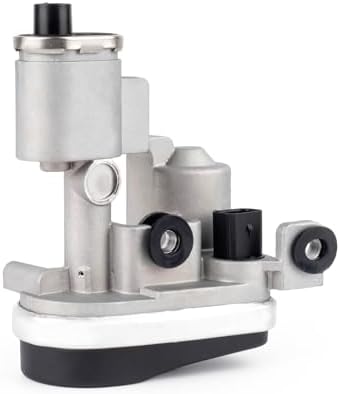
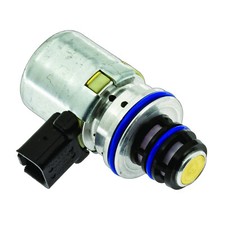
If your Cummins-powered Ram 2500 or 3500 with the 48RE four-speed is banging every shift at light throttle, slipping on the 1-2 or 2-3 when you tow, or is storing a code in the P1749 to P1755 range, the transmission throttle valve actuator (TTVA) is one of the first parts to look at. This is the electric actuator that replaced the old TV cable, sold here as a direct replacement for Mopar 53041140AB.
What the throttle valve actuator does in a 48RE
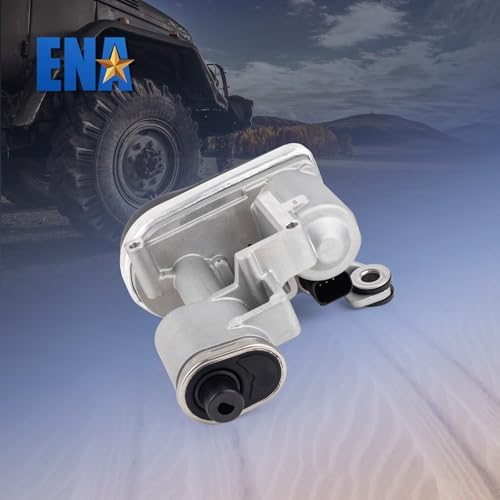
The 48RE is still a hydraulically shifted TorqueFlite at heart. Line pressure and shift timing depend on how far the throttle valve inside the valve body is pulled. On gas trucks and early diesels a cable did that job. Starting with the 2005 model year, Dodge put a TTVA on the 48RE behind the diesel in the 2500 and 3500. It sits on the driver side of the case above the throttle valve shaft. Inside is a small DC motor that the engine computer drives, plus two potentiometers that report the actuator's position back. The D-shaped opening in the bottom of the actuator slips over the throttle shaft, so whatever angle the computer commands is the throttle pressure the valve body sees.
The computer has no pressure sensor to check its work. It commands a position and trusts the hydraulics to follow. That means a lazy motor, a worn potentiometer track or a bad connection changes line pressure without the computer knowing.
Symptoms of a failing TTVA
- Codes P1749 through P1755, the TTVA circuit and performance codes on the 2005-up diesel 48RE.
- Hard, banging shifts everywhere. Some TTVA codes make the computer cut power to the actuator, and the failsafe leaves it in the high-TV position, so every shift comes in firm.
- Slipping or flaring 1-2 and 2-3 shifts under load when the actuator is not moving the throttle valve its full range, so line pressure stays too low.
- Early or late shift points that come and go with temperature or after a key cycle.
How to confirm it before you buy
Read codes first. A stored P1749-P1755 on an 05-up diesel explains a harsh shift by itself. With the key on, the computer runs a self-calibration every key cycle and expects at least 48 degrees of travel from minimum to maximum. If the actuator was ever moved to a cable-style bracket, the throttle shaft adjustment bolt can be set wrong: the factory gap between the bracket and the inside of the bolt head is .905 in., and some cable brackets have as little as .820 in., which can set P1751 or P1752 on a perfectly good actuator. Check that before you condemn the part. Our 48RE Ram 2500 shift problems guide walks through separating a TTVA fault from a worn valve body, and the 48RE Cummins failure points guide covers the other pressure-related wear that causes the same slip.
Fitment
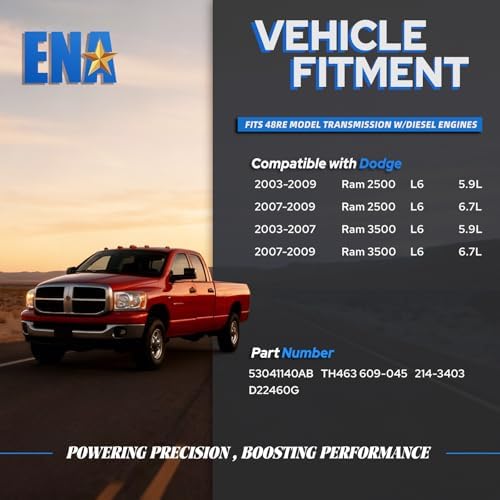
This actuator replaces OE 53041140AB, and the listing crosses it to 609-045, TH463, 214-3403 and D22460G. It has a six-terminal female oval connector and mounts externally on the driver side of the case. Mopar catalogs 53041140AB for 2005-2009 Ram 2500 and 3500 with the 5.9L and 6.7L Cummins. Two honest notes: 2003-2004 48RE trucks used the throttle cable and do not take this actuator, and most 6.7L pickups from mid-2007 on came with the 68RFE six-speed, which has no TTVA at all. If your truck is a 6.7L, confirm it really has a 48RE before ordering. When in doubt, send us your year and VIN and we will check it. You can see every part we carry for this transmission on the 48RE parts page.
Install notes
- The TTVA is external. It comes off with two bolts and one connector, with no fluid drain and no valve body removal. No mounting hardware is included, so reuse your bolts.
- Seat the D-shaped opening fully on the throttle valve shaft before you snug the bolts. A cocked actuator will not get its full 48 degrees of travel.
- There is no adjustment on the actuator itself. After installing, turn the key on and wait at least 30 seconds before starting so the computer can find the new zero position.
- Clear codes, then road test cold and hot. If shifts are still soft under load with a good actuator, the throttle valve bore in the valve body is the next suspect; a worn bore gives the wrong pressure for a correct command. That is when a 48RE valve body for 2000-2007 makes sense.
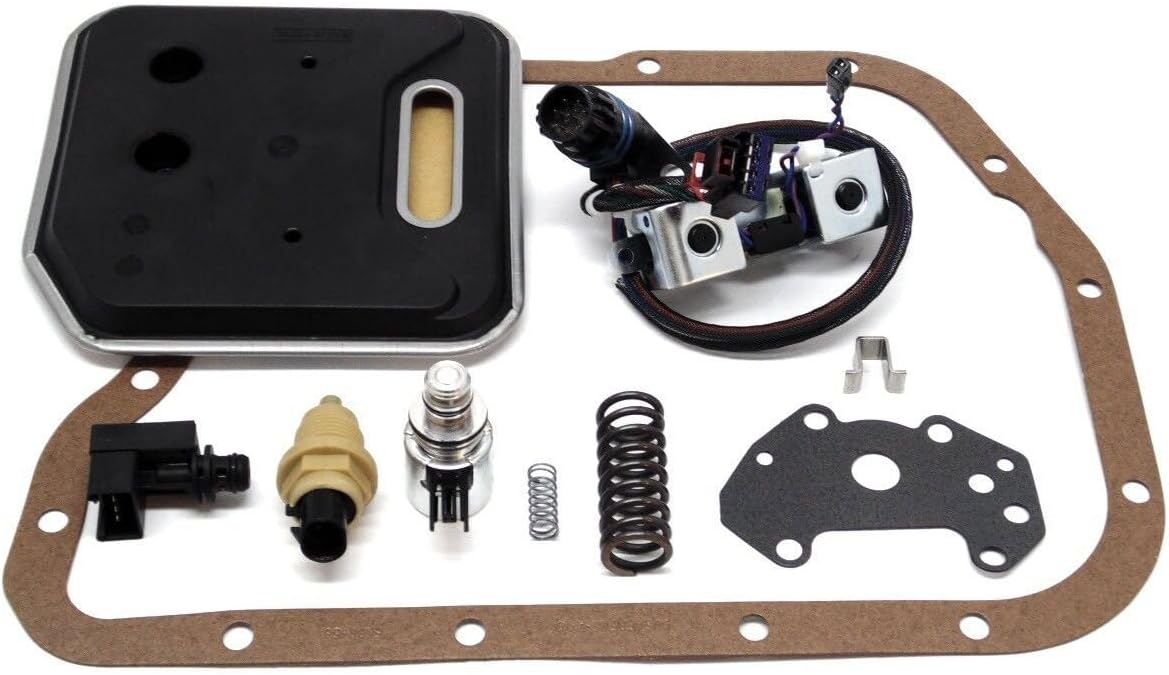
- Check fluid level and condition with ATF+4. Burnt fluid after a long slip means the clutches took damage, and a 2003-2007 48RE master rebuild kit may be the real fix.