Shift complaints on a 3500 Cummins with a 48RE come in three flavors: it starts in 3rd with the light on, it won't upshift when it should (usually 2-3 with a trailer on), or the shifts are there but they land at the wrong time, too soft, or hunt back and forth. A slip is a different problem with a different checklist; we covered that in the 3500 slipping guide. This one is about the shift control side: governor pressure, throttle pressure, the electronics that make them, and the 3500-specific things that throw them off.
Chrysler's 2006 Ram Body Builder spec sheet lists the 3500's automatic as the same "Auto 4-Speed HD 48RE" behind the 5.9L Cummins that the 2500 gets. What differs is the rest of the driveline. The 3500 was sold with 3.73 or 4.10 axle ratios, a 6,500 lb single rear wheel or 9,350 lb dual rear wheel rear axle, and LT235/80R17E tires on the duallies.[1] Every one of those changes what the transmission sees, and that matters once you start reading shift data.
How the 48RE decides when to shift
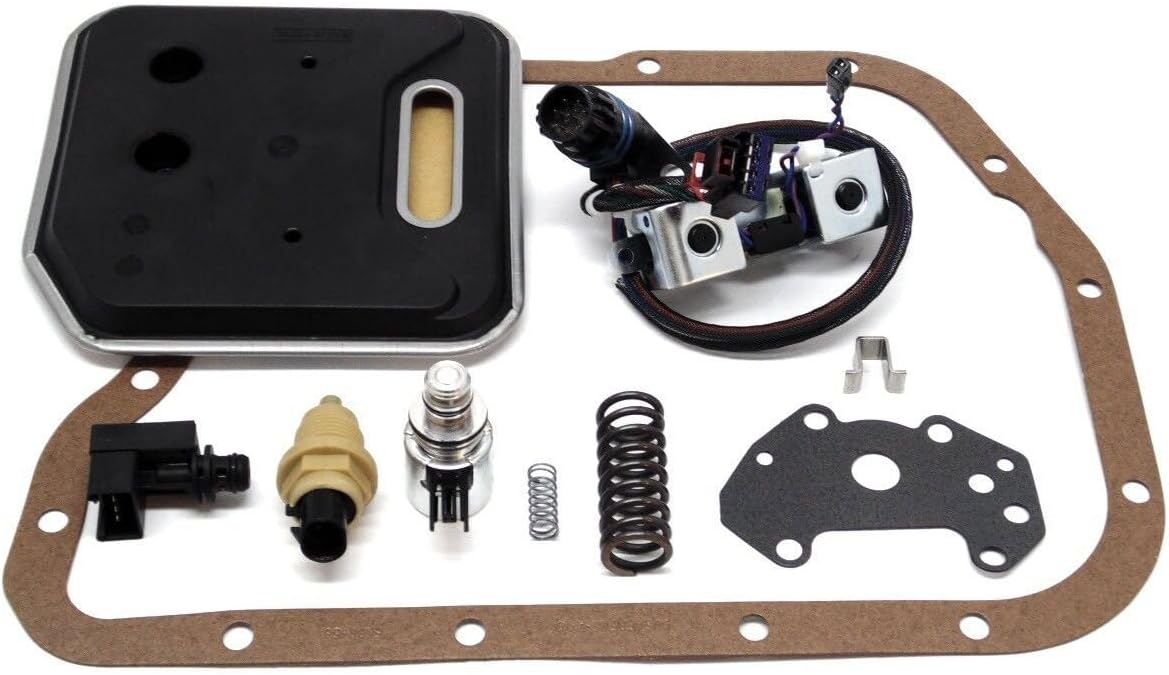
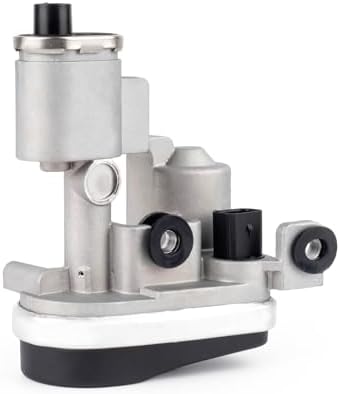
The 48RE is still a hydraulic shifter at heart. Two pressures fight over each shift valve. Governor pressure, built by the PCM through the governor pressure solenoid and reported back by the governor pressure transducer, rises with output speed and pushes the 1-2 and 2-3 valves toward the upshift. Throttle (TV) pressure, set by the TV cable on early trucks and by the throttle valve actuator from 2005, pushes back with engine load. The shift happens when governor wins. Fourth gear and converter lockup are separate: the PCM fires the overdrive and TCC solenoids directly.
Two details from the hydraulics explain most 3500 complaints. First, at wide-open throttle governor pressure has to reach about 36 psi before the TV limit valve cuts TV pressure off land H of the 2-3 shift valve. Below that, the 2-3 valve doesn't stroke, the kickdown band doesn't release and the front clutch doesn't apply. Second, line and governor pressure both jump when the PCM commands 4th or lockup, because the boost valve strokes.[2] So weak governor pressure shows up as a missing 2-3 under load, and a worn boost valve shows up in 4th and lockup.
The 42RE through 48RE are also among the few units where the scan tool shows a real measured pressure. Jeff Parlee of the Sonnax TASC Force points out that the governor pressure value on these Chrysler units comes from a transducer, not just a PCM command.[4] That makes desired versus actual governor pressure the most useful PID on the truck. Log it on a loaded road test, not in the bay.
Symptom 1: Starts in 3rd, MIL on, P0868
When the PCM stops trusting governor pressure it defaults to 3rd gear. The usual trigger on a 2003-2007 truck is the governor pressure transducer. Transmission Digest describes a 2005 2500 5.9L diesel 48RE, freshly rebuilt with a new transducer, that drove perfectly for about 5 miles and then set P0868, governor pressure sensor volts too high. A second new transducer did the same a few miles later. A normal transducer reads about 0.5 volts at zero pressure and about 3.5 volts at maximum governor pressure, and the failed units had blown a hole inside where pressure is converted to voltage. TD notes this is more common on performance builds that run higher line pressure.[3] That describes a lot of 3500s: they get the firmer valve body and the bigger converter because they tow.
Two habits save comebacks. Watch transducer voltage key on, engine off, and confirm it sits near 0.5 V before you drive. And test a new transducer before it goes in: TransGo's 48RE instructions say to blow shop air at 120-130 psi maximum into the pressure port with a rubber-tipped gun and listen. It must not leak.[6] If it hisses, it goes back in the box.
Don't forget the wiring. On RE trucks the transducer shares a 5-volt reference and ground with other sensors, so a shorted sensor elsewhere can drag its signal around. Check reference and ground at the connector before condemning the third transducer.
Symptom 2: Hangs 2nd under load, shifts when you lift
This is the classic 3500 complaint because it shows up with a trailer on. Floor it from a light, it pulls through 1-2, then holds 2nd until you lift, and then it drops into 3rd. Jesse Zacarias wrote this up in Gears Magazine from calls to the Valve Body Pro HotLine on 48REs behind diesels. On his test truck, a 2003 5.9L 4x4 with a TV cable, a brand-new governor solenoid made unstable governor pressure that never reached line pressure when the PCM commanded a 1% duty cycle. An OE solenoid on the same truck was stable and rose to line pressure. Virtually all of the problem units shifted normally after an OE governor solenoid went in.[2]
The scan tool tells you which side is losing. If desired governor pressure climbs at WOT and actual lags well behind it, you have a solenoid, filter screen or valve body leak in the governor circuit. If both track but the shift still won't happen, look at the TV side: high TV pressure from a stretched cable, a mis-set actuator or a worn TV bore will out-push a healthy governor.
Symptom 3: Shift points moved after tires, wheels or gears
This one isn't a failure, but it fills shops with 3500s. The PCM times shifts from output shaft speed. It has no way to know you swapped duallies for big single rear wheel tires, went from LT235/80R17 to something much taller, or re-geared from 4.10 to 3.73. Change the tire diameter or the ratio and the same output speed is now a different road speed. The upshifts land at the wrong mph, the 3-4 and lockup come in at odd speeds, and the speedometer is off.
Check the tire size and axle tag against the build before you chase hardware. A truck that "shifts late and the speedo reads 7 mph slow" usually needs the PCM set up for its real tire and gear combination, not a valve body.
Symptom 4 (2005-2007): Shift timing wanders, TTVA codes, light-throttle shuttle
In 2005 Dodge replaced the TV cable on 48RE diesel 2500 and 3500 trucks with a transmission throttle valve actuator, a DC motor with two potentiometers that the ECM moves. There's no adjustment. Each time the key goes on, the ECM calibrates it and looks for at least 48 degrees of travel from minimum to maximum. A replacement needs 30 seconds key-on to initialize. The bracket-to-adjustment-bolt-head dimension should be .905 in. A cable-style bracket can measure as little as .820 in. and set P1751 or P1752. The codes run P1749 through P1755, covering sensor circuit low and high, minimum range, span, mechanical performance, actuator stuck and control circuit.[5]
The 3500-specific twist is tuning. A lot of these trucks pull hard and have a programmer on them. TransGo notes that 2005-2007 actuator trucks with an engine power chip or programmer can develop a light-throttle 2-3-2-3-2-3 shuttle shift, and adds a spacer to the part-throttle valve in its kit to calm it down. TransGo says the condition hasn't been found on TV cable trucks.[6] If a truck started hunting between 2nd and 3rd at light throttle right after it was tuned, that is your first lead.
Symptom 5: Firm or erratic shifts, repeated rear band failures
When the shifts are all there but feel different every time, harsh one day and soft the next, look at the valve body bores. TransGo warns that wear in the 48RE boost valve bore causes repeated rear band failure and lazy or erratic pressure rise.[6] Because the boost valve is what raises pressure in 4th and lockup,[2] a worn bore leaves the overdrive clutch and converter clutch under-fed on the highway with a load on. A truck that has eaten two rear bands is telling you about its valve body.
Band adjustment is a fair first step when the 1-2 or 2-3 has gone soft and the fluid is clean. The front band adjuster is on the outside of the case. The rear band needs the pan off. Both get torqued in inch-pounds (72 in-lb on the adjuster for the front band) and then backed off a set number of turns. The back-off count isn't the same for every engine, so use the factory figure for a diesel truck. Adjustment takes up lining wear. It won't fix a burnt band or a worn bore.
Confirm with a gauge. Parlee's rules: road-test with the gauge taped outside the cab instead of checking on the lift, and compare a clutch or band tap to line pressure. A difference of more than 10% means a leak in that circuit.[4] If line pressure looks fine until the shift and then the apply is harsh, he points to a leak in the component that is applying or the wrong frictions or fluid.
Symptom 6: TCC cycling on and off around 45-50 mph
RE trucks are known for a rhythmic converter clutch shuttle between about 45 and 50 mph, and the cause list depends on whether the truck is gas, 12-valve or 24-valve diesel. Transmission Digest describes a 2001 2500 diesel 47RE that started bumping in and out of lockup right after an oil change. Oil had gotten into the A/C high-pressure switch connector near the filter. That switch is wired in series with the low-pressure switch and heater control between ground and the PCM. Unplugging one or the other is a quick test. If the shuttle stops, test both switches.[3] It is a 47RE story, but the same logic applies on a 48RE, and it costs nothing to check before you condemn a TCC solenoid.
Before any of it: fluid and identification
The 48RE takes Mopar ATF+4. Chrysler lists a 3.8 L (8 pint) service fill and 14-16 L (29-33 pints) after overhaul, with the dry fill depending on cooler and line length.[1] Many 3500s have a deep pan or an auxiliary cooler, so fill to the dipstick hot. TransGo also recommends checking the level in Neutral when their manual valve is installed, because the converter charges more there.[6]
On early trucks, confirm what you have before ordering parts. TransGo's instructions identify the unit by the 8th VIN digit, C for a 48RE and 6 for a 47RE, and tell you to check the separator plate for the 48RE balance hole.[6] A 46/47RE valve body in a 48RE case will shift, but it won't have the 48RE's pressure rise, and that feeds every symptom above.
The fix, in order
- Fluid level and condition, ATF+4 only, checked hot.
- Scan for codes and log governor pressure desired against actual on a loaded road test.[4]
- P0868 or a third-gear start: check transducer reference, ground and voltage (about 0.5 V at rest), then replace with an air-tested transducer.[3][6]
- No 2-3 at WOT: OE-quality governor pressure solenoid and a clean screen.[2]
- 2005-07 TTVA codes or a tuned truck that hunts: bracket dimension, initialization, actuator, then the part-throttle fix.[5][6]
- Shift points moved: verify tire size and axle ratio against the PCM setup.[1]
- Erratic pressure or repeated band failure: pressure-test, then repair or replace the valve body (boost and TV bores).[6]
Also see the 48RE fluid type and capacity guide, and keep the transmission fluid spec chart handy for the rest of the fleet.
Governor pressure solenoid and transducer kits, throttle valve actuators and valve bodies for the 2003-2007 Ram 3500 Cummins 48RE, shipped fast from the USA.
Shop 48RE parts →48RE governor solenoid and transducer kit → All 48RE parts
FAQ
Why does my Ram 3500 48RE start in 3rd gear?
A third-gear start with the check engine light on is the 48RE failsafe. The PCM usually goes there when it loses faith in governor pressure, most often a failed governor pressure transducer setting P0868 (volts too high) or a governor solenoid code. Transmission Digest reports new transducers blowing internally a few miles after an overhaul, especially on builds that run higher line pressure.
Why won't my 48RE shift into 3rd at full throttle but shifts when I lift?
Governor pressure has to reach about 36 psi before the TV limit valve cuts throttle pressure off the 2-3 shift valve. If governor pressure is weak or unstable it never wins, so the 2-3 waits until you back off the pedal. Gears Magazine traced this on diesel 48REs to some aftermarket governor solenoids, and an OE solenoid fixed it.
Do bigger tires or a gear change affect 48RE shift points?
Yes. The PCM times shifts from output shaft speed, and the 3500 was sold with 3.73 or 4.10 axles and different single and dual rear wheel tire sizes. Change the tire diameter or the ratio and the same output speed means a different road speed, so shifts land at different mph and the speedometer reads wrong until the PCM is set up for the new combination.
Can a tuner or programmer cause 48RE shift problems?
It can. TransGo notes that 2005-2007 trucks with the throttle valve actuator and an engine power chip or programmer can develop a light-throttle 2-3-2-3 shuttle shift. More torque at the stock line pressure also wears the bands and clutches faster, which shows up as flares and slips later.
What fluid does a Ram 3500 48RE take?
Mopar ATF+4. Chrysler lists a 3.8 liter (8 pint) service fill and 14 to 16 liters (29 to 33 pints) after overhaul, with the dry fill changing with cooler and line length. Set the final level hot on the dipstick.
Related 48RE guides
Sources
- Chrysler / Ram Body Builder Guide 2006 — Technical Specifications and Fluid Capacities. Backs the "Auto 4-Speed HD 48RE" behind the 5.9L Cummins in the 3500, the 3.73/4.10 axle ratios, the 6,500 lb SRW / 9,350 lb DRW rear axle ratings, the LT235/80R17E DRW tire, ATF+4, and the 3.8 L service and 14-16 L overhaul fills. Technical specifications (PDF) · Fluid capacities (PDF)
- Gears Magazine (ATRA) — "It Can't Be the Solenoid...I Replaced It!", Jesse Zacarias, March 2016. Backs the diesel 48RE no-2-3-at-WOT complaint, the unstable aftermarket governor solenoid at a 1% duty cycle, the OE solenoid fix, the roughly 36 psi TV limit valve point at land H, and the boost-valve pressure rise in 4th and lockup. gearsmagazine.com
- Transmission Digest — October 2018 issue (Volume 35, No. 10): "RE series units – P0868" and "TCC cycling on and off." Backs the 2005 2500 diesel 48RE transducer failures after overhaul, the 0.5 V / 3.5 V transducer range, the internal blow-through and higher-line-pressure link, the 45-50 mph RE TCC shuttle, and the A/C pressure switch test. transmissiondigest.com
- Transmission Digest — "Diagnosis with Pressure Gauges," Jeff Parlee (Sonnax TASC Force), December 1, 2007. Backs the 42-48RE transducer pressure data, road testing over lift testing, the 10% clutch-tap-versus-line leak rule, and the harsh-apply diagnosis. transmissiondigest.com
- Sonnax Tech Resources — "48RE Transmission Throttle Valve Actuator Codes." Backs the 2005 TTVA on diesel 2500/3500 Rams, the DC motor and two potentiometers, the 30-second initialization, the 48-degree span, the .905 in. versus .820 in. bracket dimension, and the P1749-P1755 definitions. sonnax.com
- TransGo — SK 48RE shift kit installation instructions (2003-2008 diesel and V10). Backs the 120-130 psi transducer air test, the light-throttle 2-3 shuttle on actuator trucks with a power chip or programmer, boost valve bore wear causing repeated rear band failure, the 8th VIN digit and balance hole identification, and the Neutral fluid check. transgo (PDF)