A 3500 Cummins with a 48RE behind it is the hardest-working automatic Chrysler put in a pickup in those years. It has the same transmission as the 2500, but it is asked to carry and pull more, and that difference shows up in the way it fails. When a 2500 slips, it is often a band that needs adjusting. When a 3500 dually that pulls a fifth-wheel slips, heat and pressure have usually been working on it for a while, and the slip is the first symptom anybody noticed. This is the order I check them in, from the free checks to the expensive ones.
Chrysler's 2006 Ram Body Builder spec sheet lists the 3500 automatic as the "Auto 4-Speed HD 48RE" behind the 5.9L Cummins, the same unit the 2500 gets. The 3500 4x4 rear axle is rated 6,500 lb on single rear wheels and 9,350 lb on duallies, against 6,200 lb on a standard-engine 2500, and the dually rides on LT235/80R17E tires instead of the 2500's LT265/70R17E.[1] Per ATSG, the 48RE was used in 2003-07 Ram pickups behind the 5.9L diesel and the 8.0L V10.[2] Same transmission, more weight behind it. That is the whole story of the 3500.
Why a 3500 slips differently than a 2500
Clutches and bands slip when the pressure holding them can't keep up with the torque going through them, or when the friction surface is glazed or burnt and can't grip at any pressure. A 3500 makes both worse. A heavy gooseneck or fifth-wheel load keeps the Cummins at high torque for long stretches on grades, which means the converter is multiplying torque and making heat. That heat goes into the fluid, the fluid goes through the cooler, and if the cooler circuit can't shed it, the ATF+4 thins out, line pressure leaks away faster past worn valve bores, and the friction material starts to glaze. Once a band or clutch has glazed, it will slip even after the truck cools down.
So on a 3500 I don't just ask which gear slips. I also ask what the truck was doing when it started, and I check whether the cooling side has been keeping up.
Step 1: Check fluid level and condition at temperature
Low fluid feels exactly like worn clutches. The pump draws air when fluid sloshes away from the filter on a hard launch or a grade, line pressure dips, and whatever is applied lets go. Check the level hot, engine running, in Park, and read it twice.
The 48RE takes Mopar ATF+4. Chrysler lists a 3.8 L (8 pint) service fill and a 14-16 L (29-33 pint) fill after overhaul, with a note that the dry fill changes with the internal cooler, the length and inside diameter of the cooler lines, and any auxiliary cooler.[1] A lot of 3500s have aftermarket coolers or deep pans, so the refill number won't match the book. Fill to the dipstick, not to the number.
Then smell it and look at the magnet. Burnt ATF with friction dust means something has already slipped long enough to cook, and an adjustment won't fix it. Clean red fluid on a truck that slips points to pressure, adjustment or the converter, which is the cheaper end of this list.
Step 2: Name the gear that slips
The RE family uses three driving clutches (front, rear and the overdrive direct clutch) and holds with the kickdown band, the low/reverse band, the low roller clutch, the overdrive clutch and the overrun roller clutch. Gears one through three come from the front section, and fourth comes from the overdrive unit bolted on behind it.[2] Line the complaint up against what is applied:
- 1-2 shift flares, 2nd slips under load: kickdown (front) band, its adjustment, or the front servo. This is the most common 3500 complaint because 2nd is the gear that does the work getting a heavy trailer rolling.
- 3rd slips and Reverse is soft: the front clutch, since it is applied in both. See Step 6.
- All forward gears slip, Reverse is fine: the rear clutch, which is applied in 1st, 2nd and 3rd.
- Clean through three gears, then a flare on the 3-4 shift or in 4th on a grade: the overdrive clutch or the pressure feeding it.
- Everything slips: stop looking at clutches and go to line pressure and the cooler circuit.
Do this road test loaded if you can. A 3500 that only slips with 14,000 lb behind it may drive perfectly empty, and a test drive without the trailer will send you down the wrong road.
Step 3: Check cooler flow, the step people skip on a 3500
This is where a heavy-towing 3500 is different. Bob Warnke at Sonnax names cooler restriction as the most common problem in this circuit on the 46/47RH/RE family. He lists the restriction points as the drainback fitting, the auxiliary or radiator-mounted coolers, and the lines, and he ties restricted flow to lube failures, TCC slip at high torque, delayed engagements, slow converter fill and high stall speed.[5] That article was written about the 46/47 units, but the 48RE shares the same basic cooler and converter circuit layout, and I see the same failures on 48RE trucks.
Warnke also explains why this circuit causes slipping as well as heat. With the TCC off, a cooler restriction pushes the switch valve spool toward its spring, which can stage it partway and limit converter and cooler flow even more. He says it may start to matter at cooler head pressures around 80 psi.[5] His check is simple: bypass the cooler circuit for a moment and retest. If the complaint goes away, the restriction is in the cooler, not in the transmission.
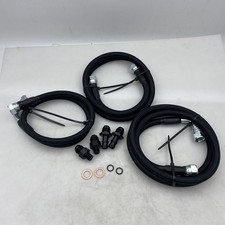
On a 3500 that has eaten a transmission before, assume the cooler is full of the old friction material until you prove it isn't. A cooler is hard to flush clean after a failure, and a new unit fed through a plugged cooler will slip and overheat again in a few thousand miles. Replace it or bypass it to a new external cooler, and replace rubber lines that have gone soft and collapse when hot.
Step 4: Separate converter clutch slip from gear slip
At highway speed in 4th with lockup applied, a slipping converter clutch lets the tach climb a couple hundred rpm without any change in road speed. That is real slip, but it isn't a gear. Watch engine rpm against output speed on the scan tool. If rpm wanders while lockup is commanded and settles when it releases, the problem is the converter clutch or its oil circuit.
Sonnax's Jim Dial explains that the 48RE valve body raises line pressure 22-28 psi when the converter applies and in 4th, against 10-15 psi on the 46/47RE, specifically to hold the converter clutch and overdrive clutch under diesel torque.[3] Warnke adds that low cooler flow until lockup, followed by a slow or slipping apply, points to restricted release oil inside the converter, and that a worn pump cover bushing or crankshaft pilot can let the turbine shaft seal rings cross-leak and upset TCC apply and release.[5] On a high-mileage 3500 that works hard, any of those can be the cause.
Step 5: Line pressure, the valve body and the TTVA
If the slip shows up under throttle and load in more than one gear, line pressure isn't rising enough. Two things cause this a lot on 3500s.
The wrong valve body. Dial warns that 46/47RE valve bodies installed in 48RE units have led to failed converter clutches and overdrive clutches after some time on the road, because they lack the 48RE's line rise.[3] Valve bodies get swapped at junkyards and cheap rebuild shops all the time. If the truck has been apart before, find out what's in it.
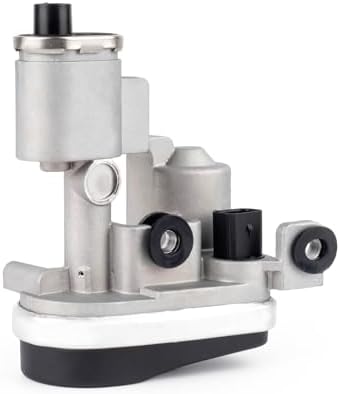
The TTVA on 2005-2007 trucks. In 2005 Dodge replaced the TV cable on the 48RE diesel 2500 and 3500 trucks with a transmission throttle valve actuator, a DC motor that moves the throttle valve shaft. Each time the key is turned on, the ECM calibrates it and looks for at least 48 degrees of movement from minimum to maximum. The bracket-to-adjustment-bolt-head dimension should be .905 in., and some cable-style brackets have as little as .820 in., which can set P1751 or P1752. A replacement TTVA needs the key on for 30 seconds to initialize.[4] If the actuator isn't moving the throttle valve its full range, throttle pressure stays low, line pressure doesn't rise with load, and the truck slips when it's working hardest. Pull codes P1749-P1755 before anything else on a 2005-07.
Step 6: Slips in 3rd and Reverse? Think front clutch piston
A 3500 that pulls fine in 1st and 2nd but slips or flares into 3rd, and also has a soft or slipping Reverse, has a problem with the front clutch, which is applied in both. Sonnax says the original cast front (direct) clutch pistons in the 46RE, 47RE and 48RE crack and break, which causes unexpected direct clutch failure, and its reinforced replacement, 22965A-01, adds webbing at the weak areas.[6] A cracked piston leaks apply oil, so the clutch slips at the times it is most loaded: on the 2-3 shift under throttle and when backing a heavy trailer up a grade. Fresh frictions won't fix it. The piston has to be replaced, and on a 3500 that tows heavy I'd use the reinforced or billet version rather than another cast one.
The fix, cheapest first
- Correct fluid level and condition. ATF+4 only, filled to the stick hot. Free to cheap.
- TTVA codes and bracket dimension on 2005-07 trucks. Initialize or replace the actuator and set the .905 in. dimension.[4]
- Band adjustment if the slip is only in 2nd or Reverse and the fluid is clean. Adjusting takes up wear. It won't bring back a burnt lining.
- Cooler and lines. Bypass test, then replace a contaminated or restricted cooler.[5]
- Valve body. Confirm it is a 48RE body with the correct line rise, and repair worn bores or replace the unit.[3]
- Overhaul. Burnt fluid, slip in several gears, or a flare that returns after an adjustment means the unit comes apart: frictions, bands, servo seals, the front clutch piston, and a cooler flush or replacement in the same job.
Keeping a 3500's 48RE alive
Heat and low pressure kill these transmissions, so prevention works on both. Keep the fluid full and change it much more often than the light-duty schedule if you tow. Make sure the cooler flows freely, and add an external cooler or a deep finned pan on a truck that pulls heavy. On long grades, hold it in 3rd instead of letting it hunt between 3rd and 4th, which cycles the overdrive clutch and lockup under full load. If the engine has been turned up, remember that stock clutch capacity and line pressure were set for stock torque. More power at the same pressure is exactly how these units start slipping.
See the 48RE fluid type and capacity guide for service details, and keep the transmission fluid spec chart handy for the rest of the fleet.
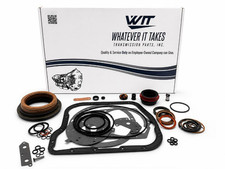
48RE master rebuild kits, remanufactured valve bodies, coolers and TTVA actuators for the 2003-2007 Ram 3500 Cummins — shipped fast from the USA.
Shop 48RE parts →Shop the 48RE Super-Hold servo kit → All 48RE parts
FAQ
Why does my Ram 3500 48RE only slip when towing heavy?
Under a heavy fifth-wheel or gooseneck load the converter makes more heat and the 48RE needs full line rise to hold its clutches and bands. A restricted cooler, a 46/47RE valve body in a 48RE case, or on 2005-2007 trucks a throttle valve actuator that is not moving the throttle valve its full range all keep line pressure too low, so the slip shows up only when the truck is working hardest.
Is a 3500 48RE different from a 2500 48RE?
No. Chrysler's 2006 Ram Body Builder guide lists the same Auto 4-Speed HD 48RE behind the 5.9L Cummins in both trucks. The 3500 is rated to carry more, with a 9,350 lb dually rear axle versus 6,200 lb on a standard-engine 2500, so it puts more heat and load through the same transmission.
How do I tell converter clutch slip from transmission slip?
Cruise in 4th with lockup commanded and watch engine rpm against output speed on a scan tool. If rpm wanders a few hundred while lockup is on and settles when it releases, the converter clutch or its oil circuit is slipping. If rpm flares during a shift or stays high in one gear with lockup off, a clutch or band is slipping.
Can a cooler cause a 48RE to slip?
Yes. Sonnax ties cooler restriction to TCC slip at high torque, delayed engagements, slow converter fill and lube failures, because restriction can stage the switch valve and limit converter and cooler flow. Bypassing the cooler circuit and retesting is the quick check. If the complaint goes away, the restriction is in the cooler.
What fluid does a 48RE take and how much?
Mopar ATF+4. Chrysler lists a 3.8 liter (8 pint) service fill and 14 to 16 liters (29 to 33 pints) after an overhaul, with the dry fill varying by cooler and line length. Set the final level on the dipstick hot with the engine running.
Related 48RE guides
Sources
- Chrysler / Ram Body Builder Guide 2006 — Technical Specifications and Fluid Capacities. Backs the "Auto 4-Speed HD 48RE" behind the 5.9L Cummins in the 3500, the 6,500 lb SRW / 9,350 lb DRW 3500 rear axle ratings versus 6,200 lb for the standard-engine 2500, the LT235/80R17E DRW tire, and the 48RE 3.8 L service fill and 14-16 L overhaul fill with its cooler footnote. Technical specifications (PDF) · Fluid capacities (PDF)
- ATSG — 46RE/47RE/48RE Technical Service Information (manual excerpt). Backs the 2003-07 Ram pickup 5.9L diesel / 8.0L application and the driving and holding component layout (front, rear and overdrive direct clutches; kickdown and low/reverse bands; low roller, overdrive and overrun clutches). atsg.biz (PDF)
- Sonnax Tech Resources — "Dodge 48RE Hydraulic Features Revealed," Jim Dial. Backs the 22-28 psi (48RE) versus 10-15 psi (46/47RE) line rise in lockup and 4th, and the warning that 46/47RE valve bodies in a 48RE lead to failed TCC and overdrive clutches. sonnax.com
- Sonnax Tech Resources — "48RE Transmission Throttle Valve Actuator Codes." Backs the 2005 TTVA introduction on diesel 2500/3500 Rams, the per-key-cycle calibration and 48-degree span, the .905 in. versus .820 in. bracket dimension that can set P1751/P1752, the 30-second initialization, and the P1749-P1755 code definitions. sonnax.com
- Sonnax Tech Resources — "46-47RH/RE Cooler and Converter Flow," Bob Warnke, December 22, 2005. Backs cooler restriction as the most common problem in the circuit, the drainback fitting / cooler / line restriction points, the symptom list (TCC slip at high torque, delayed engagement, slow converter fill, excessive stall), the switch valve staging mechanism, the roughly 80 psi head pressure threshold, the cooler bypass test, restricted converter release oil, and turbine shaft seal ring cross-leak from bushing or pilot wear. sonnax.com
- Sonnax — Reinforced Front Clutch Piston 22965A-01. Backs the cracking and breaking of OE cast front (direct) clutch pistons in '98-up 46RE, 47RE and 48RE units, the resulting direct clutch failure, and the reinforced webbing design. sonnax.com