"It's slipping" is the most common thing a 2003-2007 Ram 2500 Cummins owner says when they pull in, and it is the least useful. On a 48RE it can mean a loose kickdown band, a converter clutch that will not hold, a valve body that cannot raise line pressure fast enough for the Cummins, or a clutch pack that is finished. Those are four very different invoices. The truck tells you which one it is if you ask it the right questions before anything comes apart.
Some context on the truck. Chrysler's 2006 Ram Body Builder spec sheet lists the 2500 automatic as the "Auto 4-Speed HD 48RE" behind the 5.9L Cummins HO, with 3.73 or 4.10 axle ratios.[1] Per ATSG, the 48RE went into Ram pickups for 2003-07 behind the 5.9L diesel and the 8.0L V10.[2] When it replaced the 46/47RE in the heavy-duty trucks, Chrysler changed the pump stator, the converter and the torque capacity of the clutch drums, per ATSG's Wayne Colonna in Transmission Digest.[6] It is a stronger unit than the 47RE, but it is still a TorqueFlite at heart, and a Cummins with a trailer will find every weak point in it.
Step 1: Check the fluid hot, before anything else
A 48RE that is a quart or two low will slip under load, on hard launches, and on grades, and it will feel exactly like worn clutches. The pump picks up air when fluid sloshes away from the filter, line pressure drops for a moment, and the applied clutch or band lets go. Check it at operating temperature with the engine running, and read the stick twice.
The 48RE takes Mopar ATF+4. Chrysler lists a 3.8 L (8 pint) service fill for the 48RE and a 14-16 L (29-33 pint) fill after overhaul, with a footnote that the dry fill varies with the internal cooler, the length and inside diameter of the cooler lines, and any auxiliary cooler.[1] That footnote matters on these trucks: plenty of 2500s have an aftermarket cooler or a deep pan, so a "normal" pan drop does not refill to the same number twice. Go by the dipstick.
Then look at the fluid itself. Dark, burnt-smelling ATF with friction material on the magnet tells you a clutch or band has already been slipping long enough to cook. Clean, red fluid on a truck that slips points you toward pressure, adjustment or the converter, which is the cheaper side of this article.
Step 2: Name the gear that slips
This is the step most people skip, and it is the one that names the part. ATSG describes the RE family as having three driving components (front clutch, rear clutch and the OD/direct clutch) and holding components (kickdown band, low/reverse band, low roller clutch, overdrive clutch and overrun roller clutch). First through third come from the front section; fourth comes from the overdrive unit at the back.[2] Lay the complaint against what is applied in each range:
| Range | Applied (front section) | Slips here only? Suspect |
|---|---|---|
| D, 1st | Rear clutch + low roller clutch | If it slips in D1 but holds in manual 1, the low roller clutch |
| D, 2nd | Rear clutch + kickdown (front) band | Front band adjustment, band lining, front servo or 2nd-gear accumulator |
| D, 3rd | Front clutch + rear clutch | Front clutch, especially if Reverse is also soft |
| OD, 4th | 3rd-gear apply + overdrive clutch (direct clutch released) | Overdrive clutch, its piston seals, or low OD apply pressure |
| Reverse | Front clutch + low/reverse (rear) band | Rear band, front clutch, or line pressure loss |
| Manual 1 | Rear clutch + low/reverse band | Rear band (if Reverse also slips) or rear clutch (if 1st, 2nd and 3rd all slip) |
Two patterns cover most of the Cummins trucks I see. A flare on the 1-2 shift and in 2nd under load, with everything else fine, is the kickdown band. A truck that pulls clean through three gears and then flares or "drops out" on the 3-4 shift or in 4th on a grade is the overdrive clutch or the pressure feeding it. If every forward gear slips and Reverse is fine, the rear (forward) clutch is the common component. If everything slips, stop thinking about clutches and go to line pressure.
Step 3: Rule out the converter clutch
On a diesel this gets misdiagnosed more than anything else. With lockup applied at highway speed, a converter clutch that is losing grip lets the tach climb a couple hundred rpm with no change in road speed. The driver calls that slipping, and they are right, but it is not a gear.
The 48RE handles lockup differently from earlier RE units. Colonna explains that Chrysler changed the channel plate and spacer plates and deleted the No. 2 checkball so the TCC solenoid is fed with forward-clutch oil instead of 2nd-gear oil, which allows converter apply in manual 1 and 2 for low-rpm pulling.[6] Sonnax adds that the 48RE's pressure regulator exhausts two reducing points (A and D) when lockup or 4th is on, raising line pressure about 22-28 psi, versus 10-15 psi on a 46/47RE.[3] That extra rise is what keeps the converter clutch and overdrive clutch clamped behind Cummins torque.
Two consequences for slip diagnosis. First, a worn lockup boost valve bore shows up as "TCC slip under load"; Sonnax sells an oversized lockup boost valve kit (22771-19K) for exactly that complaint.[4] Second, Sonnax warns that a 46/47RE valve body swapped into a 48RE seems to work at first, then comes back with a failed converter clutch or overdrive clutch because it never delivers the 48RE's line rise.[3] On a truck with an unknown repair history, confirm the valve body is a real 48RE unit before you blame the converter.
Step 4: Line pressure is the Cummins problem
A gas truck can live with marginal line pressure. A Cummins making its torque at low rpm cannot. On a TorqueFlite, throttle pressure pushes the pressure regulator toward higher line pressure as throttle opens.[3] If anything in that chain is weak, the clutches and bands get the pressure they need for an empty truck and not a loaded one, so the slip shows up only when the truck is working.
The worn part Sonnax names most often for this is the line pressure sleeve. Excess wear at the sleeve's inside diameter allows pressure loss that hinders line rise, producing delayed engagement, soft or slipping Reverse, poor cooler charge at idle and poor line pressure control. The fix is their line pressure plug and sleeve kit, 22771A-19K, and if the pressure regulator bore itself is worn, the oversized regulator and plug kit 22771A-16K.[4] A soft or slipping Reverse on a 48RE with clean fluid is a strong hint that this bore is the problem, because Reverse runs the highest line pressure in the unit.
Confirm it with gauges before you buy anything. The full port-by-port pressure procedure and the analysis chart that converts readings into a suspect circuit are in our 48RE slipping under load guide; use it. Low pressure in every range points at fluid, filter, pump or regulator. Low only in 4th points at the overdrive clutch circuit. Low in D, 2 and 1 with Reverse normal points at rear clutch leakage.
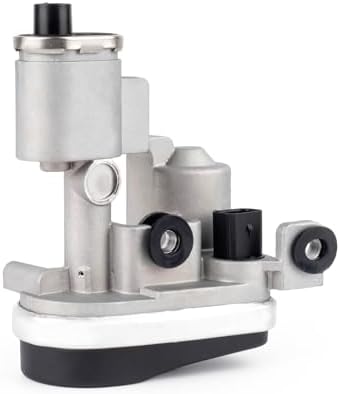
Step 5: On 2005-2007 trucks, check the TTVA first
In 2005 Dodge replaced the TV cable on the diesel 2500 and 3500 48RE with a transmission throttle valve actuator (TTVA), per Jeff Parlee of the Sonnax TASC Force.[5] It is an ECM-driven DC motor with two position potentiometers, mounted above the throttle valve shaft, and it strokes the TV valve mechanically through a D-shaped socket. Because TV pressure is what raises line pressure, a TTVA that is not stroking the full distance gives you a transmission that shifts early and soft and slips when loaded.
The details that matter:
- The actuator has no adjustment. It must be initialized after it is replaced or removed: key on, engine off, for at least 30 seconds. The ECM also recalibrates on every key cycle.[5]
- During calibration the ECM wants at least 48 degrees of travel. The distance between the pressure regulator spring bracket and the inside of the throttle shaft adjustment bolt head should be 0.905 in. Some cable-type brackets are set as tight as 0.820 in., which limits travel and sets P1751 and/or P1752.[5]
- The code set is P1749 through P1755: sensor circuit low and high, minimum range, span, mechanical performance, actuator stuck and control circuit.[5]
If a 2005-2007 truck slips under load and has any of those codes stored, fix that before you condemn clutches. This also catches trucks that came back slipping after a rebuild where the builder reused a cable-era bracket.
Step 6: Adjust the bands, if the slip lives in 2nd or Reverse
If the table above put you on a band, adjustment is the first move and it costs nothing but time. The factory procedure for the 48RE:
- Front (kickdown) band: adjusting screw is on the left side of the case above the manual and throttle valve levers. Loosen the locknut, tighten the screw to 72 in-lb, then back it off 1-3/4 turns on diesel trucks (1-1/2 turns on the V10). Hold the screw while you tighten the locknut to about 30 ft-lb.
- Rear (low/reverse) band: the pan has to come off. Tighten the adjuster to 72 in-lb, back it off 3 turns, and hold it while tightening the locknut to about 25 ft-lb.
Use an inch-pound wrench, not feel, and paint-mark the adjuster so you can see it did not turn when the locknut went down. Over-tightening a band makes it drag in the gears where it should be released, which burns it faster. Adjustment takes up normal lining wear. It will not save a band that is already glazed or a servo that is leaking apply oil.
The fix, in cost order
- Fluid level and condition, plus filter and pan service with ATF+4. Free to check, cheap to correct.
- TTVA codes and the 0.905 in. bolt on 2005-2007 trucks, then actuator initialization or replacement.
- Band adjustment when the slip is confined to 2nd, Reverse or manual 1.
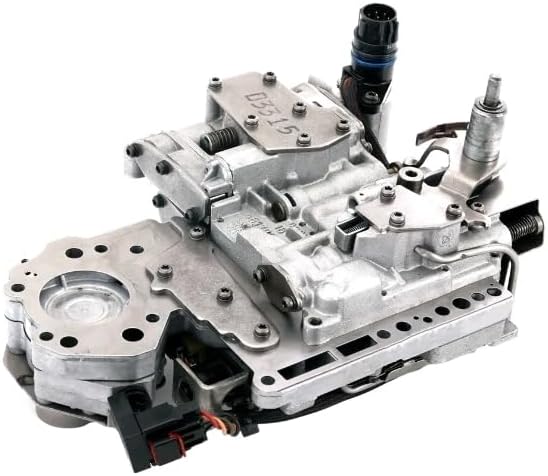
- Valve body repair when gauges show low or slow line rise: line pressure plug and sleeve, lockup boost valve, or a complete remanufactured 48RE valve body. Confirm it is a true 48RE body.
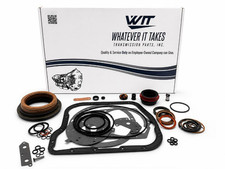
- Overhaul when the fluid is burnt and the gauges are good, or the slip is in 4th with healthy OD pressure. That means a master rebuild kit with fresh frictions, steels and front band, and the valve body work from step 4 done at the same time so the new clutches get proper pressure.
The order matters because the cheap fixes are the ones most often skipped. A rebuilt 48RE that goes back into a 2005 truck with a misadjusted TTVA bracket, or with the old worn valve body bolted back on, will slip again, and the new clutches will be the next thing to burn.
Keeping it from coming back
A 48RE behind a Cummins dies from heat and low pressure, so prevention is about those two things. Keep the fluid full and fresh, and service it more often on a truck that tows than the light-duty schedule suggests. Make sure cooler flow is strong, because a restricted cooler raises temperatures and starves lube. Pull grades in 3rd instead of letting the truck hunt between 3rd and 4th, which cycles the overdrive clutch and lockup under load. And if the engine has been turned up with a tuner or injectors, understand that the stock clutch capacity and line pressure were set for stock torque. More torque with the same pressure is a recipe for the exact slip this article is about.
For fluid and service intervals, see our 48RE fluid type and capacity guide, and keep the transmission fluid spec chart handy for the rest of the fleet.
48RE master rebuild kits, remanufactured valve bodies, bands, servos and TTVA actuators for the 2003-2007 Ram 2500 Cummins — shipped fast from the USA.
Shop 48RE parts →Shop the 48RE master kit → All 48RE parts
FAQ
Why is my 48RE slipping only when I tow?
A 48RE raises line pressure as throttle and load climb, so anything that limits that rise shows up first under a trailer. On 2005-2007 trucks check for P1749-P1755 throttle valve actuator codes and the 0.905 inch adjustment bolt dimension; on all years, a worn line pressure sleeve or a 46/47RE valve body in a 48RE case keeps line pressure too low for Cummins torque.
How do I tell converter slip from clutch slip on a 48RE?
Watch engine rpm against road speed at a steady cruise in 3rd or 4th with lockup commanded. If rpm flares a few hundred and drops back as lockup releases and reapplies, the converter clutch or its valve body circuit is slipping. If rpm flares during a shift or stays high in one gear with lockup off, a clutch or band is slipping.
What are the 48RE band adjustment specs for a Cummins?
The factory procedure tightens the front (kickdown) band adjusting screw to 72 in-lb and backs it off 1-3/4 turns on diesel trucks (1-1/2 on the V10), then holds the screw while tightening the locknut. The rear (low/reverse) band needs the pan off, 72 in-lb, then 3 turns back.
What fluid and how much does a 48RE take?
The 48RE uses Mopar ATF+4. Chrysler's 2006 Ram Body Builder chart lists a 3.8 liter (8 pint) service fill and 14 to 16 liters (29 to 33 pints) after an overhaul, with the dry fill varying by cooler and line length. Set the final level on the dipstick at operating temperature.
Can a band adjustment fix a slipping 48RE?
Only if the slip is in 2nd gear, Reverse or manual 1 and the band is simply loose. Adjustment takes up normal wear; it does not restore a burned band lining, a scored drum, a leaking servo or a slipping clutch pack. If the flare comes back within a few hundred miles, the unit needs to come apart.
Related 48RE guides
Sources
- Chrysler / Ram Body Builder Guide 2006 — Fluid Capacities and Technical Specifications. Backs the 48RE 3.8 L (8 pint) service fill, the 14-16 L (29-33 pint) overhaul fill and its cooler footnote, the "Auto 4-Speed HD 48RE" behind the 5.9L Cummins HO, and the 3.73/4.10 Ram 2500 axle ratios. Fluid capacities (PDF) · Technical specifications (PDF)
- ATSG — 46RE/47RE/48RE Technical Service Information (manual excerpt), 2011. Backs the 2003-07 Ram pickup 5.9L diesel / 8.0L application, the 2005-up diesel TTVA, and the driving and holding component layout (front, rear and OD/direct clutches; kickdown and low/reverse bands; low roller, overdrive and overrun clutches). atsg.biz (PDF)
- Sonnax Tech Resources — "Dodge 48RE Hydraulic Features Revealed," Jim Dial, October 27, 2015. Backs the TorqueFlite pressure regulator and throttle pressure behavior, the 22-28 psi (48RE) versus 10-15 psi (46/47RE) line rise in 4th and lockup, and the failed TCC/overdrive clutch warning for 46/47RE valve bodies in a 48RE. sonnax.com
- Sonnax — 48RE Line Pressure Plug & Sleeve Kit 22771A-19K and Oversized Lockup Boost Valve Kit 22771-19K product pages. Backs the line pressure sleeve wear mechanism and its complaints (soft or slipping Reverse, delayed engagement, poor line pressure control), the 22771A-16K oversized regulator kit, and the "TCC slip under load" lockup boost valve complaint. 22771A-19K · 22771-19K
- Transmission Digest — "Preventing 48RE Transmission Throttle-Valve-Actuator Codes," Jeff Parlee (Sonnax TASC Force), June 1, 2010. Backs the 2005 TTVA introduction on diesel 2500/3500 Rams, the 30-second initialization, the 48-degree span, the 0.905 in. versus 0.820 in. bolt dimension, and the P1749-P1755 code list. transmissiondigest.com
- Transmission Digest — "A Significant Departure: The 48RE Transmission," Wayne Colonna (ATSG), August 1, 2012. Backs the 48RE pump stator, converter and clutch drum capacity changes, the forward-clutch-fed TCC solenoid, and the channel plate / No. 2 checkball changes. transmissiondigest.com